Finding Your True Colors: The Art and Science of Personal Color Analysis
A complete article on why personal color analysis works, where it came from, and how to apply it in daily style.
Quick answer
Personal color analysis works by matching your undertone, value, and chroma to colors that repeat those same traits, which makes your face look clearer, brighter, and more balanced.
What you will learn
- Color harmony is driven by undertone, value, and chroma alignment.
- Seasonal color analysis evolved from early color science into practical styling systems.
- Your palette is a tool for faster, more confident wardrobe decisions.
Introduction
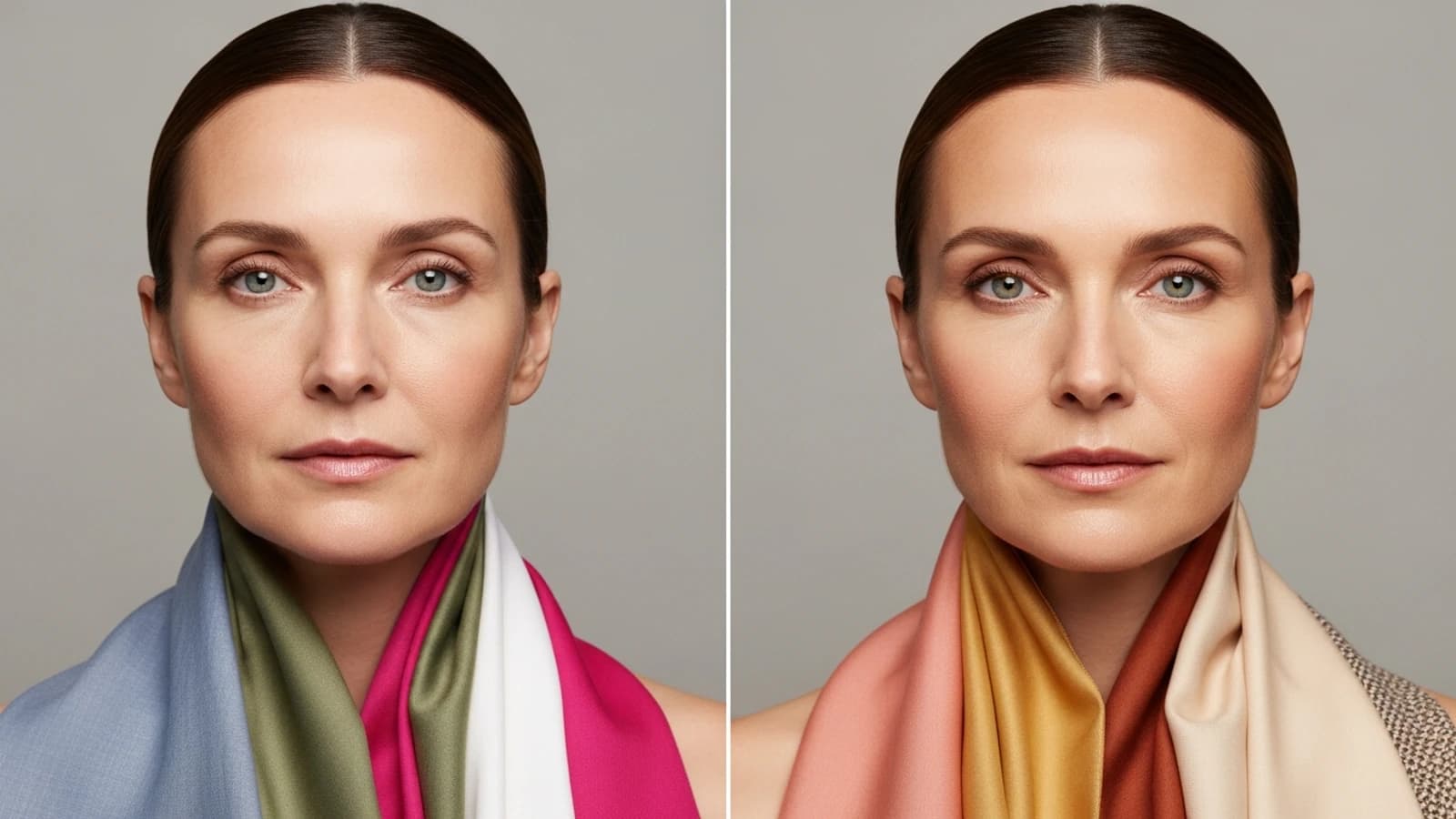
Have you ever noticed that certain clothing colors make you look tired and washed out while others instantly make you look fabulous?1 This isn’t just in your head – the colors you wear can dramatically affect your appearance. The right hues can bring your face to life, making your skin glow and your eyes sparkle, whereas the wrong ones might emphasize shadows or dull your complexion23. Personal color analysis is the art-meets-science of discovering which colors flatter you most. It’s like finding the perfect lighting for your face, built right into your wardrobe.
Why Color Matters More Than You Think
Color has transformative power when it comes to style. The goal of personal color analysis (sometimes called seasonal color analysis) is to identify a palette of colors that harmonize with your natural coloring – your skin tone, eye color, and hair color4. When you wear colors that share the same qualities as your own coloring (undertone, lightness, intensity), they connect with you instead of overpowering you25. For example, the right colors can reduce the appearance of dark circles or redness and give you a fresher, brighter look2. On the other hand, wearing shades that clash with your natural tones can make your skin look uneven or highlight imperfections, making you seem tired or washed out3. In short, color compatibility is about creating harmony between you and what you wear – so you shine, not your clothes.
Even beyond clothing, color influences first impressions and mood. Color psychology tells us that colors can evoke feelings or project images – think of the confidence of a bold red tie or the calming trustworthiness of a blue blouse. Generally, cooler colors like blues and greens tend to soothe or give a calm impression, while warm colors like reds and yellows can energize and uplift6. Of course, context and culture matter (in some cultures white is for mourning, in others it’s red), and personal associations with color vary78. It’s important to note that personal color analysis is different from general color psychology: one is about how colors make you look, and the other is about how colors make you feel9. But the two can work hand-in-hand – for instance, you might choose to wear a shade of blue that both complements your eyes and helps you feel calm and confident10. In the end, the best colors for you are those that flatter your appearance and empower your spirit.
Ready to apply this to your own wardrobe?
Use your personal palette as the fastest filter for what belongs near your face.
A Splash of History: From “Color Me Beautiful” to TikTok
The fascination with finding one’s best colors isn’t new – it’s been evolving for over a century. In the early 20th century, artists and scientists were already exploring how color affects perception11. Swiss artist Johannes Itten observed something intriguing while teaching at the Bauhaus: when he let his students paint with whichever colors they found pleasing, they often chose colors that reflected their own natural coloring1213. This led Itten to propose that people tend to gravitate towards (and look great in) the colors that are in their own complexion (and their complementary hues)1413 – an insight that planted the seed for personal color analysis.
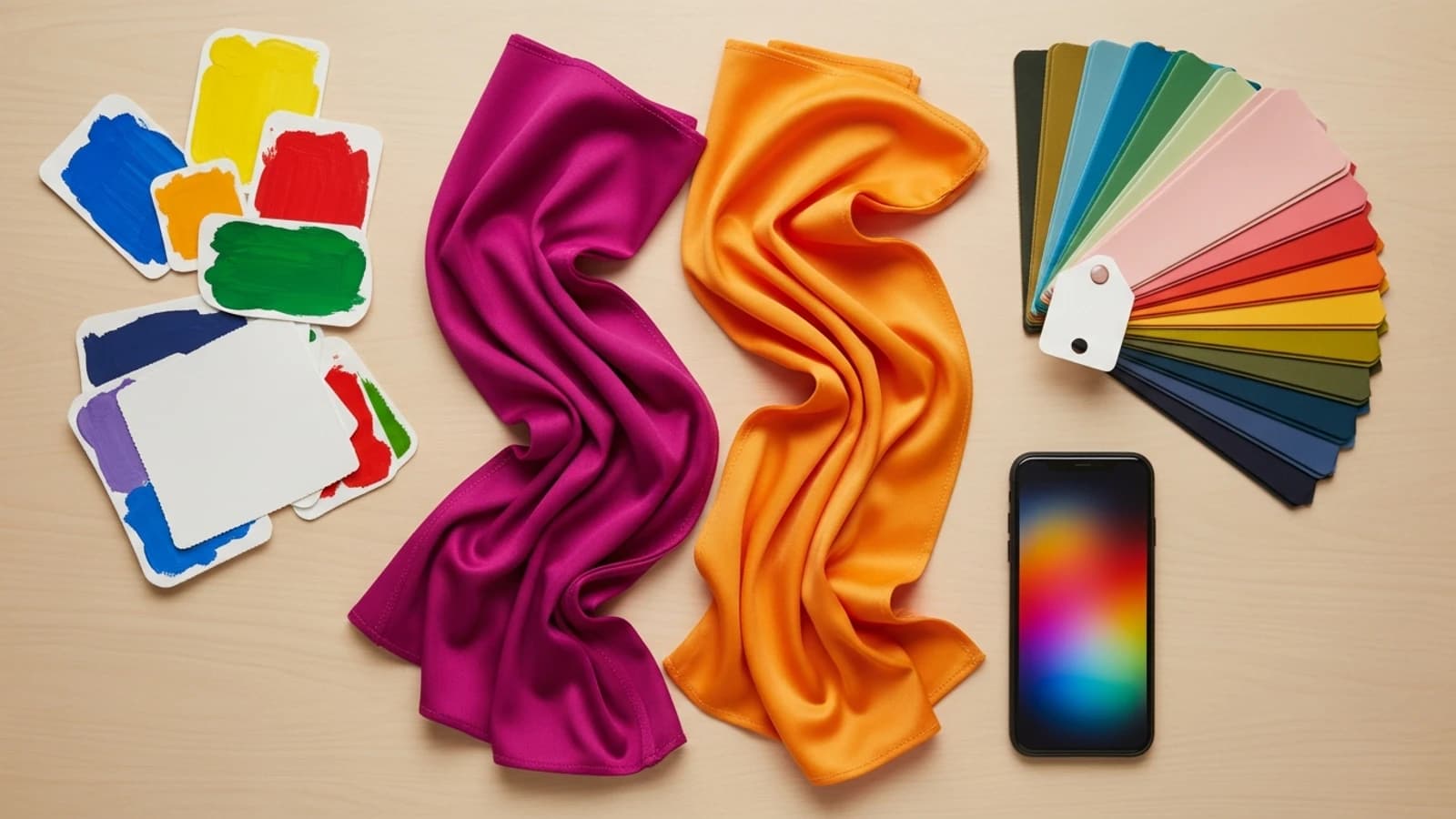
By 1928, artist Robert Dorr took these ideas into practical experimentation. He noticed that colors with similar undertones look harmonious together, and he applied this to people’s coloring15. Dorr developed a simple draping test: he’d place a magenta cloth (a cool, bluish pink) and then an orange cloth (a warm, yellowy orange) under someone’s face to see which undertone complemented their skin16. This was perhaps the first instance of the classic warm vs. cool test that remains a cornerstone of color analysis today. He categorized folks as “Key 1” cool or “Key 2” warm based on which drape flattered them16.
A few decades later, in 1942, a Hollywood stylist and milliner named Suzanne Caygill created an elaborate system linking individuals to specific color palettes. In her book Color: The Essence of You, Caygill introduced the idea of four seasons – Spring, Summer, Autumn, Winter – as archetypes of color palettes, and went further to define sub-seasons with even more nuance1718. She would analyze a person’s coloring in great detail (even factoring in personality) and assign a tailored palette. Caygill’s approach was highly individualized – she reportedly had 24 categories (six variations for each season)18 – and was a hit among her celebrity clientele.
It wasn’t until the 1970s and 80s that seasonal color analysis burst into the mainstream. American color consultant Carole Jackson studied Caygill’s methods and decided to simplify things for the public19. She pared the system down to the basic Four Seasons (no sub-types) and focused on an easy process anyone could try. In 1980, Jackson published Color Me Beautiful, a user-friendly guide that became a surprise best-seller19. Suddenly, millions of people were draping themselves with fabric swatches or holding jewelry to their skin to answer the question: “Am I a Winter, Summer, Autumn or Spring?” Personal color analysis became a full-blown 1980s phenomenon – it was not uncommon for friends to ask each other, “Have you had your colors done?”20. Knowing your “season” was almost as popular as knowing your astrological sign20. Color consultation businesses boomed, and style magazines of the era frequently dished out tips based on Jackson’s seasonal palettes.
What exactly were these Four Seasons? Each corresponds to a general combination of undertone, depth, and intensity:
Each season comes with a tailored palette of dozens of hues, but the basic idea is that your ideal colors share your coloring’s “DNA.” According to color theory, every color can be described by three dimensions – hue (warm vs. cool color bias), value (light vs. dark), and chroma (bright vs. muted)29. Your personal coloring has those same dimensions: the undertone of your skin (cool or warm), the depth of your hair/eyes (dark, medium, or light), and the overall intensity contrast of your features (soft and subtle or high-contrast and vivid). Personal color analysis works by matching those dimensions. In essence, it identifies the “settings” of your natural coloring and finds a season whose colors have similar settings30. When you wear colors that mirror the qualities of your own coloring, the result is a pleasing harmony – you stand out, not the clothes531.
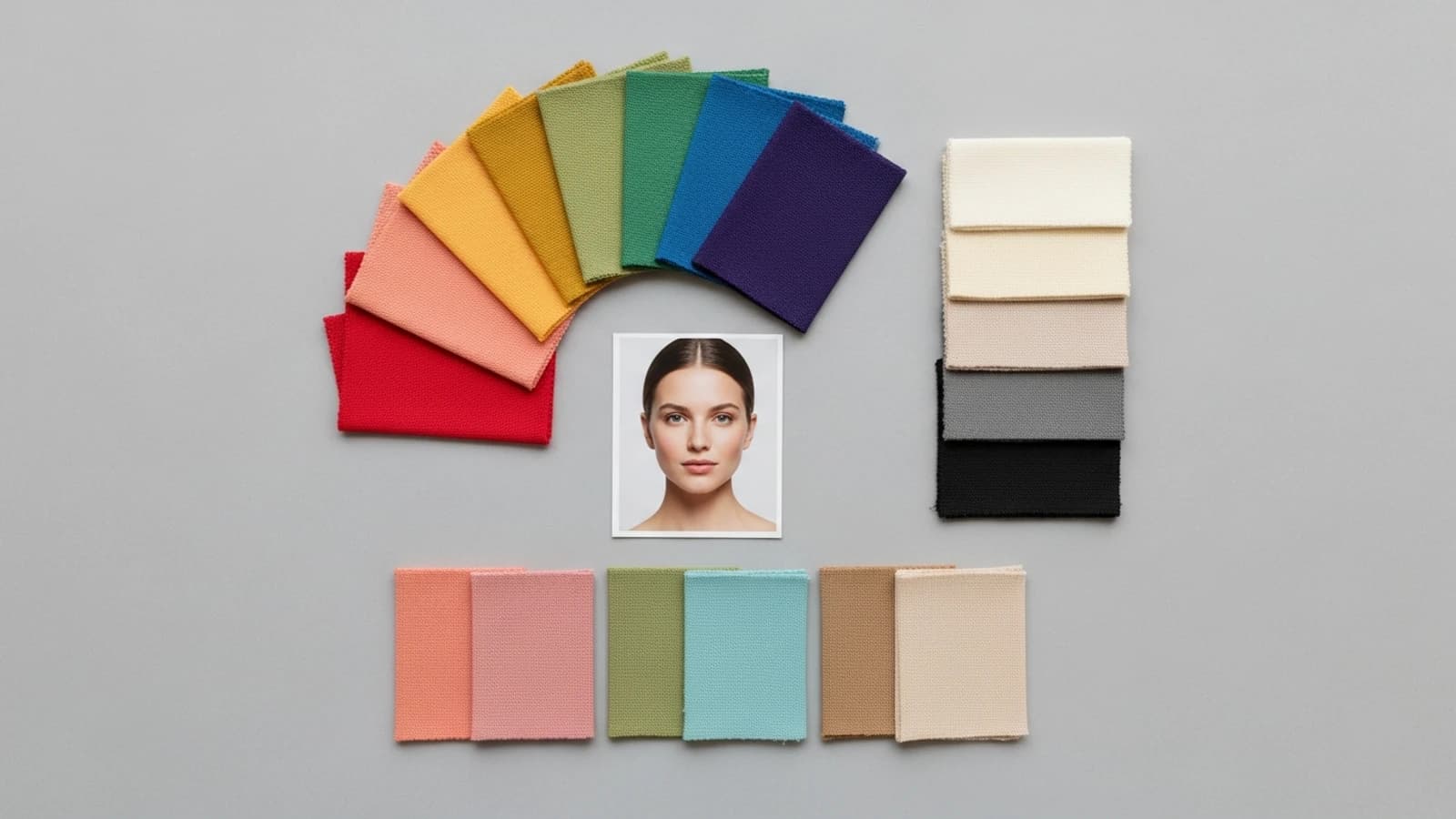
- Winter: Cool (blue-based) undertones, often dark or high-contrast coloring, and generally bright/bold intensity. Winters shine in rich, icy shades and jewel tones. Think of Snow White’s coloring as a classic Winter: very fair cool skin against dark hair and eyes. Winters look fantastic in deep, vibrant colors like true black and white, sapphire blue, emerald, fuchsia, crimson, and icy pastels2122. These strong hues don’t overwhelm them – they energize them.
- Summer: Cool undertones as well, but typically light to medium coloring and a soft or muted intensity. Summers are the gentler side of the cool palette. With lower contrast between hair/skin/eyes, they glow in pastels and powdered hues. Soft rose, dusty blue, lavender, pale gray, and sage green are examples of Summer colors that harmonize and won’t wash them out2324. Imagine the delicate, subdued tones of a Monet painting – that’s Summer.
- Autumn: Warm (yellow/golden) undertones, usually deep or earthy coloring, with a rich (often soft-warm) intensity. Autumns have a natural affinity for the colors of fall foliage. They come alive in earthy, muted shades like olive or forest green, mustard, burnt orange, rust, terracotta, chocolate brown, and deep teal2526. These warm, cozy colors enhance the golden or olive tones in their skin and hair.
- Spring: Warm undertones as well, but usually light, bright, and fresh overall coloring. Springs often have clear, warm complexions (think peaches-and-cream, or warm ivory) with light hair or eyes, and they sparkle in cheerful, clear colors. Their best colors are like a spring bouquet: corals, peach, clear aqua, mint green, true turquoise, sunny yellow, and tomato red2728. These vibrant yet light colors echo the Spring person’s own vivacity.
How Does Color Analysis Work? (The Basics)
So, how do we figure out which colors belong in your personal palette? Traditionally, a color analyst might conduct a “draping” session. This involves placing different colored fabrics (drapes) near your face under good light, and observing how each color affects your skin. Does the color accentuate dark circles or make your skin tone look ashy? Or does it make your face seem clearer, eyes brighter? By comparing drapes in pairs – for example, a cool blue drape vs. a warm orange, a light pastel vs. a deep jewel tone – analysts narrow down what flatters you most3233. The process is one of elimination along those three key dimensions (hue, value, chroma) until we find your best fit category. It’s partly science and partly an art of perception. A trained color consultant’s eye can detect subtle changes in your face’s appearance with each drape.
Even without a professional, there are a few DIY clues you can use to get a sense of your coloring. First, determine your skin’s undertone. Do you look better in gold jewelry or silver? Gold tends to flatter warm (yellow/golden) undertones, while silver flatters cool (pink/blue) undertones34. You can also check the veins on the underside of your wrist: if they appear more greenish, you likely have warm undertones; if they look bluish-purple, you’re probably on the cool side34. This warm-or-cool question is the fundamental fork in the road – typically, “warm” folks end up as Springs or Autumns, and “cool” folks as Summers or Winters34.
Next, consider value (depth): are you more flattered by lighter shades or darker ones? This often correlates with the natural depth of your hair, eye, and skin coloring. If you have very light and delicate coloring (for example, blonde hair, light eyes, fair skin), very dark colors might overwhelm you – so you lean toward the Spring/Summer end of the spectrum. Conversely, if you have deep coloring (dark hair, eyes, or high contrast features), you might carry off intense dark hues with ease – a hallmark of the Autumn/Winter families. Finally, assess your chroma or intensity: do you glow in bold, saturated colors, or do you find that softer, more muted tones are more forgiving? A person with extremely vivid eyes and sharp contrast might shine in bright, clear colors, whereas someone with soft, blended features (e.g. ash-brown hair, gray-blue eyes, gentle complexion) might find dusty, toned-down shades are more harmonious. All these factors combine to pinpoint a season (and possibly a sub-season) that encapsulates your ideal balance. For example: if you have warm undertones, fairly light coloring, and look best in clear rather than muted colors, you are likely a Spring type. If you’re cool-toned, high-contrast (dark hair, light skin), and rock saturated colors, you’re probably a Winter. Many modern systems include 12 or 16 sub-seasons to account for nuances (like a “Soft Summer” vs. “Cool/True Summer” vs. “Light Summer”), but the core principles remain the same – it’s all about undertone + value + chroma in sync.
One important thing to remember is that these categories are guidelines, not strict rules etched in stone. Real people don’t always fit neatly into four (or even twelve) boxes. Many of us have a mix of features – you could have neutral-cool skin but bright golden-brown eyes, or softly medium coloring that sits between Summer and Autumn. In fact, some color experts point out that the original four-season system created “false dichotomies” – not everyone is purely warm or cool, or purely muted or bright35. Think of the seasons as useful concepts to explore what works, not as limiting labels. The ultimate goal is to find a range of colors that make you look and feel your best. For most people, that spans a few neighboring “seasons” anyway. If you happen to love a color that isn’t in your official palette, you can often still wear it – just maybe not right under your chin, or in a slightly different tint. For instance, a Winter who loves orange (typically a no-go warm color for Winters) might wear a vivid red-orange as a skirt, or incorporate that color in a print away from the face. Personal taste and joy matter too, and rigid rules are made to be broken when you know what you’re doing. As one makeup artist wisely said, “No rules should be put in place if it takes away something you simply want to do… if you feel you’re best wearing a certain shade, then do it.”36 In other words, use color analysis as a tool, not a tyrant.
The Revival and Modern Twist
After the craze of the 1980s, personal color analysis quietly simmered on the back burner for a while, considered by some as a dated fad. But fashion and beauty trends have a way of cycling back, and in the 2020s color analysis is experiencing a revival – thanks in part to the internet and social media. On TikTok and YouTube, a new generation is discovering seasonal color analysis and having fun with it37. Viral videos show young people draping themselves in bedsheets or using filters that magically cycle through different hair colors or lipstick shades to “reveal” their best tones. There’s a communal excitement in the comments: “OMG, you’re definitely a Soft Autumn, those olive tones are perfect on you!” Suddenly, having your colors done is cool again (and not just something your mom did back in the day).
Interestingly, this resurgence has a global flavor. In places like South Korea, personal color analysis has become a huge part of beauty culture in recent years38. It’s common for image-conscious teens and K-pop fans to talk about getting professionally “tone checked” to find their harmony (the K-Beauty industry even offers personalized palettes for your season). Korean approaches sometimes tweak the old Western seasonal system, adding their own cultural aesthetics – but the goal is the same: enhancing natural beauty with the right hues39. The enthusiasm from South Korea helped spark new interest worldwide, proving that looking good in your colors is a universally appealing idea.
Modern technology is also changing how we do color analysis. In the past, you’d need an in-person consultation with a trained analyst, professional lighting, and a whole suitcase of colored drapes – a process that could cost a pretty penny. Today, there are increasingly sophisticated apps and AI tools that claim to do the job with a single selfie. Upload a clear photo, and some software will analyze the pixels of your skin, hair, eyes and spit out your color season along with a palette recommendation. While results can vary in accuracy, these digital methods make color analysis more accessible than ever. For many curious people, it’s an easy first step – a fun way to explore your possible season before fine-tuning with real fabrics or an expert’s eye. In fact, the appeal of color analysis has always been a bit like a personality quiz, with a touch of magic: it’s fun to discover more about yourself. As color expert Leatrice Eiseman (of Pantone) notes, “People are always attracted to, ‘tell me more about myself.’…Anything that helps them attain the look that they want” will find an eager audience37. The enduring allure of seasonal analysis is that it gives us a new lens to understand ourselves – and a confidence boost when we see how transformative the right colors can be.
Ready to apply this to your own wardrobe?
Use your personal palette as the fastest filter for what belongs near your face.
Wearing Your Colors with Confidence
At its heart, personal color analysis isn’t about strict rules or limiting your style – it’s about finding freedom within a palette that flatters you. When you know your best color family, shopping and outfit planning can become easier (and more economical!). Imagine standing in front of a rack of clothes and zeroing in on your colors – you can bypass that lovely dress in the wrong shade that would have drained the color from your face, and pick the one that will make you shine. Many people find that having a curated color palette helps them build a cohesive wardrobe – pieces mix and match effortlessly because the colors all complement each other (no more closet orphans in odd shades that go with nothing). It can also save you from costly mistakes on makeup (finding your perfect lipstick or hair dye becomes simpler when you know what warmth or coolness to look for).
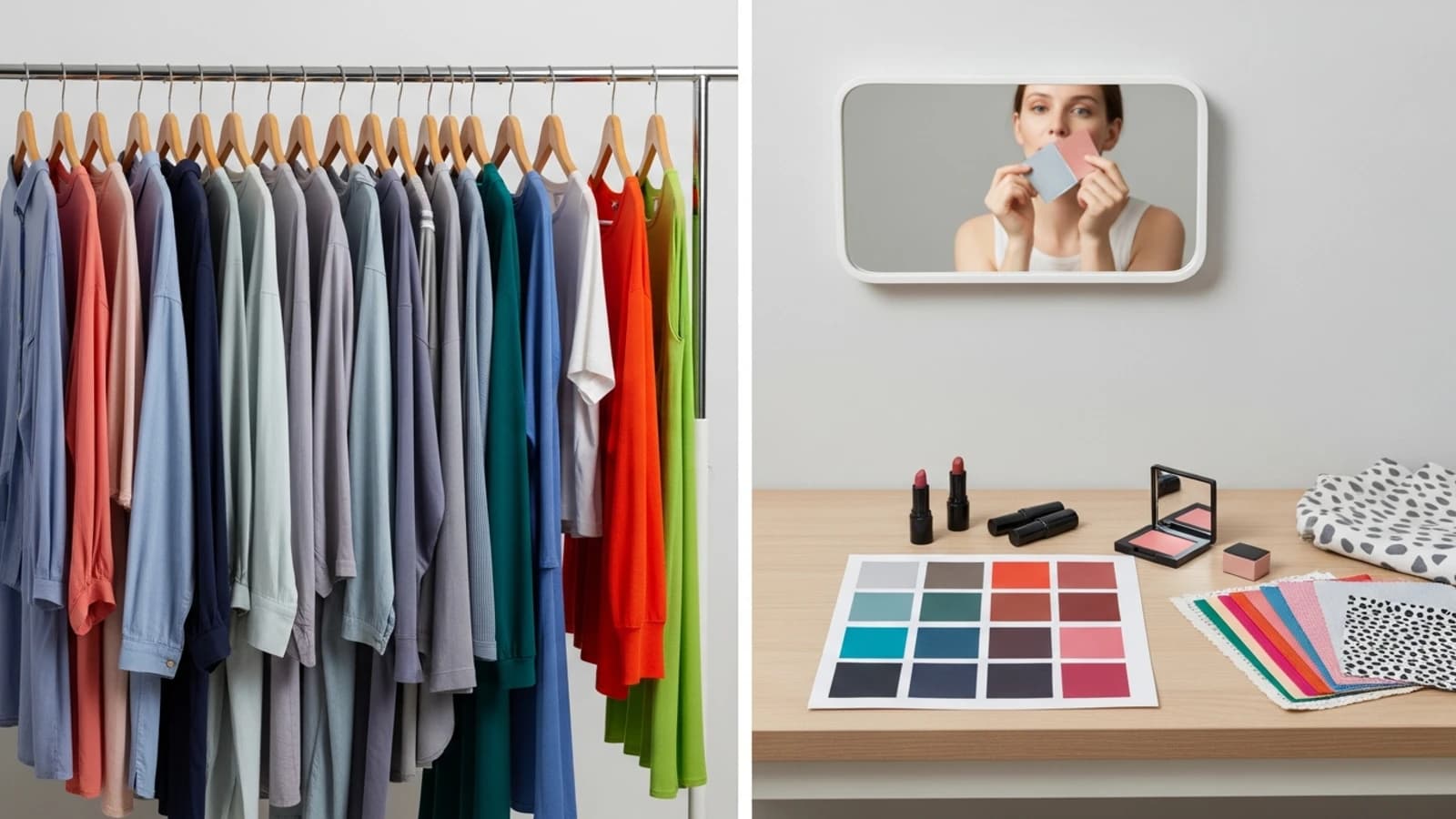
Perhaps the greatest benefit, though, is the boost in self-confidence. There’s something almost empowering about wearing a color that you know looks great on you – it’s like putting your best face forward, literally. You might find that people suddenly say “you look well-rested” or “that color brings out your eyes,” not realizing that it’s the harmony of the color doing the trick. And when you catch a glimpse of yourself in the mirror, you see you first, not the shirt or the dress. As the personal color mantra goes, “The right colors make you glow.” They let your natural beauty take center stage.
Finally, keep in mind that style is personal and meant to be enjoyed. While color analysis provides science-based guidance, wearing your best colors should feel good, not like a constraint. Many modern color experts emphasize bringing your own preferences and emotions into play4036. If wearing a scarlet red blazer makes you feel like a powerhouse, go for it – just choose the hue wisely (a Winter might opt for a pure crimson, a Spring for a tomato red, an Autumn for a brick red, a Summer for a rose red). The idea is to use the theory to enhance your expression, not hamper it. As Eiseman puts it, colors have emotional resonance and the right ones should also give you confidence and joy40.
Embrace the Journey
Personal color analysis is part science, part artistry, and part self-discovery. Its popularity over the years – from the pages of 1980s bestsellers to the feeds of 2020s social media – shows that it resonates with our desire to look our best and understand ourselves better. It weaves together threads of color theory (thank you, Newton and Munsell, for the color wheel and dimensions of color29!), psychology (how we perceive beauty and feel in certain colors), and even a bit of history and culture (from art teachers in the 1920s to image consultants in Seoul).
If you haven’t had your colors done yet, consider giving it a try – it can feel like unlocking a secret about yourself. Whether you consult a professional, play with a mobile app, or just experiment in your closet, it’s an adventure in creativity and self-care. At the end of the day, the goal isn’t to fit neatly into a season label or follow rigid fashion rules. The goal is to gather insights that help you present your most authentic, vibrant self to the world. As the saying goes, “find your true colors and let them shine.” By understanding the hues that harmonize with you, you might find you’re not just changing your wardrobe – you’re also embracing the unique palette of who you are.
Source Notes
The article includes the following annotated references from the original manuscript.
- Arden Reece, Color Wisdom: Insights on Johannes Itten’s discovery about personal coloring1213.
- MyStyleBox, Color Analysis & Seasonal Color Theory: Effects of right vs. wrong colors on appearance12, and why matching color dimensions (undertone, value, chroma) matters41.
- Kathryn K. Griffin, A Brief History of Personal Color Analysis: On Suzanne Caygill’s pioneering work and Carole Jackson’s popularization (1970s–80s)1742; modern critiques of rigid seasonal systems43 and the influence of South Korea & TikTok on the revival38.
- Wikipedia: Carole Jackson – details on the Color Me Beautiful phenomenon and seasonal palette examples4420.
- The Lexington Line (Feb 2025), “Color Seasons: Complement Your Natural Beauty”: Historical timeline from Munsell to Robert Dorr (1920s) and Caygill (1940s)1518; definitions of hue, value, chroma29; explanation of identifying seasons by undertone, contrast, etc.4546; and seasonal color examples2226.
- Calin Van Paris, Vogue (Aug 25, 2023), “How This Retro Beauty Theory Became the Latest TikTok Craze”: Commentary on the resurgence of seasonal color analysis and expert tips (Eiseman and Moultrie) on determining undertones3734, plus the importance of emotional resonance and flexibility in modern approaches4036.
- Audrey Stanton, The Good Trade (Oct 23, 2025), “How To Use Color Psychology To Pick Your Clothing”: Clarifying the difference between color psychology and personal color analysis910 and noting general psychological effects of colors6.
Sources
- Color Analysis & Seasonal Color Theory | Find Your Perfect Palette
- How To Use Color Psychology To Pick Your Clothing - The Good Trade
- Origins of the Most Advanced Color Analysis - Stoltz Image Consulting | Dallas Fort Worth Texas
- what this pioneering art teacher discovered about your personal coloring + preferences • Arden Reece, Soul Color Readings, Wayfinding & Intuitive Guidance
- Color Seasons: Complement Your Natural Beauty — The Lexington Line
- A brief history of personal color analysis and my approach — K Griffin Style
- Carole Jackson - Wikipedia
- Seasonal Color Analysis | Which Color Season Are You? | A Comprehensive Guide
- How Seasonal Color Analysis Became a TikTok Craze | Vogue