Women's Jeans Styles and Cuts Guide: Every Fit and Rise Explained
An industry-style analysis of women's denim architecture, body-shape compatibility, 2025-2026 trend cycles, and the fit mechanics behind every major jeans silhouette.
Quick answer
Women's jeans styles are built from rise, top-block contour, thigh volume, leg opening, crop length, fabric stretch, and wash. Low, mid, and high rises change torso proportion; skinny, straight, wide, barrel, flare, crop, and embellished cuts each solve a different silhouette problem and carry a different fashion signal.
What you will learn
- Rise controls the top block: low-rise suspends from the hips, mid-rise anchors most body types, and high-rise elongates the leg while defining the waist.
- The dominant 2025-2026 denim market is plural, with skinny and cigarette cuts existing beside straight, wide-leg, baggy, boyfriend, barrel, flare, and cropped silhouettes.
- Fabric and wash matter as much as cut: rigid denim creates structure, stretch adds comfort, dark indigo reads polished, and ecru or embellished denim shifts the styling mood immediately.
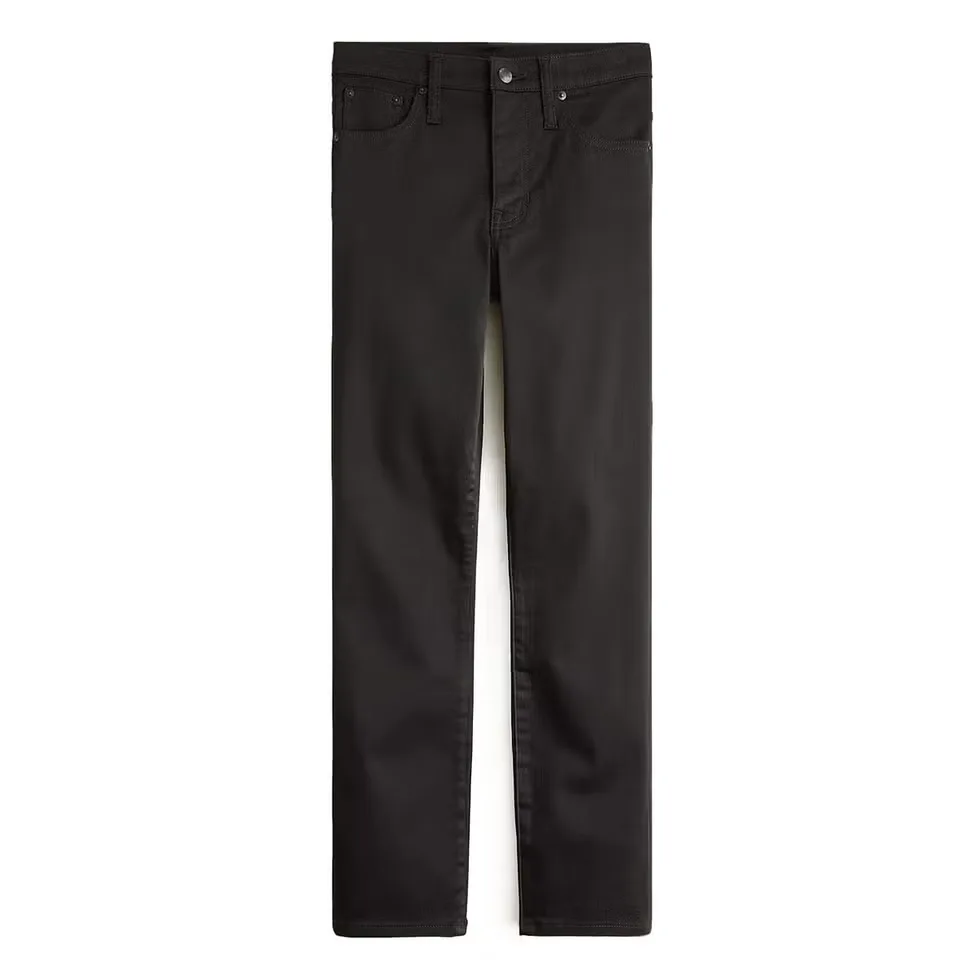
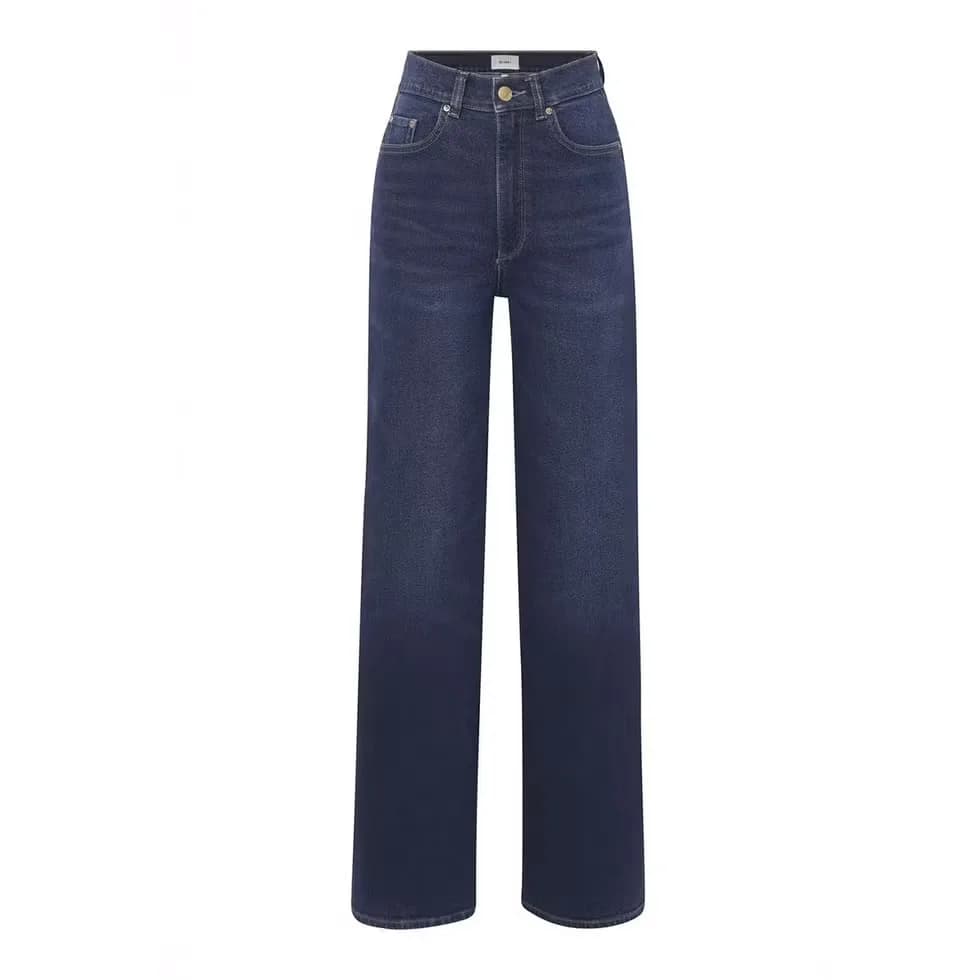

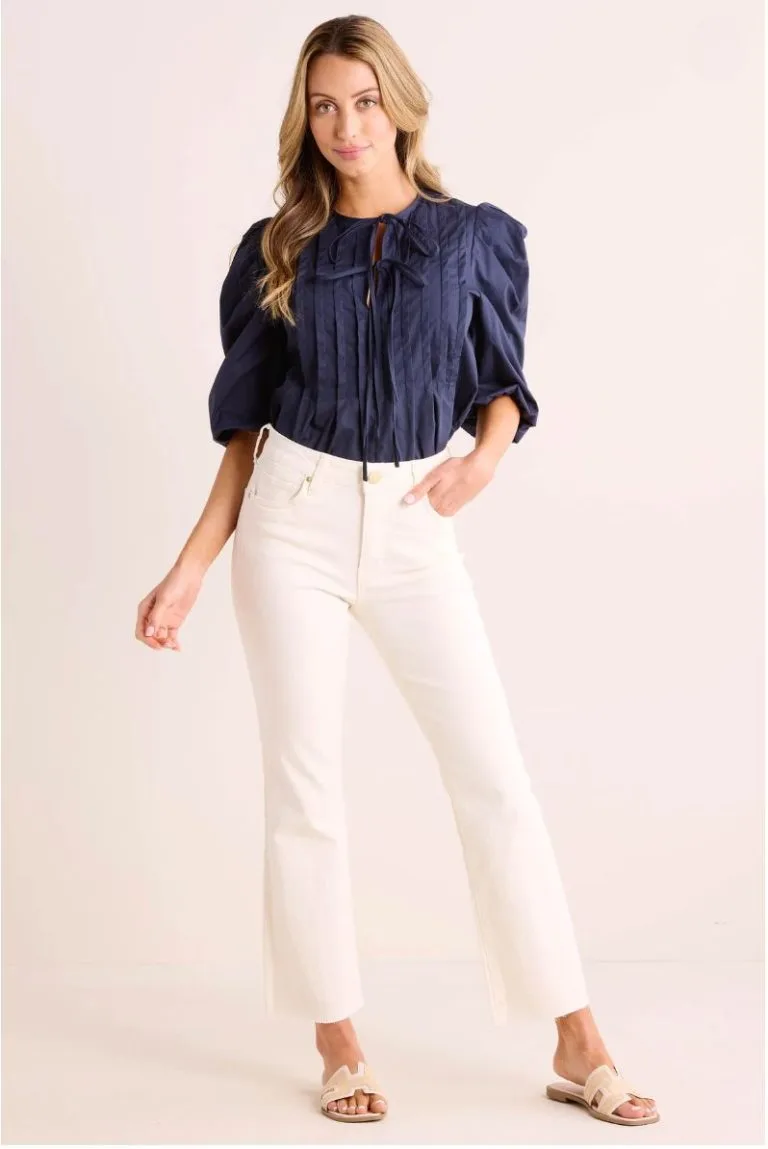
The modern denim market represents one of the most complex, rapidly evolving, and fiercely contested sectors within the global apparel industry. Originally forged as utilitarian workwear in the late nineteenth century, denim has metamorphosed into a foundational pillar of the contemporary wardrobe. The landscape of the 2025 and 2026 fashion seasons marks a fascinating inflection point in denim consumption and production. Historically, the industry operated on rigid, decade-long trend cycles—the pronounced bell bottoms of the 1970s, the high-rise, rigid "mom jeans" of the 1980s, the grunge-inspired, aggressively baggy cuts of the 1990s, and the absolute hegemony of the high-stretch skinny jean throughout the 2010s.1 Today, however, the monolithic trend cycle has fractured into a simultaneous, pluralistic market where nearly every historical silhouette exists concurrently on the runway and the street.1
This hyper-segmentation requires a rigorous, almost architectural understanding of garment construction. Evaluating denim is no longer simply a matter of selecting a color wash; it demands a comprehensive understanding of top-block geometry (the rise), leg-shape morphology (the cut), and textile engineering (fabric weight, fiber composition, and stretch mechanics).5 The most refined iterations of denim serve dual purposes: they act as versatile, structural anchors for daily attire while simultaneously telegraphing the wearer’s alignment with specific sartorial movements. Whether a consumer opts for the "Quiet Luxury" of dark indigo wide-leg trousers, the avant-garde anti-fit of the architectural barrel leg, or the nostalgic rebellion of a low-slung baggy jean, the choice is heavily laden with stylistic and sociological implications.5
This analysis provides an exhaustive deconstruction of the various styles, cuts, and rises defining women's denim. By examining the structural mechanics, historical lineage, and morphological impact of each silhouette, alongside structured visual data points featuring multiple reference images for each category, this report serves as a definitive, expert-level guide to the structural anatomy of the modern jean.
Fit Meets Color
The right denim shape still needs the right wash near your palette.
Jeans change the line of the body, but denim color, contrast, and the tops you pair with it decide whether the look sharpens your face. auraDNA helps connect silhouette choices to your own color season and styling direction.
The Architecture of the Top Block: A Comprehensive Analysis of Denim Rises
Before analyzing the shape, volume, and drape of the leg, one must understand the geometry of the top block. The "rise" of a jean is defined as the specific linear measurement from the intersection of the crotch seams up the front center of the garment to the top edge of the waistband.7 This singular metric is arguably the most crucial structural component of the pant. The rise dictates the entire drape of the garment, alters the wearer's perceived center of gravity, modifies the visual proportion of the torso to the legs, and determines the biomechanical comfort of the jean during movement.3
The denim industry standardizes rises into three primary categories—low, mid, and high—though the exact measurements can fluctuate marginally depending on the brand, the intended ease of the garment, and the specific historical era the design references. The interplay between these measurements and human anatomy forms the basis of all denim tailoring.
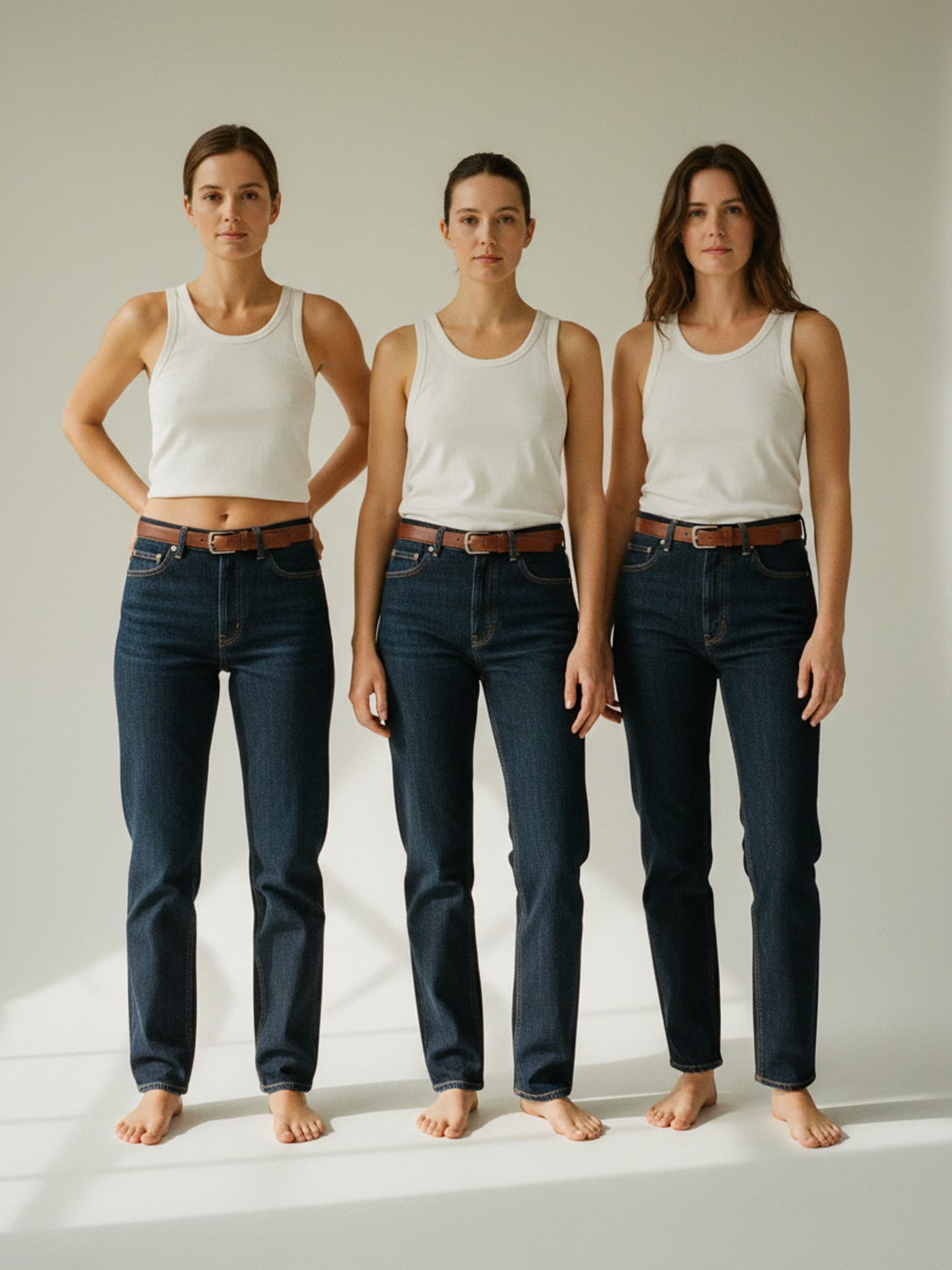
Low-Rise: The Y2K Resurgence and Pelvic Suspension
The low-rise jean is strictly characterized by a front rise measurement ranging from approximately to (), with some ultra-low contemporary variations dropping even lower.3 Rather than conforming to the natural, pliable waist, the waistband is engineered to rest directly on or slightly below the prominent pelvic hip bones.3 Originally popular in the 1960s and 1970s as rebellious "hip-huggers," the low-rise saw its most aggressive and mainstream adoption in the early 2000s, an era characterized by the Y2K fashion movement.1 Following a decade of high-rise dominance, the low-rise has seen a substantial and highly publicized revival in the 2024–2026 collections of premier high-fashion houses, notably championed by brands like Chanel and Knwls.1
Structurally and visually, low-rise jeans elongate the appearance of the torso, making them particularly flattering for individuals with shorter torsos or those possessing hourglass and athletic figures who wish to highlight abdominal definition.3 However, because the structural anchor of the garment sits below the pelvic structure, low-rise denim offers minimal to no support or coverage for the midsection.14 Modern iterations of the low-rise deliberately attempt to correct the functional flaws of the early 2000s versions; contemporary "low-slung" or relaxed low-rise jeans frequently land around the to mark.1 While purists may argue this borders on a mid-rise, this modern adjustment allows the garment to rest effortlessly on the hips, providing the slouchy, effortless aesthetic of a low-rise without compromising functional mobility or causing the garment to slide down excessively during daily wear.7
Mid-Rise: The Universal Biomechanical Anchor
The mid-rise jean features a measurement typically ranging from to ().7 This specific rise is meticulously engineered to sit just below the navel, aligning perfectly with the body's natural pivot points and center of mass. Consequently, the mid-rise is universally recognized within the industry as the most figure-friendly, democratic, and versatile option within the entire denim pantheon.3
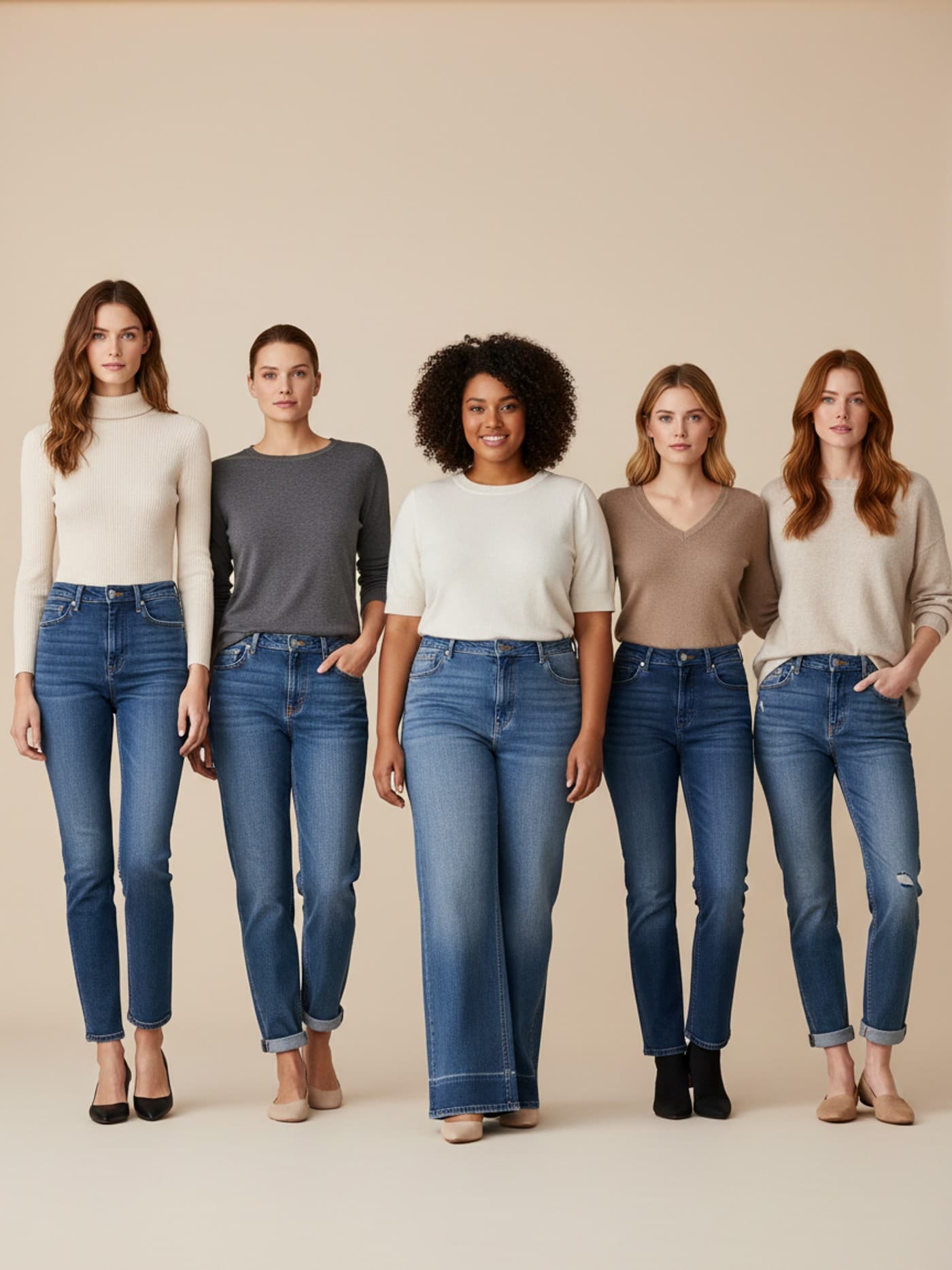
By covering the lower abdomen without encroaching upon the natural waistline (where the torso bends), mid-rise denim offers structural support and coverage without the constrictive feeling some wearers experience with higher, rib-hugging cuts.10 It serves as a seamless, unobtrusive bridge for various top lengths. The mid-rise accommodates untucked shirts, draped blouses, and longer, chunky knitwear flawlessly, as it does not create a harsh horizontal line across the narrowest part of the torso.3 For individuals with slender, petite, or oval body morphologies, the mid-rise provides optimal proportionality, preventing the fabric from overwhelming shorter frames while simultaneously offering a secure, comfortable fit.3
High-Rise: Structural Elongation and Abdominal Contouring
High-rise jeans possess a front rise measurement strictly exceeding , frequently reaching to and occasionally higher in specialized vintage reproductions ().3 The waistband is explicitly designed to encapsulate the navel, sitting precisely at the natural waist—the absolute narrowest part of the torso where the body naturally bends and hinges.10
The primary structural advantage of the high-rise silhouette is its capacity to visually elongate the legs while simultaneously contouring, smoothing, and holding in the midsection.3 This engineering makes it an exceptionally popular choice for curvier body types, pear shapes, and those of below-average height who are actively seeking vertical extension in their silhouette.3 Stylistically, high-rise denim demands to be seen and utilized as an active participant in the outfit's composition; it serves as the ideal, structured anchor for cropped jackets, skin-tight bodysuits, and tucked-in blouses.1 In recent years, it has become the default, non-negotiable rise for vintage-inspired straight cuts, wide-leg trousers, and the iconic, voluminous "mom jean" aesthetic.2
Morphological Compatibility Index
The interaction between distinct body shapes and the specific mathematical measurements of a denim rise is a critical component of successful denim tailoring and consumer satisfaction. The following table outlines the biomechanical rationale for matching specific body morphologies with appropriate rises 3:
| Body Morphology | Optimal Rise Selection | Structural and Biomechanical Rationale |
|---|---|---|
| Rectangle (Straight) | Mid to High-Rise | The high-rise waistband artificially creates a defined waistline and horizontal focal point where natural curvature is minimal, breaking up the vertical line.17 |
| Hourglass | Mid to High-Rise (with Stretch) | Accentuates natural curves by resting at the narrowest point; necessitates a high percentage of elastane (stretch) to prevent the waistband from gaping at the lower back.17 |
| Triangle / Pear | High-Rise | Visually lengthens the leg to balance wider hips; the high waist hugs the natural waist, providing a secure fit that will not slide down over broader hips.17 |
| Athletic / Heart | Low to Mid-Rise | Elongates the appearance of the torso and sits comfortably on narrower hips; avoids the accumulation of excess, bunching fabric at the waist.3 |
| Oval / Apple | Mid-Rise | Settles comfortably just below the natural waist, avoiding midsection constriction or digging when seated, while still providing necessary lower abdominal coverage.17 |
The Linear Paradigm: Skinny Jeans, Jeggings, and Cigarette Silhouettes
The linear family of denim encompasses styles that closely trace the natural, anatomical line of the leg without adding external volume, theatrical flares, or dramatic structural manipulations. These silhouettes, driven by advances in textile engineering, represent the commercial backbone of the global denim market.
Skinny Jeans: The Woven Anchor
Despite periodic industry predictions forecasting its demise in favor of looser fits, the skinny jean retains a formidable, unwavering market share.4 Cut to be aggressively form-fitting and skin-tight from the hip straight down to the ankle opening, skinny jeans create a sleek, modern, streamlined silhouette.2 This specific cut is uniquely equipped for certain styling scenarios where volume would be a hindrance; for example, skinny jeans remain the only viable silhouette to be seamlessly tucked into knee-high or riding boots, and they serve as the perfect proportional counterweight to highly oversized knitwear, voluminous tunics, or heavy winter outerwear.19
Structurally, traditional skinny jeans are constructed from woven denim. While they fundamentally rely on the incorporation of elastane or spandex for necessary stretch and mobility, they retain a higher percentage of rigid cotton.22 This ensures that the garment maintains its structural integrity over time, features fully functional pockets, utilizes authentic hardware (copper rivets, sturdy belt loops, and standard zip-fly closures), and ages with the characteristic fading of true denim.22
Jeggings: Extreme Stretch and Hybridization
A critical, often misunderstood distinction must be drawn between traditional skinny jeans and jeggings, as the two rely on fundamentally different paradigms of textile engineering. Jeggings represent the ultimate hybrid garment, bridging the extreme comfort of athletic leggings with the visual aesthetic of woven jeans.2
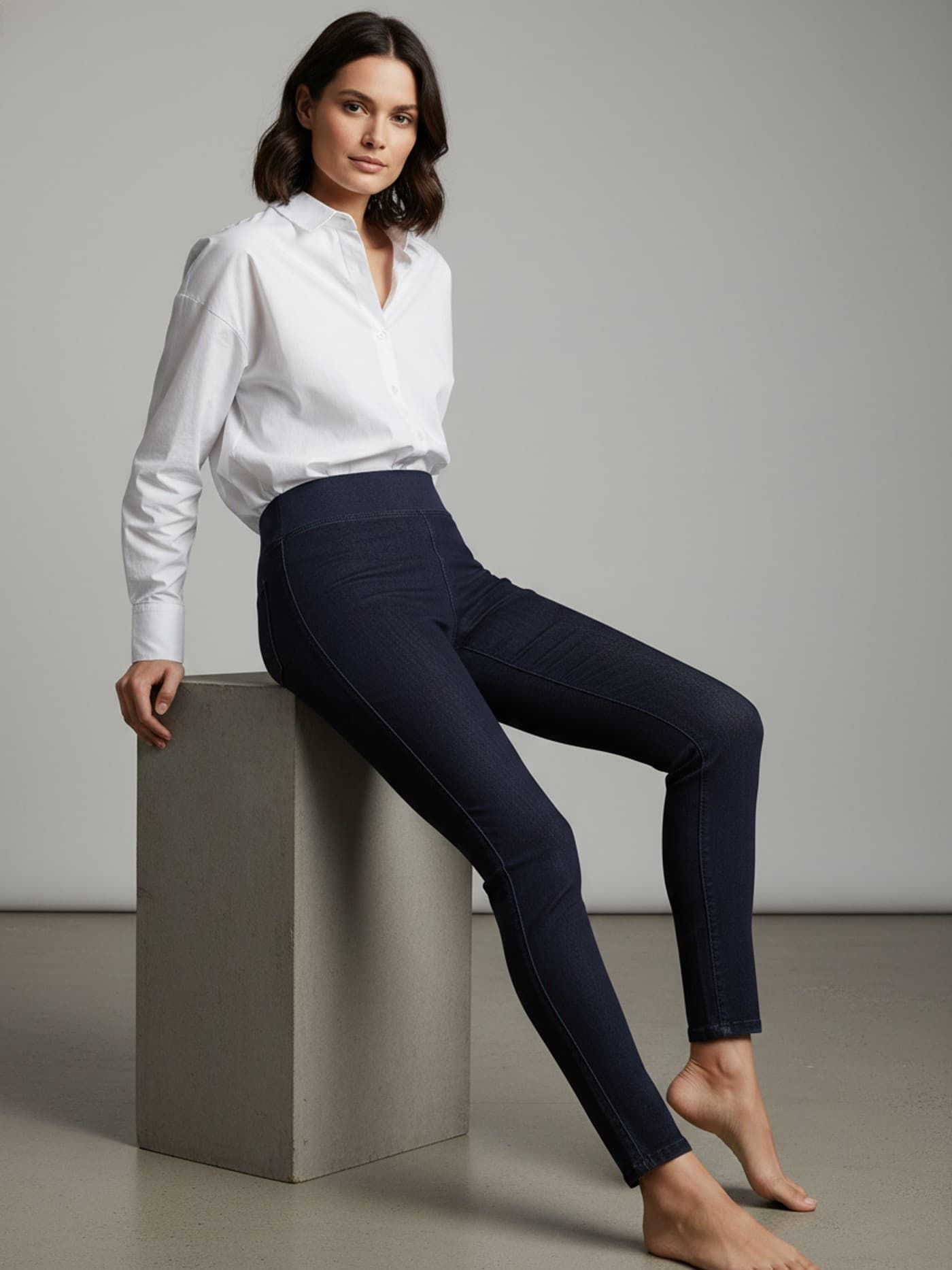
Jeggings utilize a significantly higher percentage of synthetic fibers—complex blends of polyester, rayon, and spandex—to achieve extreme, unrestricted four-way stretch.22 To maintain a completely smooth, second-skin profile, jeggings frequently eliminate bulky hardware, utilizing faux front pockets, smooth pull-on elastic waistbands in place of a zip-fly, and minimal seaming.22 While jeggings offer unmatched adaptability and comfort suitable for fluctuating body sizes or highly active days, they generally lack the durability, structural hold, and authentic aging properties of woven skinny jeans.24
To accommodate diverse, highly curvaceous body types in these skin-tight fits without compromising construction, modern manufacturing has introduced specific "curvy" tailoring metrics. While standard denim is designed with a mathematical differential between the hip and waist measurements, curvy jeggings and skinnies utilize an exaggerated differential ().25 This engineering specifically targets and eliminates the persistent issue of waistband gaping at the lower back, ensuring the fabric hugs every curve seamlessly.25
Cigarette Pants and the Slim-Straight Compromise
The slim-straight (often referred to as the cigarette) jean represents a highly calibrated, sophisticated compromise between the body-conforming nature of a skinny jean and the relaxed, linear drape of a straight leg.2 These jeans fit closely and cleanly through the thigh but critically release their grip below the knee, maintaining a narrow, straight—but not skin-tight—column down to the ankle.20
Industry analysts and creative directors report that the slim-straight ankle fit has gained immense commercial traction in 2025.8 This surge is largely driven by the simultaneous resurgence of the chunky loafer and ballet flat footwear trends.8 Consumers specifically desire a tailored, slimmer bottom option to pair with larger, boxy tops and blazers, without committing to the restrictive feel of a pure skinny jean.8 Cigarette silhouettes offer a polished, streamlined, and highly contemporary alternative that translates effortlessly into smart-casual, business-casual, and formal office environments where pure skinny jeans might appear too casual.2
Structured Visual Data: Skinny, Jegging, and Cigarette Geometries
The following dataset aggregates multiple high-quality visual references to delineate the subtle structural differences within the linear denim family.
The Archival Standard: Straight-Leg Denim
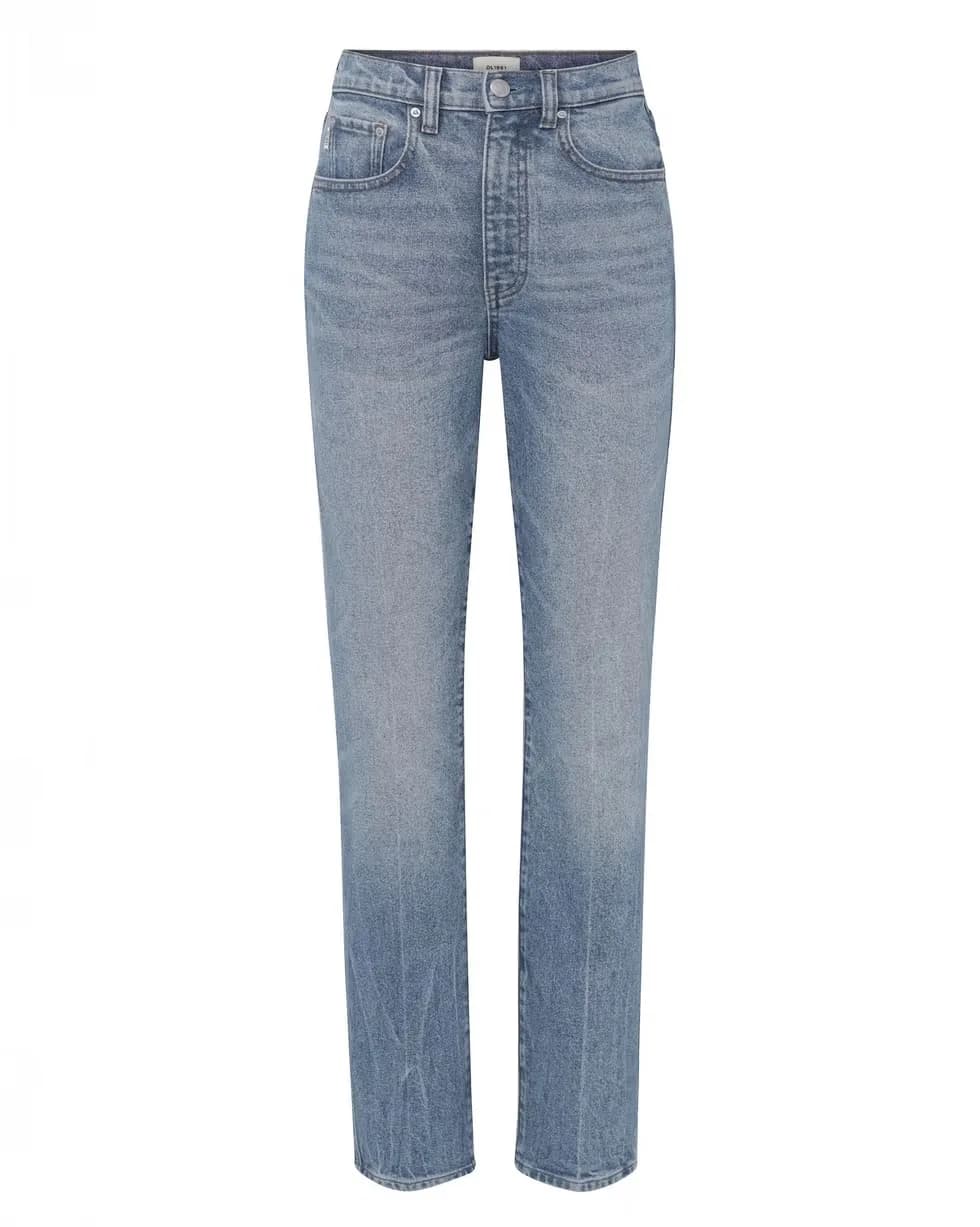
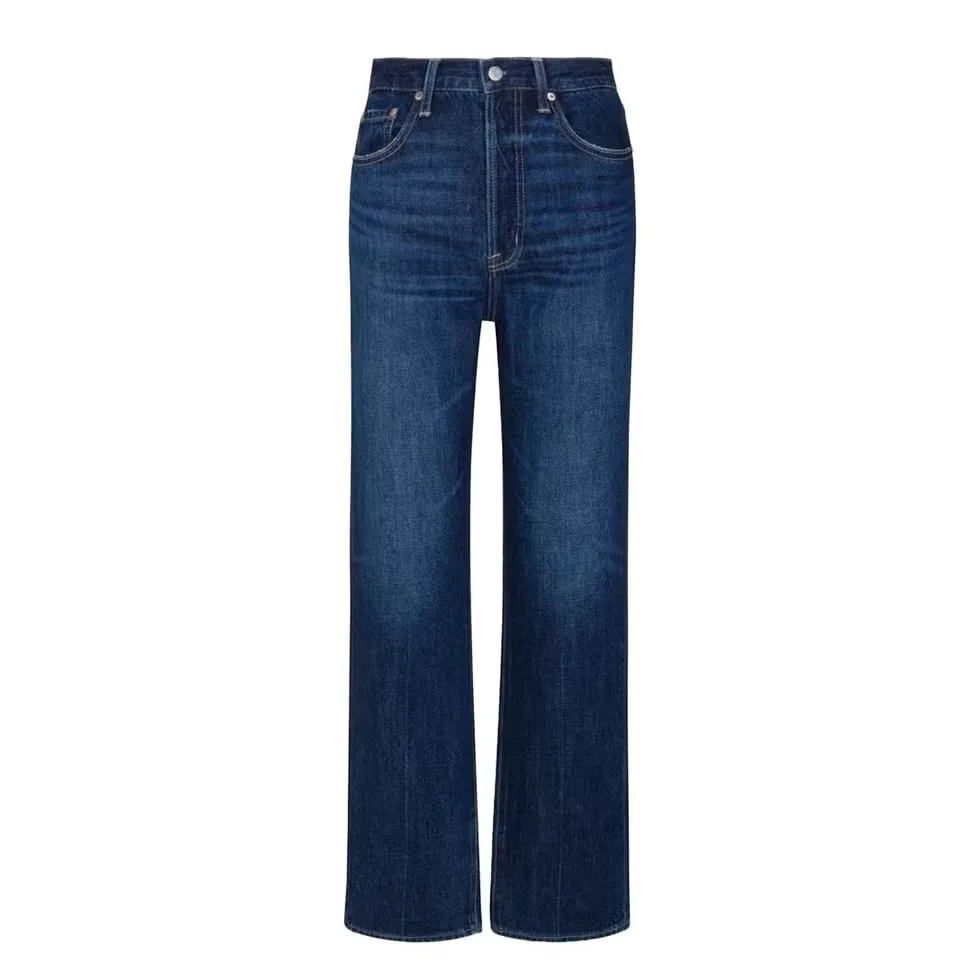
The straight-leg jean serves as the eternal, immovable baseline of denim geometry. While other cuts oscillate wildly in and out of fashion, the straight leg remains a constant. Structurally, the pant maintains a completely consistent, mathematical width from the knee down to the leg opening, deliberately avoiding both the tapering of a skinny jean and the outward flaring of a bootcut.6 This classic up-and-down architectural fit traces its lineage directly back to the original Levi's 501s, introduced in 1873 as durable workwear.6
Straight-leg jeans are currently experiencing a massive, sustained resurgence as consumers increasingly pivot toward aesthetics defined by "effortless" and "authentic" dressing.18 Quantitative retail data indicates a notable +4% increase in the immediate adoption of rigid, straight denim pants across Europe for the spring 2025 season, standing in stark defiance of extreme flares or baggy styles.28 This growth is heavily driven by trendy, sartorially educated consumers aged 26-35 who utilize the straight leg as a blank canvas.28 They style these jeans with simple, high-quality basics—pairing them with retro sneakers or polished loafers, and topping them with unstructured wool blazers for a refined, casually elegant vibe.28
Denim experts and master tailors emphasize that a timeless straight leg—such as the modern Khaite Danielle or an archival, vintage Levi's 501—never truly falls out of style due to its structural simplicity and lack of extreme proportions.5 They are highly flattering on a multitude of body types, offering enough room for muscular thighs and calves while maintaining a sharp, clean silhouette that does not overwhelm the wearer.2
Structured Visual Data: The Straight-Leg Baseline
The following references demonstrate the consistent, knee-to-ankle uniformity of the straight leg.
Volumetric Expansion: Wide-Leg, Baggy, and Boyfriend Silhouettes
The post-2020 fashion landscape witnessed a tectonic, industry-wide shift toward comfort, spatial allowance, and volume, permanently disrupting the skinny jean's monopoly.4 This volumetric expansion in denim has manifested in three highly distinct cuts, each engineered to serve a completely different aesthetic subculture and lifestyle requirement.
Wide-Leg Jeans: The Denim Trouser
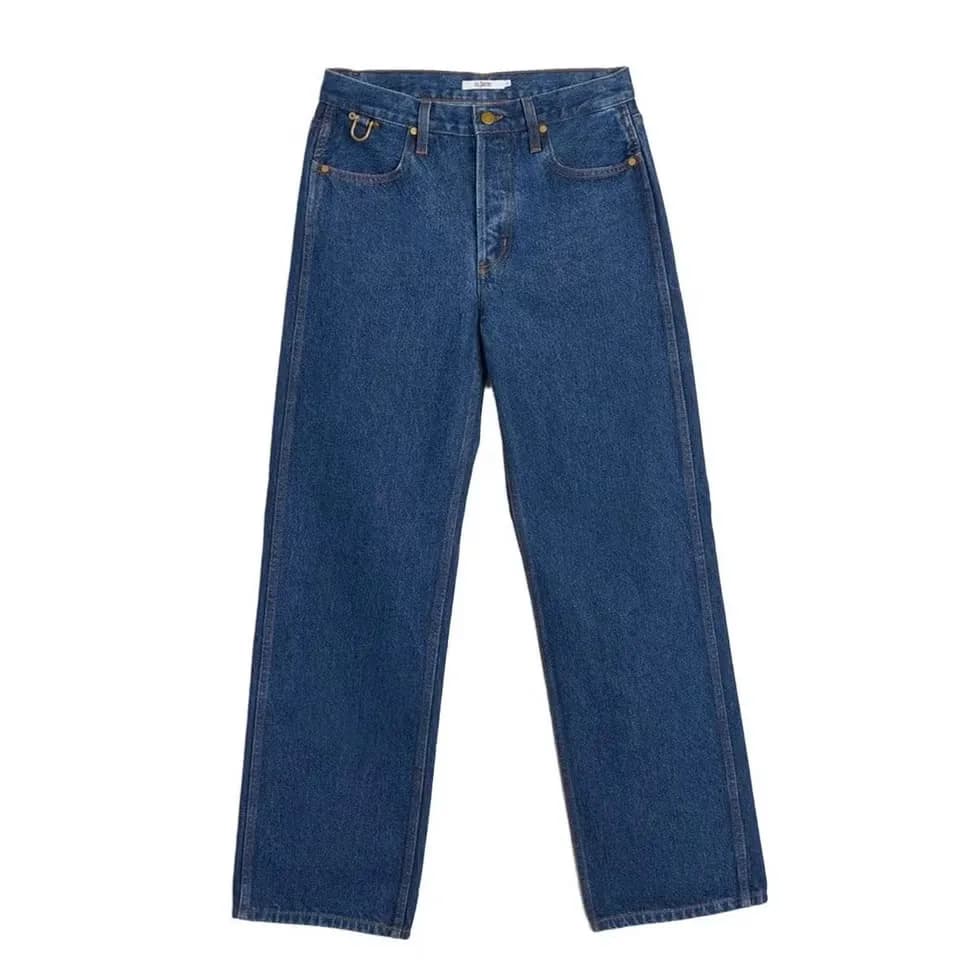
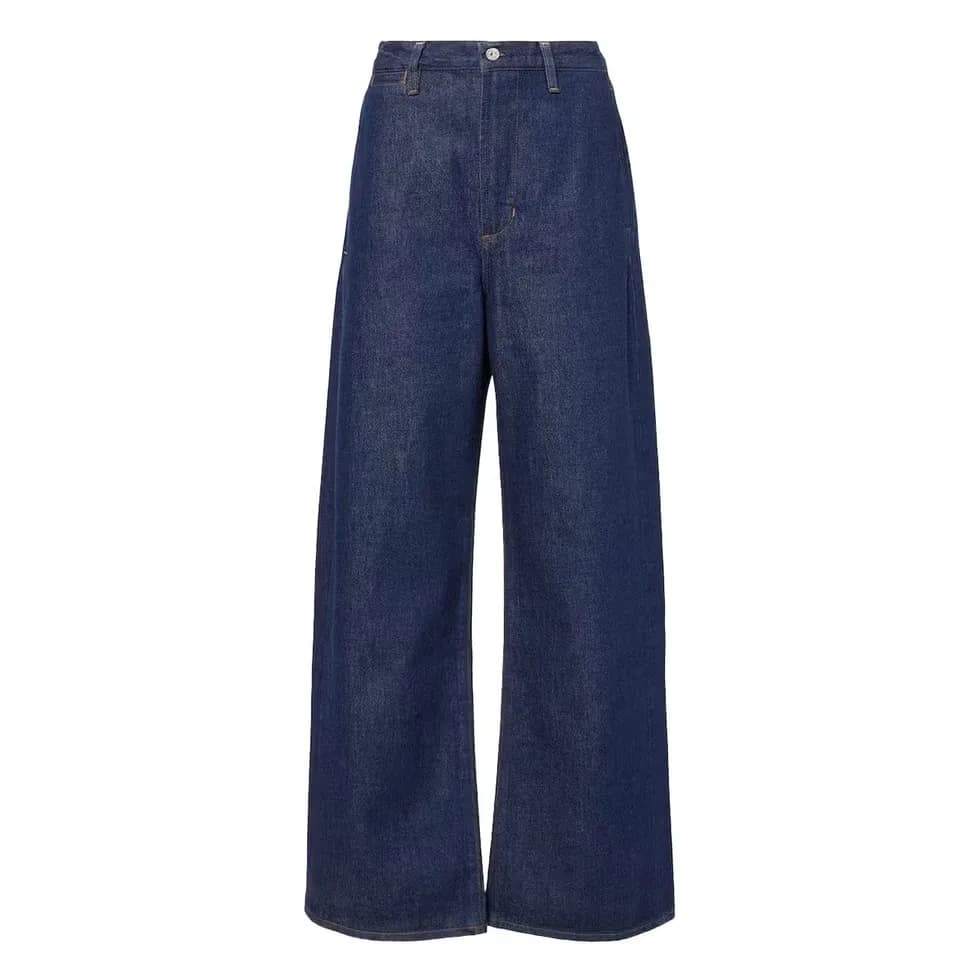
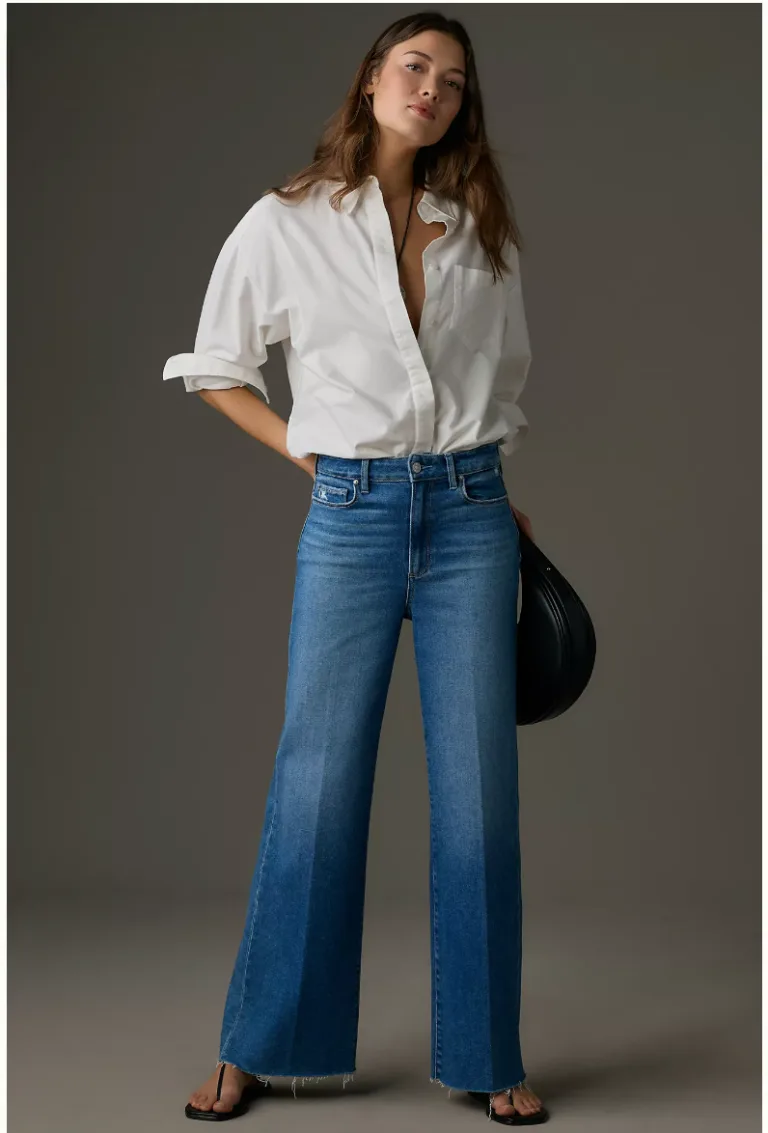
Wide-leg jeans represent the formalization and elevation of relaxed denim. Structurally, the cut forms a distinct A-line shape, falling loosely and cleanly over the body and widening progressively and evenly from the hip down to the hem.27 This breezy, bold silhouette focuses on freedom of movement and architectural drape rather than body contouring.2
The wide-leg cut has been enthusiastically embraced by luxury fashion houses and is frequently styled as a direct, modern replacement for traditional tailored wool trousers.9 When constructed from heavyweight, structured denim and paired with a high-rise waist, the wide-leg jean provides a highly elongating, statuesque effect, pooling elegantly over flats, heels, or boots.21 It is currently a cornerstone of the "Quiet Luxury" and minimalist aesthetics, perfectly balancing the inherently casual nature of denim fabric with the sophisticated, sweeping lines of formalwear.8 Stylists frequently recommend pairing wide-leg jeans with fitted tops, sleek bodysuits, or sharply tailored blazers to maintain proportion and prevent the volume from swallowing the wearer's frame.21
Baggy Jeans: Streetwear and the Anti-Fit Movement
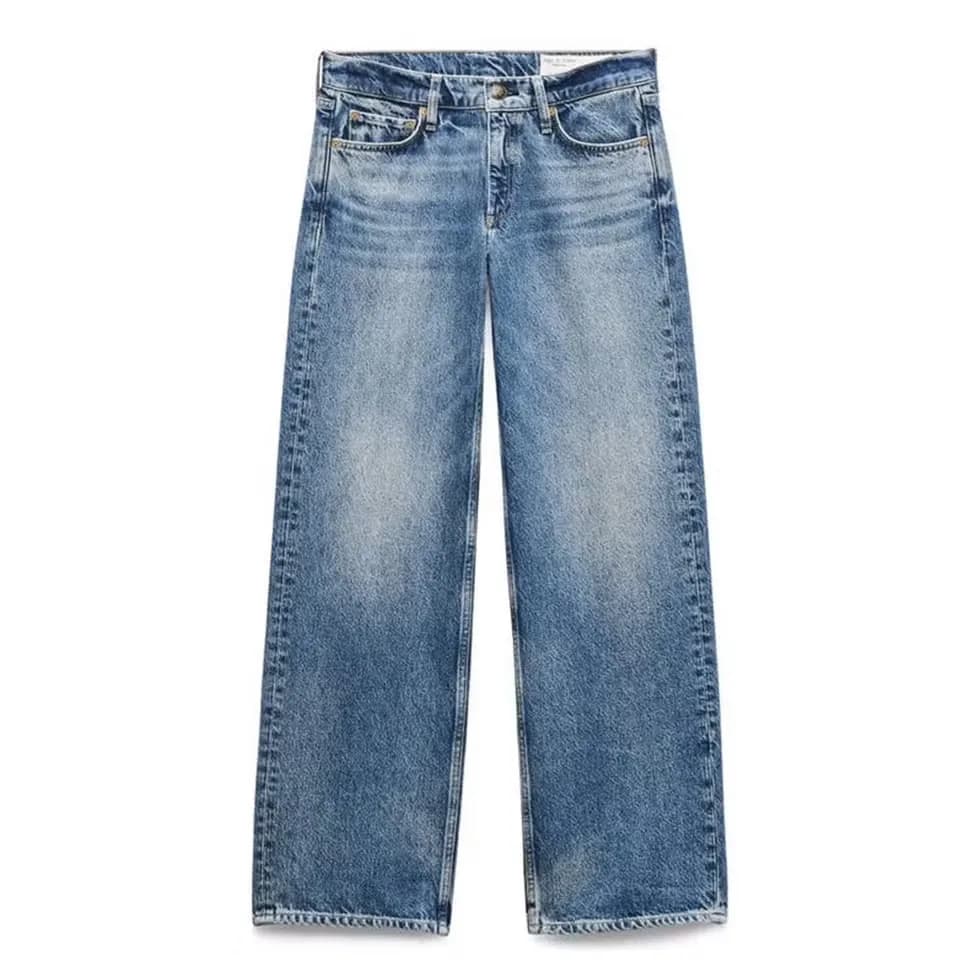
While wide-leg jeans maintain structural tailoring and crisp lines at the top block, baggy jeans are defined by an intentional, rebellious, all-over looseness.6 Characterized by an oversized, relaxed rise (often slung perilously low on the hips) and a massive, roomy leg that typically puddles heavily and folds at the shoe, baggy denim is a direct, unfiltered homage to 1990s and Y2K skater, hip-hop, and streetwear subcultures.2
Baggy jeans reject the fundamental concept of body contouring entirely, offering maximum spatial allowance and promoting an "anti-fit" aesthetic.6 Styles explicitly marketed as the "Baggy Dad," "Extra Baggy," or "Cinch Baggy" feature dropped crotches, fluid legs, and excess fabric.2 This silhouette serves as an absolute staple for younger demographics and trend-forward consumers who prioritize comfort, edge, and proportional play. The prevailing styling directive for baggy jeans involves extreme contrast: pairing the enormous, masculine bottoms with micro-tops, cropped baby tees, or fitted corsets to create a dynamic, highly modern silhouette.1
Boyfriend Jeans: The Relaxed Taper
The boyfriend jean offers a highly accessible, wearable middle ground between the crisp lines of a straight leg and the overwhelming volume of a baggy fit. Conceptually marketed as being "borrowed from him, tailored to you," this cut features a slouchy, relaxed fit through the hip, pelvis, and thigh, but critically, it tapers back inward slightly at the calf and ankle.28
Boyfriend jeans continue to dominate the casual and weekend-wear markets due to their easy, off-duty silhouette that does not require the sartorial commitment of a fully baggy jean.28 To maintain a flattering shape, they are almost exclusively styled with the cuffs rolled up thickly to expose the ankle.21 This styling technique is crucial; by revealing the narrowest part of the leg, the wearer balances the excess, masculine volume of the top block with a flash of skin, retaining a feminine shape and preventing the jeans from appearing unkempt.21
Structured Visual Data: The Expansion of Volume
The following reference table traces the expansion of denim volume from tailored trousers to extreme anti-fit.
Sculptural and Avant-Garde Silhouettes: The Barrel Leg Phenomenon
One of the most fascinating and commercially surprising developments in the denim market between 2024 and 2026 is the rapid ascent and mainstream adoption of the barrel-leg (frequently referred to as the horseshoe) jean.6 This silhouette represents a complete paradigm shift in denim engineering: it utilizes heavy denim fabric not to conform to the body's natural anatomical lines, but rather to impose an external, standalone, architectural geometry upon the wearer.
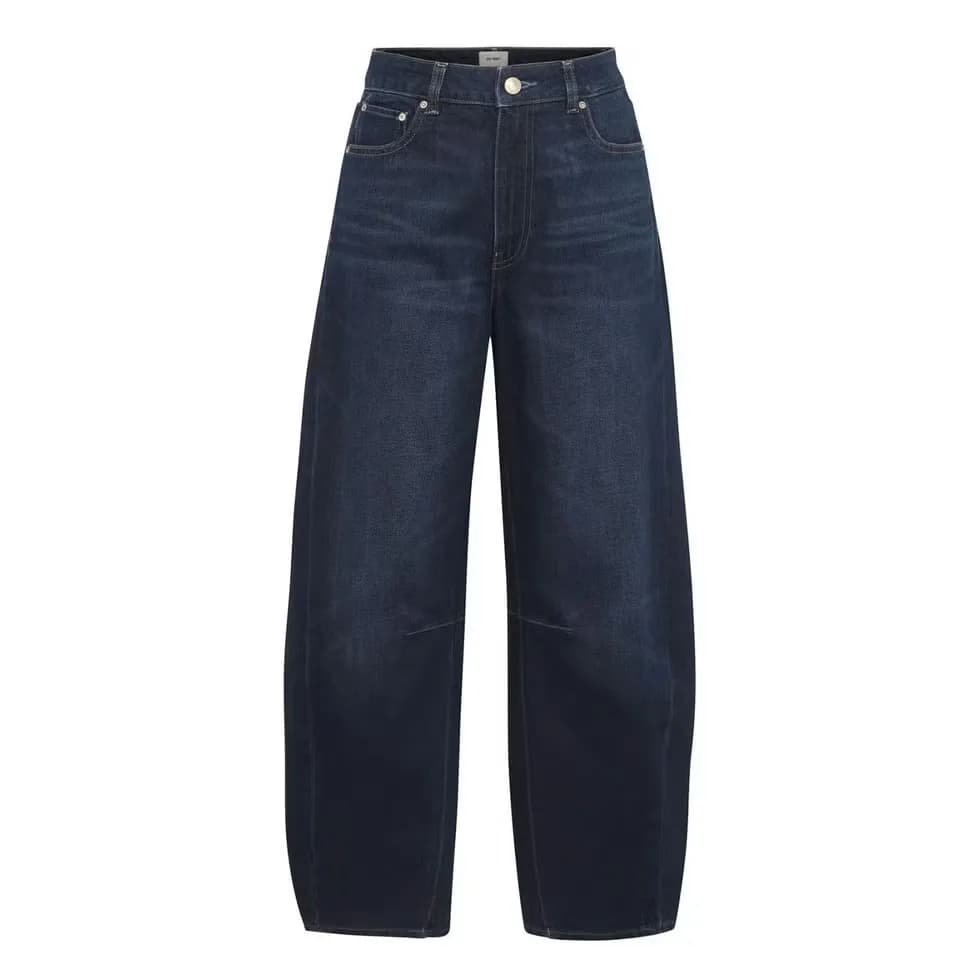
The barrel leg is fundamentally characterized by a cinched, high waist and a bold, voluminous, curved leg that intentionally bows outward at the mid-thigh and knee, before tapering sharply back inward at the ankle.6 It creates a distinct O-shaped or parenthesis-like silhouette () that completely obscures the natural line of the leg.6 Initially dismissed by traditionalists as a niche, unwearable avant-garde micro-trend relegated to high-fashion editorials, the fit has achieved peak commercial relevance.8
Denim experts and creative directors note that women are heavily gravitating toward barrel jeans precisely because the sculptural volume acts as an independent fashion statement.8 The dramatic curvature provides an intriguing visual contrast when paired with simple, fitted tops (such as fine-gauge turtlenecks or sleek bodysuits), allowing the complex, 3D construction of the denim to act as the focal point of the entire outfit.8 Modern retail iterations have intelligently softened the extreme, clownish "horseshoe" shape into a more wearable, subtly darted barrel. By strategically placing seams and darts at the knee and ankle, designers create a 3D curve that flatters the wearer, offering a sense of highly curated, editorial style without overwhelming smaller frames.8
Structured Visual Data: Barrel and Sculptural Cuts
The following image links highlight the deliberate architectural curvature of the barrel fit.
Flared and Bell Proportions: Functional Elegance and Theatrical Revival
Pants that feature an expansion exclusively from the knee down belong to the flared family. While consumers and retailers often group them together interchangeably, bootcut, flare, and bell-bottom jeans possess highly distinct mathematical measurements, historical contexts, and visual applications.
Bootcut: Utilitarian Elongation
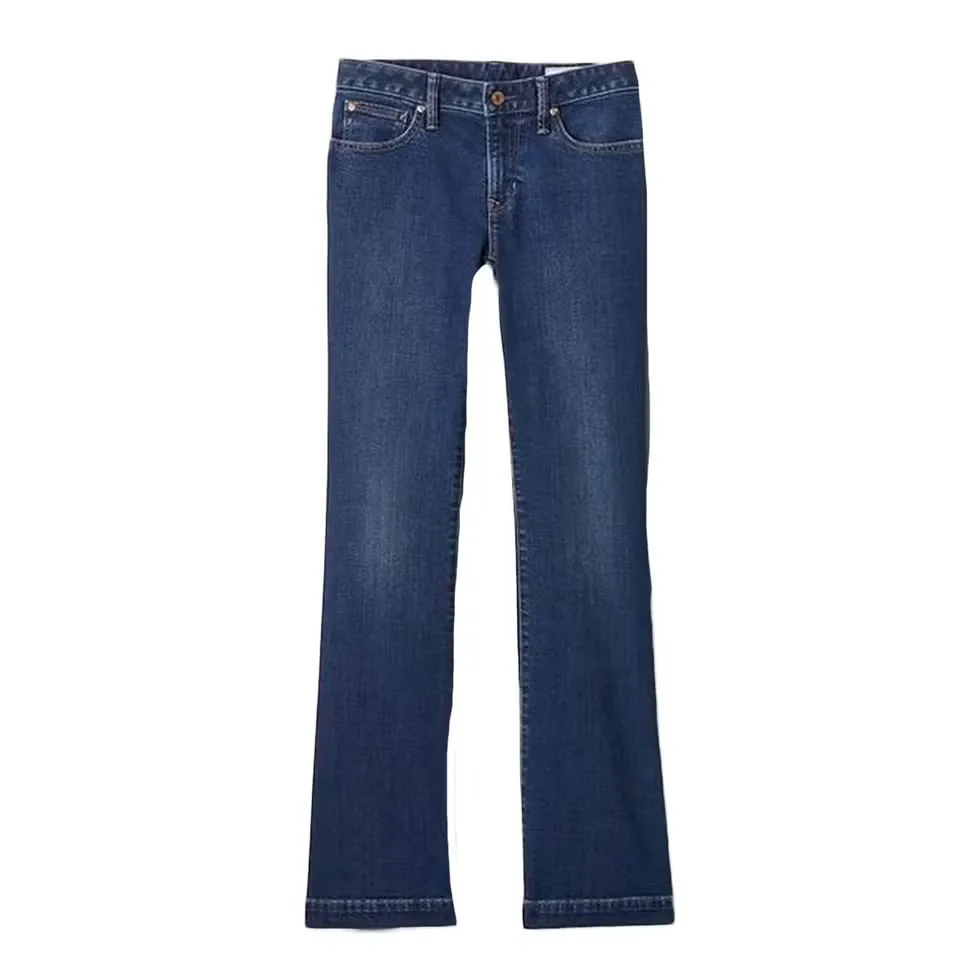
The bootcut jean is, at its core, a fundamentally functional garment. It is meticulously designed to fit closely and smoothly through the thigh and gently fan out from the knee to the hem just enough to physically accommodate the bulk of a pair of leather boots—be they cowboy boots, work boots, or modern ankle booties.6
In 2025, the "Lean Bootcut" has taken center stage as a highly elegant, elongating alternative to wider, sloppier styles.26 Legacy brands like Gap and Levi's have heavily revived their archival "Long & Lean" and "Superlow" fits, utilizing modern contour waistbands and clean, subtle leg flares engineered with updated stretch denim.26 Because the flare is modest and controlled, bootcut jeans are incredibly versatile and almost universally flattering; they biomechanically balance out wider hips and pear-shaped bodies by creating visual symmetry between the width of the hip and the width of the hem, drawing the eye in a continuous vertical line.2
Flared Jeans: The 1970s Bohemian Revival
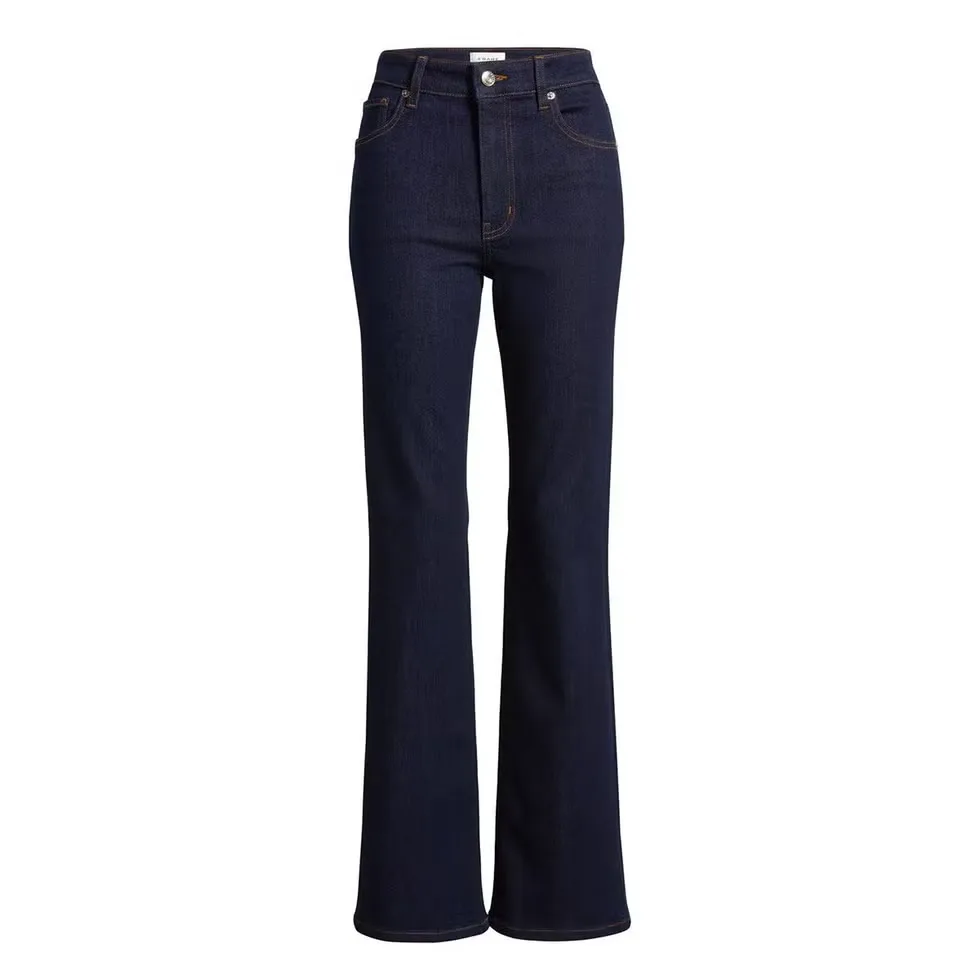
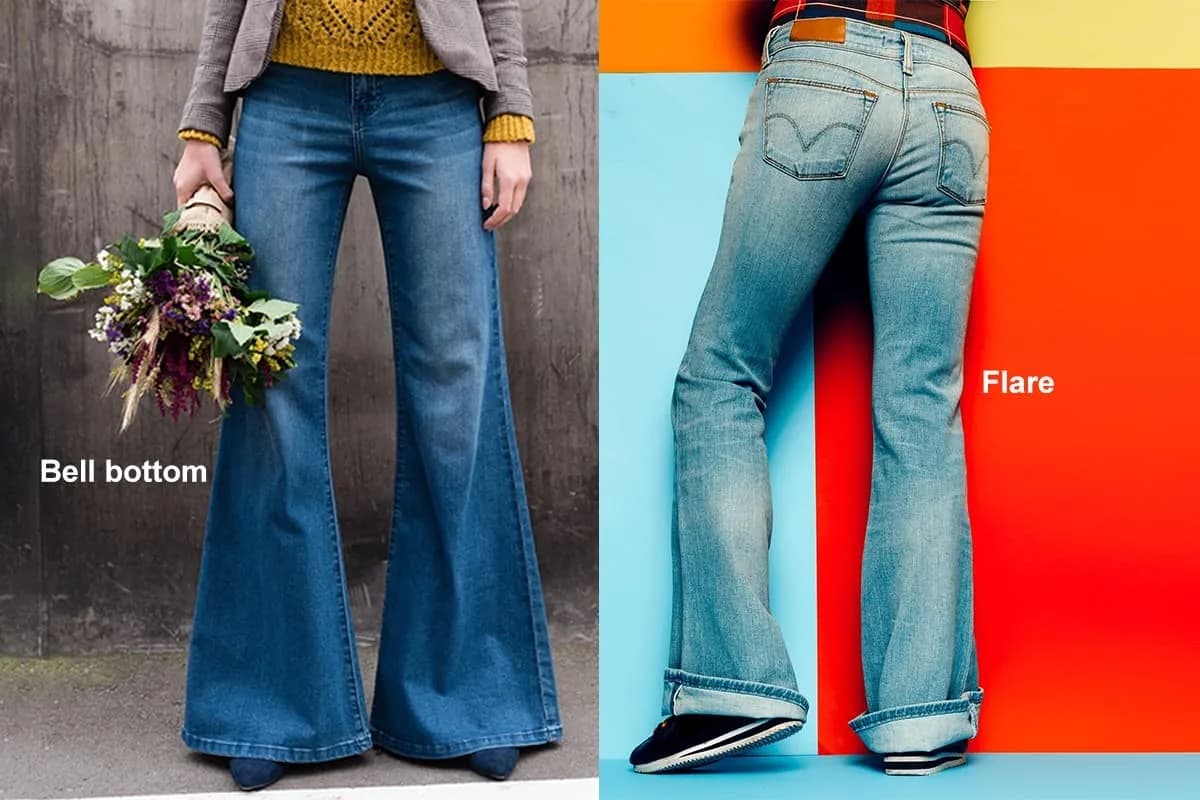
Flared jeans feature a significantly more pronounced widening that typically begins slightly higher on the leg (just below the knee cap) than a bootcut.2 The flare is softer and more progressive than the dramatic bell bottom, yet substantially wider than a bootcut, immediately imbuing the garment with a distinct, undeniable 1970s retro-chic aesthetic.27
The rapidly growing consumer demand for Bohemian (Boho) aesthetics and vintage nostalgia in 2025 has cemented the flared silhouette as a vital, high-priority investment piece for modern wardrobes.28 When expertly paired with high-waisted rises, platform shoes, and structured tops (such as form-fitting turtlenecks or cropped jackets), flared jeans create a highly stylized, harmonious, and dramatic leg-lengthening hourglass silhouette.2 The volume of the lower leg demands added height from footwear, making platforms or high-heeled boots a near necessity to maximize the intended visual effect.27
Bell Bottoms: Dramatic Counterculture Exaggeration
Bell bottoms are defined by pure theatricality and a rich history of subcultural rebellion. Originating strictly for utilitarian purposes in the early nineteenth century as U.S. Navy uniforms (the wide legs allowed sailors to roll their pants easily over their knees when swabbing wet decks), the cut was famously co-opted in the late 1960s and 1970s by rock musicians, hippies, and disco culture.12
The bell-bottom jean is extremely tight-fitting through the thigh before exploding into a dramatic, rigid, undeniable flare from the knee down, creating a literal "bell" shape that envelops the entire foot.33 The hem circumference of a true bell bottom is massive, significantly wider than a standard flare, often spanning to in total flare width.33 While less common in conservative everyday office wear due to their volume, they remain a powerful, unapologetic statement piece in contemporary festival wear, vintage-inspired fashion, and high-glamour evening looks, particularly when adopted by the plus-size market where the extreme flare beautifully balances broader proportions.33
Structured Visual Data: The Gradient of the Flare
The following image links demonstrate the precise mathematical gradient from functional bootcut to theatrical bell bottom.
Cropped Denominations: Capris, Pedal Pushers, Culottes, and Ankle Crops
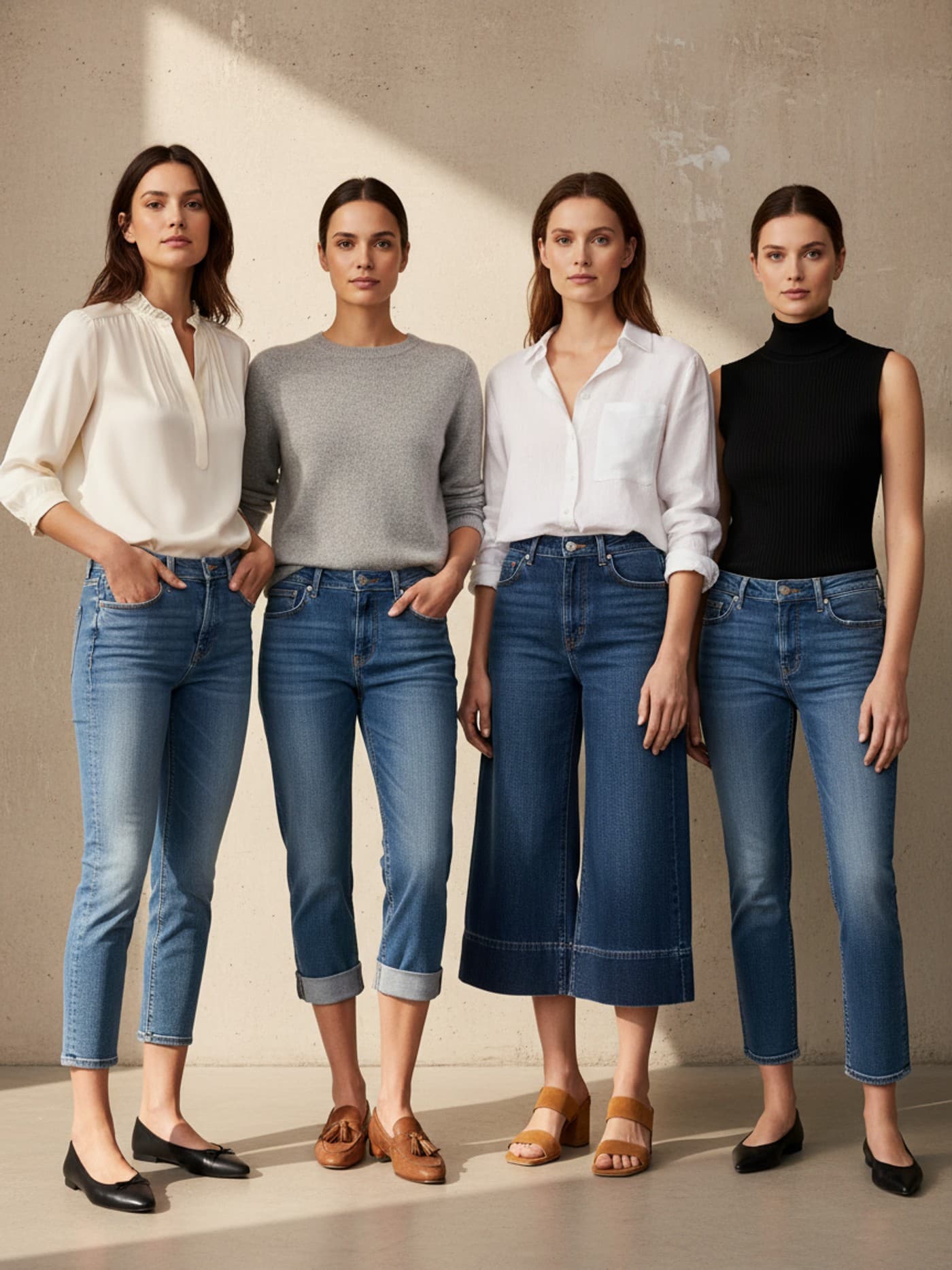
Cropped denim introduces stark horizontal lines across the leg, which can drastically and sometimes perilously alter a woman's vertical proportionality. Understanding the precise anatomical placement of hemlines is vital to distinguishing these highly specialized, warm-weather cuts.
Capris: The Ankle-Skimming Resort Wear
Capri pants gained massive international prominence in the 1960s, heavily inspired by chic, wealthy European resort wear and popularized by figures like Audrey Hepburn and Jackie Kennedy.37 A true capri jean falls gracefully between the mid-calf and the ankle bone, deliberately ending at the slimmest, most delicate part of the lower leg.37 Capris can be tapered, straight, or feature a very slight micro-flare. They are inherently polished and sophisticated, lending themselves easily to ballet flats, espadrilles, wedges, and tailored blouses for an elevated, semi-casual warm-weather ensemble.37
Pedal Pushers: Mid-Calf Utility
Pedal pushers are distinctly shorter and more casual than capris. They end abruptly right at the mid-calf (often bisecting the widest part of the calf muscle) and almost universally feature a narrow, heavily tapered cut that grips the leg.37 The style originated in the 1950s from a strict utilitarian need—allowing women to ride bicycles without the catastrophic hazard of catching their pant fabric in the greasy bicycle chain (hence the literal name, pushing the pedals).12
Because the hemline interrupts the leg at a much wider anatomical point than a capri, pedal pushers run a severe risk of appearing disproportionate, "frumpy," or leg-shortening if styled incorrectly.38 However, modern adaptations utilizing very high rises and advanced stretch fabrics have successfully repositioned them as a retro-activewear hybrid. When perfectly paired with classic sneakers and fitted, athletic tops, they offer a highly functional, vintage-inspired active aesthetic.37
Culottes and Cropped Wide-Legs
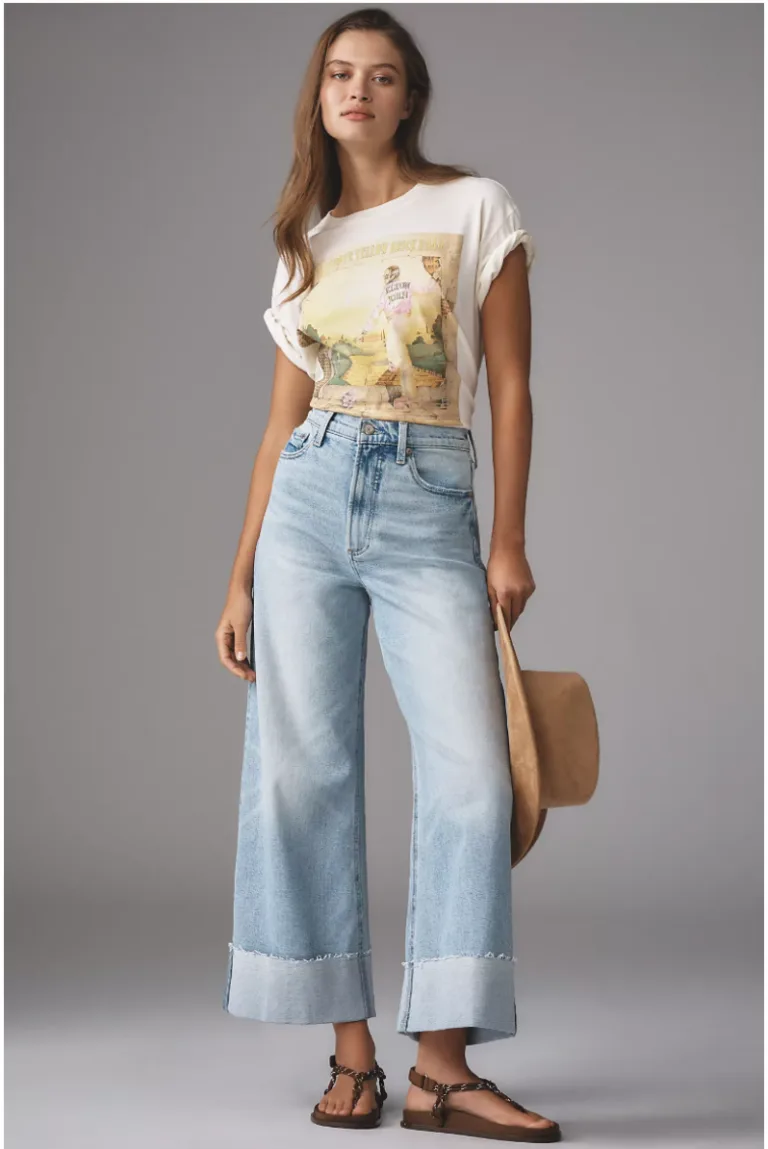
Culottes represent the intersection of extreme volume and severe cropping. They are essentially wide-leg jeans that have been abruptly chopped off above the ankle.6 Unlike capris or pedal pushers, which hug the calf tightly, culottes maintain a massive, voluminous A-line flare right down to the hem, frequently giving the visual illusion of a split skirt when the wearer is standing still.8 They are highly effective at showcasing statement footwear and bringing a breezy, bold, artistic aesthetic to spring and summer wardrobes.2
(A Critical Note on Paperbag Waists): During the early 2020s, cropped pants and culottes were frequently paired with a "paperbag waist"—a gathered, heavily pleated, high-rise waist cinched tightly with a prominent belt.31 It is vital to note that trend analysts in 2025 consider the paperbag waist an obsolete, short-lived fad that has rapidly fallen out of favor.31 Forecasters strongly recommend a pivot away from the bulky paperbag waist, advising consumers to choose clean-lined, flat-front high-waisted flares or wide-leg pants to achieve a much more sophisticated, enduring, and less chaotic silhouette.31
Standard Cropped and Ankle-Length Jeans
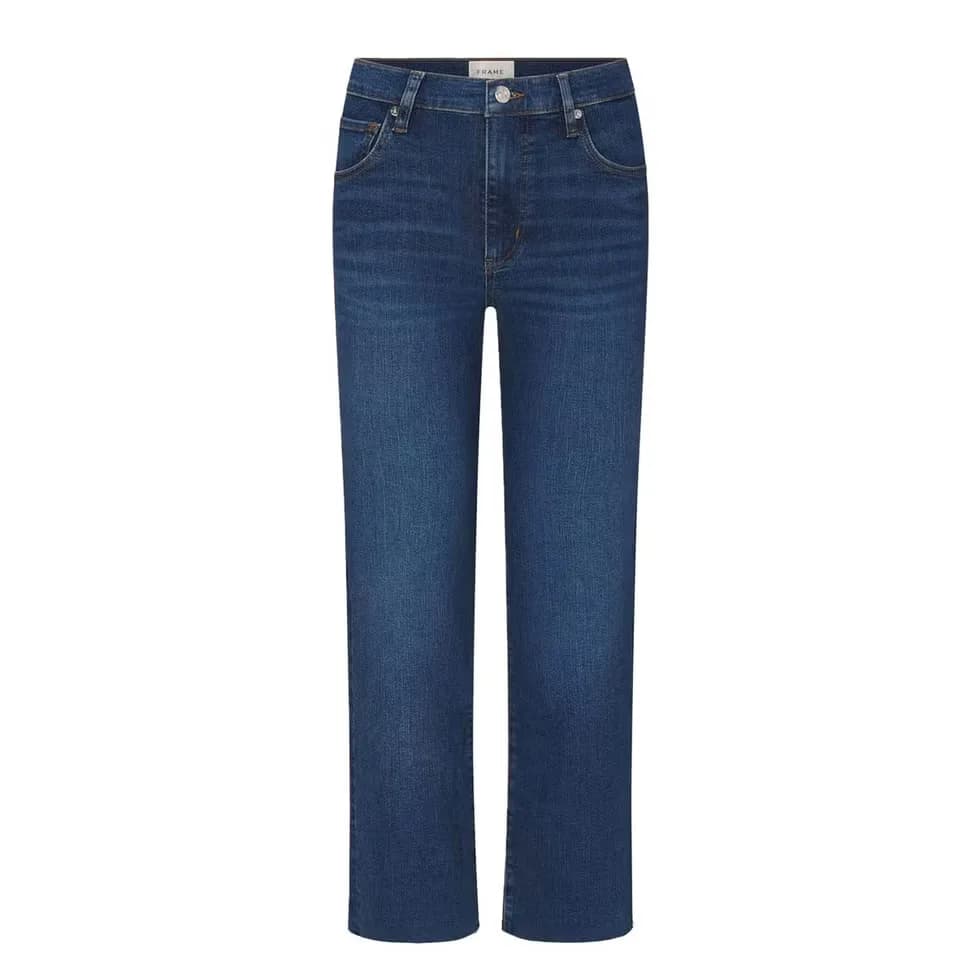
For consumers wary of extreme calf cuts, the standard ankle-length crop remains the most universally flattering cropped option.2 Cut just an inch or two above the shoe line, these jeans highlight the slimmest part of the ankle, showcasing footwear and bringing a touch of casual, playful elegance without disrupting the overall length of the leg.2 This crop is highly prevalent across all styles, from straight legs to wide-legs.2
Structured Visual Data: Cropped Denominations
The following image links highlight the varying degrees of cropped denim, from voluminous culottes to precise ankle crops.
Fabrication, Wash, Embellishments, and Textural Trends
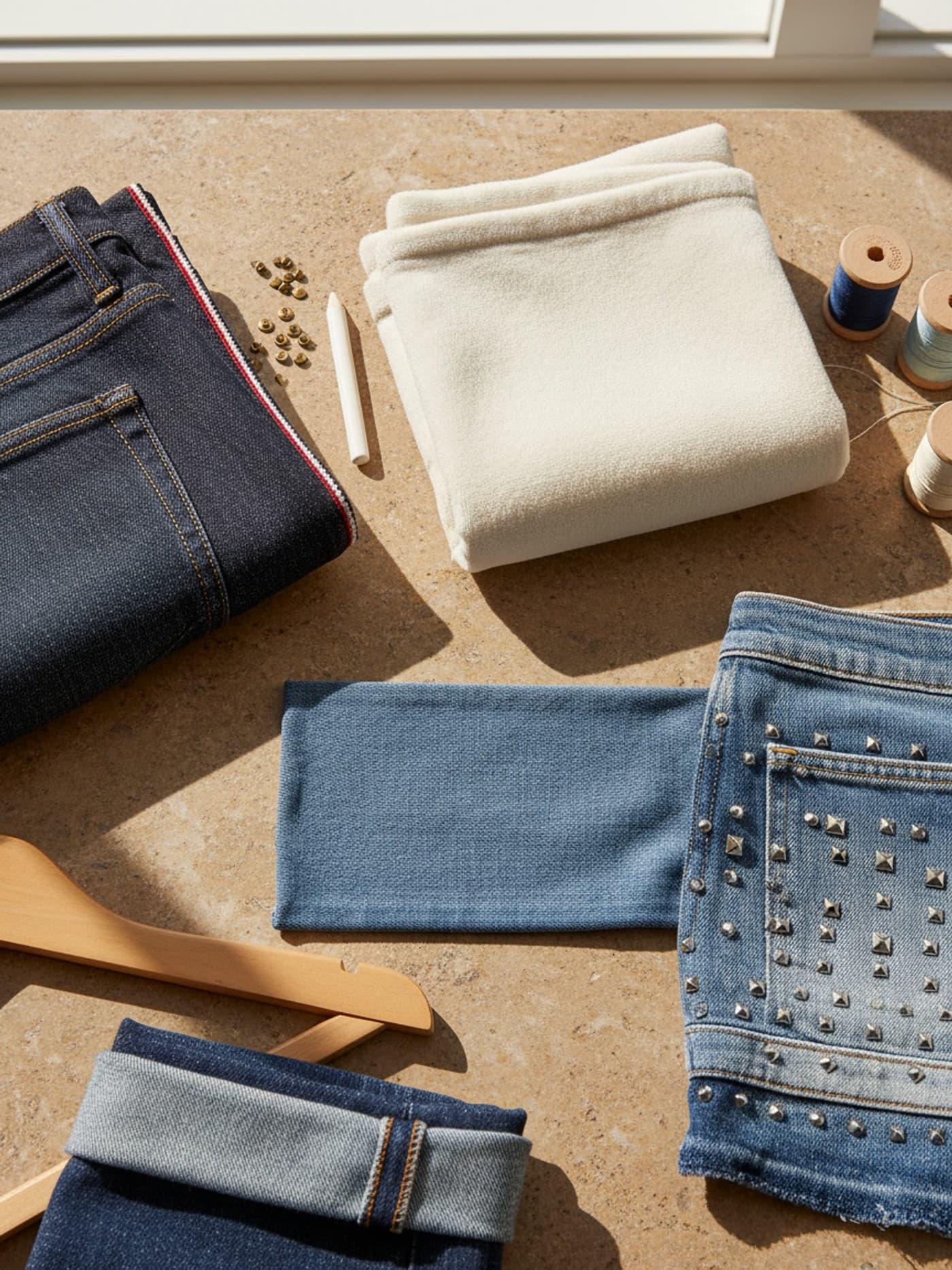
Beyond the geometric cut and mathematical rise of the fabric, the physical aesthetic treatment of the denim itself heavily dictates its market positioning, formality, and cultural relevance.
Denim Weight and the Purity of Brut (Raw) Denim
Authenticity in the high-end denim market is increasingly reliant on fabric weight and raw purity. "Denim whisperers" and elite industry designers assert that high-quality, authentic denim requires a minimum fabric weight of at least 13 ounces.5 This heavy weight provides the garment with the requisite structural integrity and stiffness, allowing the jeans to break in, soften, and fade properly and organically over years of wear, creating a personalized patina.5
This renewed appreciation for unadulterated, heavy fabric has fueled the rapid rise of "Brut" (raw, completely unwashed) denim in elite 2025 collections from designers like 16Arlington, Kidsuper, and Sportmax.28 Brut denim strictly shuns the artificial distressing, aggressive whiskering, or "hot" artificial thigh fading that characterizes and often cheapens the look of mass-market, fast-fashion garments.5 Instead, it offers a stiff, pristine, dark canvas that commands respect and molds entirely to the specific wearer over time.5
The Dominance of Dark Indigo and Winter White
The specific color wash chosen heavily influences the formality and seasonal appropriateness of the jean.
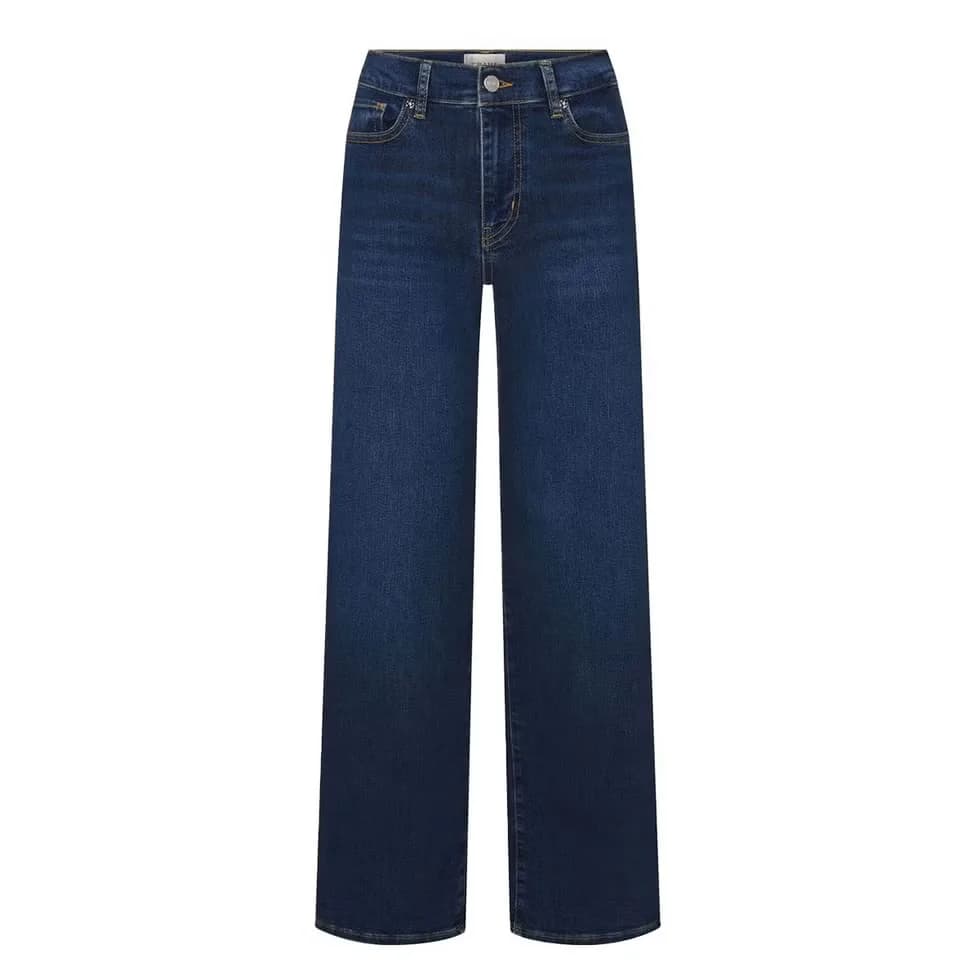
Dark Indigo: The darkest, unwashed blue washes have successfully transformed roomy, wide-leg denim into highly viable office, corporate, and evening wear.9 These deep, rich hues mimic the sophistication and seriousness of a tailored wool trouser while retaining the rugged durability of denim fabric.9
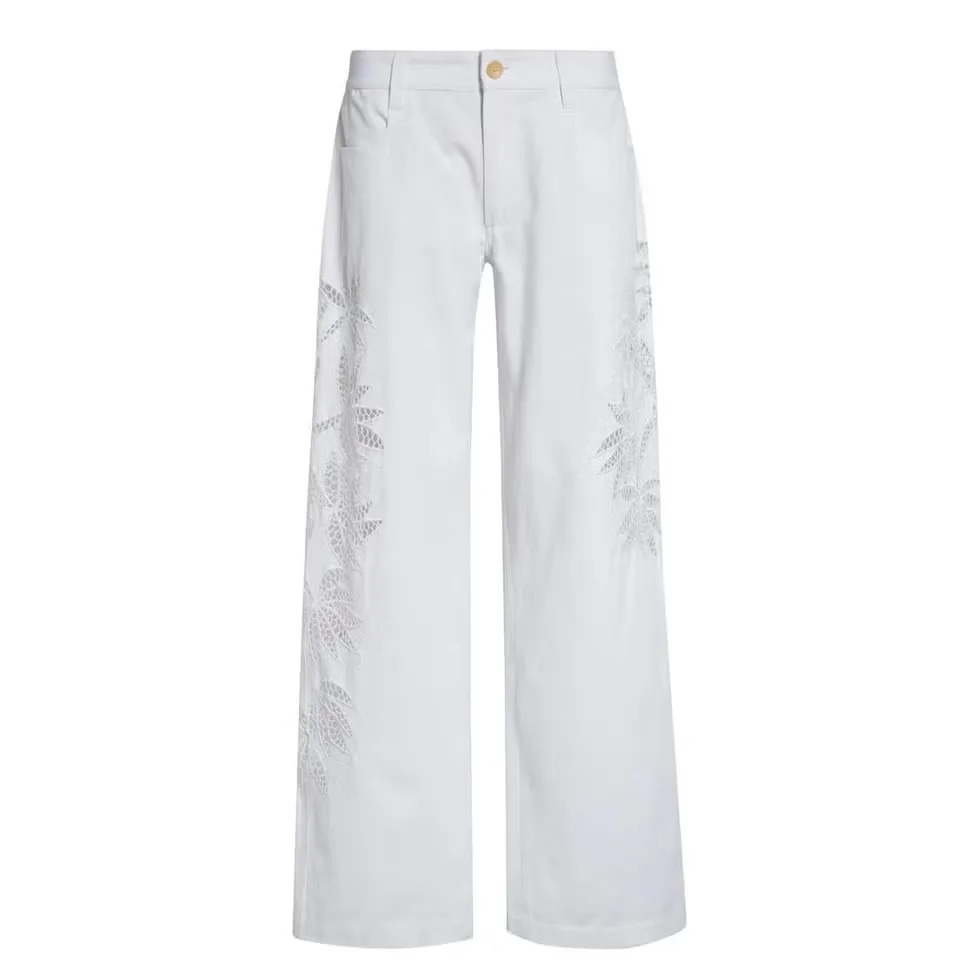
White and Ecru: Historically, rigid fashion rules relegated crisp white denim strictly to the spring and summer months. However, white and soft ecru denim have evolved into powerful, year-round staples.21 Driven by the highly popular "winter white" and "winter prep" aesthetic movements, barrel legs and wide-leg trousers in optic white and cream are dominating fall and holiday retail assortments, proving that light denim is no longer bound by seasonal constraints.8
Embellishments, Studs, Patchwork, and Hems
To actively counteract the extreme minimalism of the "Quiet Luxury" movement, a loud, bohemian counter-trend of heavily embellished denim has emerged to satisfy consumers seeking artistic exuberance.2 Jeans featuring aggressive metal studding, intricate romantic embroidery, eclectic patchwork, and sheer lace insets provide a highly artistic fusion of craft and casualwear.2
Furthermore, the styling of the hem and closure has become a major focal point. Thick, intentionally rolled-up and exposed cuffed hems add a stylishly laid-back, vintage-inspired focal point to straight and wide-leg silhouettes.21 Additionally, the button-fly closure—featuring an exposed row of metal buttons instead of a hidden zipper—offers a nostalgic, retro feel while simultaneously providing a secure, flat-lying fit that is exceptionally flattering on the midsection.27 Finally, specialized "shaping jeans" utilize strategic interior panelling, specific pocket placements, and advanced stretch fabrics to physically lift, smooth, and sculpt the wearer's figure, acting as a hybrid of denim and shapewear.6
Structured Visual Data: Textural and Aesthetic Treatments
The following image links showcase the highly specialized washes and textile embellishments currently driving the top tier of the denim market.
Conclusion
The contemporary women’s denim market is a profound masterclass in structural diversity and textile engineering. It has definitively transcended the restrictive, monolithic trend cycles of the past century, evolving into a highly nuanced, pluralistic landscape. In this modern era, multiple geometries—ranging from the high-stretch, skin-tight elasticity of the jegging, to the sweeping, formal A-line drape of the dark indigo wide-leg, and culminating in the bizarre, architectural curvature of the darted barrel leg—flourish simultaneously on the world stage.
This exhaustive analysis indicates that the selection of denim is no longer a passive, utilitarian wardrobing decision, but an active, highly conscious engagement with garment architecture. By manipulating the mathematical rise, manufacturers possess the ability to alter the wearer's perceived center of gravity, perfectly balancing torso lengths with leg extensions to flatter specific morphologies. By modulating the overall volume—whether through the linear, sophisticated constraint of a slim-straight cigarette cut, the utilitarian, elongating flare of a bootcut, or the rebellious, anti-fit slouch of a low-slung baggy dad jean—denim dictates not just the physical posture, but the societal formality and subcultural alignment of the wearer.
As the global apparel industry moves deeper into the latter half of the 2020s, the most successful consumer strategies, retail assortments, and design philosophies will be those that officially abandon the futile search for a singular, dominant "in-style" jean. Instead, the empirical data and industry forecasting heavily suggest a required pivot toward a portfolio approach to denim wardrobing. This approach recognizes that the timeless, archival anchor of a heavy 13-ounce straight-leg, the bold, avant-garde statement of a horseshoe jean, and the retro-chic, leg-lengthening appeal of a high-waisted 70s flare all serve distinct, vital, and irreplaceable functions in a comprehensively engineered modern wardrobe.
Works cited
Sources were imported from the manuscript and preserved with their original reference order.
- The Ultimate Guide to 2025 Jean Trends - FASHION Magazine, accessed May 6, 2026, https://fashionmagazine.com/style/the-ultimate-guide-to-womens-jeans/
- Types of Jeans: 25 Different Styles of Denim to Wear, accessed May 6, 2026, https://www.fashiongonerogue.com/guide/types-of-jeans/
- Choosing The Best Jeans for Your Body Type | The unspun Blog, accessed May 6, 2026, https://www.unspun.io/blog/post/choosing-the-best-jeans-for-your-body-type
- Denim Trends 2025: What's In, What's Out? - The Mom Edit, accessed May 6, 2026, https://themomedit.com/denim-trends-2025-jeans-style/
- Where Fashion Insiders Shop for the Best Denim, accessed May 6, 2026, https://www.elle.com/fashion/shopping/a70726940/best-denim-brands-for-women/
- Women's Jeans Guide | Jean Types, Fits, & Styles for women | Levi's® US, accessed May 6, 2026, https://www.levi.com/US/en_US/features/women-jeans-guide
- Mid-Rise vs. High-Waisted Jeans: Which Jeans Should You Be Wearing? - Jo-Lynne Shane, accessed May 6, 2026, https://jolynneshane.com/mid-rise-vs-high-waisted-jeans.html
- The 4 Denim Trends That Are Winning in 2025 | Who What Wear, accessed May 6, 2026, https://www.whowhatwear.com/fashion/trends/fashionable-jeans
- 6 Autumn 2025 Jeans Trends Stylish People Will Wear Nonstop, accessed May 6, 2026, https://www.whowhatwear.com/fashion/pants-trousers/autumn-jeans-trends-2025
- High vs Mid vs Low-rise Jeans: Find Your Best Rise - Be So You, accessed May 6, 2026, https://besoyou.com/blog/mid-rise-vs-high-rise-jeans-womens/
- Jeans Rise Types Explained - Lee, accessed May 6, 2026, https://www.lee.com/editorial-post-pages/denim-glossary/rise.html
- Capris or Pedal Pushers? Pants Vocabulary from 1971 | witness2fashion - WordPress.com, accessed May 6, 2026, https://witness2fashion.wordpress.com/2019/05/26/capris-or-peddle-pushers-pants-vocabulary-from-1971/
- Jean Rises for Women & How to Style Them - Express, accessed May 6, 2026, https://www.express.com/exp/express-style-101/different-jean-rises-for-women
- Low Rise vs High Rise Jeans: What's the Difference & Which Should You - Mott & Bow, accessed May 6, 2026, https://www.mottandbow.com/blogs/all-projects/low-rise-vs-high-rise-jeans-what-s-the-difference-which-should-you-choose
- High Rise vs. Mid Rise Jeans: Finding Your Perfect Fit - NYDJ, accessed May 6, 2026, https://nydj.com/blogs/nydj-blog/high-rise-vs-mid-rise-jeans-finding-your-perfect-fit
- How to Find the Best Jeans for Your Body Type - Stitch Fix, accessed May 6, 2026, https://www.stitchfix.com/women/blog/style-guide/your-perfect-jeans/
- Denim Style Guide 2024/2025 - Alysa Rene Boutique, accessed May 6, 2026, https://alysarene.com/blogs/news/denim-style-guide-2024-2025
- Guide to Jean Styles: 8 Types of Jeans and How They Fit - 2026 - MasterClass, accessed May 6, 2026, https://www.masterclass.com/articles/guide-to-jean-styles
- 20 Different Types of Jeans and How to Style Them - Karina Grimaldi, accessed May 6, 2026, https://karinagrimaldi.com/blogs/news/20-different-types-of-jeans
- 2025 Spring Denim Trends: What's In and How to Wear It - Cyndi ..., accessed May 6, 2026, https://cyndispivey.com/2025-spring-denim-trends-whats-in-and-how-to-wear-it/
- Jeggings vs Skinny Jeans: What's the Difference? - Democracy Clothing, accessed May 6, 2026, https://democracyclothing.com/blogs/fit-for-fashion/jeggings-vs-skinny-jeans
- Jeggings v. skinny jeans - The Knot Community, accessed May 6, 2026, https://forums.theknot.com/discussion/889815/jeggings-v-skinny-jeans
- Skinny Jeans And Jeggings. The Only Comparison You Need To Know - Global Republic, accessed May 6, 2026, https://www.globalrepublic.in/blogs/styling-tips/skinny-jeans-and-jeggings-the-only-comparison-you-need-to-know
- Get to Know: Women's Jeggings & Skinny Jeans - American Eagle Style, Outfitting & News Blog, accessed May 6, 2026, https://blog.ae.com/2022/11/17/get-to-know-womens-jeggings/
- 8 Best Fall Denim Trends for Women of 2025 - Harper's BAZAAR, accessed May 6, 2026, https://www.harpersbazaar.com/fashion/trends/a65820667/fall-denim-trends-2025/
- 17 Types of Jeans for All Women [The Guide] - Sumissura, accessed May 6, 2026, https://www.sumissura.com/en-us/blog/types-womens-jeans
- Top Denim Trends For 2025: A Comprehensive Review - Heuritech, accessed May 6, 2026, https://heuritech.com/articles/denim-trends/
- 5 Spring Outfits I'm Wearing on Repeat and Why - Dressed for My Day, accessed May 6, 2026, https://dressedformyday.com/5-spring-outfits-im-wearing-on-repeat-and-why/
- JEANS FIT GUIDE - WOMEN'S - COS, accessed May 6, 2026, https://www.cos.com/en-eu-e/fit-guide/women/jeans-fit-guide
- 5 FASHION TRENDS OUT OF STYLE IN 2025 - So Heather | Dallas Fashion Blogger, accessed May 6, 2026, https://soheather.com/fashion-trends-out-of-style-in-2025/
- Women's Denim Guide 2.0 – Citizens of Humanity, accessed May 6, 2026, https://citizensofhumanity.com/pages/womens-denim-guide
- Bell Bottoms vs Flared Jeans: Key Differences Explained - DiZNEW, accessed May 6, 2026, https://www.diznew.com/blog/Bell-Bottoms-vs-Flared-Jeans-Key-Differences-Explained_b8466
- Editor's Pick: The best denim jeans to buy this Fall 2025 - Vogue Scandinavia, accessed May 6, 2026, https://www.voguescandinavia.com/articles/best-denim-jeans
- Bell Bottoms vs Flared Pants The Difference Finally Clear - Baleaf, accessed May 6, 2026, https://www.baleaf.com/blogs/all-blogs/what-s-the-difference-between-bell-bottoms-and-flared-pants
- bell bottom jeans vs flare - TikTok Shop, accessed May 6, 2026, https://shop.tiktok.com/us/k/bell-bottom-jeans-vs-flare
- Are Pedal Pushers and Capris the same thing? - Fresh Produce Clothes, accessed May 6, 2026, https://freshproduceclothes.com/blogs/beachwear/are-pedal-pushers-and-capris-the-same-thing
- Difference Between Crop Pants, Capris + Pedal Pushers - The Mom Edit, accessed May 6, 2026, https://themomedit.com/all-about-crops-capris-and-pedal-pushers/
- Ditch Capri Pants & wear Pedal Pushers instead! - YouTube, accessed May 6, 2026, https://www.youtube.com/watch?v=lCuVB4wCuYk
- Top Summer Denim Trends for Women in 2025 - Jo-Lynne Shane, accessed May 6, 2026, https://jolynneshane.com/summer-denim-trends-for-women.html