Morphological Evolution of Timeless Women's Hairstyles: A Visual and Historical Analysis
A visual and historical analysis of ten classical women's hairstyles, their sociological context, and their mechanical construction.
Quick answer
Classical women's hairstyles endure because each one combines a repeatable structural logic with a distinct cultural signal, turning hair into an engineered silhouette rather than a random beauty trend.
What you will learn
- The source manuscript treats hairstyles as mechanical structures shaped by history, labor, politics, and technology.
- Each of the ten featured styles has a distinct geometry, from the blunt perimeter of the French bob to the spherical architecture of the Afro.
- Pairing generated reconstructions with credited reference images makes the construction logic of each hairstyle much easier to see.
The manipulation of human hair represents one of the most enduring, complex, and universally recognizable forms of non-verbal communication, socio-political signaling, and personal self-expression throughout recorded history. Far from being a mere biological byproduct, the physical architecture of hair has been meticulously engineered across decades to reflect shifting paradigms in gender politics, societal liberation, wartime utility, and aesthetic philosophy. Historically, hair has operated as a definitive status symbol, dictating an individual's place within the prevailing social hierarchy.1 In the contemporary era, this manipulation has evolved into a multi-billion-dollar global industry, with American consumers alone expending an estimated thirty billion dollars annually on color modification, twenty-two billion dollars on structural cutting, and seven billion dollars on styling products.2
As a biological filament composed primarily of keratin, hair is inherently malleable, yet it requires precise mechanical and chemical manipulation to achieve standardized architectural forms. These interventions include precise geometrical cutting vectors, chemical structural alterations, thermal setting, and the defiance of gravity through internal follicular scaffolding. When the objective is to translate these historical configurations into the digital latent space of modern text-to-image generative models, a granular, excruciatingly detailed understanding of their three-dimensional geometry, light interaction, and textural behavior is absolutely mandatory.
This comprehensive analysis deconstructs ten of the most classical, distinct, and enduring hairstyles for women. Each configuration is dissected through its historical origin, its mechanical and morphological construction, and its precise visual semantics. To facilitate accurate reproduction within algorithmic text-to-image synthesis, highly specific descriptive matrices have been formulated. These matrices translate the physical reality of the hairstyle into optimized lexical tokens detailing lighting, geometry, specular reflection, and follicular tension, ensuring that generative artificial intelligence can replicate the sociocultural weight and structural reality of these timeless aesthetic architectures.
The French Bob
Historical Context and Sociological Impact
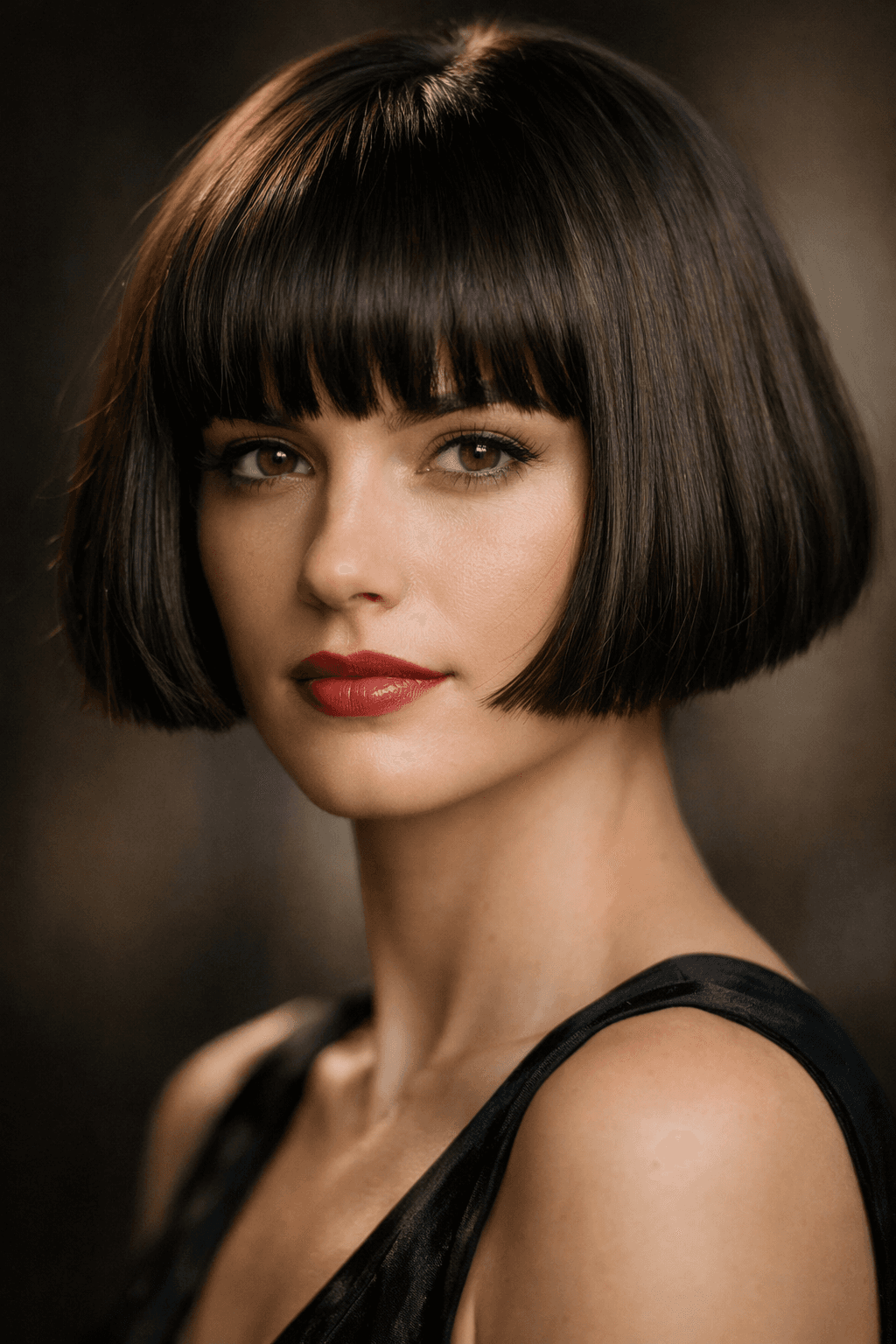
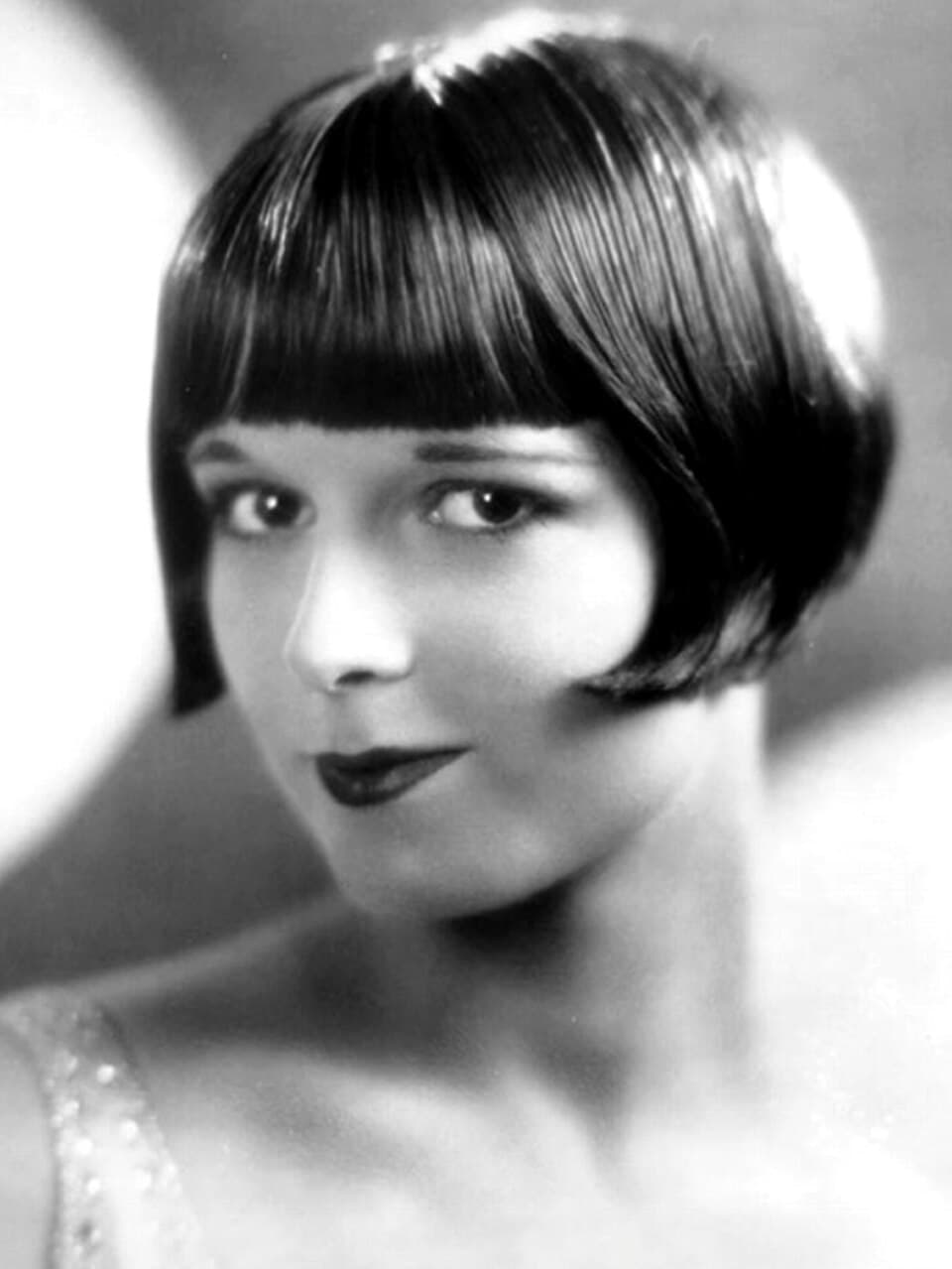
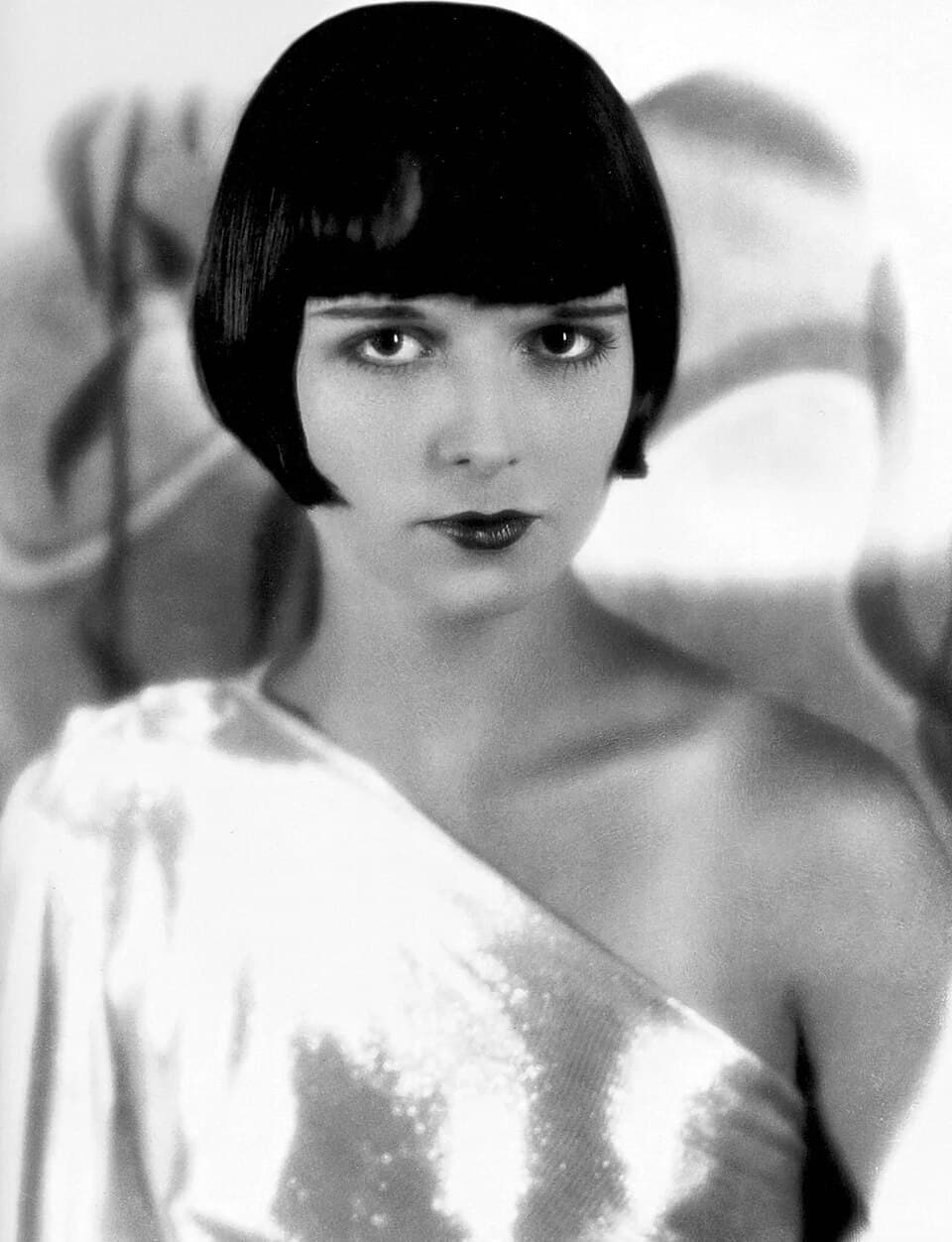
Emerging initially in the 1910s as a precursor to broader liberation, women began shaking off the constraints of sleek, restrictive Victorian updos in favor of looser, more organic styling.3 However, it was the roaring 1920s that ushered in the true revolution of the bob, a fashion phenomenon that fundamentally dismantled the paradigm of long, restrictive tresses.1 The notion of women sporting short hair was virtually unheard of prior to this decade; thus, the physical severing of the hair acted as a potent visual metaphor for the severing of traditional gender constraints.3 Actresses such as Louise Brooks, Clara Bow, and Marion Davies popularized the style, challenging acceptable norms and turning it into an international symbol of edgy, fresh individuality.1 The French bob, a specific regional variation that has retained its timeless, Parisian-inspired appeal into the 21st century, is characterized by its distinct interaction with the wearer's facial geometry, resting higher on the face than the standard Anglo-American bob and offering effortless elegance.4
Structural and Morphological Breakdown
The structural integrity of the classical French bob relies on a blunt, remarkably uniform perimeter cut that typically terminates precisely at the jawline or, more traditionally, exactly at the height of the cheekbone.5 Unlike modern, heavily layered iterations, the classic French variation is essentially a one-length cut featuring minimal layers, which maintains a uniform density at the ends to create a bold, razor-sharp horizontal silhouette.5 The main differentiating factor between a standard bob and the French bob is this elevated length and the integration of a fringe.6 This blunt edge is inextricably coupled with a choppy, chunky, or texturized fringe that squarely skims the eyebrows or hits the mid-forehead.1 While the cut itself is highly geometric, the natural texture of the hair is generally preserved and worn slightly tousled, allowing for a soft, relaxed, lived-in wave that frames the face and softens the severe geometry of the baseline.1
The Pixie Cut
Historical Context and Sociological Impact
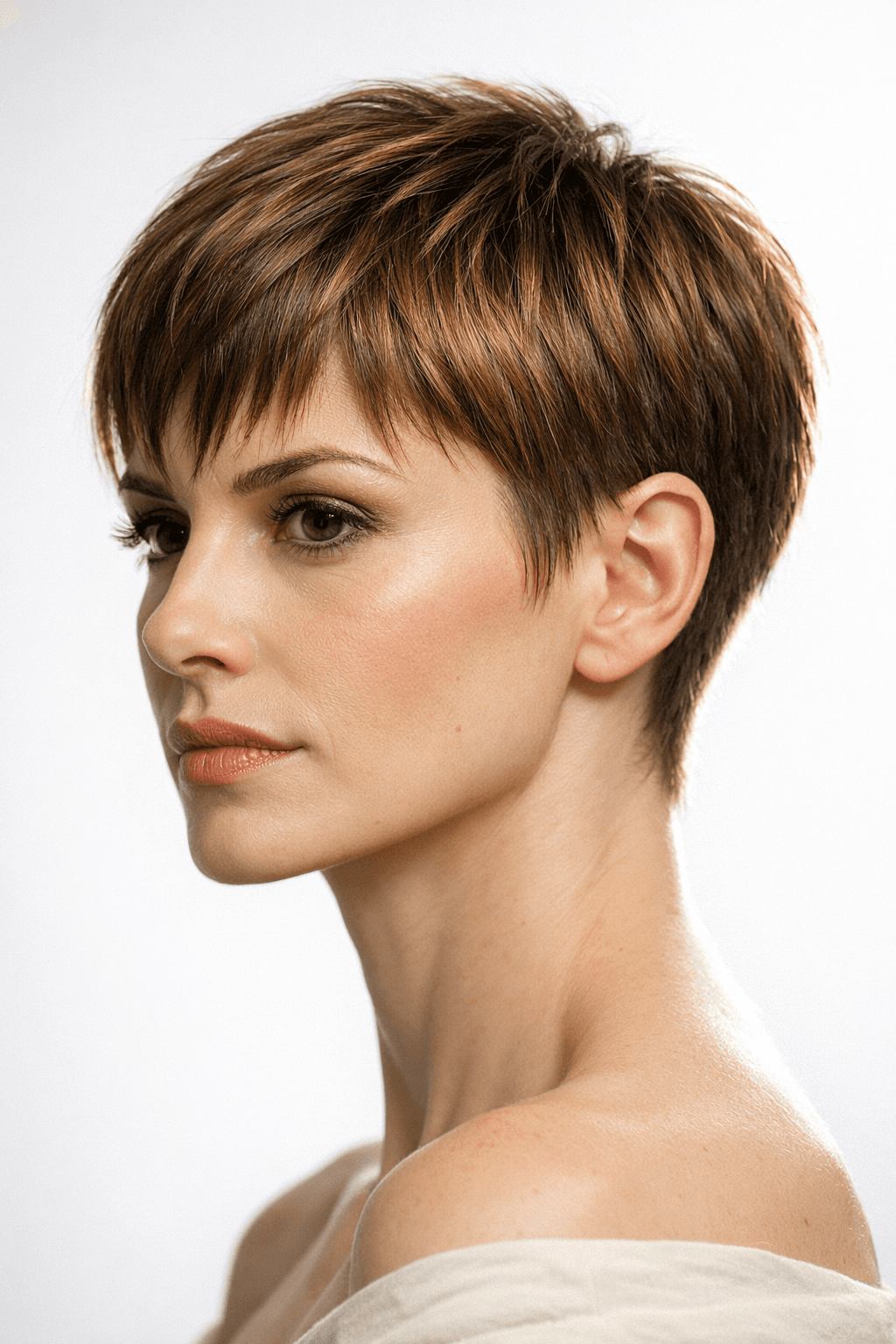
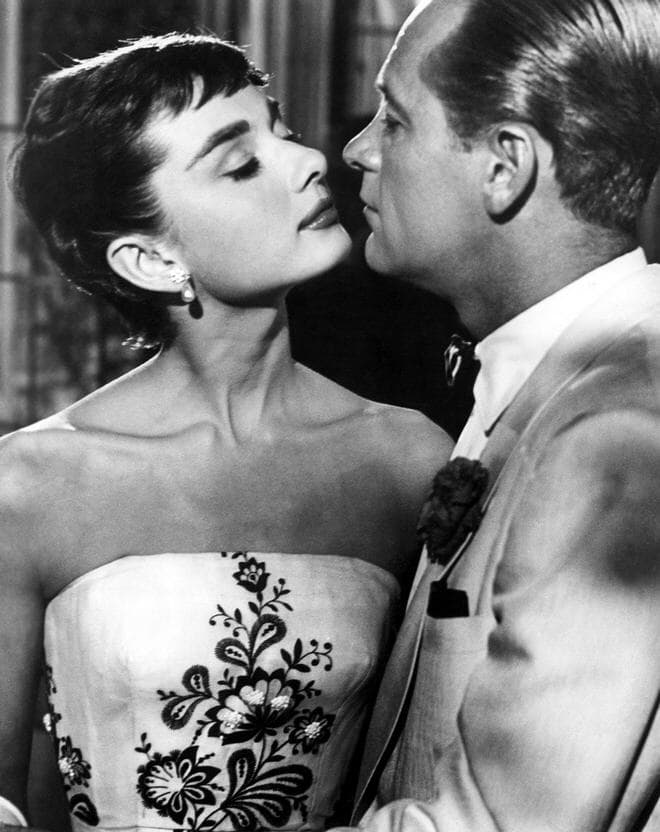
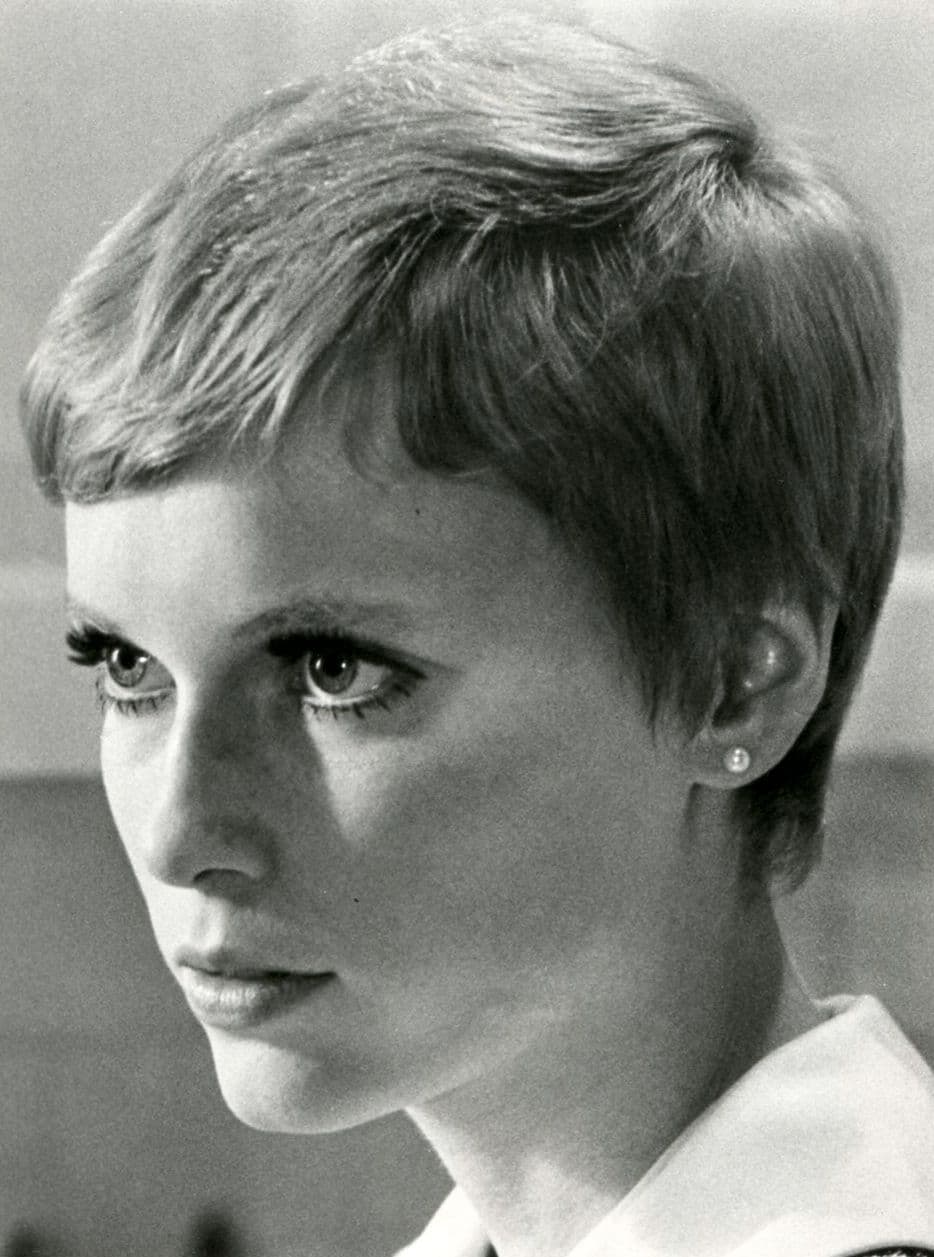
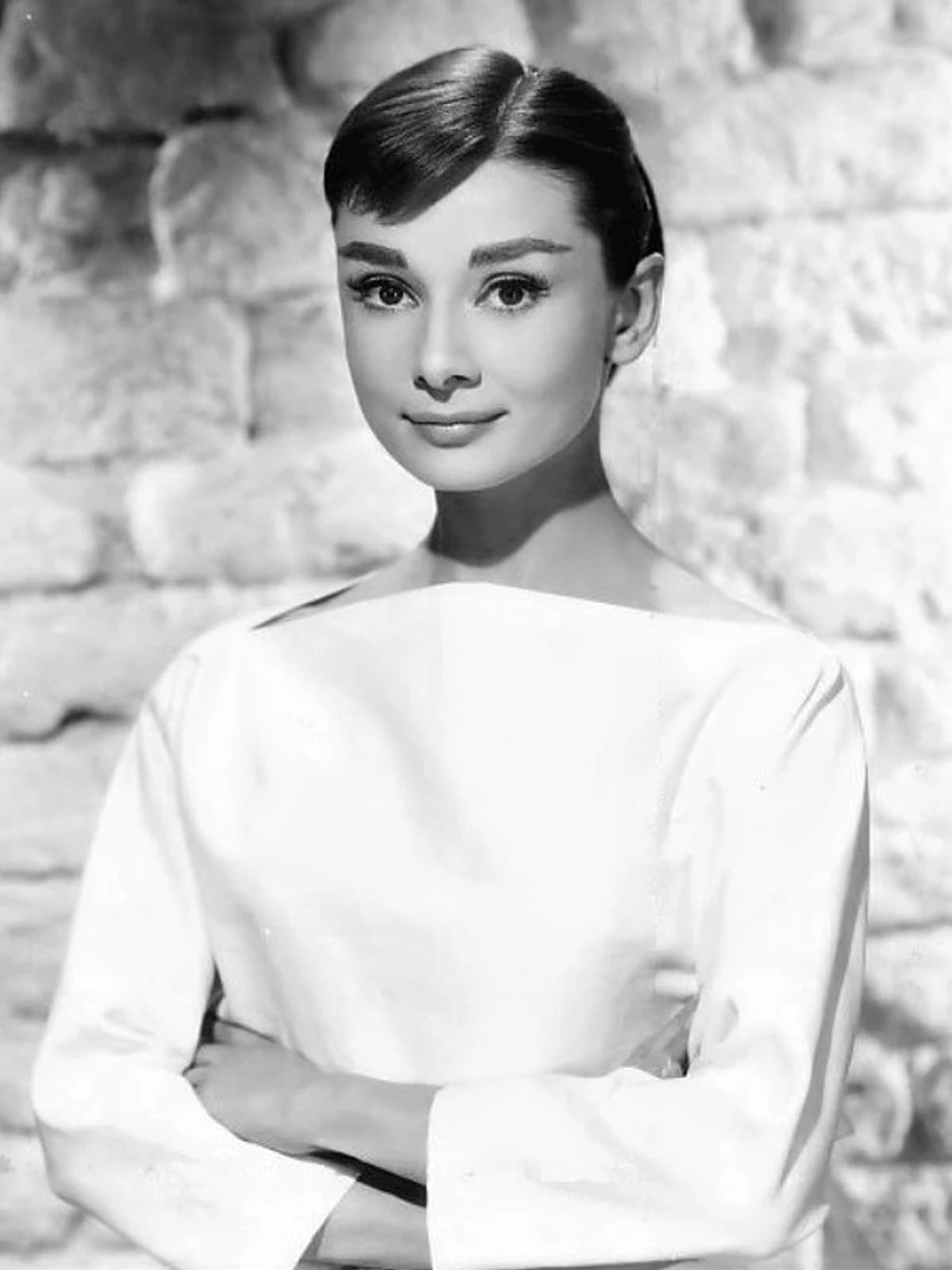
The pixie cut emerged in the mid-20th century as a striking, bold statement that completely defied conventional gender norms surrounding hair length and feminine presentation.4 While the bob of the 1920s drastically shortened hair, the pixie cut effectively eradicated the visual curtain of hair entirely, cropping it close to the scalp in a manner previously reserved strictly for men's barbering. Popularized and immortalized by iconic cultural figures such as Audrey Hepburn in the 1950s and Mia Farrow in the 1960s, the style exudes a daring, no-fuss confidence, alluring charm, and a spirit of deep personal liberation.4 It strips away the traditional framing of hair, leaving the wearer's facial features—particularly the eyes, cheekbones, and jawline—entirely exposed to the observer. This dramatic reduction in mass creates a highly specific aesthetic of delicate vulnerability juxtaposed with extreme, unapologetic confidence.4
Structural and Morphological Breakdown
The morphology of the pixie cut is defined by severe, tight tapering at the nape of the neck and around the ears, contrasting with slightly longer, heavily textured layers situated at the crown and apex of the skull.10 The cut relies on intricate point-cutting and razor-cutting techniques to carefully remove interior bulk, allowing the short strands to lie flat against the anatomical curve of the skull while simultaneously retaining enough kinetic energy to be styled forward, swept to the side, or slightly elevated.12 The fringe is a crucial component, typically cut into micro-bangs—short, wispy, feathered layers that graze the upper forehead rather than fully covering it.11 The resulting silhouette is highly aerodynamic and low-maintenance, requiring the natural follicular growth patterns of the hair to dictate the organic flow of the daily style.4
Make It Flatter You
Upload 2 photos and get instant color and style analysis before you commit to a dramatic cut.
Short silhouettes expose the face immediately. auraDNA shows you the season, best colors, and styling direction that make sharp lines, fringe, and hair depth work with your features instead of against them.

Finger Waves
Historical Context and Sociological Impact
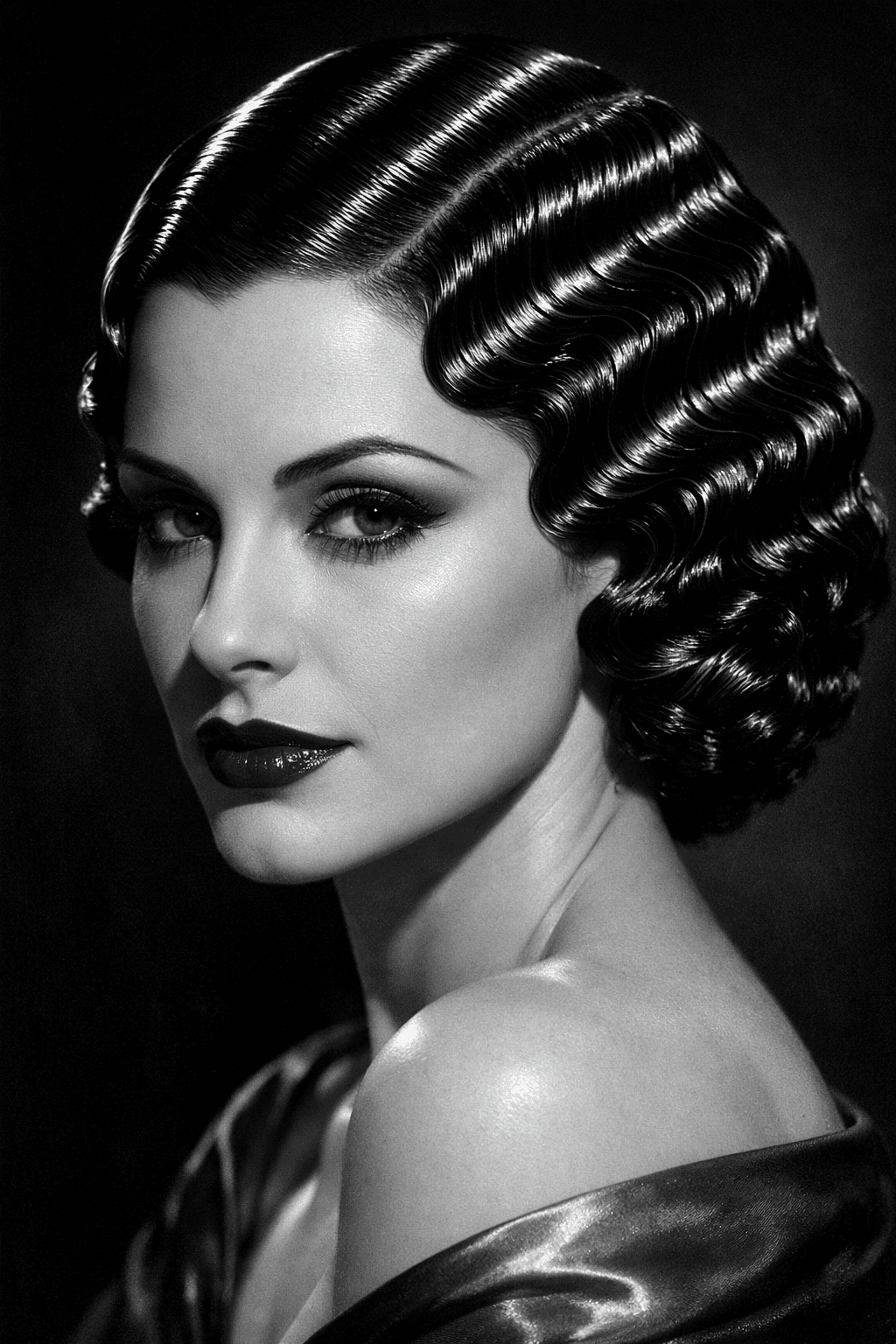
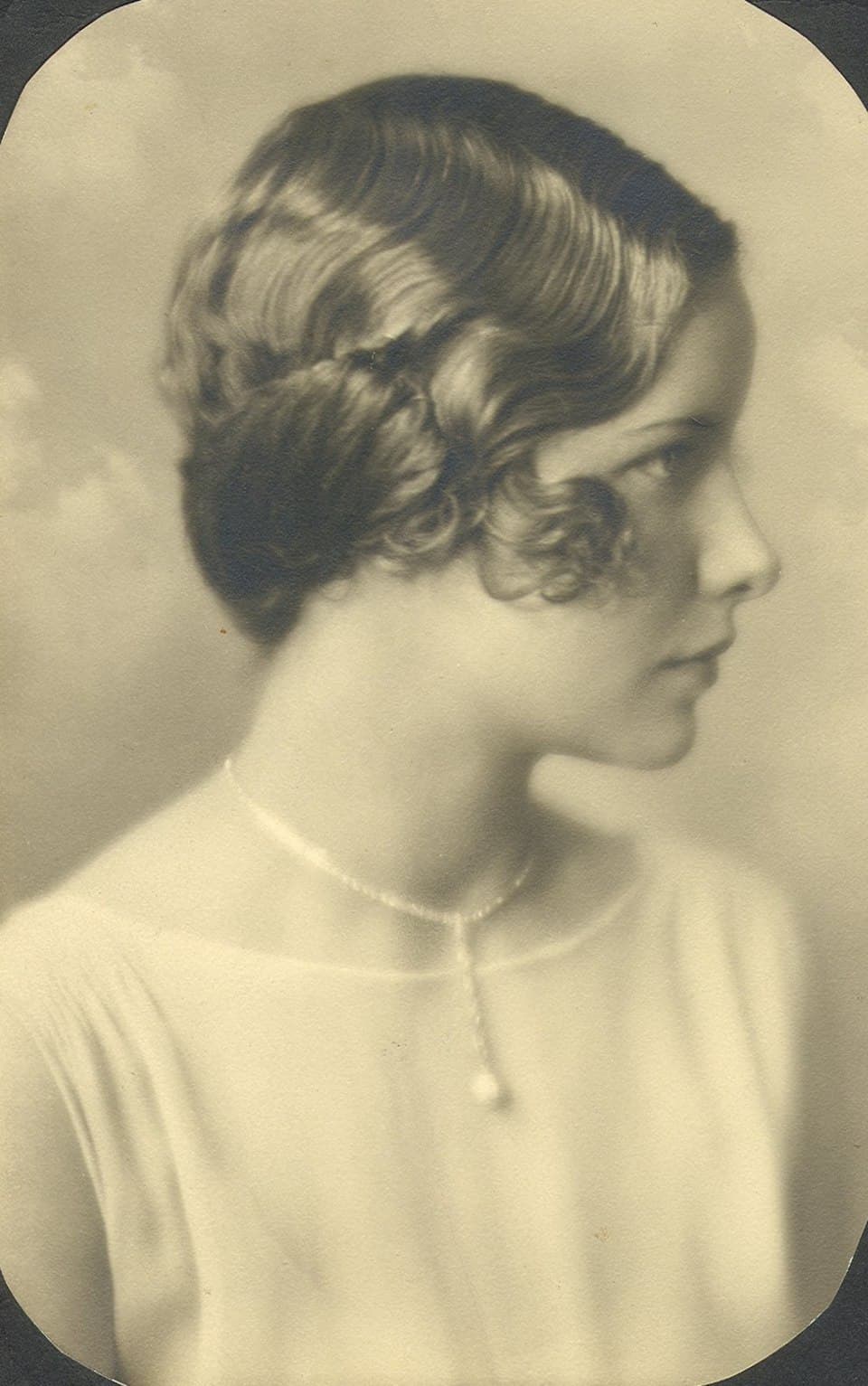
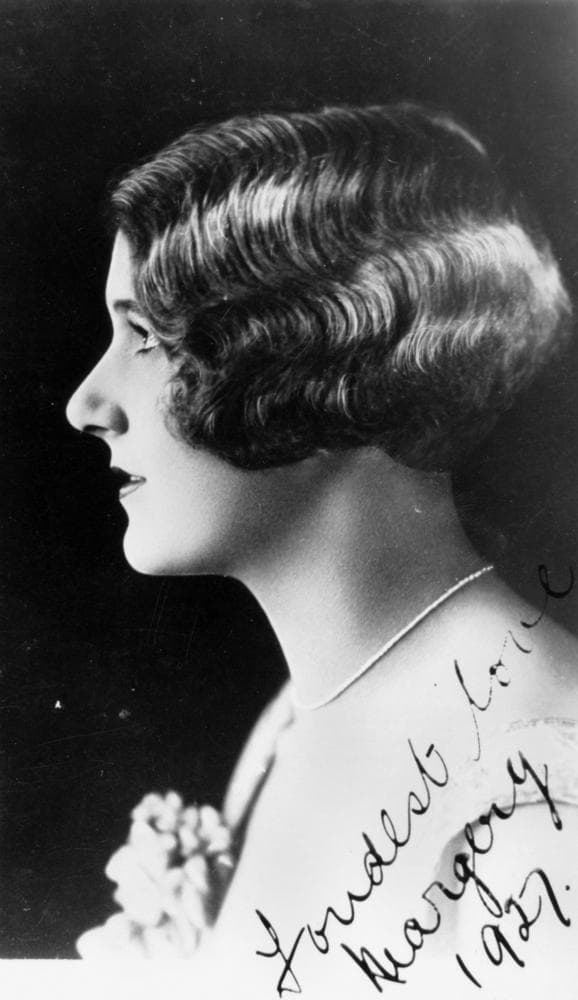
Finger waves represent the absolute pinnacle of stylized, hyper-controlled hair architecture, flourishing primarily in the 1920s and 1930s as a softened, glamorous evolution of the harsh, geometric bob.1 Worn prominently by Hollywood royalty like Bette Davis and Anita Page, as well as groundbreaking entertainers like Josephine Baker and Florence Mills, this style required immense technical skill, patience, and artistic vision to execute.1 It represented a societal shift from the rebellious, straight chop of the early twenties to a highly cultivated, deliberate artificial elegance. Finger waves transformed the hair into a static, sculptural relief, turning the human head itself into an Art Deco artifact. The style has maintained a timeless, powerful presence, continually resurfacing in modern high-fashion and red-carpet aesthetics, particularly within the Black hair community where it is frequently executed with edge control, styling gels, and setting foams.16
Structural and Morphological Breakdown
The mechanics of the finger wave are entirely dependent on the manipulation of fluid dynamics and chemical tension within the hair shaft. Achieving this look is widely considered a high art form.1 The hair is heavily saturated with water and a viscous setting lotion or pomade until it loses all natural mechanical resistance.1 Using a fine-tooth comb and the stylist's fingers, the hair is brushed completely flat against the face and scalp.1 The stylist then draws the comb down from the parting and sharply pushes it upwards, buckling the hair shaft into a distinct, raised ripple or ridge, which is immediately secured between two fingers.1 This creates a continuous, mathematically precise sine-wave pattern across the curvature of the skull.1 Clips are applied to preserve the undisturbed geometry while the hair is baked under a hood dryer.1 Once dried, the chemical bonds in the hair temporarily lock into this S-shaped matrix, resulting in a solid, unmoving, highly reflective surface devoid of any individual loose strands.1
Victory Rolls
Historical Context and Sociological Impact
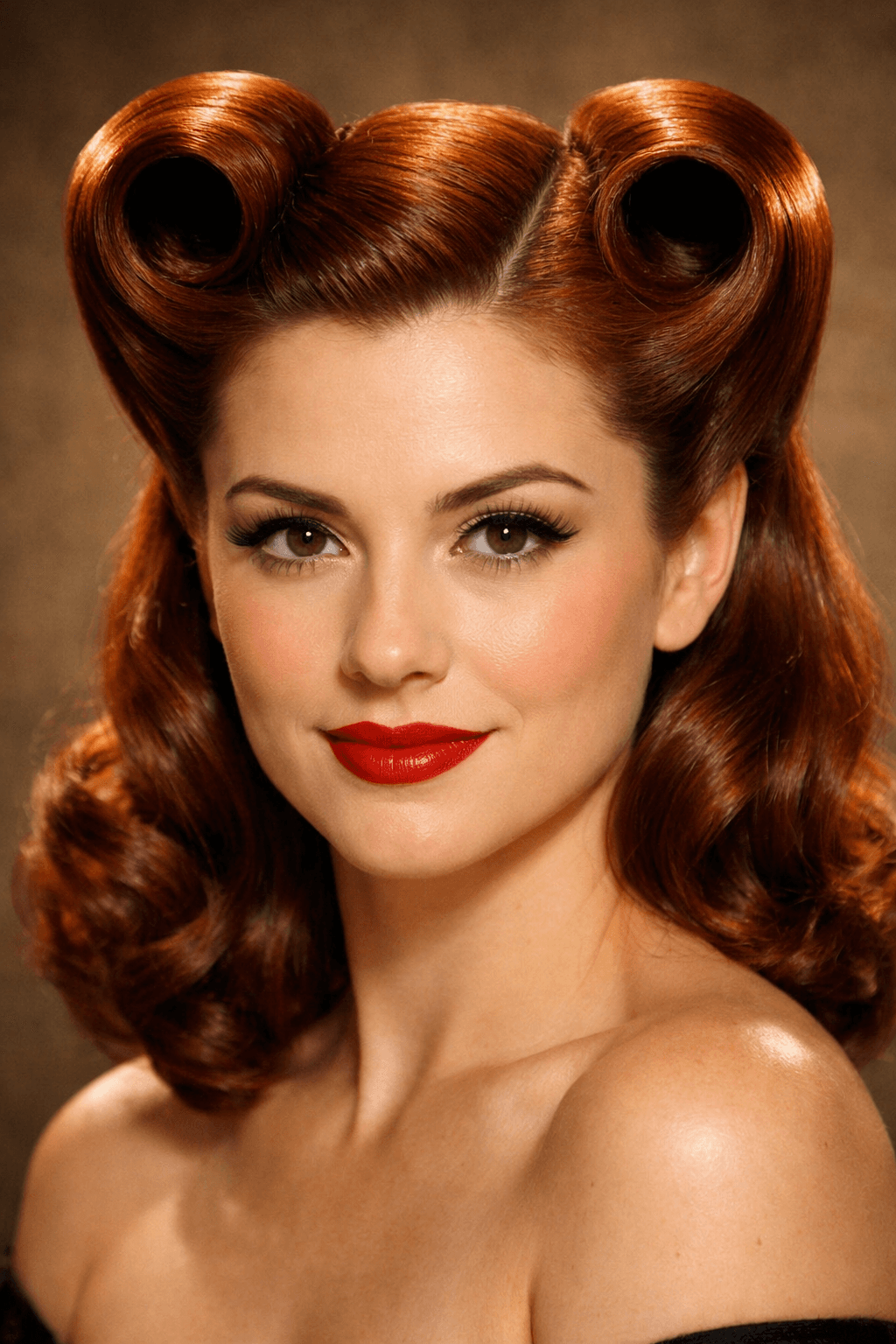
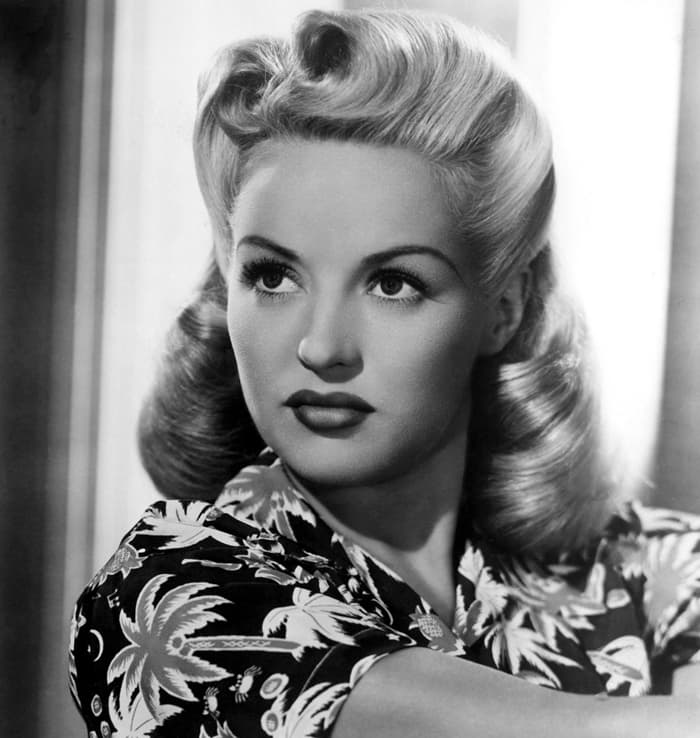
Emerging in the early 1940s during the height of World War II, victory rolls are a profound example of aesthetic evolution driven by socioeconomic necessity, industrial labor, and wartime patriotism.1 As millions of women entered industrial and manufacturing roles in war production plants, long, loose hair became a severe, sometimes fatal, safety hazard around heavy factory machinery.19 The victory roll offered a brilliant solution that was intensely practical—sweeping the hair securely up and away from the face, neck, and machinery gears—while simultaneously maintaining a hyper-feminine, glamorous silhouette favored by global pin-up models like Betty Grable and Lana Turner.1 The nomenclature itself is deeply tied to wartime morale; the term "Victory" was ubiquitous in propaganda, and the hairstyle was allegedly named after a celebratory, spinning aileron maneuver executed by Allied fighter pilots returning from successful missions.1
Structural and Morphological Breakdown
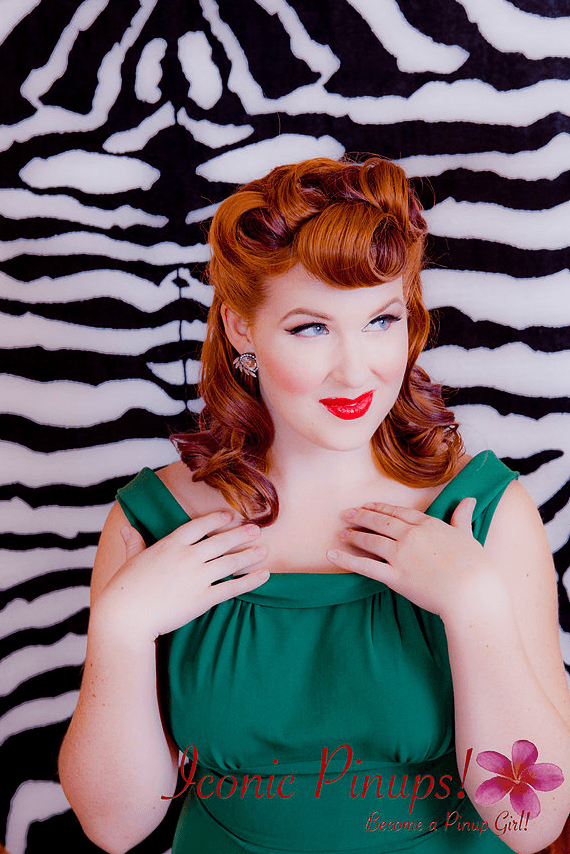
The structural engineering of a victory roll is complex, relying on the creation of a hollow, gravity-defying cylinder of hair. The hair is first meticulously sectioned and curled firmly inward using a heated iron to establish a directional base.19 Crucially, the base of the hair section must be aggressively backcombed (teased) near the root to create an internal, interlocking scaffold of tangled keratin fibers that can support the considerable weight of the final structure.19 The hair is then rolled upward from the ends toward the scalp, forming a smooth, voluminous, sausage-like tube that sits prominently on the parietal ridge or directly on top of the head.21 The exterior of the roll is smoothed with a comb to a glass-like finish, concealing the chaotic, teased matrix inside, and anchored invisibly to the scalp with bobby pins. The roll remains distinctly open at the front, creating a dramatic, dark central void facing the observer.20 The remaining hair at the back is often left down in soft curls or secured in a hairnet.1
The Beehive
Historical Context and Sociological Impact
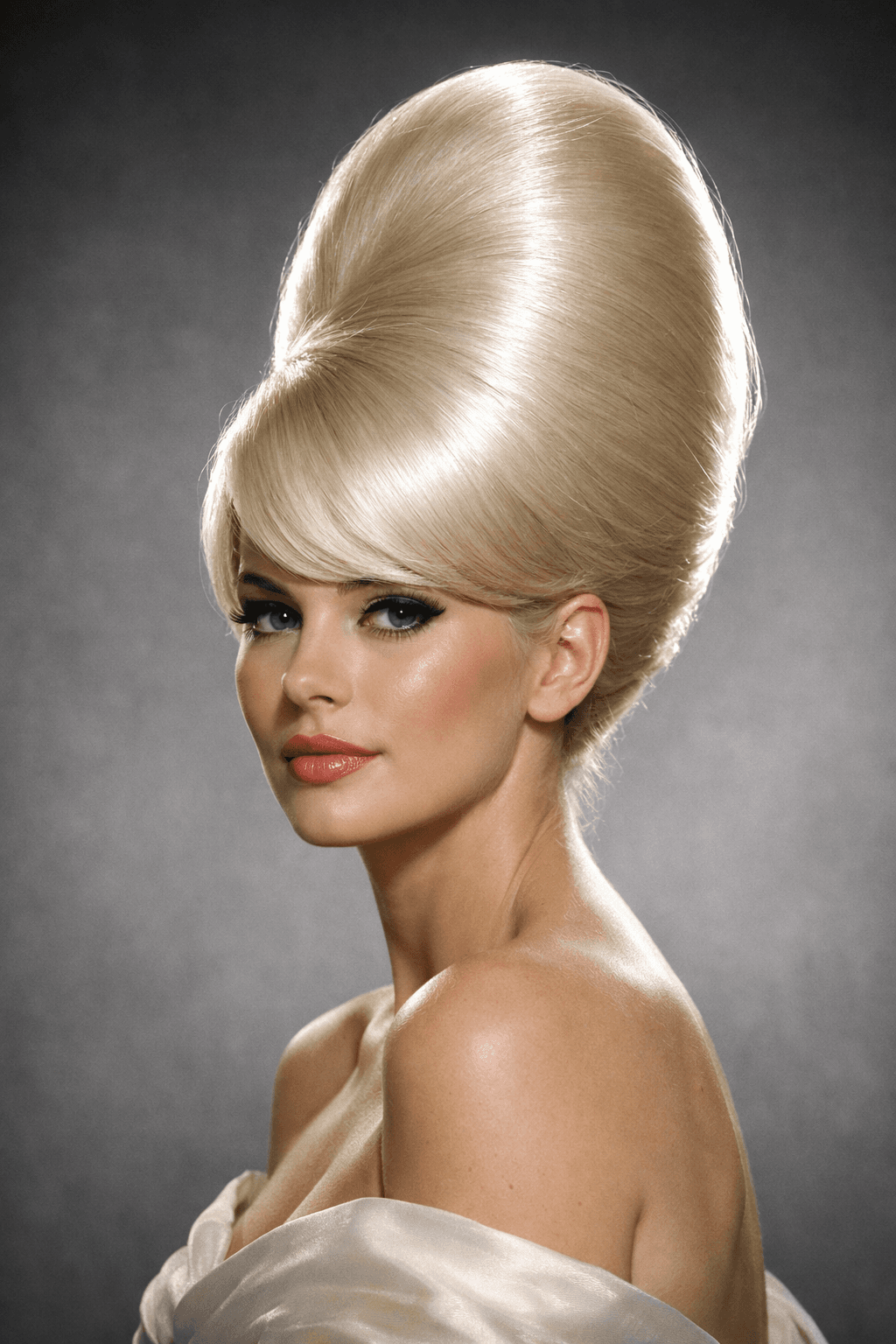
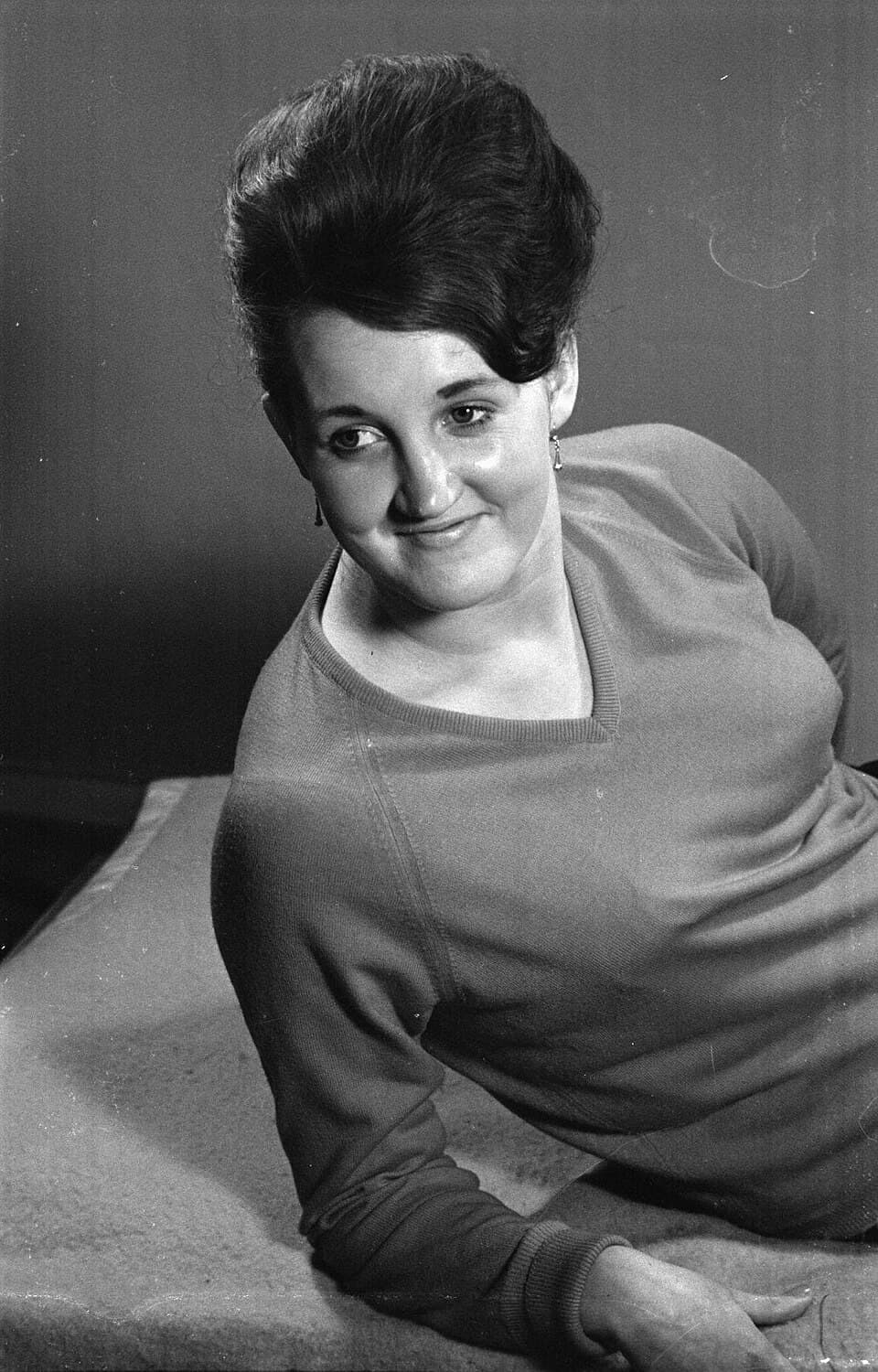
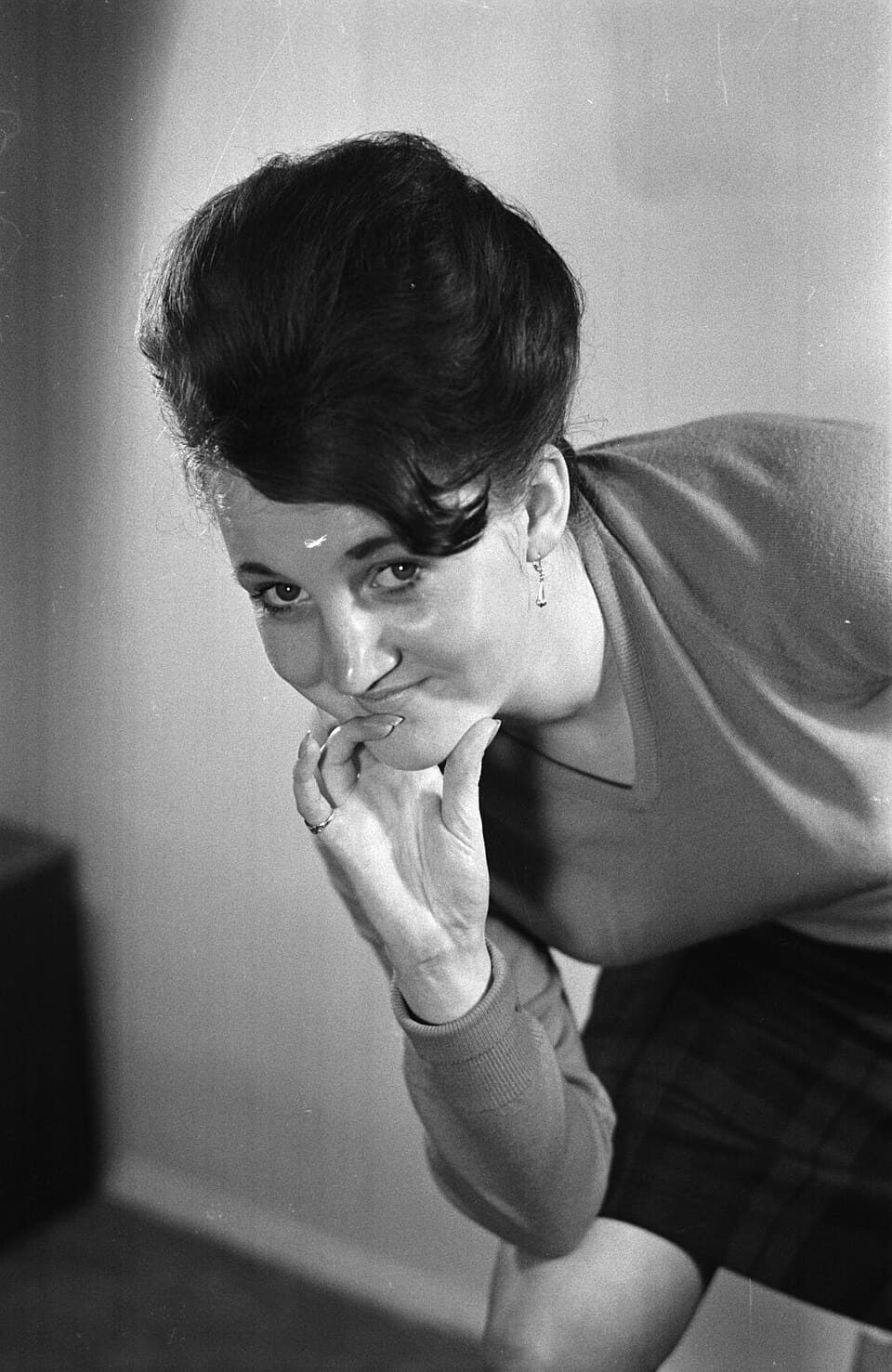
Developed in 1960 by Chicago-based hairstylist Margaret Vinci Heldt, the beehive became the absolute defining structural silhouette of the early to mid-1960s.23 Known alternately in popular culture as the B-52—due to its distinct, bulbous resemblance to the distinctive nose of the Boeing B-52 Strategic Bomber—this style captured the futuristic, vertical ambition of the Space Age zeitgeist.25 Worn by cultural monoliths such as Bridget Bardot, Audrey Hepburn, and Aretha Franklin, the beehive represented a towering peak of artificial styling and required a specific design to perfectly fit under the popular pillbox hats of the era.1 It was structurally rigid, heavily reliant on the mass post-war production of aerosol hairsprays, and physically elevated the stature of the wearer. The style required such an intense investment of time, salon resources, and holding product that it altered behavioral patterns; women would frequently wrap their towering heads in toilet paper or silk scarves while sleeping to preserve the rigid, lacquered structure for multiple days without washing.1
Structural and Morphological Breakdown
The beehive is a masterpiece of vertical tension, extreme friction, and chemical hold. The foundation requires separating the hair into multiple sections and systematically backcombing (teasing) every section from the root to the mid-shaft. This action drives the hair cuticles against their natural downward direction, creating a dense, matted, tangled core that acts as a self-supporting structural pillar.25 Once this massive, tangled pile is erected into a conical or dome-like shape pointing slightly backward on the top of the head, the topmost layers of unteased, smooth hair are carefully draped and lightly combed over the chaotic structure.25 This smooth outer veneer is pulled taut to create a flawless surface and pinned securely at the nape or crown, fully concealing the architectural scaffolding underneath.1 The entire monolith is then saturated with heavy aerosol lacquer to freeze it into a rigid, aerodynamic, immovable cone.25
Try It On
See how hair theory changes when it is applied to your own face.
Use the instant hair try-on to test shades visually. If you want undertone, depth, and contrast guidance too, take the full auraDNA analysis.
The Chignon
Historical Context and Sociological Impact
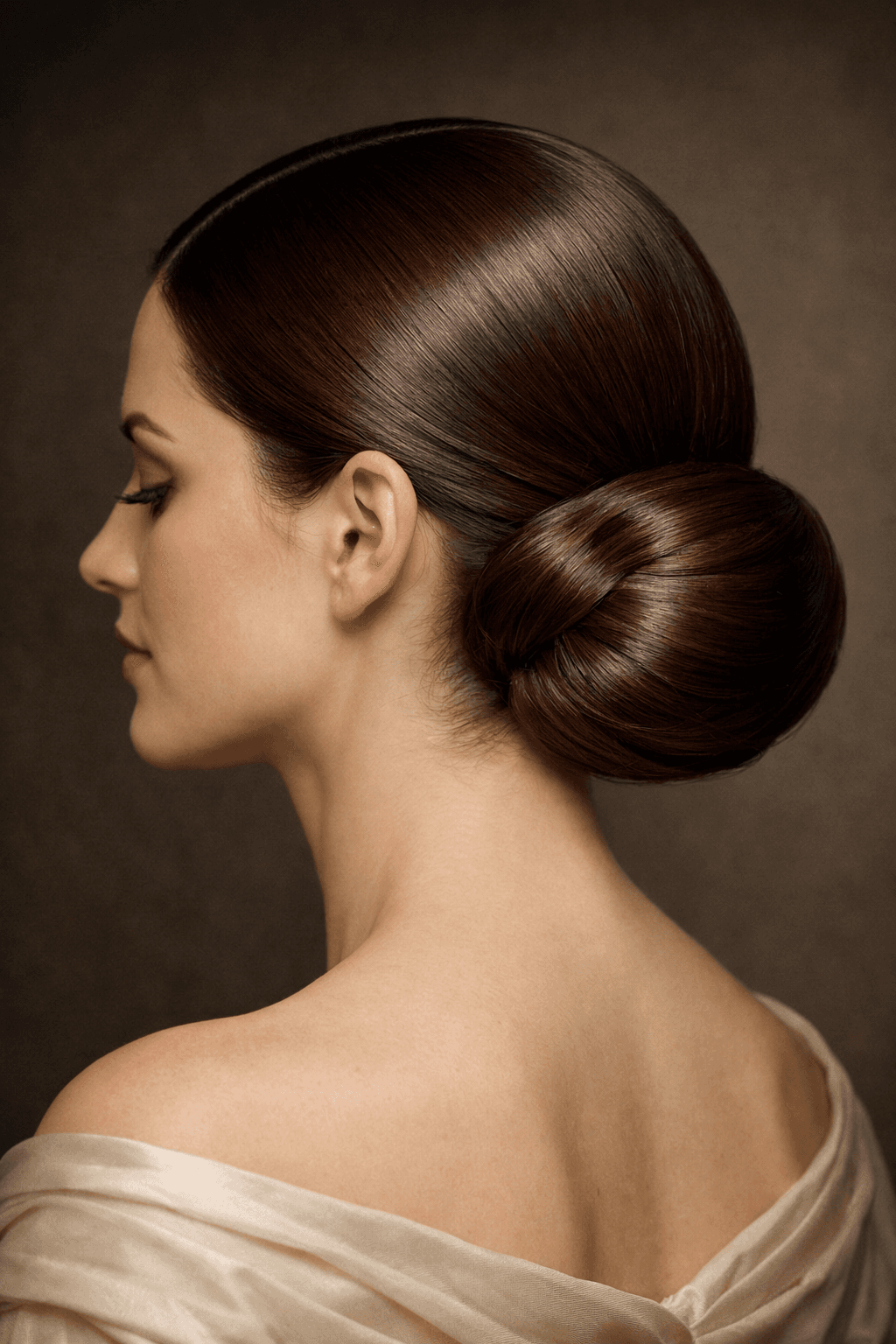
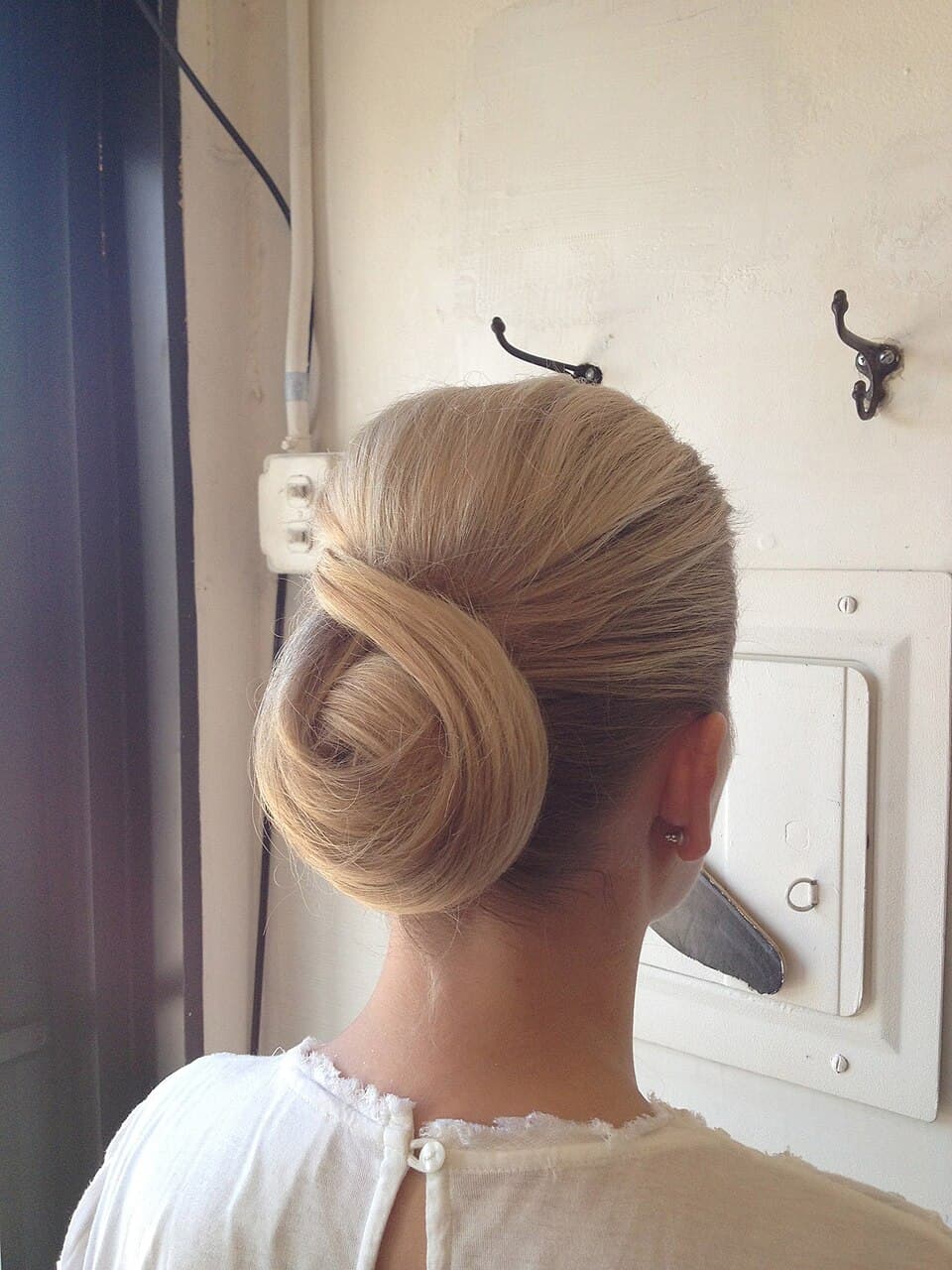
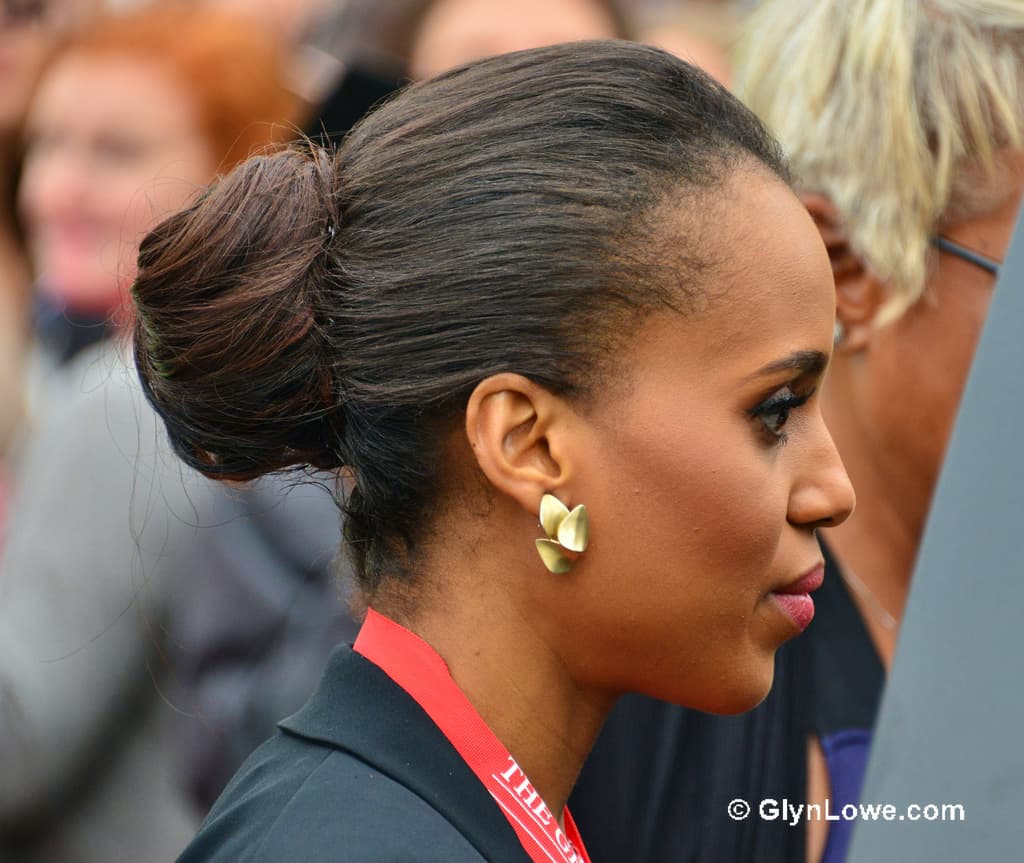
The chignon—derived directly from the French phrase chignon du cou, translating literally to "nape of the neck"—is perhaps the most enduring, versatile, and classical of all updos in the history of female cosmetology.28 While its earliest origins trace back to ancient Greece and the Roman Empire, it has remained a persistent, unwavering staple in female styling due to its remarkable adaptability and inherent, understated elegance.28 Unlike the flamboyant, sociopolitical rebellion of the 1920s bob or the towering, space-age artifice of the 1960s beehive, the chignon represents restraint, professionalism, and timeless classical beauty. It is an exercise in structural minimalism, consistently adopted for high-formality events, matrimonial ceremonies, and conservative professional environments.28 It acts as a universal visual signifier of polished sophistication, capable of transitioning seamlessly from an undone, messy aesthetic for casual wear to a stiff, lacquered variant for formal galas.28
Structural and Morphological Breakdown
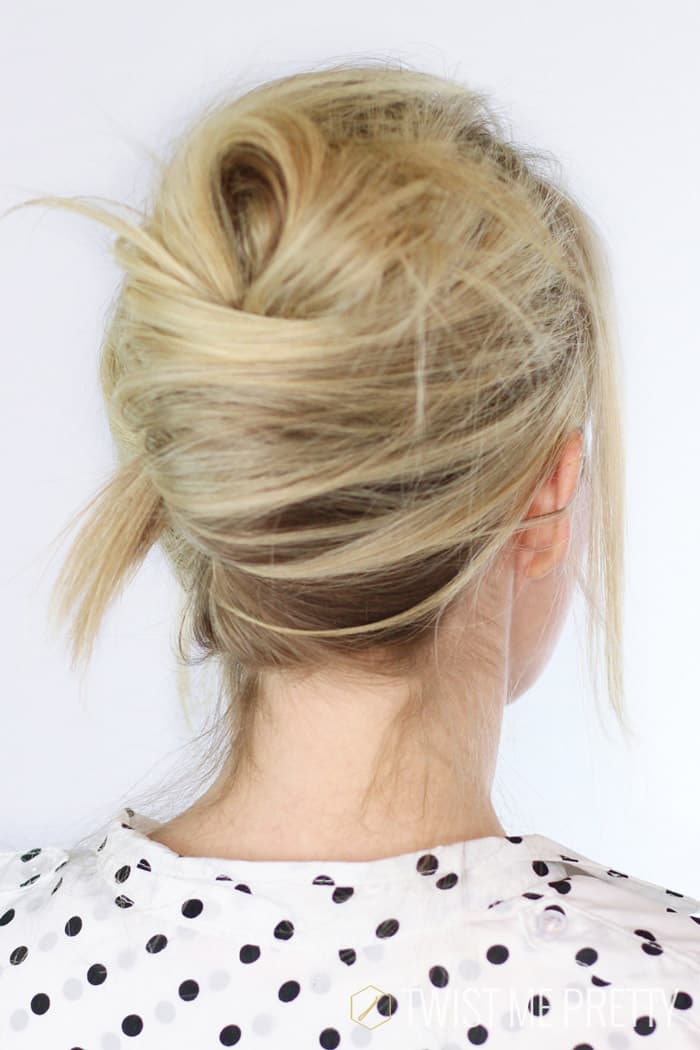
The mechanical execution of the chignon is fundamentally different from that of a standard hair bun. While a standard bun is typically twisted circumferentially around its own base and can be placed anywhere on the skull, a classic chignon is strictly formed by gathering the hair into a low ponytail resting explicitly at the occipital bone (the nape of the neck). From this anchor point, the hair is folded, tucked, or wrapped gently under or around itself or a structural accessory like a clip.28 This technique creates a horizontal, highly controlled, and flattened knot rather than a protruding sphere.28 The surface tension of the hair must be perfectly managed; the strands are pulled tautly across the scalp, often treated with smoothing serums to eradicate frizz, align the cuticles, and maximize light reflection.28 The terminal ends of the hair are completely hidden within the internal structure of the folded knot, secured tightly with U-pins to maintain the illusion of an endless loop of hair.
The French Twist
Historical Context and Sociological Impact
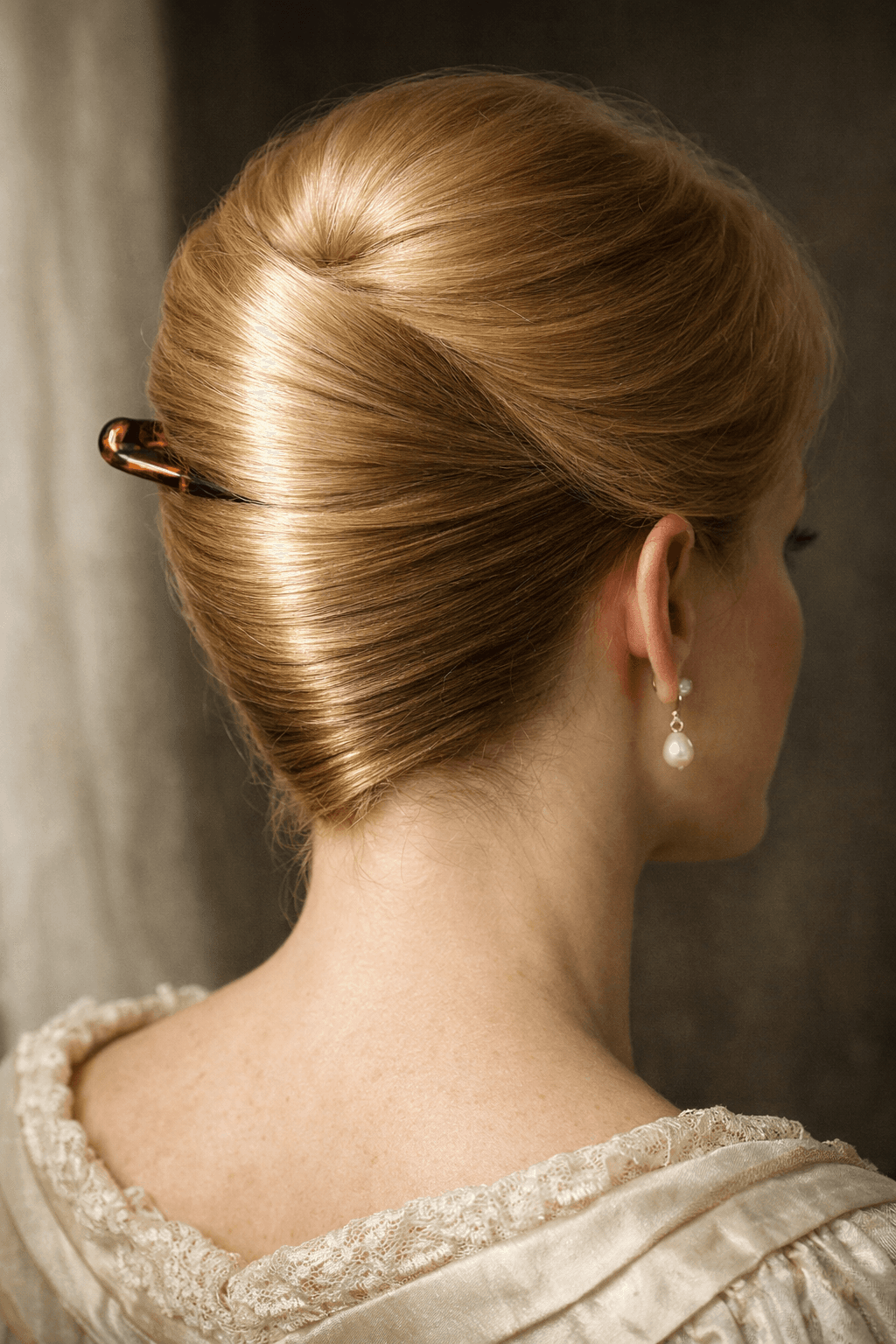
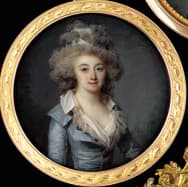
The French twist is globally synonymous with high-stakes glamour, corporate professionalism, and formal matriarchal elegance. Peaking in cultural popularity from the late 1950s through the 1970s, it remains a timeless staple for sophisticated events, continuing to dominate bridal and red-carpet aesthetics.32 Unlike the low-hanging, horizontal mass of the chignon, the French twist commands the entire vertical plane of the back of the head, creating an elongated, upward-sweeping silhouette that visually extends the wearer’s neck and improves perceived posture. It is a hairstyle that deliberately engineers an illusion of continuous, unbroken flow, hiding its mechanical underpinnings so effectively that the hair appears to magically fold into itself without the aid of external fasteners.32
Structural and Morphological Breakdown
The French twist requires a highly specific, asymmetric manipulation of the hair's total mass. To begin, all the hair is swept unilaterally to one side of the head, and a vertical seam of bobby pins is often anchored deeply up the exact center of the scalp to create a foundational grip.32 The remaining mass of hair is then pulled back across this pinned seam, wrapped tightly over the stylist's hand, thumb, or two fingers, and twisted a full 360 degrees.32 This physical torsion forces the hair to roll into a smooth, vertical, conical cylinder pointing toward the crown. The loose ends of the hair are continuously fed and tucked into the hollow center fold of this cylinder.32 Once the cylinder is rolled tight against the scalp, concealing the bobby pin seam, it is secured with a French hair pin or fork, which is woven through the top of the twist and locked against the scalp.32 The final result is a seamless, overlapping vertical sheath of hair with no visible entry or exit points.
The Shag (and Modern Wolf Cut)
Historical Context and Sociological Impact
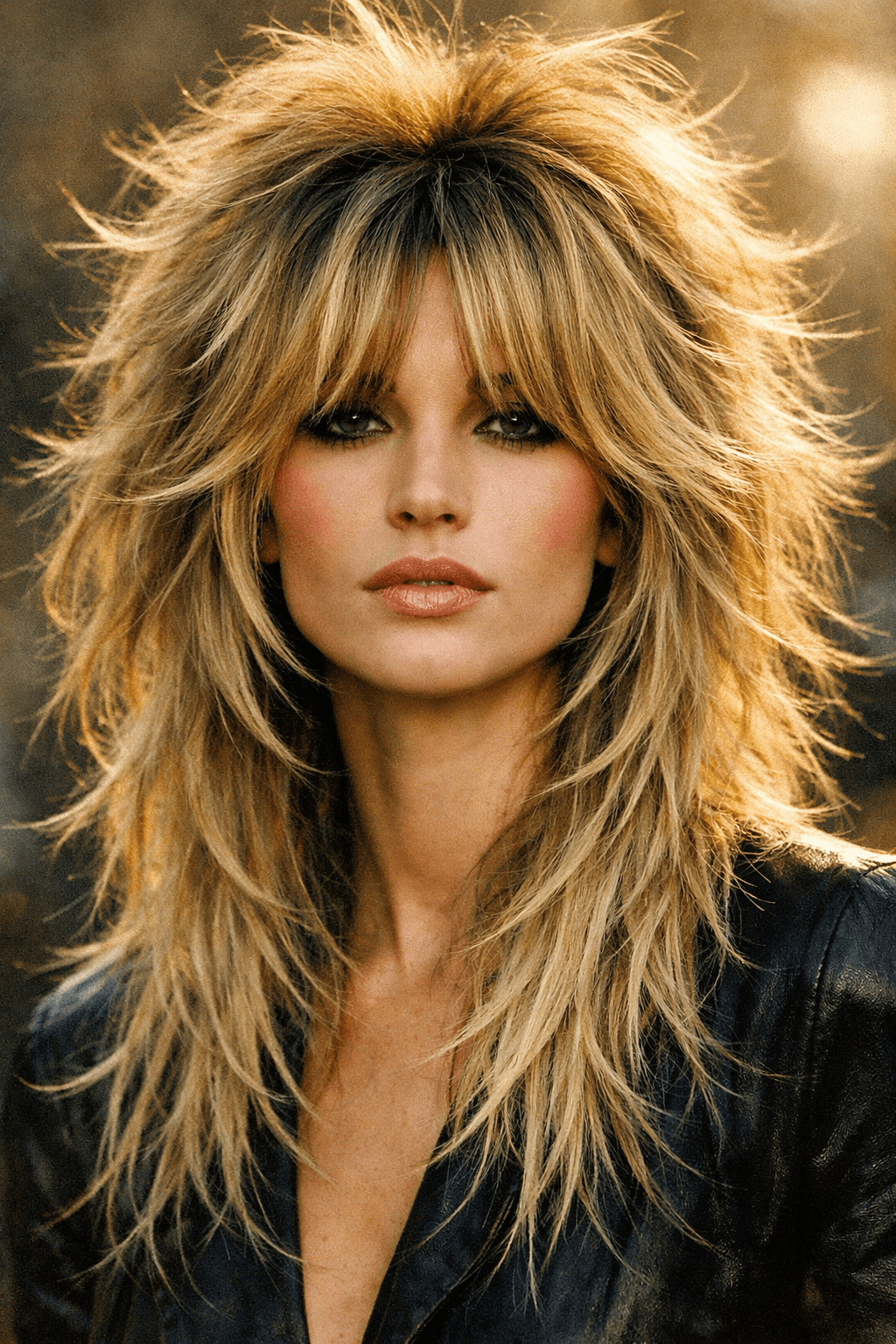
The shag haircut represents the aesthetic chaos, anti-establishment ethos, and rock-and-roll rebellion of the 1970s. Originally created by barber Paul McGregor and famously worn by cultural icons like Jane Fonda and Farrah Fawcett (who popularized the heavily feathered variant in Charlie's Angels), the shag was a direct, aggressive repudiation of the stiff, hairspray-laden, highly engineered updos of the 1950s and 1960s.1 It favored aggressive kinetic energy, extreme texture, and an organic, androgynous flow that required movement to be fully appreciated. The shag democratized hair, presenting a unisex silhouette that felt both wild and deliberately fashioned, requiring minimal daily styling.37 In the 2020s, the style has experienced a massive resurgence among Generation Z through variations like the "wolf cut" and the modern mullet, championed by pop-culture icons like Billie Eilish as a symbol of edgy, low-maintenance nonconformity.36
Structural and Morphological Breakdown
The architectural philosophy of the shag is the purposeful destruction of the solid perimeter line. A skilled stylist uses extreme, strategic layering, often executing the cuts with a straight razor rather than traditional shears, to physically shred the ends of the hair shaft and create a highly feathered, tapered, and soft effect.36 The bulk of the hair's volume is concentrated entirely at the crown and the top of the head through the use of very short, choppy layers.37 As the hair travels down the neck and sweeps over the shoulders, the density decreases dramatically, resulting in thin, wispy, highly mobile ends.1 The cut is almost universally anchored by a "Bardot bang"—a heavy, center-parted curtain fringe that blends seamlessly into the face-framing layers, directing visual attention squarely to the cheekbones and jawline.36 The style relies on natural wave patterns or applied texturizing sprays to achieve its bouncy, windswept texture.1

The Afro
Historical Context and Sociological Impact
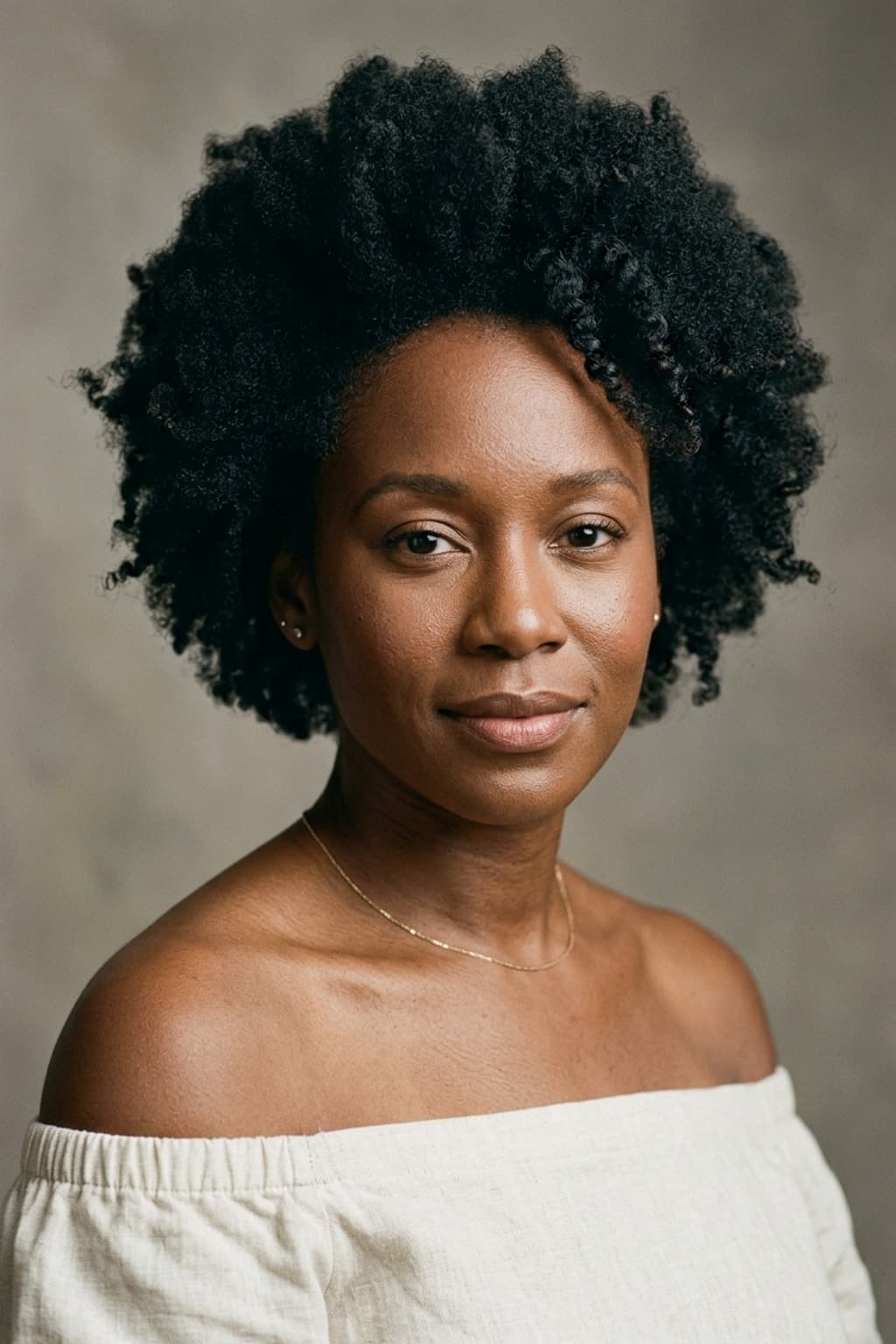
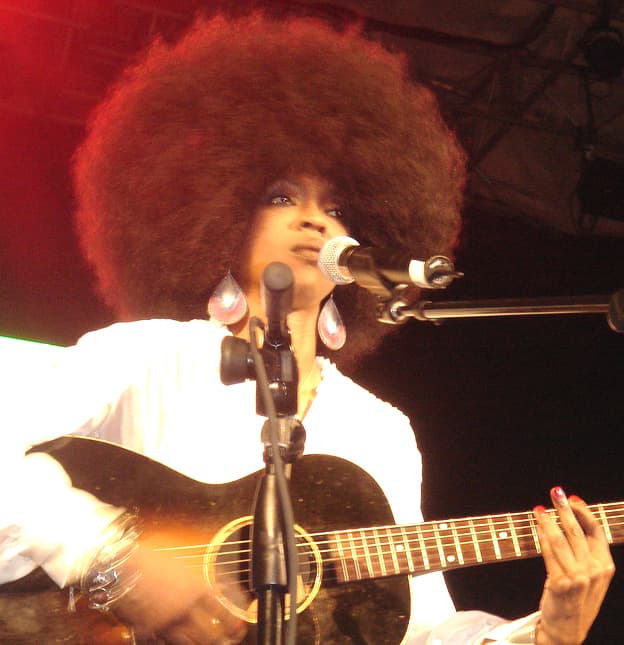
The Afro is a hairstyle of profound, unparalleled cultural, political, and aesthetic significance. Rising to global prominence during the Civil Rights and "Black is Beautiful" movements of the 1960s and 1970s, the Afro was a powerful, highly visible rejection of Eurocentric beauty standards that historically mandated the chemical straightening, thermal flattening, and subjugation of Black hair.39 Wearing an Afro was, and remains, a vibrant celebration of the hair's natural biological state, an embrace of its inherent, gravity-defying volume, and a bold statement of unapologetic identity and pride.39 The style transcends mere fashion or transient trends; it is a timeless, classical geometry that highlights the structural magnificence of Afro-textured hair. It remains profoundly relevant and is constantly celebrated in modern aesthetics, featuring in high-fashion editorials and everyday wear as a symbol of confidence and heritage.39
Structural and Morphological Breakdown
The morphological architecture of the Afro relies on the unique physics and structural properties of tightly coiled, coily, or kinky hair textures (specifically classified as Type 4 hair within cosmetology). Because the hair follicle itself is highly elliptical and asymmetrical, the hair strand grows in a tight zigzag or helical coil rather than a straight cylinder.40 When this hair is picked out or combed with a specialized Afro pick, these individual coils interlock with one another, defying gravity and expanding outward in all directions to create a massive, dense, self-supporting structural matrix.40 The classic Afro is meticulously sculpted into a perfectly symmetrical, volumetric sphere, puff, or halo surrounding the head.40 The surface of the style is defined by the micro-texture of the tightly wound curls, which interact with light uniquely: rather than reflecting light in a continuous, bright specular band (like straight hair), the interlocking coils scatter the light. This results in a deep, rich, dimensional glow with a soft, cloud-like edge boundary.40
The Gibson Girl (Pompadour/Bouffant Updo)
Historical Context and Sociological Impact
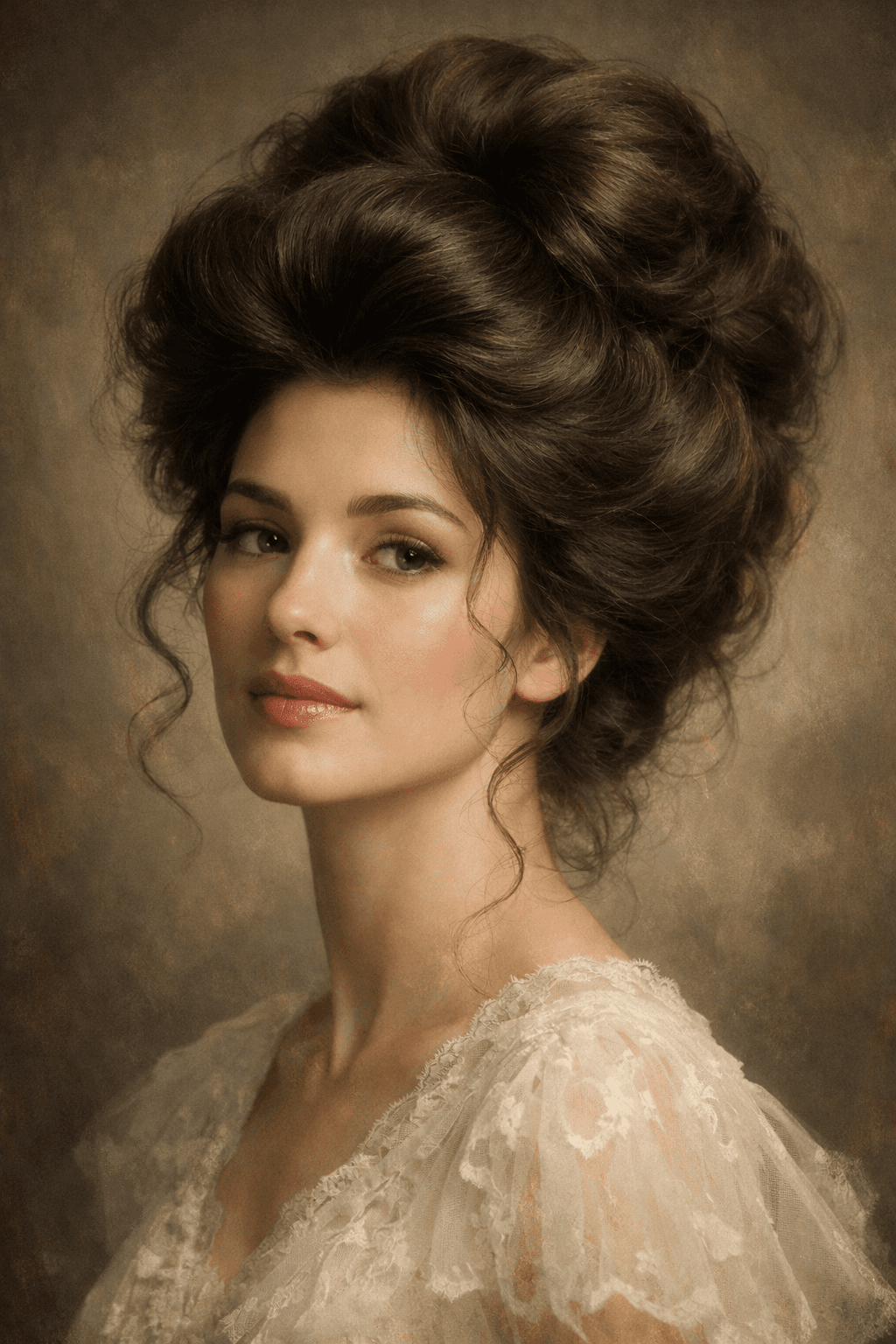
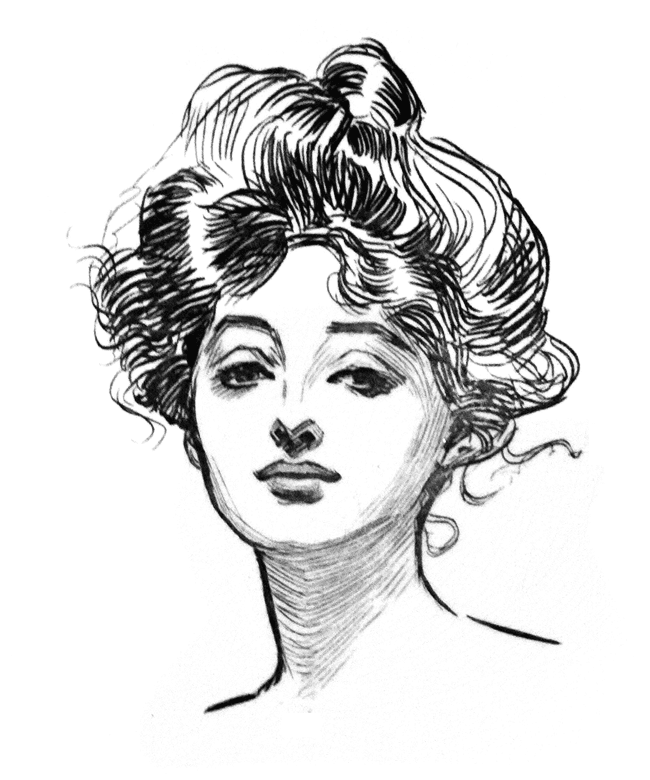
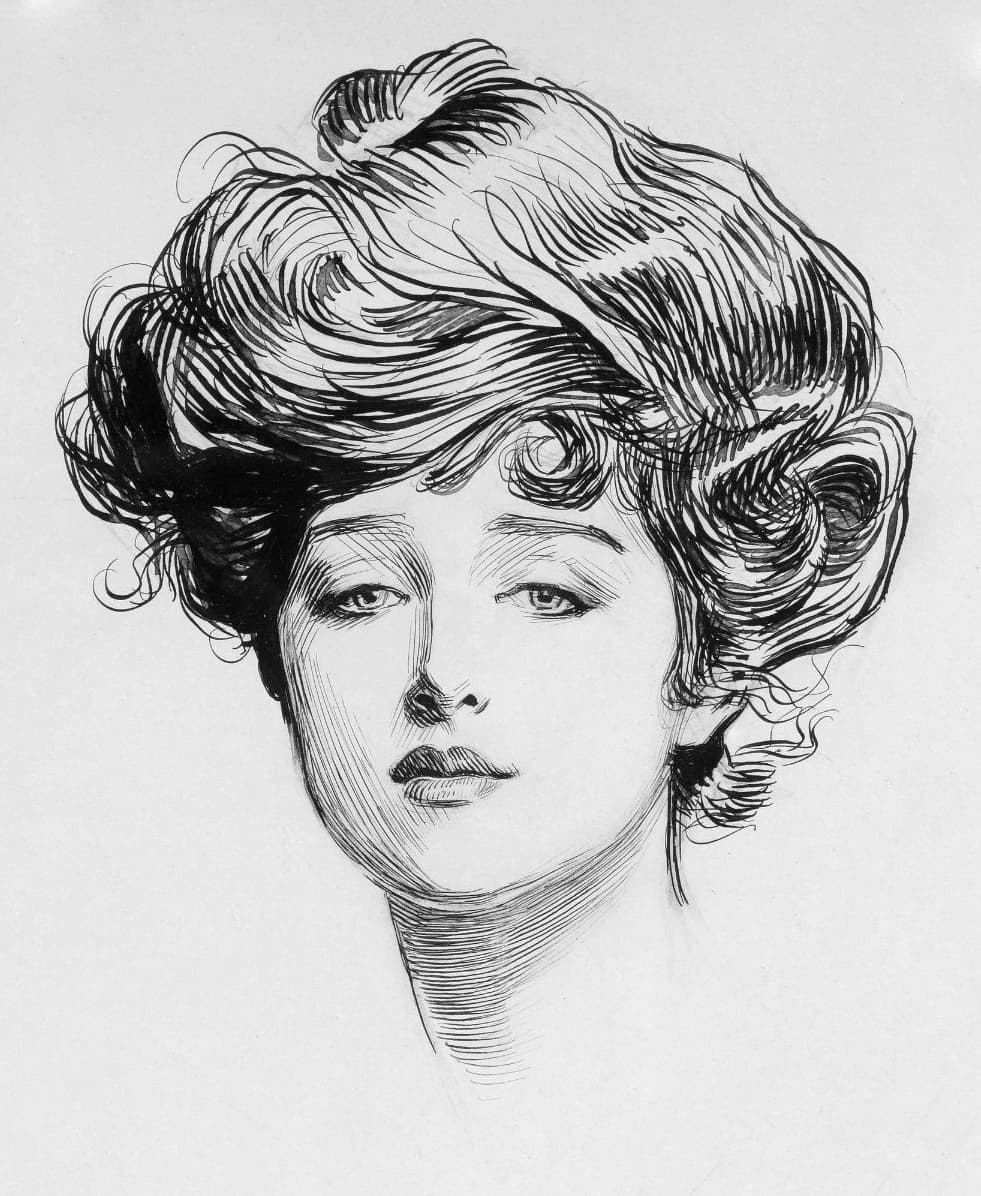
The Gibson Girl hairstyle represents a truly unique phenomenon in the history of fashion, where an aesthetic ideal originated not from a real, living person or royal figure, but entirely from the pen-and-ink illustrations of an artist, Charles Dana Gibson, in the 1890s.42 This style came to define the Edwardian era and the Gilded Age, embodying the idealized 19th-century and early 20th-century American woman. The Gibson Girl was depicted as athletic, highly independent, sophisticated, confident, yet undeniably and traditionally feminine.43 The massive, sweeping, gravity-defying hairstyle was a necessary aesthetic complement to the extreme "S-bend" or "swan-bill" corset silhouettes of the time, providing a visual architectural counterbalance to the wide skirts and massive, wide-brimmed hats required by high society.43 It effectively bridged the gap between the severe, restrictive Victorian era and the impending liberation of the modern flapper of the 1920s, representing a final, glorious, oversized peak of romantic, long-haired female ornamentation.44
Structural and Morphological Breakdown
The Gibson Girl updo is a mechanical triumph of creating the optical illusion of massive weight and dense volume while actually maintaining a soft, airy, and romantic texture.42 The foundational element of the structure is a massive pompadour or bouffant that crowns the head.43 To achieve this architecture, the immensely long hair is flipped forward, heavily backcombed at the roots to create a structural base, and then gathered loosely at the very top of the crown.45 Instead of pulling the hair tight against the scalp (as seen in the chignon), the hair is deliberately pushed upward and forward, creating a dramatic, puffy "halo" or roll that extends out over the forehead and covers the upper ears.42 The gathered ends are then pinned into a soft, highly voluminous chignon, roll, or messy bun resting at the very apex of the head.44 Finally, thin, meticulously curled tendrils are intentionally pulled free at the nape, ears, and temples, cascading down the neck to frame the face and soften the grand, intimidating scale of the updo.42
Borrow The Finish
Get style icons, color direction, and the details that make a signature hairstyle feel complete.
The full auraDNA report goes beyond haircut inspiration. It connects your palette to hair, makeup depth, accessories, wardrobe choices, and style-icon references so the whole look reads as deliberate, not pieced together.
Synthesis of Morphological and Algorithmic Paradigms
The forensic deconstruction of these ten classical hairstyles reveals a continuous, cyclical tension between structural rigidity and organic entropy within the history of female aesthetics. The evolution of cosmetology is not merely a timeline of vanity; it is an active documentation of applied physics, chemistry, and sociology. Styles such as the Finger Wave and the Beehive represent a forceful imposition of severe mathematical order upon the biological filament.1 These styles rely heavily on chemical lacquers, thermal energy, and extreme friction (backcombing) to completely defeat gravity and override the natural follicular flow of the hair.16 In direct contrast, styles such as the Pixie Cut, the Shag, and the Afro embrace and amplify the natural kinetics and geometry of the hair. They utilize advanced point-cutting, razor techniques, and the interlocking geometry of natural curls to achieve volume through organic expansion rather than artificial, product-heavy scaffolding.10
Furthermore, the data indicates a profound, inextricable link between major sociopolitical events and structural hair modifications. The French Bob was not merely a transient aesthetic shift, but a physical, mechanical severing of Victorian restriction post-WWI, signaling the birth of the modern, emancipated woman.1 Similarly, Victory Rolls engineered a way to allow women to safely operate heavy machinery during the intense labor shortages of WWII without sacrificing the era's cultural expectations of pristine glamour.19 The Afro served as a vital, visible pillar of the Civil Rights movement, reclaiming bodily autonomy from oppressive Eurocentric beauty standards.39
When mapping these biological, chemical, and historical constructs into the algorithmic space of modern text-to-image generation, the prompt formulations must transcend basic stylistic naming conventions. Generative models require precise lexical direction regarding the physics of the hair to avoid collapsing into generic representations. This requires defining the sharp geometric terminus of a blunt bob 7, the light-scattering diffusion of 4C coils 40, the high-contrast specular highlighting on a highly tensioned chignon 28, and the aerodynamic, hollow voids of the victory roll.21 By specifying the exact interaction between light sources, gravitational pull, keratin texture, and the specific cutting implement used, the digital latent space can accurately reconstruct the complex physical reality of these timeless aesthetic architectures.
The physical manipulation of women's hair remains a deeply codified language of structure, tension, and texture. The ten hairstyles detailed herein—the French Bob, the Pixie Cut, Finger Waves, Victory Rolls, the Beehive, the Chignon, the French Twist, the Shag, the Afro, and the Gibson Girl—serve as the foundational lexicon of modern beauty. Their endurance is attributed directly to their precise mechanical interactions with human facial geometry and their unparalleled ability to convey distinct psychological and sociological states. By understanding the mechanical reality of these styles, we ensure that their distinct morphological signatures will continue to be accurately preserved, simulated, and iterated upon within the digital frontier.
Works Cited
- Iconic Haircuts and Styles From Each Decade - Kult The Salon
- The 50 Most Iconic Hairstyles of All Time - The Cut
- Women's Hairstyles Throughout History - eSalon
- Classic Haircuts That Never Go Out of Style - Salon Voss
- 10 Chic French Bob Hairstyles | Rush Hair & Beauty
- 20 of the Chicest Ways To Wear a French Bob | Hair.com By L'Oréal
- Guide to French Bobs | How to Carry Off a French Bob - John Frieda
- File:Louise Brooks bob, ca. 1926.jpg - Wikimedia Commons
- File:LB 1927 P703-83.jpg - Wikimedia Commons
- Free Pixie Cut Filter Online
- Pixie Cut Filter | Try on Pixie Cut Online Free - BeautyPlus
- AI Pixie Cut Filters | Realistic and Instant Try-ons - LightX
- Pixie Hair Cut Filter: Try Virtual Styles Before You Chop - The Right Hairstyles
- File:Holden-Hepburn-Sabrina.jpg - Wikimedia Commons
- File:Mia Farrow - Rosemary's Baby.jpg - Wikimedia Commons
- 25 Finger Wave Styles We Dare You to Try - Unruly
- File:MDafoeBob20s.jpg - Wikimedia Commons
- Category:Marceled hair - Wikimedia Commons
- How to Do a Vintage Victory Rolls Hairstyle -
- History of the Victory Roll Hairstyle
- Victory rolls - Wikipedia
- Victory Rolls Hairstyle: What They Are & How to Wear Them
- Category:Beehive hairstyle - Wikimedia Commons
- Category:Beehive hairstyle - Wikimedia Commons
- Beehive (hairstyle) - Wikipedia
- File:Woman with beehive hairstyle, posing (1488931).jpg
- File:Woman with beehive hairstyle, posing (1488912).jpg
- 32 Chignon Hairstyles That Are Perfect for Every Occasion | Hair.com By L'Oréal
- Category:Chignon (hairstyle) - Wikimedia Commons
- File:Chignon-jennadrudi.JPG - Wikimedia Commons
- Category:Chignon (hairstyle) - Wikimedia Commons
- Step-by-step French twist tutorial!❤️ #hairtutorial #hairstyle - YouTube
- AI Artwork Prompts for Feminie hair styles - PROMPTCACHE
- Textured French Twist | Day 7
- File:Comtesse de Clermont-Tonnerre 2000 CKS 06297 0072 000(011024).jpg
- Master the Modern Shag Haircut: Cutting and Styling Techniques | SNEAK PEEK - YouTube
- What Is a Shag Haircut? A Complete Styling Guide - Strand & Lock London
- File:Shag hairstyle 01.jpg - Wikimedia Commons
- Free Online Afro Hair Filter - OpenArt
- [Detailed Guide] Using Afro Ladies' Hairstyles With AI Transformation - insMind
- Category:Afro - Wikimedia Commons
- This TikTok-Trending 19th-Century Hairstyle Is Frizzy-Hair Friendly—Here's How Wear It in 2025 - PureWow
- Gibson Girl | Aesthetics Wiki - Fandom
- Perfecting Vintage: A Five-Minute Gibson Girl - Marjorie - WordPress.com
- The Gibson Girl hairstyle - Mademoiselle Charousse
- File:Gibson Girl.png - Wikimedia Commons
- File:Gibson Girl by Charles Dana Gibson.jpg - Wikimedia Commons