The Science of Flattering Hair Color
A first-principles article on pigmentation, optics, contrast, aging, and why certain hair colors frame the face more successfully than others.
Quick answer
Hair color looks flattering when its hue, value, chroma, and contrast align with the biology of your skin, eyes, and natural pigmentation, then interact with light in a way that supports facial clarity instead of fighting it.
What you will learn
- Hair color harmony starts with melanin biology, not random trend language.
- Specular shine, subsurface skin scattering, and simultaneous contrast explain why the same dye can brighten one face and harden another.
- The 12-season system works best when it preserves your natural undertone, value depth, chroma, and contrast rather than forcing dramatic change.
Aesthetic harmony between human hair color, skin tone, and eye color is frequently relegated to the domain of subjective artistry, intuitive styling, and ephemeral fashion trends. However, the determination of what specific hair color optimally flatters an individual is fundamentally rooted in empirical science. It operates at the rigorous intersection of biological pigmentation, the physics of light propagation, and the neurological processing of color. To understand hair color suitability from first principles, one must systematically deconstruct the biological mechanisms that produce human pigment, the optical dynamics of how light scatters through translucent tissue and reflects off cylindrical hair fibers, and the psychophysical algorithms the human visual cortex utilizes to interpret spatial contrast and chromatic adaptation.
By integrating the biochemistry of melanogenesis, the Munsell colorimetric system, the physics of bidirectional reflectance distribution functions, and the psychophysics of contextual modulation, a quantifiable and highly predictive framework for human color harmony can be established. This report provides an exhaustive, multidisciplinary analysis of the factors dictating hair color suitability. It explores the cellular origins of skin undertones, the physics of light scattering, the neurological mechanics of simultaneous contrast, and the mathematical mapping of the 12-season color analysis system. Furthermore, it examines the physiological impact of chronological aging and environmental exposure on color perception, providing a complete scientific paradigm for optical neutralization and aesthetic optimization.
The Biological and Genetic Architecture of Human Pigmentation
The foundational element of any rigorous color analysis is the innate biochemical makeup of the individual. Human skin, hair, and eye colors are not derived from a palette of discrete, independent dyes, but rather from the varied concentration, density, and distribution of a single, complex class of polymer: melanin. The precise genetic regulation of melanin determines the baseline hue, value, and chroma of the human canvas, establishing the parameters within which any artificial hair coloration must operate to achieve visual harmony.
Melanocyte Biology and Embryogenesis
Melanin pigments are synthesized within highly specialized neural crest-derived cells known as melanocytes. During the complex process of embryogenesis, these cells migrate as melanoblasts into the epidermis and hair follicles via the mesenchyme.1 Typically, all modern humans-who share a common ancestor originating approximately 200,000 years ago in Africa-possess roughly the same baseline number of melanocytes.2 It is not the quantity of these cells that generates the vast spectrum of human coloration, but rather the rate of melanin production, the physical size of the synthesized pigment granules, and the density of their distribution throughout the epidermal layers.2
The synthesis of melanin occurs exclusively within specialized cellular organelles called melanosomes. This intracellular compartmentalization provides a critical evolutionary advantage, as it strictly isolates the highly reactive and potentially toxic quinoid intermediates of melanogenesis from the rest of the cellular machinery, preventing oxidative damage to the cell.1 Once synthesized, these melanosomes are transported via a complex intracellular network. Microtubules, motor proteins such as dynein and kinesin, actin filaments, and specific transport proteins like myosin Va are all intimately involved in the transport of melanosomes from the perinuclear area toward the plasma membrane, eventually transferring the pigment to neighboring keratinocytes.4 The final visible skin tone and hair color of an individual is the visual summation of these multicellular epidermal melanin units-the combined output of a single melanocyte and its associated pool of keratinocytes.5
The Dopaquinone Pathway and Melanin Typology
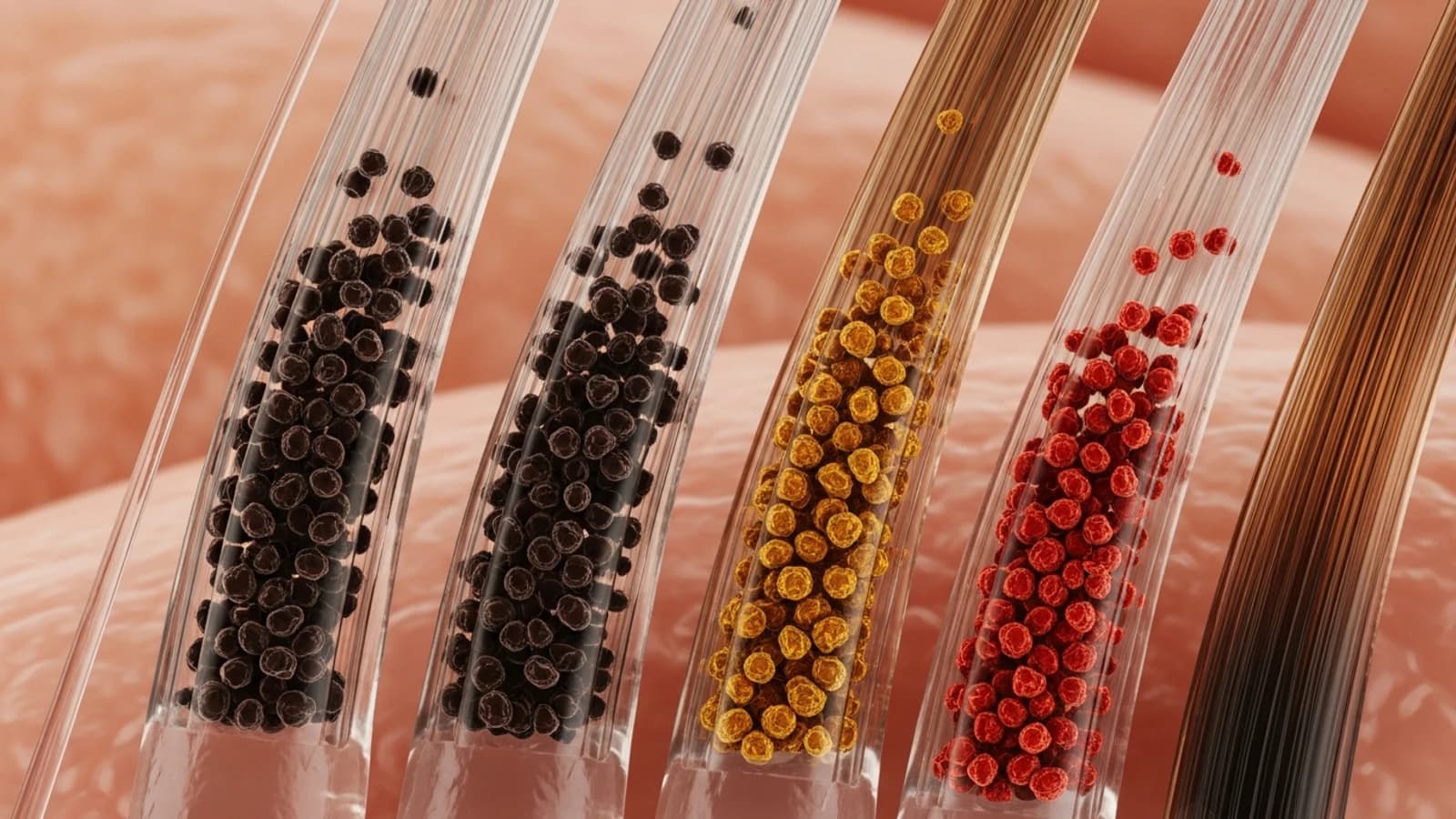
The specific undertones of human skin and the natural color of human hair are dictated by the divergence of the melanin synthesis pathway at the dopaquinone stage.6 While the enzyme tyrosinase initiates the process, the subsequent enzymatic reactions dictate the final structural polymer. There are three primary types of melanin within the human body, two of which actively contribute to visible aesthetics:
| Melanin Type | Biosynthetic Pathway | Phenotypic Expression | Primary Biological Function |
|---|---|---|---|
| Eumelanin | Diverges left from dopaquinone (orange pathway) | Produces black and brown pigments in hair, eyes, and skin. | Highly photoprotective; limits UV penetration and scavenges reactive oxygen radicals. |
| Pheomelanin | Diverges right from dopaquinone (blue pathway) | Produces red and yellow pigments; dominates in red hair and pinkish tissues (lips, nipples). | Provides lighter pigmentation; less effective at UV protection compared to eumelanin. |
| Neuromelanin | Internal neural synthesis | Dark coloration of specific neuron populations in the brain. | Regulates metal ions and protects neurons; does not affect external visible aesthetics. |
Eumelanin is the dominant pigment in individuals with dark hair, dark eyes, and deeply pigmented skin. It is remarkably efficient at absorbing ultraviolet radiation and protecting the underlying DNA from photodamage.1 Pheomelanin, conversely, is responsible for the warmer, golden, or reddish undertones in human skin. When pheomelanin is present in high concentrations alongside relatively low eumelanin levels, it produces natural red or strawberry blonde hair.2
Genetic Regulation of the Pigment Matrix
The delicate balance between eumelanogenesis and pheomelanogenesis is tightly regulated by a complex network of genetic factors. Recent systematic studies have identified no fewer than 169 distinct genes involved in human skin coloration, highlighting the immense complexity of this biological process.3 Among these, the melanocortin 1 receptor (MC1R) gene is the primary determining factor in the eumelanin-to-pheomelanin ratio.3
The MC1R protein acts as a critical biological switch. When the receptor is activated, it triggers a series of intracellular chemical cascades within the melanocytes that stimulate the production of eumelanin.7 Individuals with two functioning copies of the MC1R gene-accounting for an estimated 90 percent of the global population-exhibit high amounts of eumelanin, resulting in naturally brown or black hair.7 However, if the MC1R gene possesses loss-of-function variations, the receptor is blocked or deactivated. In this state, the melanocytes default to pheomelanin production. Individuals with deactivated copies of this gene exhibit auburn, strawberry blond, or bright red hair due to the overwhelming dominance of red and yellow pigments.7 Other critical genetic components, such as the KIT ligand (KITLG) gene, ensure the permanent survival, proliferation, and correct migration of these melanocytes throughout the organism's lifespan.3
The Physics of Light Propagation and Optical Interaction
The biological presence of melanin establishes the physical substrate of human pigmentation, but it only partially dictates the perceived color of an individual. Color is not an inherent, immutable property of matter; rather, it is a complex psychophysical response to specific wavelengths of visible light interacting with a surface, reflecting, and subsequently entering the observer's eye. To understand why a specific hair color flatters a specific skin tone from first principles, one must thoroughly examine the physics of light propagation, encompassing both specular reflection off cylindrical assemblies and subsurface scattering within translucent biological tissues.
Specular and Diffuse Reflection in Hair Assemblies
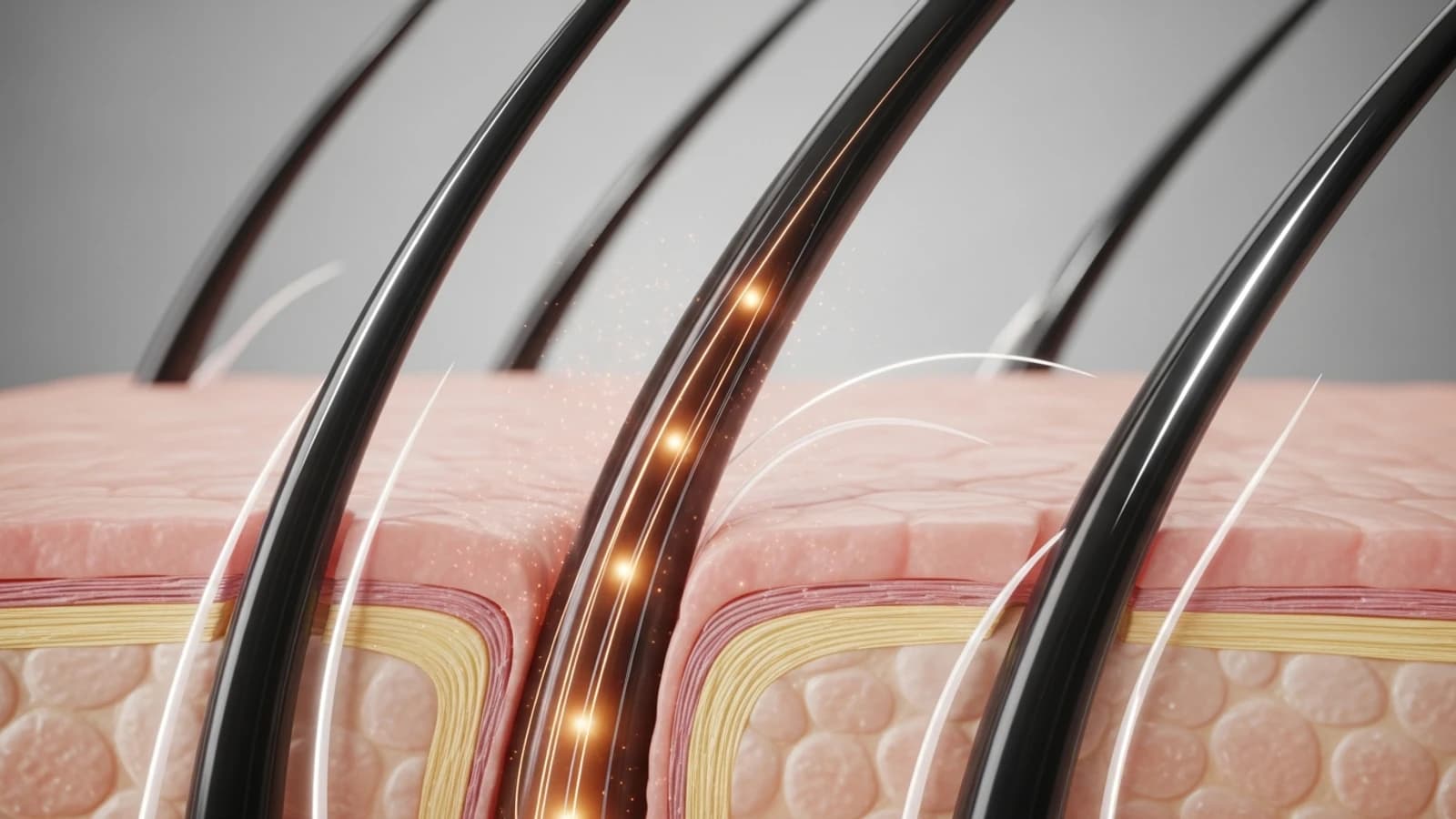
Human hair fibers operate physically as semi-transparent cylinders with a standard refractive index of approximately 1.558 When environmental light strikes a hair fiber, the interaction is multifaceted and highly dependent on the surface geometry of the fiber. A portion of the incoming light reflects directly off the outermost layer of the hair, known as the cuticle. Because the human hair cuticle is composed of overlapping, microscopic scales, these light rays diverge slightly upon impact—by an amount of just about 3 degrees.8 This surface-level interaction causes specular reflection, which registers visually as "shine" or "luster." Because this light does not enter the pigment-bearing cortex, specular reflection maintains the exact color temperature and hue of the incident light source.8
Simultaneously, a separate and significant portion of the light penetrates the cuticle and enters the cortex of the hair fiber through refraction. Inside the cortex, the light interacts directly with the embedded melanin granules. Specific wavelengths are absorbed by the pigment, while the unabsorbed wavelengths undergo multiple internal scattering events before eventually exiting the fiber. This escaping light creates diffuse reflection, which carries the actual perceived color of the hair-the color of the internal pigments.8
The visual interplay between specular reflection (shine) and diffuse reflection (color) defines the fundamental concept of hair contrast. High-resolution photographic analysis and microscopic imaging reveal that specular reflection on human hair consists of a multitude of microscopic light dots, typically separated by distances of 81 to 145 micrometers along the length of the fiber.9 Darker hair colors, which contain high concentrations of eumelanin, absorb massive amounts of diffuse light. This high rate of internal absorption prevents diffuse light from washing out the surface reflection, thereby exaggerating the visual contrast between the dark pigmented regions and the bright specular reflection dots.9 This physical phenomenon explains why naturally dark hair inherently appears glossier and highly reflective, whereas light blonde hair-which reflects a massive amount of diffuse light due to low melanin density-washes out the sharp contrast of the specular shine, appearing less glossy.10
Subsurface Scattering and BSSRDF Modeling in Human Tissue
While hair color perception is dominated by cylindrical reflection and refraction, human skin color perception is dominated by subsurface scattering (SSS). Skin is a highly translucent, heterogeneous medium consisting of distinct structural layers with varying refractive indices and distinct chromophores (light-absorbing chemical compounds).11 To computationally simulate and understand this complex interaction, physicists and computer graphics researchers frequently utilize the Torrance-Sparrow bidirectional reflectance distribution function (BRDF) combined with a bidirectional scattering-surface reflectance distribution function (BSSRDF).12
When light impacts human skin, a minor fraction—approximately 4 to 7 percent—reflects directly off the thin, outermost lipid layer, creating a slight surface glare. However, the vast majority of the light transmits into the underlying epidermis and dermis.11 Inside the biological tissue, the light undergoes a chaotic process of multiple scattering, bouncing off collagen fibers, cellular structures, and lipid boundaries in a completely nonlinear fashion.11
During this subterranean journey, specific wavelengths of light are selectively absorbed by the primary biological chromophores:
| Biological Chromophore | Tissue Location | Peak Absorption Wavelengths | Visual Result upon Reflection |
|---|---|---|---|
| Melanin | Epidermis | Short wavelengths (Blue, UV) | Dictates overall lightness/darkness; highly absorbs blue light, allowing red/infrared to pass. |
| Hemoglobin | Dermis (Vascular network) | Blue/Green wavelengths (~400 nm) | Strongly reflects red wavelengths, granting skin its flushed, rosy, or reddish undertone. |
| Water | Epidermis and Dermis | Red wavelengths | Contributes to a slight underlying blue/cool shift within the tissue. |
Melanin acts as a broadband optical absorber, soaking up short-wavelength light heavily, but allowing longer wavelengths (such as reds and near-infrared) to pass through with increasing freedom.11 Beyond the 1100 nm threshold, melanin absorption becomes almost entirely negligible, rendering all skin types virtually identical in their optical properties at this extreme wavelength.11 Oxygenated hemoglobin, located deeper in the dermal vascular networks, heavily absorbs blue and green wavelengths while strongly reflecting red, which provides the characteristic pink or ruddy undertones associated with healthy blood flow.11 Water, trapped within keratin fibers and dermal tissue, preferentially absorbs red light, adding a subtle cooling effect to the overall subsurface optical mix.11
The light that manages to escape back into the external environment after this internal multi-scattering event is what the human eye perceives as the individual's definitive skin tone.15 Because the light has diffused through a physical area significantly larger than its initial point of entry, it produces a characteristic optical "smoothing effect." This blurring of the light's exit trajectory softens the appearance of facial features, diminishing the harshness of pores and micro-wrinkles.11 Consequently, when a colorist attempts to determine a suitable hair color, they are not matching the hair to a flat, opaque, two-dimensional surface, but rather framing an internally illuminated, translucent, three-dimensional medium governed by complex fluid dynamics and optical scattering.16
Environmental Illumination and Spectral Transmission
Because both hair and skin color are entirely dependent on the specific wavelengths of reflected light, the ambient lighting environment plays a fundamentally critical role in color perception. Optical devices and human eyes both rely on the transmission of light through human tissue to determine color accuracy.14 Natural daylight, particularly clear midday sunlight, provides the most balanced, full-spectrum illumination available. It contains a proportional distribution of all wavelengths in the visible spectrum, allowing both warm (pheomelanin) and cool (eumelanin and underlying vascular structures) undertones to be perceived simultaneously without spectral distortion.17
Conversely, artificial light sources drastically alter colorimetry. Incandescent lighting skews heavily toward the warm, red and yellow end of the spectrum, suppressing the visibility of blue and ash undertones and artificially enhancing the warmth of both hair and skin. Fluorescent lighting often exhibits sharp spikes in the green and blue spectrums, which can sap the vitality from warm skin tones, leaving the individual appearing sallow, grayish, or lifeless. Therefore, any rigorous scientific evaluation of hair color harmony must be conducted under full-spectrum, natural lighting to prevent light-source bias and ensure accurate phenotype mapping.17
Chromatic Adaptation and Visual Constancy
The physics of light explains how photons interact with biological matter and eventually reach the retina, but it does not fully explain how the human brain interprets those photons. Human vision is not akin to a digital camera taking objective, absolute pixel measurements; rather, it is an active, highly interpretive neurological process heavily influenced by context, environment, and biological programming.18
The visual system is deeply invested in maintaining color constancy—the cognitive assurance that an object remains the same color despite enormous variations in the average luminance and chromaticity of the environmental illumination.19 This stability is achieved through several advanced neurological mechanisms, primarily chromatic adaptation and luminance adaptation.19 Humans are trichromatic, relying on cone excitation space to interpret a rich and complex visual world.20 When an individual steps from cool natural daylight into a warmly lit room, their visual system undergoes chromatic adaptation, adjusting the baseline perceptual threshold to partially neutralize the yellow/red bias of the room's light.20
However, chromatic adaptation often only adjusts partially to the mean color of the stimulus, leaving a residual bias in the color appearance of the visual field.21 Furthermore, the human brain has evolved specific sensitivities to certain color axes, particularly when evaluating human faces. Research utilizing simulated skin images and polychromatic stimuli indicates that human observers can detect significantly smaller color differences in face stimuli than in non-face object stimuli, particularly along the red-green (a*) color axis.20 This heightened sensitivity is theorized to possess evolutionary salience; detecting subtle variations in facial redness allows humans to accurately perceive vital social and physiological cues, such as anger, cardiovascular health, or elevated body temperature.22 Consequently, the framing hair color has an outsized impact on how the brain processes these highly sensitive red-green shifts in the adjoining skin.
The Psychophysics of Color Perception and Contextual Modulation
The aesthetic suitability of a hair color relies fundamentally on how the brain processes the boundary where the hair framing meets the facial skin. This interaction is governed by several established laws of psychophysics and optical illusion, which manipulate the perceived hue, value, and texture of the face based entirely on the surrounding contextual colors.18
Chevreul's Law of Simultaneous Contrast
In 1839, the French chemist Michel-Eugène Chevreul formalized the Law of Simultaneous Contrast, an optical principle that remains the absolute cornerstone of modern color theory, textile design, and hair color formulation.25 Appointed as the director of dyes at the national Gobelins textile factory in Paris, Chevreul sought to understand why certain black fabrics appeared to shift in depth depending on their surrounding colors. Through rigorous experimentation, he discovered that when two colors are placed side by side, the human visual system automatically exaggerates their differences, pushing them to appear "as dissimilar as possible, both in their optical composition [hue] and in the height of their tone [value]".26
In the context of human facial aesthetics, the hair mass acts as the dominant framing color (the ground), and the facial skin acts as the framed object (the figure).27 If a highly saturated, warm-toned hair color—such as a vibrant, synthetic copper—is placed next to skin that possesses a subtle, cool, pink undertone, Chevreul’s law dictates that the brain will perceive the skin as overwhelmingly cool, perhaps even bordering on an unhealthy, icy pallor. The warmth of the hair forces the brain to exaggerate the coolness of the skin to maximize the contrast boundary.27 Conversely, if highly cool, ash-toned hair surrounds naturally warm, golden skin, the skin will be pushed by the visual cortex to appear increasingly yellow or sallow. Aesthetically harmonious hair color generally seeks to minimize abrasive simultaneous contrast, utilizing complementary or analogous hues that smoothly transition into the skin’s natural biological reflectance, thereby making the skin look smooth, bright, clear, and healthy.27
The Bezold Effect and Spatial Assimilation
While Chevreul's Law of Simultaneous Contrast applies to large, solid blocks of contiguous color, the Bezold Effect—named after the German professor of meteorology Wilhelm von Bezold—describes the inverse optical phenomenon.29 The Bezold effect occurs when small, finely interspersed areas of color are viewed together. In this specific spatial scenario, the visual system fails to contrast the colors and instead assimilates them into a unified, shifted hue. This is commonly referred to as spatial color mixing or the von Bezold spreading effect.30
This precise optical mechanism is leveraged extensively by modern hair coloring techniques such as balayage, "babylights," and micro-foiling.32 By weaving incredibly fine ribbons of light blonde hair throughout a dark brunette base, the overall perceived value of the hair mass is lightened, and the specific warmth or coolness of the highlights optically bleeds into the base color without creating harsh, contrasting lines.34 Face-framing highlights explicitly exploit the Bezold effect to bounce specific, highly controlled wavelengths of light directly onto the face, simulating the effect of a continuous, flattering light source.33 This spatial assimilation draws the viewer's eye toward the internal features, artificially enhancing jawline definition and eye brightness through peripheral optical assimilation.33
Contextual Modulation and Contrast Gain Control
Beyond the manipulation of hue, the inherent value (lightness or darkness) of a hair color fundamentally alters the brain's perception of skin texture, age, and facial geometry. This phenomenon is neurologically managed by models of contrast gain control within the visual cortex, which continuously recalibrate the eye's sensitivity based on the surrounding luminance.36
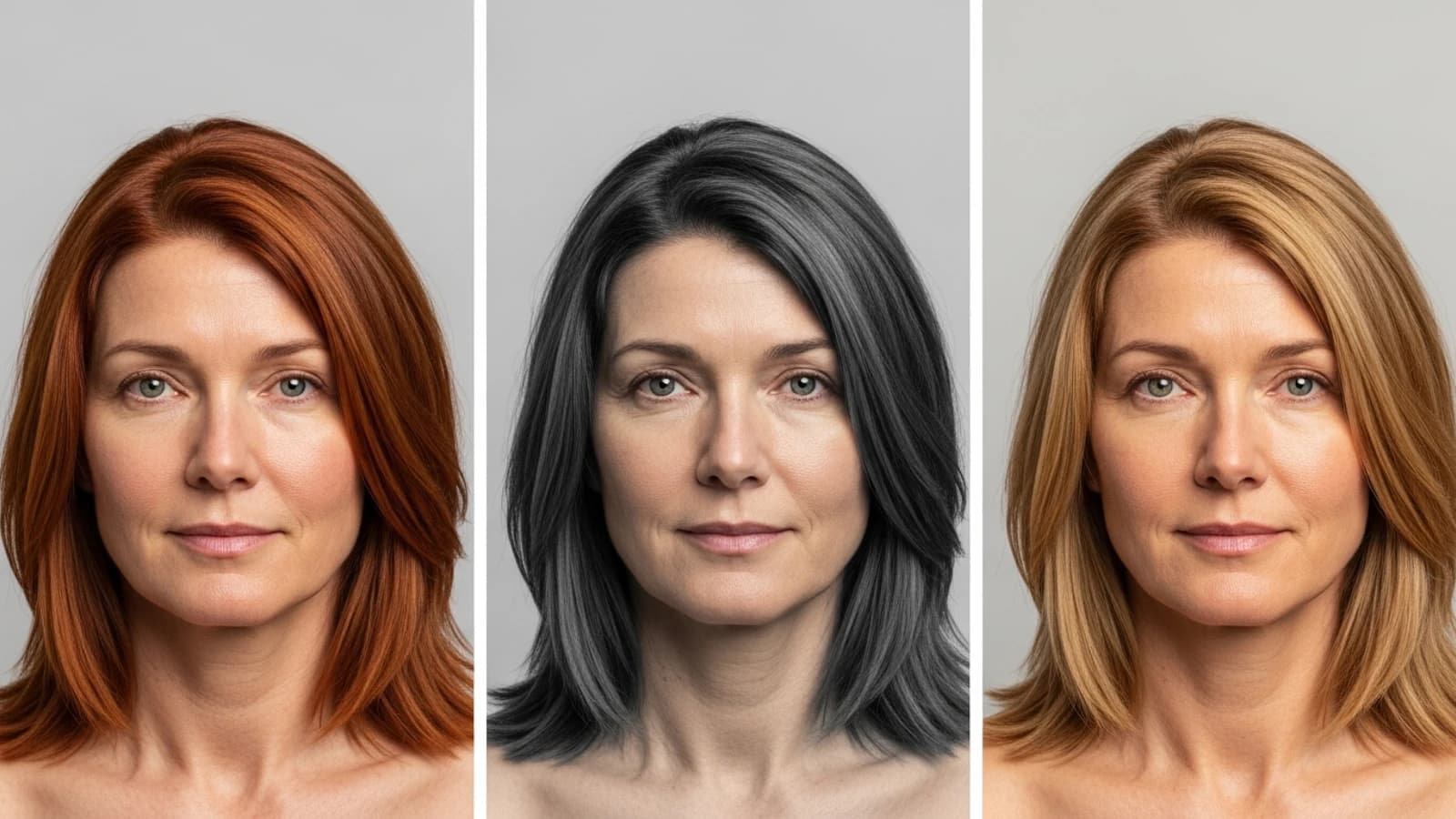
In advanced psychophysical studies analyzing the contextual modulation of facial skin, researchers manipulated the luminance of subjects' hair using controlled images from the FACES database.36 In a study involving 41 faces of German women, the subjects' hair was digitally darkened or lightened along the L* dimension of the CIELab color space, and observers were asked to rate the evenness and wrinkled appearance of the skin.36 The studies empirically demonstrated that high-contrast borders—specifically placing dark hair against light skin—caused the internal skin texture to appear significantly more even and homogeneous.36 By providing a stark, dark external frame, the brain recalibrates its internal contrast threshold, causing the minor textural variations within the skin (such as small pores, slight hyperpigmentation, or minor capillary visibility) to fall below the perceptual threshold of noticeability.36
However, this increased external contrast does not possess the capacity to hide deep structural geometry. The study rigorously noted that while darker hair made the skin look more even in surface tone, it did not make the skin look less wrinkled.36 The deep shadows cast inside structural wrinkles carry too high a contrast of their own to be mitigated by the peripheral hair frame.36 Furthermore, hair color alignment and surface shine independently contribute to evolutionary assessments of health and attractiveness. High-shine, straight-aligned hair is neurologically processed as a reliable biomarker of youth and vitality, exerting a strong psychological halo effect that causes the viewer to rate the individual's facial features more positively overall, regardless of the specific hue.37 Studies have also indicated that smaller perceived contrast between hair color and skin color in lightly-pigmented young women generally resulted in more positive aesthetic responses regarding youth and health.38
Munsell Colorimetry and the Mathematical Mapping of Phenotypes
To transition from abstract biological concepts and generalized optical illusions to a highly practical, reproducible framework for color selection, the professional beauty, dermatology, and styling industries rely extensively on the Munsell Color System. Developed by Albert H. Munsell, this system creates a precise three-dimensional mathematical matrix that assigns specific numerical values to visual color perception, ensuring that any human skin tone or synthetic hair dye can be quantitatively mapped and compared without relying on subjective language.39
- Hue (H): The actual color family on the visible spectrum, measured by degrees around horizontal circles. In human pigmentation, hue distinguishes red from blue, or green from yellow.42 In styling terminology, hue is generally discussed as temperature: warm (yellow-red, indicative of pheomelanin dominance) or cool (blue-red, indicative of underlying vascular dominance and eumelanin).39
- Value (V): The lightness or darkness of a color, measured vertically on the core cylinder from 0 (pure black) to 10 (pure white).40 Human skin tones generally fall between Munsell values of 2.5 (deeply pigmented, dark skin tones) and 8 (lightly pigmented, pale skin tones).45 A lower value indicates less light reflectance, while a higher value indicates a highly reflective, light surface.42
- Chroma (C): The saturation, purity, or brilliance of a color, measured radially outward from the neutral gray vertical axis at the center of each slice.40 A high chroma indicates a vivid, clear, "neon" or highly saturated color, while a low chroma indicates a muted, greyed, soft, or washed-out color.40 Human skin chroma typically ranges from 1 to 8, with higher numbers indicating a redder, more highly saturated vascular visibility.45
The Munsell system defines color via three independent, mathematically robust dimensions (HVC), often represented cylindrically as an irregular color solid 40:
By utilizing the Munsell HVC system, dermatological researchers and cosmetologists can classify a person's exact physical phenotype with clinical precision.45 For example, in a clinical study utilizing 417 subjects to detect erythema, researchers utilized Munsell charts to categorize subjects into distinct cohorts: light skin tones (Values 7-8), medium skin tones (Values 5-6), and dark skin tones (Values 2.5-4).45 An individual with high eumelanin content and thick dermal structure may map to a Value of 3 and a Chroma of 2 (Dark and Muted), whereas an individual with highly translucent skin, low melanin, and highly visible capillary networks may map to a Value of 8 and a Chroma of 7 (Light and Bright).
Selecting an aesthetically suitable hair color therefore transitions from an artistic guessing game into an exercise in mathematical alignment. The goal is to match the HVC coordinates of the artificial hair dye to the natural, biologically determined HVC coordinates of the subject's skin and eyes, creating perfect visual resonance and preventing abrasive optical dissonance.47 Advanced interpolation algorithms, such as those defined by the ASTM in 2008 and Centore in 2012, allow for the precise specification of arbitrary colors within this space, ensuring that hair color formulations can be perfectly calibrated to individual phenotypes.40
The 12-Season Color Analysis Framework: Flow Theory and Contrast Paradigms
The direct integration of Munsell colorimetry with aesthetic styling resulted in the development of Seasonal Color Analysis. Originally introduced as a simplified four-season model (Spring, Summer, Autumn, Winter) by the Swiss artist and Bauhaus instructor Johannes Itten, the initial system proved biologically inadequate.48 It failed to account for the full diversity of human phenotypes, specifically struggling to accurately map individuals of color, those with mixed ethnic heritage, and those possessing neutral or cross-boundary features.49 The original model's primary flaw was its over-reliance on temperature (Hue) and lightness (Value), largely ignoring the critical third dimension of Munsell's system: Chroma (saturation).49
Consequently, the framework was refined and evolved into the highly accurate 12-season matrix utilized by modern image consultants. This expanded system fully respects the three-dimensional nature of the Munsell model. It categorizes individuals by isolating their single most dominant color characteristic (Hue, Value, or Chroma) and combining it with their secondary characteristic, resulting in twelve distinct subtypes.43
The Comprehensive 12-Season Matrix
The modern 12-season framework divides each of the four traditional parent seasons into three distinct sub-types. This creates a highly specific, mathematically grounded categorization system that matches the optical properties of the individual's skin, eyes, and hair to an ideal palette of fabrics, cosmetics, and artificial hair dyes.
| Parent Season | Subtype | Dominant Trait (Munsell Metric) | Secondary Trait | General Phenotypic Description and Optical Properties |
|---|---|---|---|---|
| Spring (Warm & Bright) | Light Spring | Light Value | Warm Hue | High reflectance, low eumelanin, delicate golden undertones, low contrast. |
| Spring (Warm & Bright) | True Spring | Warm Hue | Bright Chroma | Distinct yellow-gold undertones, completely devoid of cool-blue influences. |
| Spring (Warm & Bright) | Bright Spring | Bright Chroma | Warm Hue | High internal contrast, highly saturated clear features, glassy eyes. |
| Summer (Cool & Muted) | Light Summer | Light Value | Cool Hue | High reflectance, pink-blue undertones, low contrast, delicate ashy hair. |
| Summer (Cool & Muted) | True Summer | Cool Hue | Muted Chroma | Distinct blue-ash undertones, highly greyed vibrancy, completely devoid of warmth. |
| Summer (Cool & Muted) | Soft Summer | Muted Chroma | Cool Hue | Heavily blended, desaturated features, complex mid-tones, grayish overlays. |
| Autumn (Warm & Muted) | Soft Autumn | Muted Chroma | Warm Hue | Desaturated, earthy appearance, low surface contrast, muted golden tones. |
| Autumn (Warm & Muted) | True Autumn | Warm Hue | Muted Chroma | Heavy golden-bronze undertones, thick skin structure, rich but non-reflective. |
| Autumn (Warm & Muted) | Dark Autumn | Dark Value | Warm Hue | High eumelanin, deep underlying warmth, rich contrast, low light reflectance. |
| Winter (Cool & Bright) | Dark Winter | Dark Value | Cool Hue | High eumelanin, deep blue-olive undertones, striking depth and heavy shadows. |
| Winter (Cool & Bright) | True Winter | Cool Hue | Bright Chroma | Stark blue-icy undertones, high internal saturation, completely devoid of warmth. |
| Winter (Cool & Bright) | Bright Winter | Bright Chroma | Cool Hue | Extreme contrast (e.g., porcelain skin against jet black hair), vivid eye clarity. |
Flow Theory and the Contrast Paradigm
A critical scientific advancement inherent in the 12-season model is the inclusion of "Flow Theory." Flow theory acknowledges the biological reality that human pigmentation does not exist in rigidly separated, discrete categories.49 Because the system is built upon the continuous gradients of the Munsell irregular color solid, individuals exist on a spectrum and can "flow" between adjacent seasons that share dominant characteristics. For example, an individual typed as a Bright Spring and an individual typed as a Bright Winter both share the dominant Munsell trait of high Chroma (maximum saturation, clarity, and brightness).49 Therefore, they can flow into one another's aesthetic palettes, provided they carefully manage their secondary trait of temperature (Hue).49
Furthermore, the concept of visual contrast-defined as the degree of visual difference or distance between the lightest feature (typically the skin sclera) and the darkest feature (typically the hair mass or irises)-is absolutely paramount in determining hair color suitability.53
High Contrast Aesthetics: Individuals falling into the Winter sub-seasons frequently possess exceptionally dark hair paired with pale, highly reflective skin. The borders between these different colors and shades are sharply delineated.53 In these high-contrast looks, the transition from one color to another is striking, creating a dynamic, bold appearance that natively draws attention and defines facial geometry.53 If a naturally high-contrast individual dramatically bleaches their hair to a pale blonde, they destroy their inherent contrast metric. This severe reduction in contrast causes their facial features to lose definition, making the face appear structurally flat and causing the individual to look washed out.54
Low Contrast Aesthetics: Conversely, individuals categorized in the Light Summer or Light Spring seasons possess hair, eyes, and skin that all share a highly similar, elevated Munsell Value.42 Their beauty is derived from the subtle, seamless blending of these light tones. If a naturally low-contrast individual dyes their hair jet black or dark brown, the heavy, dark frame entirely overwhelms their delicate harmony. The brain's visual processing is hijacked by the immense contrast of the hair, pulling the viewer's focal point entirely away from the face and onto the hair mass itself.54
Hair color suitability is therefore defined as the deliberate mathematical replication and maintenance of the individual's inherent biological contrast and Munsell coordinates. By precisely mimicking the natural value depth and chroma intensity, the artificial hair color operates synergistically with the biological canvas, rather than competing against it.
Put Theory Into Practice
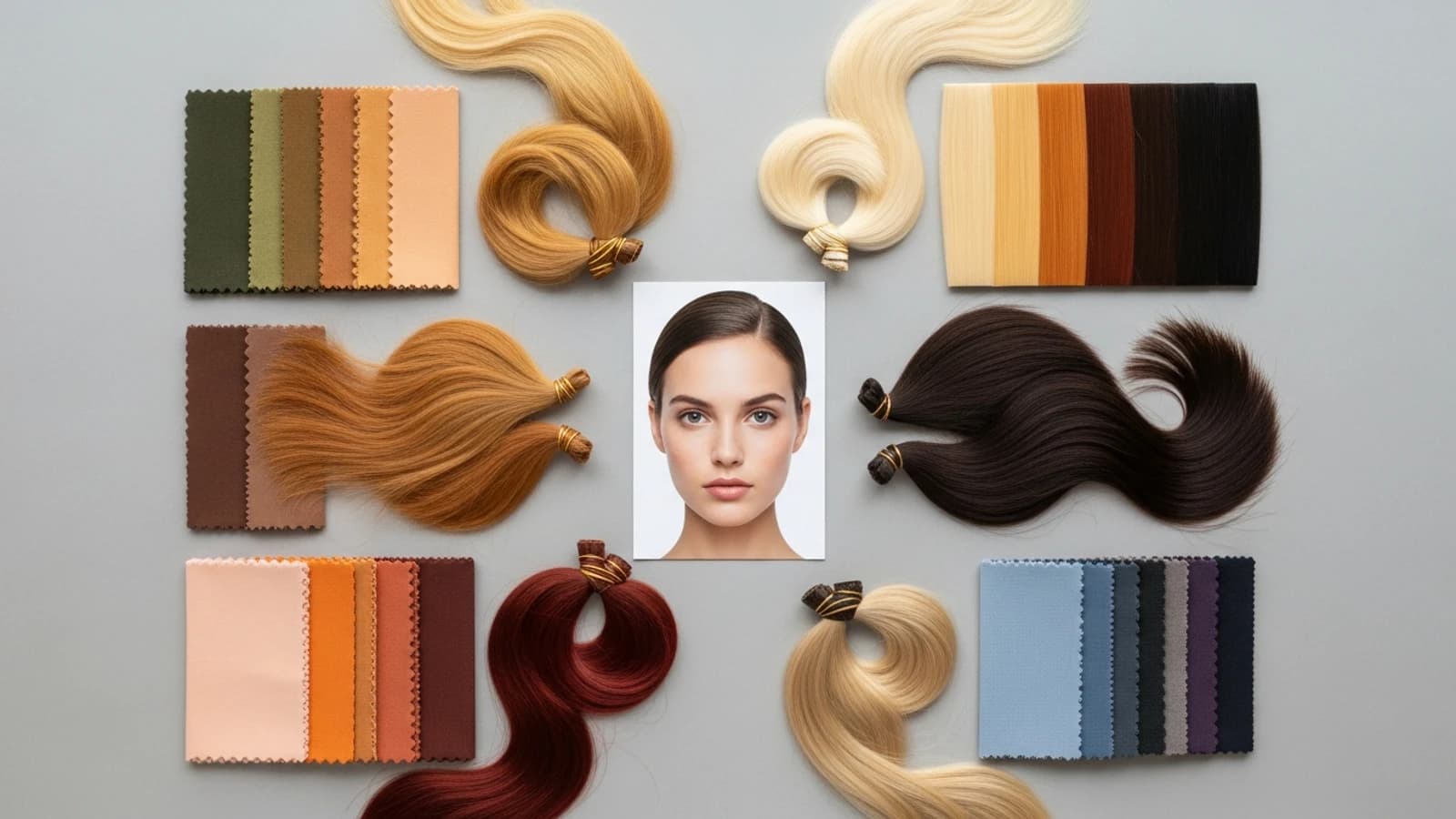
Try hair colors on your own photo, then get the shades that truly flatter you.
Use the instant hair try-on to test shades visually. If you want the hair colors that match your undertone, depth, and contrast, take the full auraDNA color analysis.
Optical Neutralization of Dermal Anomalies
Beyond merely maintaining harmony and matching Munsell coordinates, hair color can be actively and aggressively engineered to act as an optical corrective mechanism for specific dermal conditions and unwanted skin undertones. Just as Chevreul's Law dictates that neighboring colors heavily influence one another's perception, the foundational laws of complementary color theory allow skilled hair colorists to optically neutralize unwanted facial pigment. On the standard color wheel, colors positioned directly opposite one another are complementary. When juxtaposed, bordered, or layered, they effectively cancel each other out, driving the resulting visual perception toward a neutral gray, brown, or balanced baseline.55
Counteracting Facial Erythema (Redness)
Erythema is the clinical reddening of the skin due to vasodilation, increased localized blood flow, rosacea, acne inflammation, or acute ultraviolet B (UVB) radiation exposure.1 Because red wavelengths are heavily visible via subsurface scattering and possess high evolutionary salience for the human eye, erythema can easily overpower the entire complexion, causing the skin to appear inflamed and unbalanced.
According to fundamental color theory, green is the direct complementary color to red.56 In topical cosmetic applications, dermatologists and makeup artists utilize green-tinted primers directly applied to the skin to physically neutralize the red pigment of rosacea or blemishes, optically reducing the redness within minutes.55 In the chemistry of hair coloration, this principle translates to the utilization of "ash" tones. An ash blonde or ash brunette hair color formulation is structurally built upon heavy green and blue base pigments. When a green-based ash hair color frames a face suffering from widespread erythema, the visual proximity of the green hue optically absorbs and heavily dampens the perceived intensity of the red skin. The brain processes the complementary boundary and neutralizes the red, resulting in a significantly calmer, more even, and optically neutralized complexion.58
Counteracting Sallow Skin and Hypoxia
Sallow skin describes a complexion that has lost its natural vitality, presenting with an undesirable yellowish, brownish, or excessively pallid tone.59 Physiologically, sallow skin is rarely a natural skin undertone; rather, it is an external indicator of environmental damage, internal physiological deficiency, or illness. The primary biological cause of sallowness is anemia—a condition characterized by a lack of healthy red blood cells or a deficiency in hemoglobin.59 Anemia deprives the skin tissues of the vital oxygenated blood required to reflect the healthy rosy, blue/red wavelengths of light, leaving the skin pallid and yellowed.59 Acute anemia is often resolved via iron and vitamin B12 supplementation, which restores the hemoglobin and resolves the sallow appearance.59 External lifestyle factors such as chronic smoking and heavy environmental pollution induce massive oxidative stress, which further restricts vascular blood flow and accelerates the degradation of dermal collagen, compounding the yellowed, lifeless appearance.61
The direct complementary color to yellow on the color wheel is violet or purple.56 To optically rescue a sallow complexion while the underlying biological causes are being addressed, the application of violet-based hair colors is required. This can range from cool, rich burgundies and violet-blacks for darker seasons, to icy platinum blondes heavily toned with purple pigments for lighter seasons. The strict proximity of the violet frame effectively cancels out the sickly yellow wavelengths radiating from the hypoxic skin. This complementary neutralization restores a powerful illusion of brightness, clarity, and vascular health to the face, lifting the dullness through pure optical physics.55
| Dermal Anomaly | Visual Presentation | Biological/Environmental Cause | Complementary Neutralizing Hue | Ideal Hair Color Formulations |
|---|---|---|---|---|
| Erythema | Excessive Redness, Inflammation | Vasodilation, Rosacea, Acne, UVB exposure | Green | Ash Blonde, Matte Brunette, Green-based toners |
| Sallow Skin | Yellowish, Pallid, Lifeless | Anemia, Hypoxia, B12 Deficiency, Smoking | Violet / Purple | Cool Burgundy, Violet-Black, Icy/Purple Platinum |
| Dullness | Gray, Flat, Shadowed | Aging, Loss of surface reflectance | Yellow / Orange (Warmth) | Golden Blonde, Copper, Warm Chestnut |
The Impact of Chronological and Extrinsic Aging on Color Harmony
The scientific parameters that dictate an individual's ideal hair color suitability are not static. Human biology is a dynamic system, highly susceptible to the passage of time and the accumulation of environmental trauma. Consequently, the optimal Munsell coordinates for a subject will inevitably shift over their lifespan. A hair color that is mathematically suitable and highly flattering for a person at age twenty will likely become profoundly abrasive, harsh, and disharmonious by age sixty due to fundamental changes in the skin's structure and the hair's intrinsic pigmentation.
Extrinsic Photoaging and Textural Degradation
Every time an individual steps outside, their skin interacts with ultraviolet (UV) radiation. While chronological aging is a natural and inevitable physiological process, extensive dermatological research indicates that an astounding 90 percent of visible skin aging is actually attributable to "photoaging"-the premature aging and structural degradation of the skin caused by cumulative, lifetime exposure to the sun.62
The solar spectrum reaches the earth primarily in two forms that affect the skin: Ultraviolet A (UVA) and Ultraviolet B (UVB).63 UVA rays possess the longest wavelength and penetrate deep into the dermis, where they aggressively damage the structural collagen and elastin fibers.63 This deep structural damage results in a severe loss of dermal firmness, elasticity, and the eventual development of deep wrinkles and sagging.63 Concurrently, UV exposure triggers the melanocytes to drastically upregulate melanin production as a protective, defensive mechanism. Over decades of repetitive exposure, this constant stimulation manifests as localized hyperpigmentation, profoundly uneven skin tone, and the formation of solar lentigines (age spots).63
As a direct consequence of this photoaging, the skin's Munsell Chroma (clarity and saturation) severely degrades. The biological canvas transitions from a clear, bright, highly reflective surface to a highly textured, mottled, and muted surface.62 Hair colors possessing extremely high chroma-such as artificially bright, saturated reds or stark, jet blacks-that once flawlessly flattered the smooth skin of youth will begin to violently clash with the photoaged skin. Because high-chroma colors draw the eye and maximize simultaneous contrast, they will inadvertently highlight the textural damage, hyperpigmentation, and wrinkles through harsh optical juxtaposition.65
Chronological Aging, Pigment Depletion, and the Loss of Contrast
As the human body ages chronologically, independent of UV exposure, a systemic, genetically programmed downregulation of pigment production occurs across all tissues. Within the hair follicles, the melanocyte stem cells gradually deplete and enter apoptosis. Consequently, the active production of both eumelanin and pheomelanin subsides and eventually ceases altogether.8 The physical space within the hair cortex previously occupied by dense melanin granules is replaced by microscopic air bubbles deposited within the hair shaft, resulting in hair that reflects all visible light and appears optically white or gray.8 Simultaneously, the epidermis thins, cellular turnover slows, and the dermis loses a significant portion of its underlying capillary vascularity, causing the overall complexion to pale, lose its rosy flush, and cool in temperature.59
This dual biological loss of pigment radically destroys the individual's inherent biological contrast. An individual who possessed a striking, "High Contrast" Winter phenotype in their youth-characterized by jet black hair framed against pale skin-will physically transition into a significantly lower contrast state as their hair turns white and their facial features soften and desaturate.65
While an individual's core, genetically determined color season does not completely rewrite itself-a genetically cool-toned person will typically gray into a cool silver or pure white, while a warm-toned person will gray into a softer, yellowish-golden white 68-their ideal sub-type within the Munsell matrix undoubtedly shifts toward the muted and light spectrums.69 To force an aging, low-contrast face to support the harsh, high-value contrast of a jet-black hair dye requires immense cosmetic compensation, often resulting in a severe, unnatural appearance.70 Instead, to maintain optical harmony, the artificial hair color must soften in tandem with the biological changes. Adapting to lower-value and lower-chroma hair shades, such as soft ash browns, dimensional multi-tonal blondes, or elegantly embraced silvers, drastically reduces the stark shadows cast upon the face. This reduction in contrast effectively flatters the softened aging structures, minimizes the appearance of photoaging, and preserves aesthetic elegance and biological congruence.65
Biochemical Innovations, Toxicity, and the Future of Hair Coloration
Given the incredibly complex interplay of biology, genetics, and optical physics required to achieve hair color harmony, the global cosmetic industry continuously searches for more biologically congruent, safer, and structurally accurate methods of hair coloration. Traditional permanent hair dyes operate through highly aggressive chemical mechanisms. They utilize alkaline agents, typically ammonia, to forcibly swell the hair fiber and lift the protective cuticle. Oxidative agents, such as hydrogen peroxide, are then driven into the cortex to bleach the natural melanin, while synthetic dyes are simultaneously deposited to create the new color.71
However, the widespread use of aromatic amines, particularly para-phenylenediamine (PPD), in these synthetic dye formulations has been increasingly linked to severe physiological toxicity. Beyond common contact dermatitis, recent clinical case studies have documented catastrophic ocular complications associated with hair dye aromatic amines. Specifically, a condition termed RAHDAA (Retinopathy Associated with Hair Dye Aromatic Amines) has been identified, wherein the chemicals mimic the pathological effects of MEK inhibitors used in cancer chemotherapy.72 The absorption of para-phenylenediamine through the scalp is hypothesized to disrupt the mitogen-activated protein kinase (MAPK) pathway, which the retinal pigment epithelial cells rely upon for survival, leading to multiple bilateral serous retinal detachments and acute, though sometimes reversible, blindness.72
In direct response to these profound physiological hazards, cutting-edge biochemical and materials science research has begun pivoting toward synthesizing natural melanin pathways to color human hair. In groundbreaking developments at institutions such as Northwestern University, researchers have successfully developed methods to create a full spectrum of natural-looking hair colors-ranging from blonde to black-by utilizing enzymes to catalyze synthetic melanin directly onto the hair fiber.71
This biomimetic approach represents a paradigm shift. In this process, scientists combine common mushroom enzymes with specific amino acids, triggering a biochemical reaction that mimics the natural melanogenesis pathway found in human melanocytes.71 Rather than stripping the internal cortex with harsh bleaches, this method deposits the catalyzed melanin directly onto the surface of the hair, providing permanent color without the toxic byproducts of oxidative industrial dyes.71 Because this innovative method utilizes actual biological melanin rather than synthetic chemical dyes, the resulting subsurface scattering, diffuse reflection, and UV-protective properties are practically indistinguishable from natural, genetically produced hair. This ensures absolute optical integration with the human phenotype, representing the zenith of applying first principles to cosmetic science.71
Conclusion
The determination of flattering hair color entirely transcends the realm of subjective opinion, intuitive artistry, and fleeting fashion. It operates, fundamentally, as a highly quantifiable, predictable interplay of biophysics, evolutionary genetics, and perceptual neuroscience. Suitability is dictated initially by the biological ratio of eumelanin to pheomelanin and the structural depth of the epidermal and dermal tissues, which definitively establish the individual's foundational hue, value, and chroma.
The optical properties of light—specifically the specular reflection generated by the hair cuticle's overlapping scales and the complex subsurface scattering of light through the translucent dermal layers—further dictate how external illumination interacts with the subject's biological features. Ultimately, aesthetic harmony is achieved by strategically managing the cognitive algorithms of the human visual cortex, specifically exploiting Chevreul’s Law of Simultaneous Contrast and the Bezold effect of spatial assimilation.
By systematically utilizing the Munsell-derived 12-season framework, professionals can perfectly match the mathematical variables of hair dye to the biological realities of the individual. Employing complementary color theory allows for the precise, targeted optical neutralization of dermal imperfections, rescuing the complexion from the visual effects of erythema and anemia-induced sallowness. Furthermore, as individuals age and inevitably experience a biological loss of melanin contrast alongside cumulative photoaging, hair coloration must dynamically adapt, softening in both value and chroma intensity to maintain an elegant, harmonious frame around the face. Through the rigorous application of these scientific first principles—and the ongoing evolution of biomimetic melanin technologies—hair coloration is elevated from a mere cosmetic gamble into a precise, optimized, and medically conscious optical science.
Works Cited
Complete bibliography imported from the original manuscript.
- Clinical and Biological Characterization of Skin Pigmentation Diversity and Its Consequences on UV Impact - PMC, accessed March 30, 2026, https://pmc.ncbi.nlm.nih.gov/articles/PMC6163216/
- Melanin: What Is It, Types & Benefits - Cleveland Clinic, accessed March 30, 2026, https://my.clevelandclinic.org/health/body/22615-melanin
- Human skin color - Wikipedia, accessed March 30, 2026, https://en.wikipedia.org/wiki/Human_skin_color
- Physiological factors that regulate skin pigmentation - PMC - NIH, accessed March 30, 2026, https://pmc.ncbi.nlm.nih.gov/articles/PMC2793097/
- Role of light in human skin color viariation - PubMed, accessed March 30, 2026, https://pubmed.ncbi.nlm.nih.gov/1211434/
- The Genetics and Evolution of Human Pigmentation - PMC, accessed March 30, 2026, https://pmc.ncbi.nlm.nih.gov/articles/PMC12383888/
- Is hair color determined by genetics? - MedlinePlus, accessed March 30, 2026, https://medlineplus.gov/genetics/understanding/traits/haircolor/
- Optical Detection of Hairs - PMC, accessed March 30, 2026, https://pmc.ncbi.nlm.nih.gov/articles/PMC3250015/
- Optical properties of hair--detailed examination of specular reflection patterns in various hair types - PubMed, accessed March 30, 2026, https://pubmed.ncbi.nlm.nih.gov/15037919/
- Effect of hair color on luster | Request PDF - ResearchGate, accessed March 30, 2026, https://www.researchgate.net/publication/8121057_Effect_of_hair_color_on_luster
- Simulating subsurface scattering in skin by near ... - Chalmers ODR, accessed March 30, 2026, https://odr.chalmers.se/bitstreams/d33ae669-6d02-470b-a669-e2df87f6d813/download
- A Spectral BSSRDF for Shading Human Skin, accessed March 30, 2026, http://graphics.ucsd.edu/~henrik/papers/skin_bssrdf/skin_bssrdf.pdf
- A biophysical-based skin model for heterogeneous volume rendering - IEEE Xplore, accessed March 30, 2026, https://ieeexplore.ieee.org/iel8/10750449/10901938/10903676.pdf
- Effect of skin color on optical properties and the implications for medical optical technologies: a review - PMC, accessed March 30, 2026, https://pmc.ncbi.nlm.nih.gov/articles/PMC10807857/
- Studying the Color of Skin and its representation - ARTHUR HAYWOOD, accessed March 30, 2026, http://arthaywood.blogspot.com/2015/07/studying-color-of-skin-and-its.html
- Can anyone explain subsurface scattering to me? : r/ArtistLounge - Reddit, accessed March 30, 2026, https://www.reddit.com/r/ArtistLounge/comments/1okix4n/can_anyone_explain_subsurface_scattering_to_me/
- How Lighting Affects Hair Color Perception | Trademark Salon, accessed March 30, 2026, https://trademarksalon.com/how-lighting-affects-hair-color-perception/
- Daily Discovery: Optical Illusions & Color Vision, accessed March 30, 2026, https://fcmod.org/blog/2020/07/31/daily-discovery-optical-illusions-color-vision/
- color vision - Handprint, accessed March 30, 2026, https://www.handprint.com/HP/WCL/color4.html
- Modelling Colour Appearance: Applications in Skin Image Perception - University of Liverpool Repository, accessed March 30, 2026, https://livrepository.liverpool.ac.uk/3004489/1/200858584_Nov2016.pdf
- Interactions between chromatic adaptation and contrast adaptation in color appearance - PubMed, accessed March 30, 2026, https://pubmed.ncbi.nlm.nih.gov/11090672/
- Color and face perception (Chapter 28) - Handbook of Color Psychology, accessed March 30, 2026, https://www.cambridge.org/core/books/handbook-of-color-psychology/color-and-face-perception/BF0DD234DDB9B16DD96DB8C934F74E3A
- Facial Skin Coloration Affects Perceived Health of Human Faces - PMC - NIH, accessed March 30, 2026, https://pmc.ncbi.nlm.nih.gov/articles/PMC2780675/
- Most Important Color Analysis Theory To Learn - YouTube, accessed March 30, 2026, https://www.youtube.com/watch?v=1Xo_G9hOLNU
- Check It Out: Color Theory: Chevreul & Albers | February 21, 2024, accessed March 30, 2026, https://libraries.oberlin.edu/news/2024/02/21/check-it-out-color-theory-chevreul-albers
- Michel-Eugene Chevreul's 'Principles of Color Harmony and Contrast.' - Handprint, accessed March 30, 2026, https://www.handprint.com/HP/WCL/chevreul.html
- Why House of Colour, accessed March 30, 2026, https://www.houseofcolour.com/blog/why-house-of-colour
- Michel Eugene Chevreul: The Principles of Harmony and Contrast of Colours, and Their Applications to the Arts | artstrokez, accessed March 30, 2026, https://artstrokez.wordpress.com/2013/10/21/michel-eugene-chevreul-the-principles-of-harmony-and-contrast-of-colours-and-their-applications-to-the-arts/
- What is Bezold Effect? - LASIK of Nevada, accessed March 30, 2026, https://lasikofnv.com/blog/test-your-vision-by-bezold-effect/
- Bezold effect - Wikipedia, accessed March 30, 2026, https://en.wikipedia.org/wiki/Bezold_effect
- Bezold Effect | Visual Illusion | Brain Games | Mind Benders - YouTube, accessed March 30, 2026, https://www.youtube.com/watch?v=Q5XSEy5jrTg
- How Hair Color Changes Face? - Salon Deauville, accessed March 30, 2026, https://salondeauville.com/blog/how-hair-color-changes-face/
- Everything You Need to Know About Face Framing Highlights | Hair, Lash & Brows, accessed March 30, 2026, https://vegamour.com/blogs/blog/face-framing-highlights
- The Bezold Effect - Optical Illusions - YouTube, accessed March 30, 2026, https://www.youtube.com/watch?v=ChivQBIqwlg
- Your eyes see color by contrasting it with other colors, so when the square slides back and forth it appears to change color. - Reddit, accessed March 30, 2026, https://www.reddit.com/r/blackmagicfuckery/comments/p7foq4/your_eyes_see_color_by_contrasting_it_with_other/
- Hair color modulates skin appearance | JOV | ARVO Journals, accessed March 30, 2026, https://jov.arvojournals.org/article.aspx?articleid=2750840
- Hair Color and Skin Color Together Influence Perceptions of Age, Health, and Attractiveness in Lightly-Pigmented, Young Women - ResearchGate, accessed March 30, 2026, https://www.researchgate.net/publication/325210006_Hair_Color_and_Skin_Color_Together_Influence_Perceptions_of_Age_Health_and_Attractiveness_in_Lightly-Pigmented_Young_Women
- Hair Color and Skin Color Together Influence Perceptions of Age, Health, and Attractiveness in Lightly-Pigmented, Young Women - PubMed, accessed March 30, 2026, https://pubmed.ncbi.nlm.nih.gov/29772598/
- How Color Notation Works - Munsell Color System, accessed March 30, 2026, https://munsell.com/about-munsell-color/how-color-notation-works/
- Munsell color system - Wikipedia, accessed March 30, 2026, https://en.wikipedia.org/wiki/Munsell_color_system
- Color Theory Topic: Hue, Value Chroma, accessed March 30, 2026, https://sites.harding.edu/gclayton/Color/Topics/001_HueValueChroma.html
- The Importance of Hue, Value and Chroma - Chrysalis Colour, accessed March 30, 2026, https://www.chrysaliscolour.com/hue-value-chroma/
- Why depth comes before temperature in 12 seasonal color analysis - Sterling Style Academy, accessed March 30, 2026, https://sterlingstyleacademy.com/why-depth-comes-before-temperature-in-12-seasonal-color-analysis/
- Seasonal Color Analysis | Which Color Season Are You? | A Comprehensive Guide, accessed March 30, 2026, https://theconceptwardrobe.com/colour-analysis-comprehensive-guides/seasonal-color-analysis-which-color-season-are-you
- Use of Munsell Color Charts to Measure Skin Tone Objectively in Nursing Home Residents at Risk for Pressure Ulcer Development - PMC, accessed March 30, 2026, https://pmc.ncbi.nlm.nih.gov/articles/PMC4958492/
- How to Read a Munsell Color Chart, accessed March 30, 2026, https://munsell.com/about-munsell-color/how-color-notation-works/how-to-read-color-chart/
- Which Season Are You? Seasonal Color Analysis and Why It Matters | Gabrielle Arruda, accessed March 30, 2026, https://gabriellearruda.com/seasonal-color-analysis-what-season-are-you/
- Colour analysis: the science of colours in personal styling - IED Istituto Europeo di Design, accessed March 30, 2026, https://www.ied.edu/news/armocromy-science-colours-personal-styling
- Find your Color Season - A Comprehensive Guide | Color Analysis Quiz, accessed March 30, 2026, https://theconceptwardrobe.com/colour-analysis-comprehensive-guides/what-is-color-analysis
- What's Your True Colors? Easy Explanation of Seasonal Color Analysis, accessed March 30, 2026, https://www.sumissura.com/en-us/blog/seasonal-color-analysis
- COLOUR ANALYSIS CHEAT SHEETS - Style Coaching Institute, accessed March 30, 2026, https://stylecoachinginstitute.com/wp-content/uploads/sites/2/2020/11/Colour-Analysis-Cheat-Sheets-_Full-Set.pdf
- Discover Your Color Season: A Guide to the 12-Season Color Analysis - Svaha USA, accessed March 30, 2026, https://svahausa.com/blogs/news/discover-your-color-season-a-guide-to-the-12-season-color-analysis
- Understanding the Visual Dynamics of Hair Contrast | Blog - Greco Hair Restoration, accessed March 30, 2026, https://www.grecohairrestoration.com/blog/understanding-the-visual-dynamics-of-hair-contrast/
- I Let Seasonal Color Analysis Decide My New Hair Color - Great Lengths, accessed March 30, 2026, https://www.greatlengths.com/en-us/blog/i-let-seasonal-color-analysis-decide-my-new-hair-color
- Color Correcting 101 | McLean & Potomac Dermatology, accessed March 30, 2026, https://www.mcleanskin.com/color-correcting-101/
- Hair Color Theory and Chemistry: The Complete Professional Guide, accessed March 30, 2026, https://www.gotopjs.com/blog/hair-color-theory-and-chemistry-the-complete-professional-guide/
- Color theory in skin care: how to quickly remove redness on the face using green pigments, accessed March 30, 2026, https://viatiara.com.ua/en/en-news/neutralising-redness-with-green-pigments
- Mastering Hair Color: A Comprehensive Guide to Color Theory, Techniques, and Trends for Aspiring Colorists | PJ's College of Cosmetology, accessed March 30, 2026, https://www.gotopjs.com/blog/mastering-hair-color-a-comprehensive-guide-to-color-theory-techniques-and-trends-for-aspiring-colorists/
- What Causes Sallow Skin and How Is It Treated? - Healthline, accessed March 30, 2026, https://www.healthline.com/health/beauty-skin-care/sallow-skin
- What Is Sallow Skin? - DEINDE, accessed March 30, 2026, https://www.deinde.com/blogs/next-in-skin/sallow-skin
- What Is Sallow Skin And What Causes It? Dermatologists Explain. - Women's Health, accessed March 30, 2026, https://www.womenshealthmag.com/beauty/a34731756/sallow-skin-causes/
- How Sun Exposure Accelerates Skin Aging and Ways to Prevent It - Center for Dermatology, accessed March 30, 2026, https://centerforderm.com/how-sun-exposure-accelerates-skin-aging-and-ways-to-prevent-it/
- The Sun's Impact on Your Skin: UV Radiation and Skin Aging | Farmington Valley Dermatology & Surgery, accessed March 30, 2026, https://fvderm.com/the-suns-impact-on-your-skin-uv-radiation-and-skin-aging/
- A Comprehensive Review of the Role of UV Radiation in Photoaging Processes Between Different Types of Skin - PMC, accessed March 30, 2026, https://pmc.ncbi.nlm.nih.gov/articles/PMC12018068/
- Why Your Seasonal Palette Gets Better With Age - misi app, accessed March 30, 2026, https://www.misi.app/post/why-your-seasonal-palette-gets-better-with-age
- Virtual approach of the aesthetical fit between hair colours and skin tones in women of different ethnical origin backgrounds - PMC, accessed March 30, 2026, https://pmc.ncbi.nlm.nih.gov/articles/PMC9907600/
- Can your color season change as you age? Feel like I was warm-toned as a child but am now cool as an adult - Reddit, accessed March 30, 2026, https://www.reddit.com/r/coloranalysis/comments/vhd2kk/can_your_color_season_change_as_you_age_feel_like/
- How Your Colouring Changes as You Age - From Warm to Cool and Softening Down, accessed March 30, 2026, https://insideoutstyleblog.com/2014/02/how-your-colouring-changes-as-you-age-2.html
- Does Your Season Change As You Age? - The Style Suite, accessed March 30, 2026, https://onesoftautumn.com/does-your-season-change-as-you-age/
- Help, I'm Not Young Anymore! - Chrysalis Colour, accessed March 30, 2026, https://www.chrysaliscolour.com/not-young-anymore/
- Researchers develop a new way to create a spectrum of natural-looking hair colors, accessed March 30, 2026, https://news.northwestern.edu/stories/2020/10/natural-hair-dye
- Eye-popping shades of hair dye - Medical Republic, accessed March 30, 2026, https://www.medicalrepublic.com.au/eye-popping-shades-of-hair-dye/111036