The Architecture of Timeless Men's Grooming: A Technical Guide to Classic Hairstyles
A technical analysis of ten enduring men's haircuts, their architectural logic, styling protocols, and visual structure.
Quick answer
Classic men's hairstyles last because each one solves facial geometry, hair behavior, and cultural signaling through a repeatable structure of length, taper, volume placement, and finish.
What you will learn
- The report treats each haircut as an engineered silhouette with a specific history, geometry, and styling logic.
- The most important structural distinctions are taper versus fade, quiff versus pompadour, and uniform crop versus graduated top.
- Every hairstyle section preserves the original prose, technical specification table, feature illustration, and credited reference images.
The intersection of sartorial history, precision barbering, and modern digital rendering creates a fascinating and highly technical study of men's grooming. For decades, a select group of men's hairstyles has dominated the aesthetic landscape, surviving the volatile nature of fleeting fashion trends to cement themselves as timeless, classical standards.1 These hairstyles—rooted in military utilitarianism, collegiate prestige, and mid-century subcultures—rely on strict architectural principles, blending geometric precision with organic hair flow.3 In the contemporary era, the ability to accurately describe these physical styles using highly specific nomenclature has become a critical skill, particularly in the realm of artificial intelligence and text-to-image generation models.6
Generative models such as Midjourney, Flux, Stable Diffusion, and specialized tools like MyEdit and PhotoDirector require excruciatingly detailed prompt engineering to differentiate between similar cuts.8 The artificial intelligence latent space frequently conflates a taper with a fade, or a quiff with a pompadour, unless guided by hyper-specific tokens detailing length, volumetric distribution, styling finish, and cranial geometry.7 To bridge the gap between traditional barbering craftsmanship and digital prompt engineering, the analysis must absolutely deconstruct the structural anatomy of these haircuts.
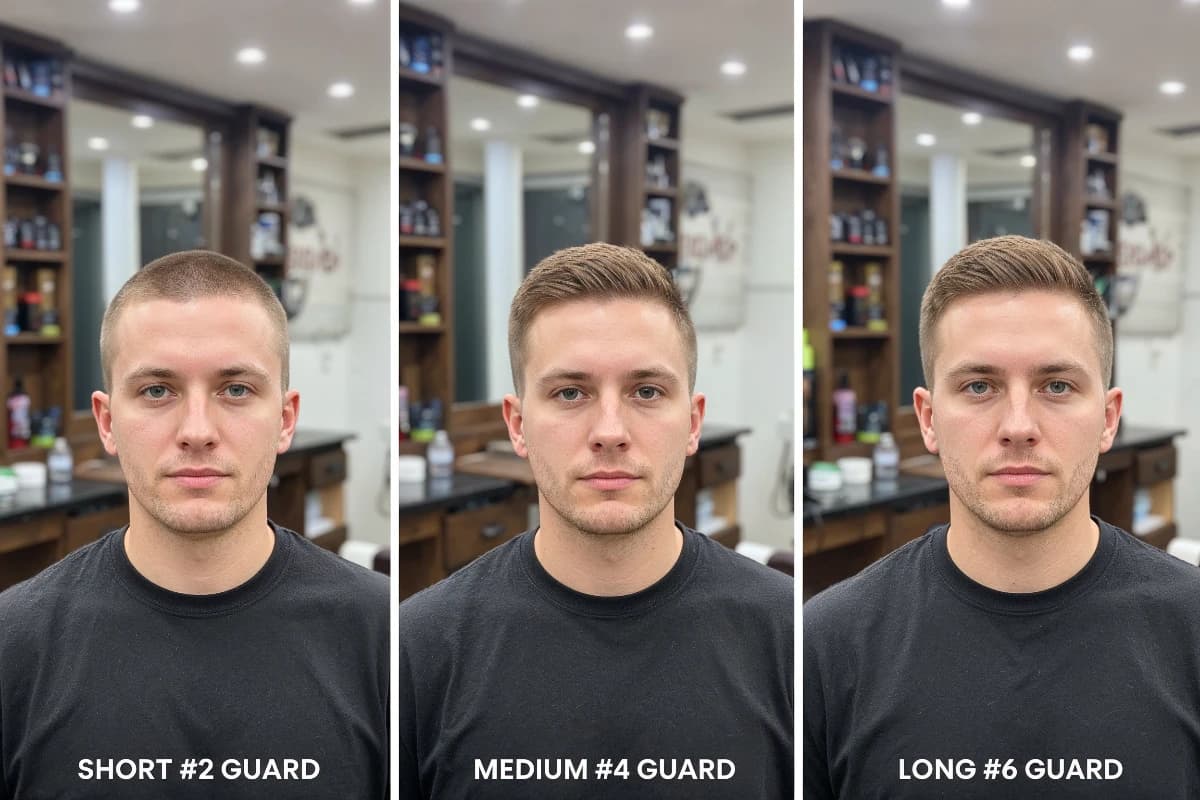
The fundamental architecture of classic men's hairstyles dictates how weight and volume are distributed across the parietal ridge, the crown, and the occipital bone. The transition of length on the sides and back is universally governed by the standardized clipper guard numbering system. A precise understanding of these measurements is non-negotiable: a #0 guard or no guard cuts hair to a microscopic 1.5 millimeters (1/16 inch) for skin fades; a #1 guard leaves 3 millimeters (1/8 inch); a #2 guard leaves 6 millimeters (1/4 inch); a #3 guard leaves 10 millimeters (3/8 inch); a #4 guard leaves 13 millimeters (1/2 inch); a #5 guard leaves 16 millimeters (5/8 inch); a #6 guard leaves 19 millimeters (3/4 inch); a #7 guard leaves 22 millimeters (7/8 inch); and a #8 guard leaves 25 millimeters (1 inch) of growth.11
Furthermore, understanding the profound visual and mechanical distinction between a fade and a taper is paramount for accurate visual reproduction. A fade is a high-contrast technique that blends hair down to the skin, often rising high up the sides of the head.3 Conversely, a taper is a much more conservative, subtle technique that preserves the natural hairline around the ear, reducing length only at the sideburns and the nape of the neck.3
This exhaustive research report examines the ten most popular, distinct, and enduring classical hairstyles for men.19 Each style is systematically dissected to reveal its historical context, rigorous technical specifications, chemical styling techniques, physiological compatibilities, and the precise textual descriptors required to generate photorealistic representations using advanced text-to-image AI models.
The Classic Side Part
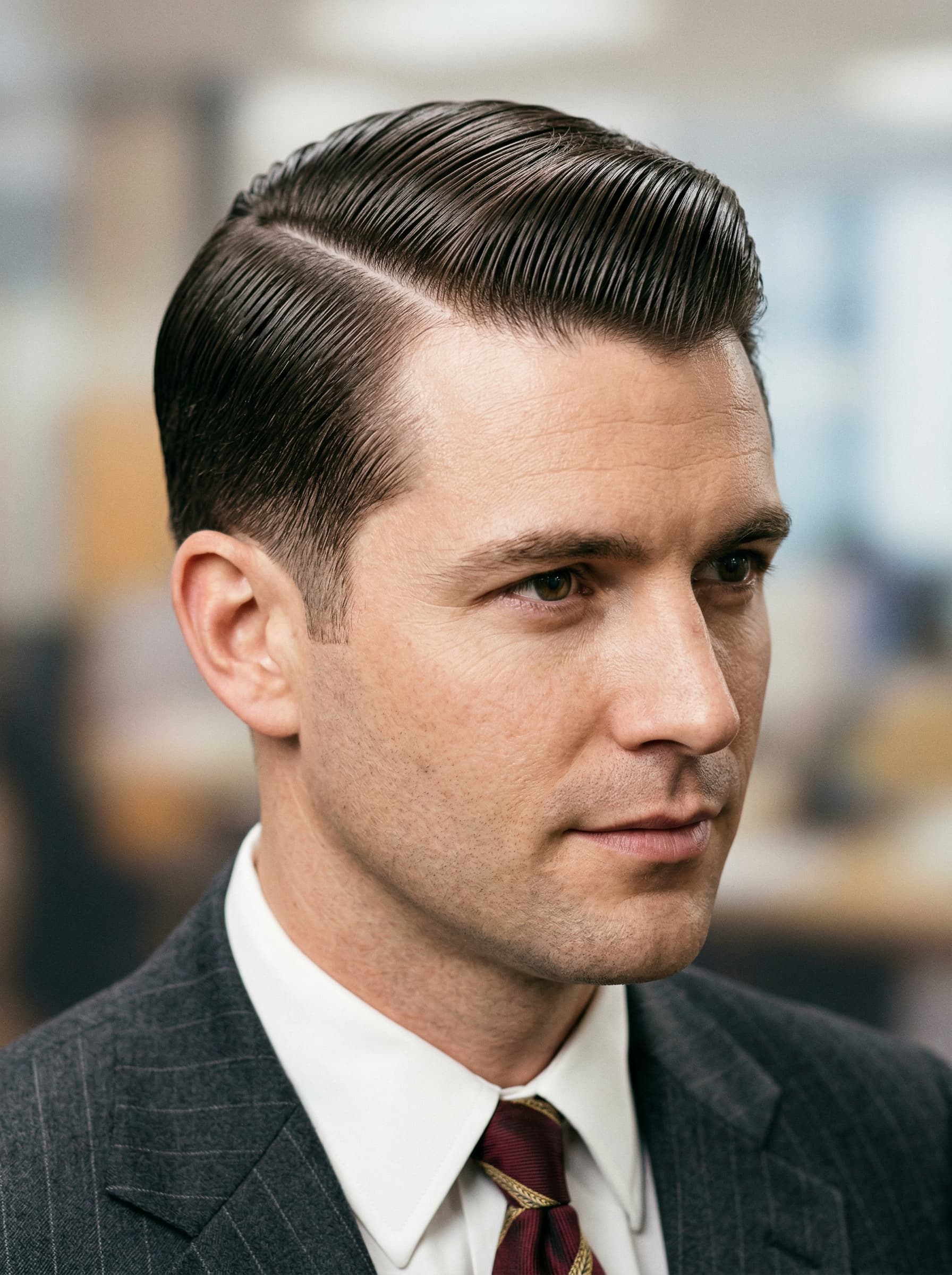
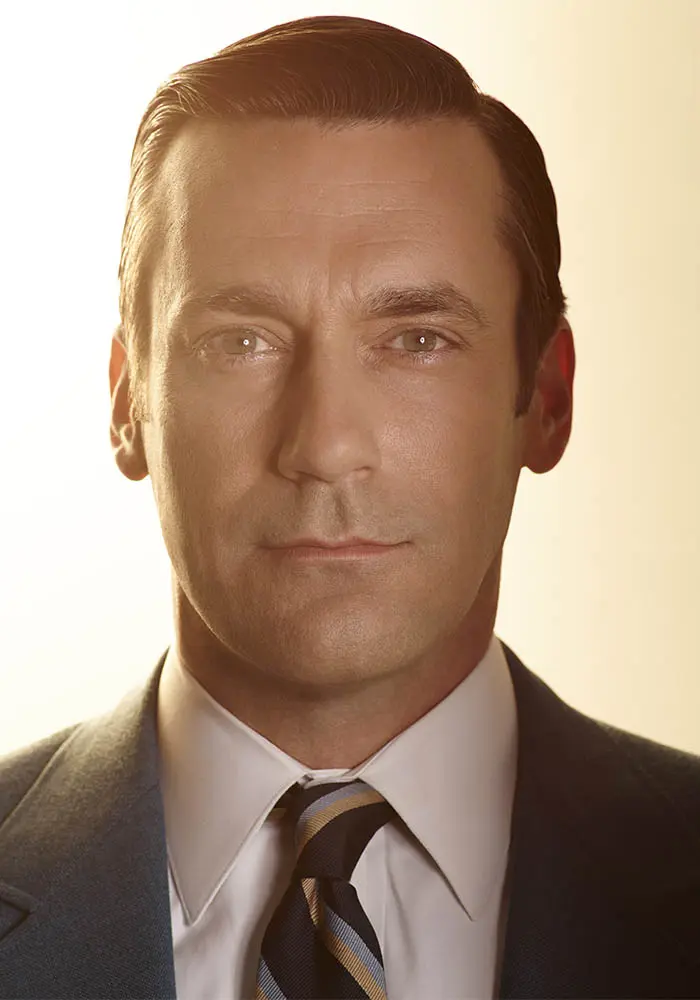
The classic side part, occasionally referred to as the professional or businessman's cut, is the quintessential gentleman's hairstyle. Originating in the early twentieth century and reaching its cultural zenith during the 1940s and 1950s, this style projects an aura of neatness, symmetry, and corporate authority.20 The style relies heavily on a distinct asymmetrical division of the hair, utilizing the natural growth pattern, known as the cowlick or the whorl, to separate the heavier top section from the shorter sides.19
Structurally, the classic side part requires a top length of approximately three to four inches. This specific length provides the fringe and crown with enough physical weight to be swept across the sagittal plane of the head without standing upright or cowlicking unnaturally.20 The back and sides are traditionally cut using a scissor-over-comb technique or a low clipper guard, typically ranging from a #3 (10 millimeters) to a #5 (16 millimeters), to create a clean, conservative taper rather than a harsh, exposing fade.14 The transition at the parietal ridge must be meticulously blended so that the longer hair on the top canopy cascades smoothly over the shorter foundation. Some modern iterations introduce a "hard part," wherein the barber utilizes a straight razor or mechanical edger to shave a microscopic, definitive line directly into the scalp where the hair naturally separates, adding a severe, contemporary geometric edge to the vintage aesthetic.20
To chemically and mechanically style the classic side part, the hair must be prepped while slightly damp. A high-shine, water-based pomade or a traditional grooming cream is distributed evenly from the roots to the tips to alter the hair's natural tensile strength.24 Using a fine-tooth comb, the hair is directed away from the parting line. The dominant, heavier side is swept backward and laterally, while the shorter side is combed strictly downward toward the ear. The resulting finish is glossy, heavily controlled, and devoid of flyaways, ensuring a shell-like architectural hold throughout the day.25 Physiologically, this cut is universally flattering but is exceptionally effective at adding soft angles to round faces and framing oval face shapes.28
| Technical Specification | Measurement / Architectural Detail |
|---|---|
| Top Canopy Length | 3.0 to 4.0 inches (75mm - 100mm) |
| Side/Back Foundation | Clipper guards #3 to #5 (10mm - 16mm) |
| Transition Methodology | Low classic taper, scissor-blended ridge |
| Cosmetic Product | High-shine water-based pomade, grooming cream |
| Visual Finish Texture | Glossy, tight, comb-striated, highly controlled |

The Classic Pompadour
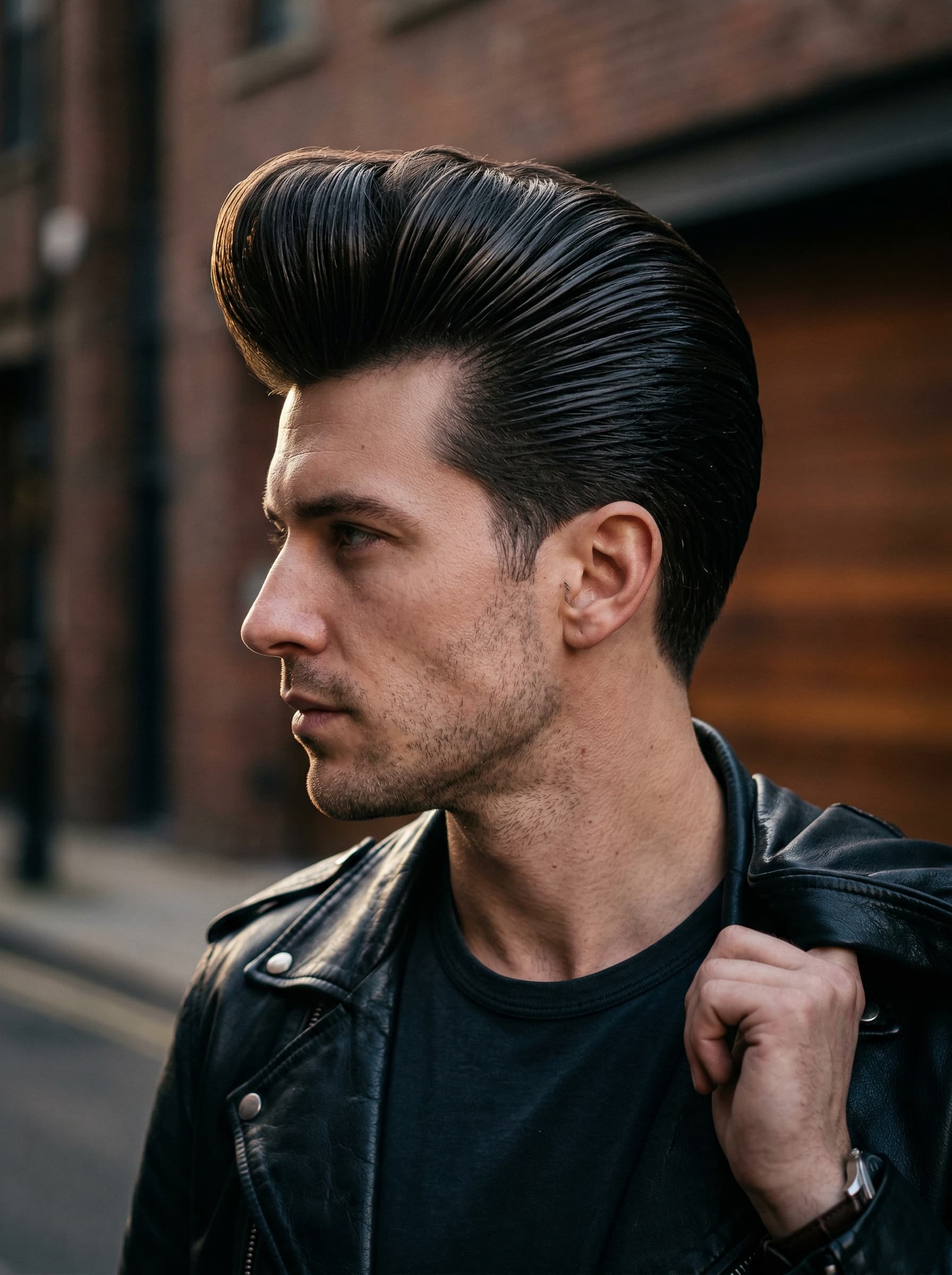
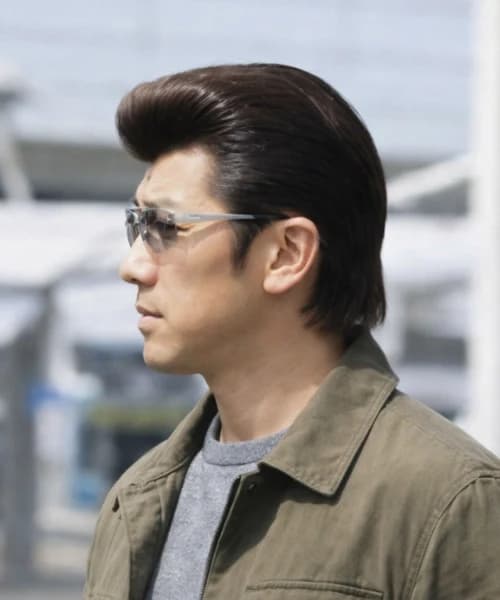
The pompadour is a hairstyle defined by dramatic verticality, sweeping curves, and immense historical prestige. Originally named after Madame de Pompadour, the chief mistress of King Louis XV in the 18th century, the style was aggressively co-opted by men in the 1950s.21 Driven by cultural icons such as Elvis Presley, Johnny Cash, and James Dean, it stands as a permanent symbol of rock-and-roll rebellion, characterized by an imposing volumetric "pouf" or forelock at the front hairline that sweeps gracefully backward over the crown of the head.34
The anatomical construction of a classic pompadour relies on an extreme length differential from the front of the head to the back. The hair at the anterior hairline must be left exceptionally long—often spanning four to six inches—to provide the necessary mass and structural integrity for the upward and backward sweep.2 As the hair travels toward the vertex (crown) of the skull, it is gradually layered shorter to support the heavy weight of the front without collapsing. In the traditional iteration of the cut, the sides and the back are not faded to the skin. Instead, they are slicked back tightly against the scalp using a #3 or #4 guard (10mm to 13mm), creating a streamlined, aerodynamic silhouette that visually pushes all the observer's attention upward.21 However, the contemporary modern pompadour often incorporates a high skin fade, creating a severe, stark disconnect between the completely bald sides and the towering canopy on top.34
The styling phase of a pompadour is highly technical and relies heavily on thermal manipulation to alter the hydrogen bonds within the hair shaft. The hair must be blow-dried aggressively upward from the roots using a round brush. This forces the hair cuticles to stand erect, creating immense structural volume and a parabolic shape.24 Once the height is locked in via heat, a heavy-duty, oil-based pomade or a strong-hold water-based pomade is glazed over the outer layer. This locks the hair into place, provides a glass-like, reflective sheen, and smooths down any rogue flyaways.25 Physiologically, the pompadour adds significant vertical length to the face, making it an exceptional choice for men with round or square face shapes who wish to elongate their profile.28
| Technical Specification | Measurement / Architectural Detail |
|---|---|
| Top Length (Anterior) | 4.0 to 6.0 inches (100mm - 150mm) |
| Side/Back Foundation | Tapered or slicked back tightly (10mm - 13mm) |
| Transition Methodology | Low taper or disconnected skin fade |
| Cosmetic Product | Strong-hold oil-based pomade, grooming tonic |
| Visual Finish Texture | Immense volume, aerodynamic curve, highly glossy |
The Voluminous Quiff
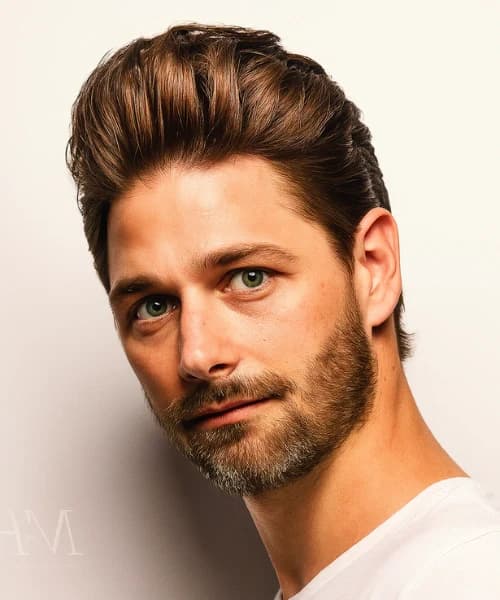
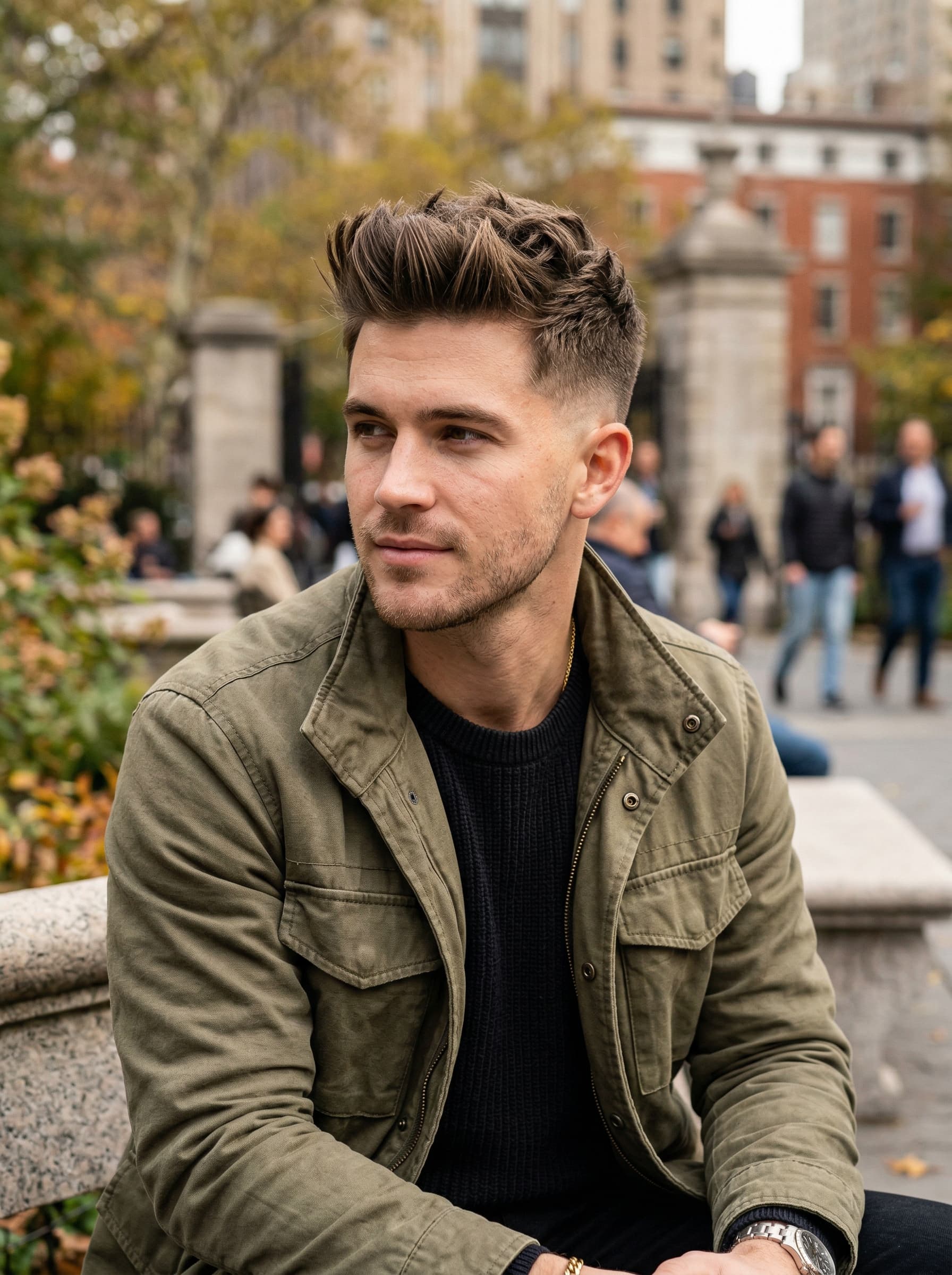
While the quiff shares a genetic lineage with the pompadour, it is a distinctly different architectural entity. The quiff emerged in the mid-20th century as a hybrid style, aggressively borrowing the verticality of the pompadour, the horizontal lines of the flat-top, and the rugged, anti-establishment aesthetic of the mohawk.37 Unlike the pompadour, which demands a smooth, unbroken, helmet-like wave of hair combed strictly backward, the quiff is characterized by an airy, highly textured, and slightly chaotic forward-and-upward trajectory. The bulk of the hair is brushed forward from the crown, and only the front bangs at the hairline are lifted upward and gently pushed back.24
To execute a classic quiff, the top length typically ranges from two to four inches, with the absolute longest point situated directly above the forehead.42 The back and sides are heavily reduced, often utilizing a mid-fade or a high skin fade. In this scenario, the hair transitions from bare skin (0mm) at the nape, blending seamlessly up to a #2 guard (6mm) or #3 guard (10mm) at the parietal ridge.15 This severe contrast greatly enhances the visual impact and perceived volume of the textured top. Because the quiff relies on weightless volume rather than structural density, it is best suited for men with thick, coarse, or wavy hair that possesses the natural tensile strength to support its own weight without collapsing.28
The finishing protocol for a quiff is the antithesis of the pompadour; it relies entirely on dry, matte styling products rather than wet-look pomades. A pre-styling sea salt spray or volumizing mousse is aggressively applied to damp hair to swell the hair shaft and provide microscopic grit.43 The hair is then blow-dried upward using a vented brush to separate the individual strands and encourage airflow. Finally, a dry matte texture clay or molding paste is worked through the roots and mid-lengths. The barber or wearer pinches sections of the hair to create a piecey, disjointed, and wind-swept aesthetic that is completely devoid of artificial shine.43
| Technical Specification | Measurement / Architectural Detail |
|---|---|
| Top Canopy Length | 2.0 to 4.0 inches (50mm - 100mm) |
| Side/Back Foundation | Mid to High Skin Fade (0mm to 6mm) |
| Transition Methodology | Seamless blended fade |
| Cosmetic Product | Sea salt spray, matte texture clay, styling powder |
| Visual Finish Texture | Matte, dry, airy, separated, piecey |
The Crew Cut
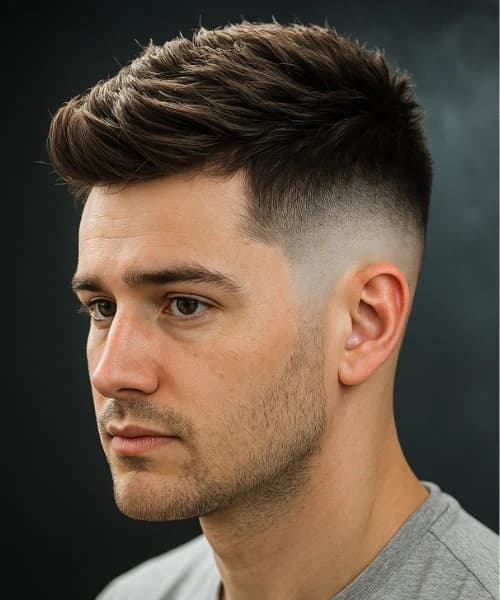
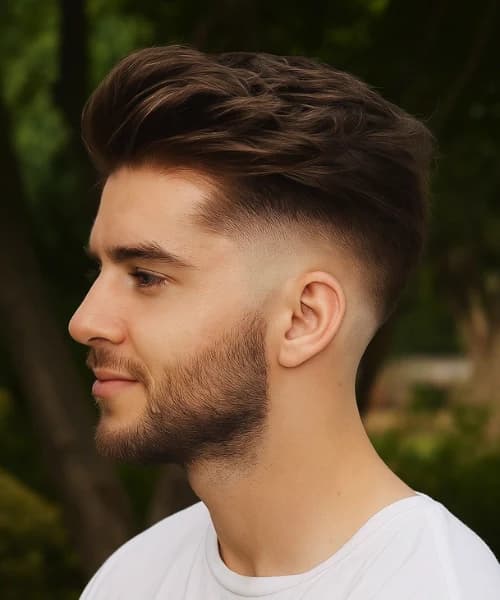
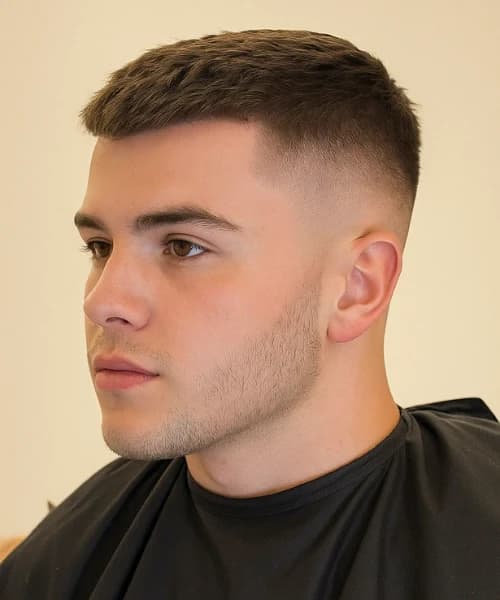
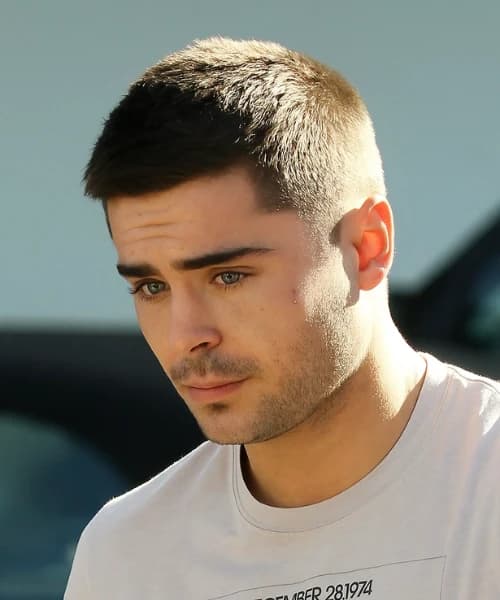
The crew cut is a masterpiece of minimalist grooming and highly functional design. Its origins are famously traced back to Ivy League collegiate rowing teams (crews) in the 1920s and 1930s.45 These athletes required a haircut that would prevent hair from blowing into their eyes during highly competitive races, while simultaneously avoiding the completely shorn, skin-exposing look of low-ranking military conscripts.45 It remains one of the most requested and universally reliable haircuts in the history of barbering, projecting an immediate image of quiet confidence, athleticism, and unpretentious masculinity.47
From an anatomical and geometric perspective, the crew cut is defined by its subtle, horizontal graduation across the top of the skull. The hair at the front of the head (the fringe) is left the longest—typically ranging from one to two inches.29 As the hair travels backward toward the crown, it is systematically clipped or scissored shorter and shorter, tapering down to as little as half an inch at the vertex.19 This graduation ensures the hair stands upright without collapsing. The sides and back are taken down uniformly using a #3 guard (10mm) or #4 guard (13mm), creating a clean, slightly rounded silhouette that strictly follows the natural curvature of the skull.12 Unlike the severe, boxy geometry of the flat top, the crew cut is soft and conforms to cranial topography.
Styling a crew cut requires absolute minimal effort, making it the premier choice for men seeking low-maintenance routines.47 The short length of the hair inherently forces it to stand upright. However, applying a small dab of light styling cream, matte paste, or pomade to the longer front fringe allows it to be brushed slightly upward and to the side, creating a subtle focal point.47 The ultimate goal is a neat, crisp presentation that requires zero mid-day adjustment. Physiologically, the crew cut flatters almost all face shapes, but it is particularly effective at adding sharp, structural lines to round faces.1

| Technical Specification | Measurement / Architectural Detail |
|---|---|
| Top Length (Anterior) | 1.0 to 2.0 inches (25mm - 50mm) |
| Top Length (Posterior) | 0.5 to 1.0 inches (13mm - 25mm) |
| Side/Back Foundation | Clipper guards #2 to #4 (6mm - 13mm) |
| Transition Methodology | Subtle graduation, rounded cranial silhouette |
| Cosmetic Product | Light styling cream or matte paste (optional) |
| Visual Finish Texture | Neat, upright, softly textured |
Look Your Best
Upload 2 photos and get a men's color and style analysis that sharpens your haircut choice.
If you are deciding between close crops, clean tapers, or more volume on top, stop guessing from celebrity photos. Upload two clear photos and get your season, best colors, grooming direction, and wear-now guidance in app plus PDF.
The Buzz Cut (Induction & Burr)
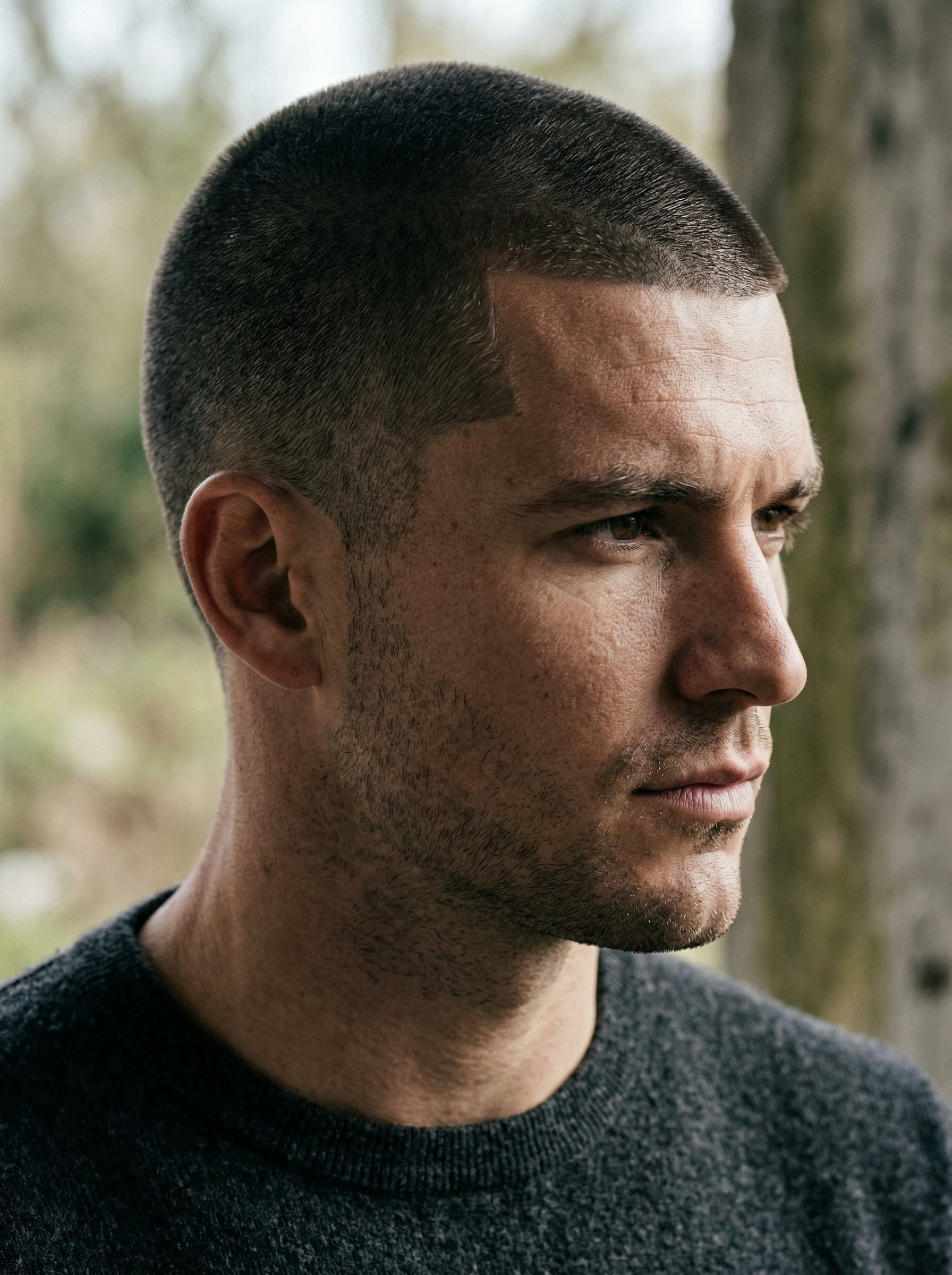
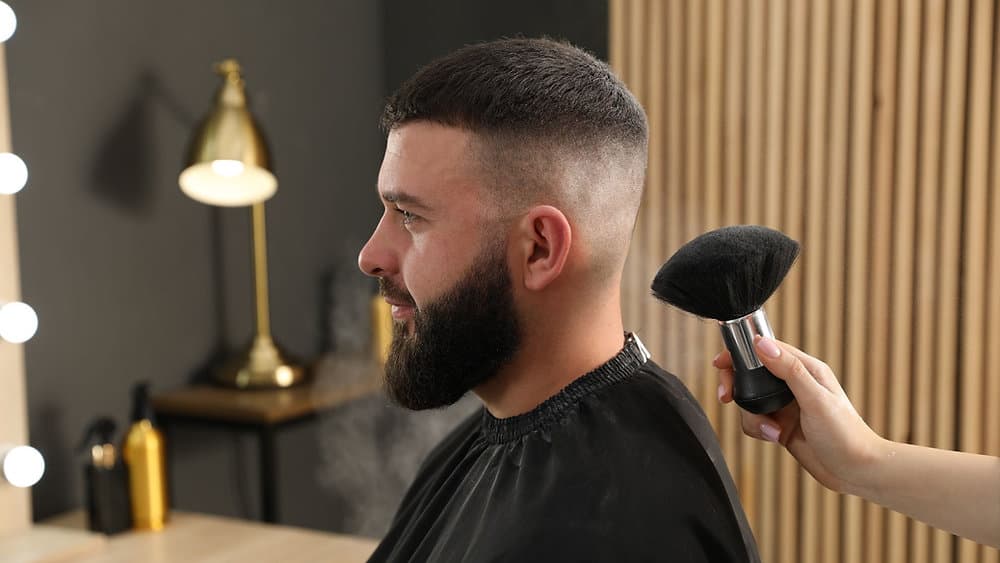
The buzz cut represents the absolute reduction of men's hair to its most fundamental, unadorned baseline. Emerging from strict military necessity during World War I and II—where hygiene, uniformity, and the ability to wear tightly fitted helmets and gas masks were paramount—the buzz cut strips away all styling variables.51 It leaves nothing but the raw contours of the skull, the texture of the scalp, and the masculine architecture of the face. It is a stark, bold statement of anti-fashion that has ironically become highly fashionable, embraced over the decades by counterculture movements, 1990s hip-hop artists, and high-fashion runways.51
Technically, a true buzz cut is executed entirely with electric clippers, bypassing shears altogether. The most extreme variation of this style is the "induction cut," historically named for the rapid, utilitarian style given to new military recruits upon enlistment.52 It is cut without a guard attached to the clipper (a #0 or #0.5), reducing the hair to a microscopic 1.5 millimeters.13 This effectively exposes the scalp while leaving only a faint, dark shadow of follicles. A slightly more forgiving, civilian variation is the "burr cut," which utilizes a #1 guard (3mm) or #2 guard (6mm) uniformly across the entire head.50 This length provides a soft, velvety texture that fully covers the scalp but remains entirely un-styleable. Modern urban adaptations often incorporate a line-up—using a straight razor to etch sharp, highly geometric angles into the front hairline and temples—or a high skin fade on the sides to introduce artificial contrast and shape to the uniform length.52
Because there is insufficient length to manipulate, standard styling products (pomades, gels, clays) are entirely useless for a buzz cut. Maintenance shifts entirely from the hair shaft to the epidermis of the scalp itself; men with buzz cuts are strongly advised to utilize matte SPF moisturizers and scalp oils to prevent dry skin, flaking, and severe sun damage, as the scalp is completely exposed to ultraviolet radiation.50
| Technical Specification | Measurement / Architectural Detail |
|---|---|
| Global Length | #0 to #2 guard (1.5mm - 6mm) |
| Side/Back Foundation | Uniform with top, or high skin-faded |
| Transition Methodology | Uniform globe or high skin fade |
| Cosmetic Product | Scalp moisturizer, SPF lotion |
| Visual Finish Texture | Velvety, prickly, raw, uniform |
The French Crop
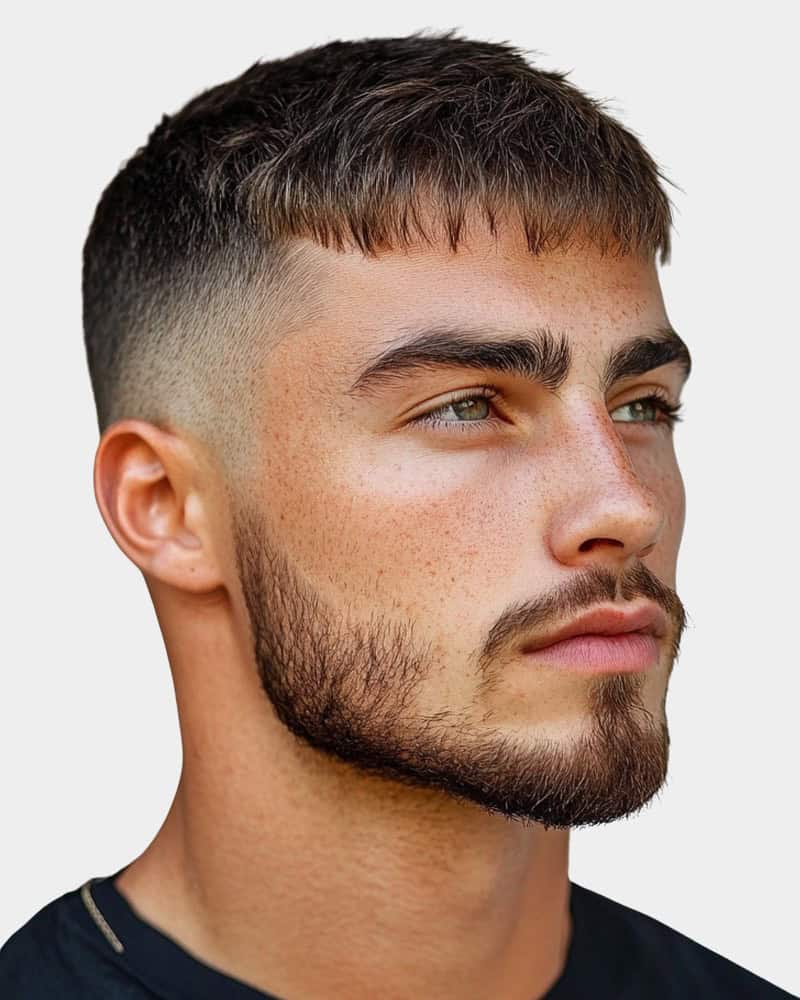
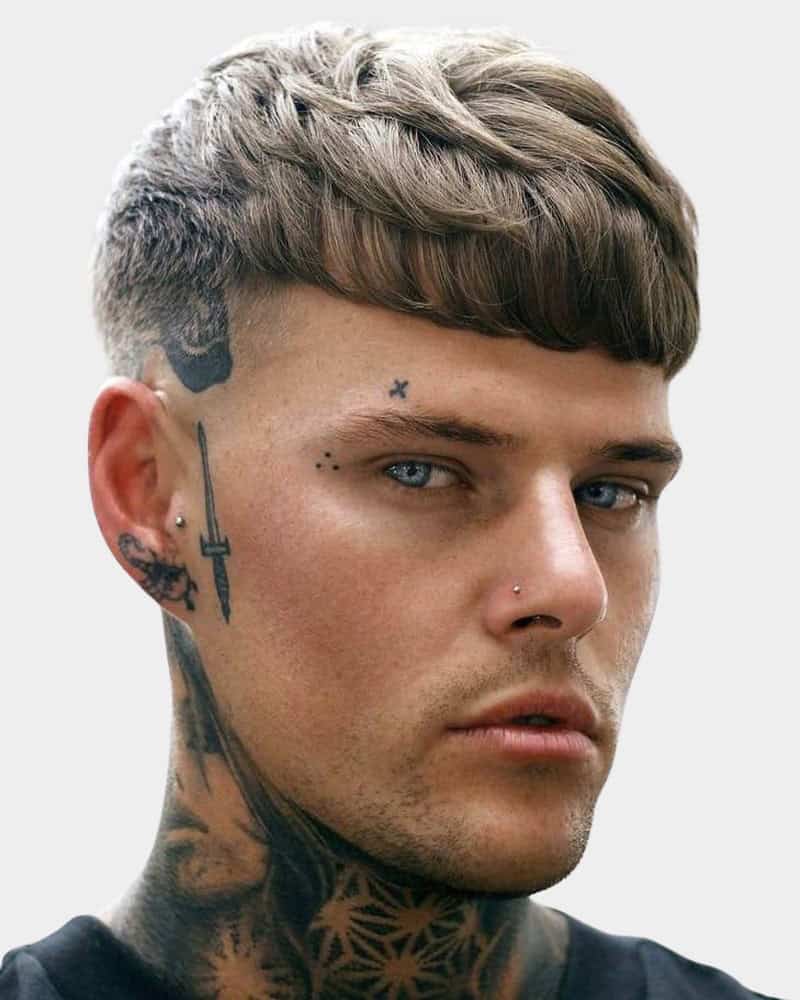
The French crop is a masterful, highly contemporary collision of harsh geometric lines and chaotic, organic texture. Having originally earned its stripes as the cornerstone haircut of the European mod subculture, the French crop has surged back into modern prominence across the globe due to its low-maintenance nature, high-fashion aesthetic, and ability to disguise receding hairlines.60 It is immediately identifiable by its defining architectural feature: a severe, blunt, horizontally cut fringe (bangs) that rests squarely across the upper forehead.24
The architectural specifications of the French crop dictate a strict dichotomy between the top canopy and the sides. The hair on top is maintained at a short-to-medium length (one to three inches) and is heavily texturized by the barber using point-cutting shears or specialized thinning shears.7 This aggressive texturization reduces the bulk and encourages the hair to lay relatively flat against the scalp, while simultaneously creating jagged, piecey, overlapping separation. The fringe, however, is cut with absolute precision, creating a severe, straight line.24 To maximize the visual impact of this heavy, textured top, the sides and back are subjected to a high skin fade or a severe disconnected undercut.61 The abrupt, stark transition from the chaotic, textured canopy to the bald sides creates an aggressive, contemporary silhouette.
Styling the French crop requires encouraging the forward momentum of the hair growth. The hair is blow-dried flat and strictly forward toward the face. A high-hold, zero-shine matte clay or texturizing powder is aggressively rubbed into the roots and pinched through the ends of the hair.24 This chemical application separates the strands, creating a messy, "lived-in" look on the crown that sharply and deliberately contrasts with the severe, clean precision of the blunt fringe.61

| Technical Specification | Measurement / Architectural Detail |
|---|---|
| Top Canopy Length | 1.0 to 3.0 inches (25mm - 75mm) |
| Fringe Architecture | Severe, blunt, precise horizontal line |
| Side/Back Foundation | High Skin Fade or Disconnected Undercut (0mm - 3mm) |
| Cosmetic Product | Texture powder, heavy matte styling clay |
| Visual Finish Texture | Choppy, forward-flowing, completely matte |
The Ivy League (Princeton Cut)
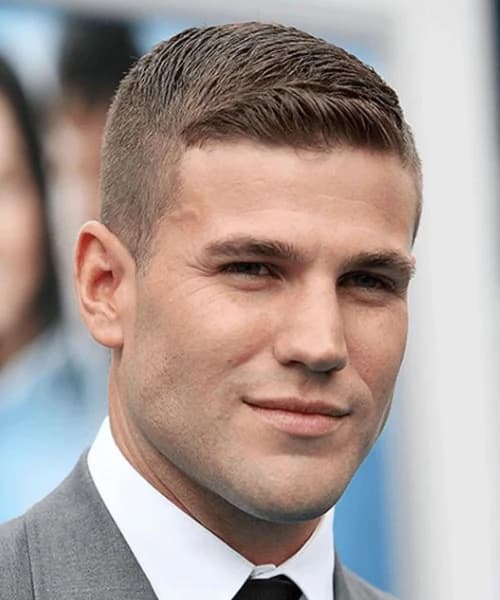
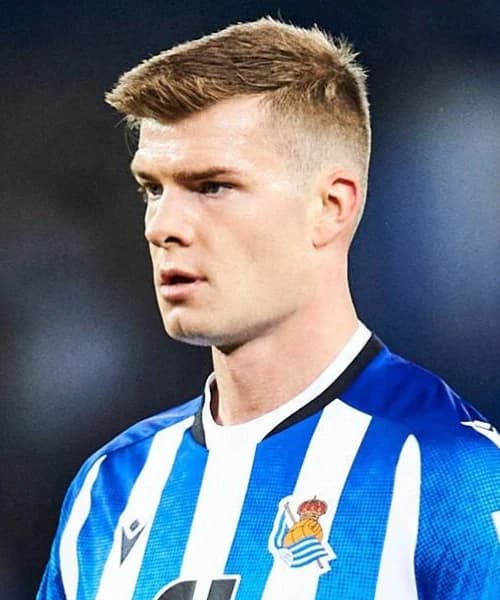
Also known deeply within the grooming industry as the Harvard Clip or the Princeton Cut, the Ivy League haircut is a highly sophisticated, elongated evolution of the standard crew cut.5 It was born on the elite university campuses of the American Northeast in the mid-20th century. It was heavily favored by students who desired the neatness, athleticism, and discipline of a military cut, but required enough length on top to display their grooming prowess and personal style for formal collegiate events, interviews, and post-graduate networking.5 It strikes a flawless balance between utilitarian practicality and aristocratic elegance.
The technical distinction between an Ivy League and a standard crew cut lies almost entirely in the specific length of the top hemisphere. While a crew cut maxes out around an inch and a half at the front, the Ivy League strictly requires the top front section to be left between 1.5 to 2.5 inches long.66 This critical extra inch of volumetric density allows the hair to be folded over into a distinct side part, brushed back into a miniature pompadour, or swept neatly and diagonally across the forehead.5 The crown is still tapered shorter to conform to the head shape, maintaining the crew cut silhouette at the rear. The sides and back are meticulously tapered using a scissor-over-comb method or guards ranging from #2 to #5 (6mm to 16mm).16 Traditionally, barbers strictly avoid the harsh, scalp-exposing skin fades of contemporary cuts when executing an Ivy League, in favor of a soft, gentlemanly, perfectly blended scissor taper.69
The styling phase relies on lightweight, pliable cosmetic products rather than heavy gels. A traditional styling cream, light pomade, or even classic "butch wax" is applied to slightly damp hair.5 The hair is then combed to create a subtle, natural side part, with the front fringe swept cleanly to the side and slightly elevated off the forehead. The final finish should boast a healthy, natural luster—neither drippingly wet nor artificially dry and matte.68

| Technical Specification | Measurement / Architectural Detail |
|---|---|
| Top Length (Anterior) | 1.5 to 2.5 inches (38mm - 63mm) |
| Side/Back Foundation | Clipper guards #2 to #5 (6mm - 16mm) |
| Transition Methodology | Soft, classic scissor taper, no skin exposure |
| Cosmetic Product | Styling cream, light pomade, butch wax |
| Visual Finish Texture | Soft sheen, neatly parted, pliable hold |
Borrow The Blueprint
Get style icons, grooming direction, and the colors that make a polished haircut land.
A strong cut works better when the rest of the look agrees with it. The full auraDNA report pairs your palette with menswear guidance, hair and beard direction, and style-icon references so your haircut, clothes, and hardware read as one coherent system.
The Classic Slicked Back
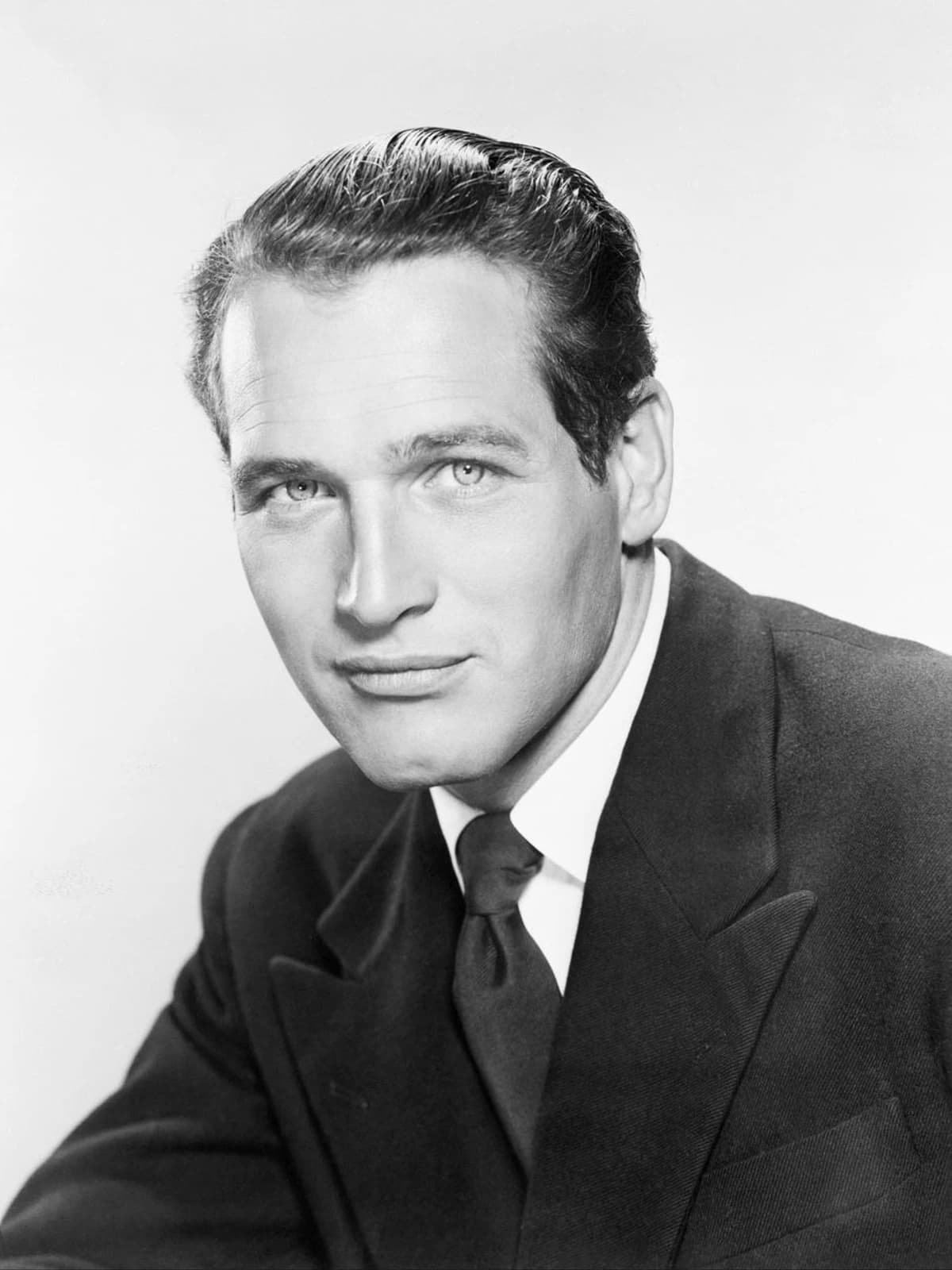
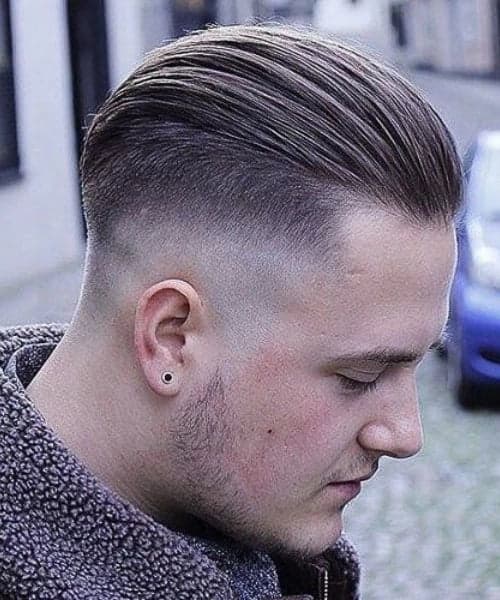
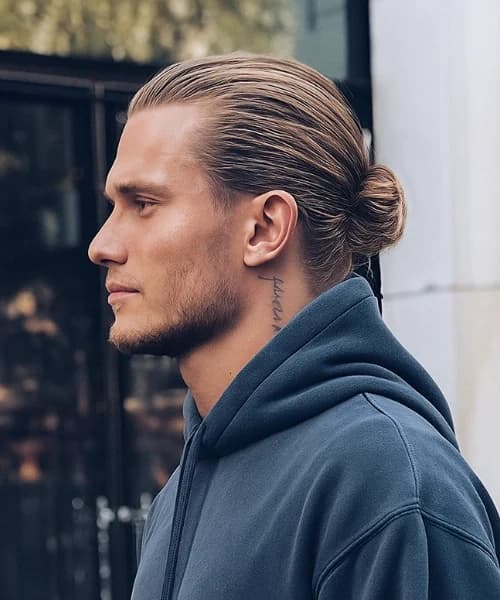
The slicked-back hairstyle is the ultimate physical projection of power, authority, and unbroken control over one's appearance. Serving as a cultural staple for 1920s mobsters, 1940s Hollywood elites, and 1980s Wall Street executives, the slick back abandons the modern obsession with volume, airy texture, and messy fringes in favor of absolute aerodynamic sleekness.21 It is an uncompromising style that pulls every visible strand of hair tightly against the scalp, creating a mirror-like dome that heavily accentuates the facial bone structure and jawline.
Mechanically, the slick back requires significant length on the top of the head—generally ranging from three to six inches.28 This length is an absolute physical requirement; the hair must possess enough mass and dead weight to lie completely flat when pulled linearly backward toward the occipital bone.72 Without sufficient length, the hair's natural growth patterns will cause it to spike upright or cowlick. Historically, the sides and back were grown out to a medium length and slicked back as well, creating a solid, uniform helmet of hair.21 However, the contemporary, modernized execution frequently pairs the long, slicked top with a tight taper, an aggressive skin fade, or a disconnected undercut. This modernizes the silhouette, removes unnecessary bulk around the ears, and creates a striking contrast between the glossy top and the matte skin of the sides.73
The finishing protocol for a classic slick back is entirely dependent on heavy, high-shine, high-hold cosmetic products. The hair must be towel-dried to a slightly damp state to increase pliability. A highly generous application of heavy-duty, oil-based pomade or modern high-hold water-based gel is raked through the hair from root to tip.73 A fine-tooth comb is then used to drag the hair linearly straight back, pressing it flush against the scalp to eradicate any bumps, waves, or parting lines. The resulting finish is heavily reflective, wet-looking, heavily comb-striated, and completely immovable.36

| Technical Specification | Measurement / Architectural Detail |
|---|---|
| Top Canopy Length | 3.0 to 6.0 inches (75mm - 150mm) |
| Side/Back Foundation | Scissor-tapered or heavily skin-faded |
| Transition Methodology | Blended taper or sharp disconnected undercut |
| Cosmetic Product | High-shine heavy pomade, strong styling gel |
| Visual Finish Texture | Wet-look, mirror-glossy, flat, immovable, striated |
The Caesar Cut
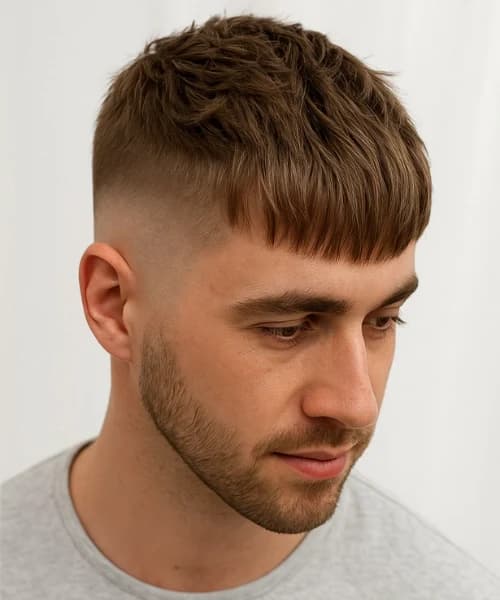
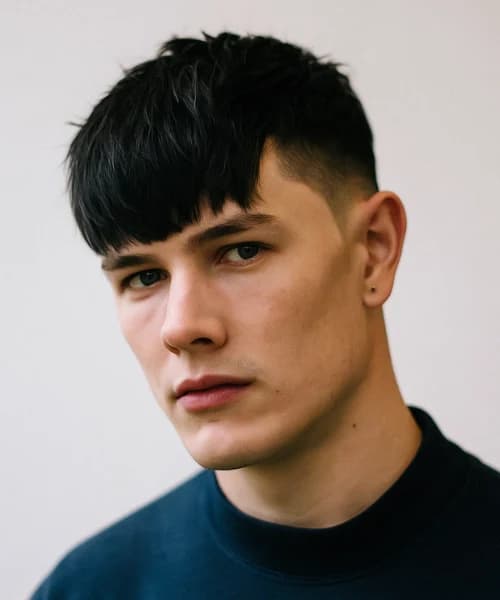
The Caesar cut is a hairstyle of antiquity reborn into modern, minimalist sophistication. Named directly after the Roman Emperor Julius Caesar—who historically adopted the forward-swept style in an attempt to disguise a rapidly receding hairline—the cut experienced a massive cultural resurgence in the late 1990s, spearheaded by prominent actors and musicians.76 It is a profound study in uniformity, offering a low-maintenance, highly textured aesthetic that naturally frames the face with soft, horizontal geometry. Because the hair is pushed entirely forward, it remains one of the most effective hairstyles for men experiencing temple recession or thinning hair.77
Unlike the French crop, which relies on a severe, aggressive discrepancy between a long textured top and completely bald sides, the true Caesar cut is heavily uniform and balanced. The hair on the top, sides, and back is clipped to an almost identical length, typically resting between one to two inches globally.76 The ultimate hallmark of the style is the fringe. The hair on the crown is brushed entirely forward, culminating in a short, horizontal fringe across the upper forehead. Unlike the razor-sharp, blunt fringe of the French crop, the Caesar's fringe is significantly softer. It is lightly point-cut with shears and intended to naturally follow the organic curvature of the hairline, rather than imposing a strict, artificial geometric line across the face.76 Modern variations often introduce a subtle low or mid fade on the sides to update the silhouette, but the traditional, classical Caesar remains a uniformly even crop across the entire skull.77
Styling the Caesar cut requires almost no mechanical effort, making it ideal for daily wear. After a shower, the hair is towel-dried and simply brushed forward toward the nose. A lightweight molding paste, matte clay, or a small dab of styling cream is worked lightly through the strands to define the texture and prevent the hair from looking fuzzy, dry, or uncontrolled.77 The final visual finish should be entirely matte, touchably soft, and lying close to the head.

| Technical Specification | Measurement / Architectural Detail |
|---|---|
| Global Length | 1.0 to 2.0 inches (25mm - 50mm) |
| Fringe Architecture | Softly textured, forward-sweeping, natural horizontal |
| Transition Methodology | Uniform globe or very low, subtle taper |
| Cosmetic Product | Light molding paste, styling cream, matte clay |
| Visual Finish Texture | Soft, matte, completely forward-directed, uniform |
The Flat Top
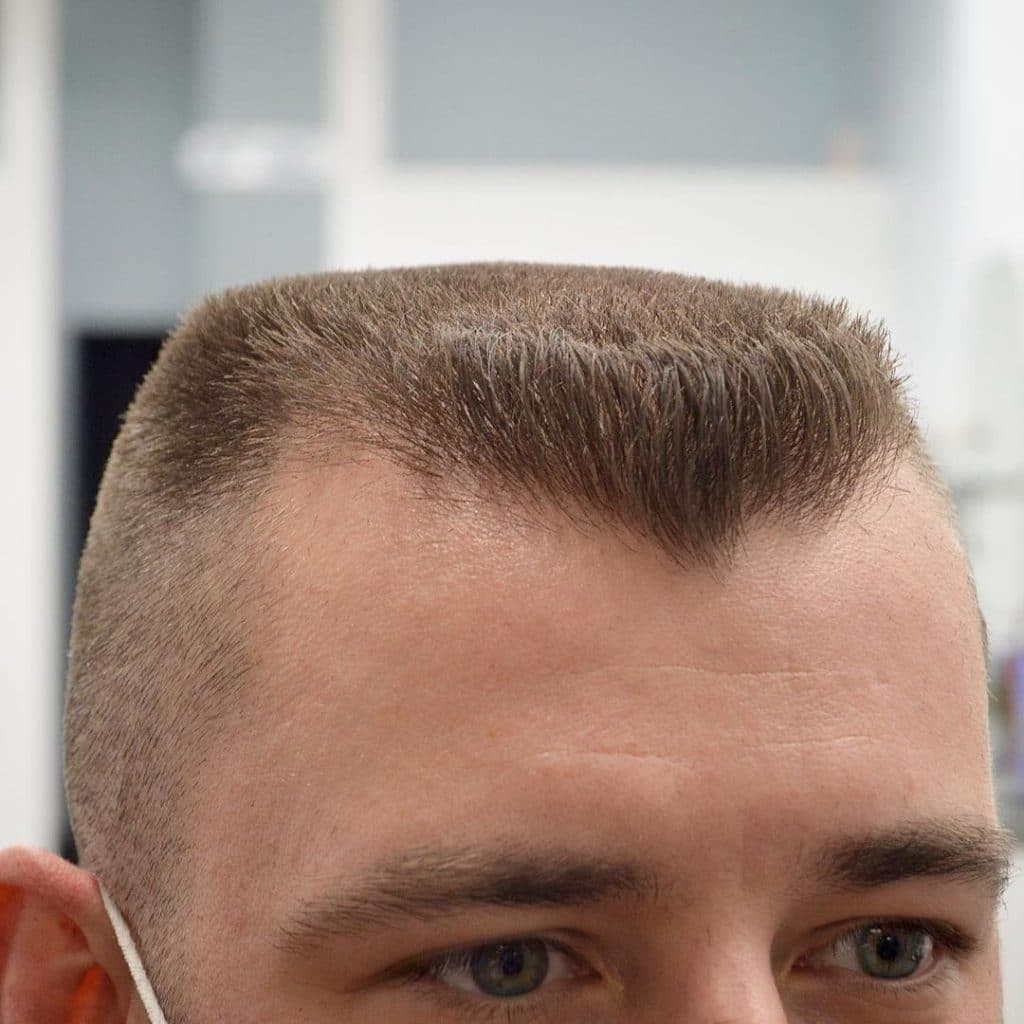
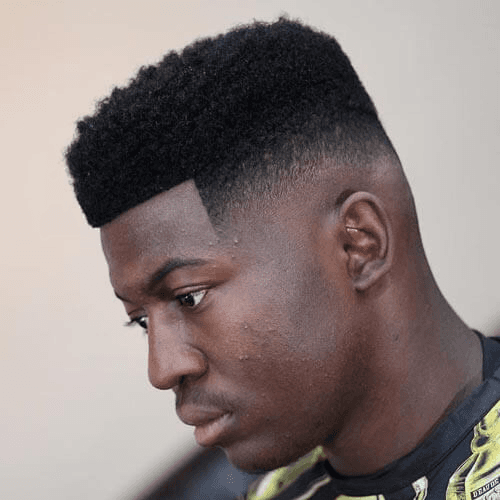
The flat top is the ultimate, uncompromising intersection of masterful barbering skill and pure architectural geometry. Rising to prominence originally within mid-century military ranks as a variation of the crew cut, it experienced a massive, culturally defining explosion during the 1980s and 1990s golden age of hip-hop (often referred to in its extreme variations as the High-Top Fade or the Cameo cut).60 The flat top aggressively defies the organic, sloping curvature of the human head.60 It literally forces hair into a stark, rigid, box-like structure, presenting a perfectly flat, leveled horizontal deck across the top of the crown.
The execution of a flawless flat top is notoriously difficult and requires masterful, freehand clipper-over-comb techniques by an experienced barber.83 The sides and the back are typically shaved down completely to the skin—a high skin fade—creating sheer vertical walls on the sides of the head.81 The hair on top is held perfectly upright and clipped horizontally so that it forms a perfectly flat plane, running parallel to the ground. In a standard flat top, the hair at the front may be one to two inches long, growing progressively shorter toward the crown to maintain the illusion of a perfectly level deck despite the skull's natural downward curve.81 In the more extreme "high-top fade" variation, the hair can extend several inches straight up, creating a towering, rectangular monolith.60 Because of the extreme structural and anti-gravity demands, this style works almost exclusively on coily, highly textured, or extremely dense, stiff straight hair that can stand upright independently.
Styling a flat top requires maximum structural control. For highly textured, coily hair, an afro pick is used to pull the hair upright, followed by a physical pat-down technique to enforce the strict box shape.60 For straighter hair types, heavy-duty styling wax, firm-hold gel, and a highly generous application of freezing hairspray are required to defy gravity and lock the rigid, horizontal plateau in place.83

| Technical Specification | Measurement / Architectural Detail |
|---|---|
| Top Canopy Length | 1.0 to 4.0+ inches, leveled perfectly flat |
| Side/Back Foundation | High skin fade (0mm) |
| Transition Methodology | Sharp 90-degree corner disconnect |
| Cosmetic Product | Afro pick, heavy wax, freezing hairspray |
| Visual Finish Texture | Rigid, architectural, perfectly horizontal deck, vertical |
Synthesizing Grooming Architecture and Artificial Intelligence
The profound cultural endurance of these ten classic hairstyles—the Side Part, the Pompadour, the Quiff, the Crew Cut, the Buzz Cut, the French Crop, the Ivy League, the Slicked Back, the Caesar Cut, and the Flat Top—highlights a fundamental, underlying truth in men's grooming: aesthetic perfection relies heavily on mathematical proportion, facial geometry, and structural integrity.85 These cuts have survived nearly a century of shifting trends precisely because they are not fads; they are architectural solutions to human physiognomy. Whether a barber is compensating for a receding hairline by utilizing the forward-sweeping fringe of a Caesar cut 76, elongating a round, wide face with the towering, vertical volume of a Pompadour 28, or highlighting a strong, square jawline with the severe, minimalist exposure of a Buzz Cut 53, these timeless styles manipulate geometric weight to drastically enhance human anatomy.29
As the creative industry rapidly transitions into an era dominated by text-to-image generative AI models, the hyper-specific vocabulary of the master barber inherently becomes the required syntax of the AI prompt engineer.7 Artificial intelligence models do not inherently understand the physics of hair dynamics, the effects of gravity on a follicle, or the nuanced difference between a mid-fade and a low-taper.7 When prompted with generic terms, models default to averaged, messy, undefined amalgamations of hair.
Therefore, to generate accurate, photorealistic visual representations of these timeless cuts, one must completely bypass vague colloquialisms. Success in manipulating the latent space requires the explicit, excruciating dictation of millimeter lengths, clipper guard numbers, volumetric flow, directional brushing, chemical light reflectivity (matte clay versus glossy pomade), and strict anatomical transition points.7 By applying the rigorous, uncompromising technical specifications outlined in this report directly to AI prompts, digital creators, stylists, and prompt engineers can guarantee photorealistic, historically accurate, and structurally flawless digital representations of men's most enduring and classical hairstyles.
Put It On Your Face
See which colors sharpen the haircut you already like.
Use the free color analysis to find the shades that flatter your features, then test hair colors directly on your own photo before you commit to a change.

Works cited
- Classic and Timeless Hairstyles for Men | Pall Mall Barbers London, accessed April 1, 2026, https://www.pallmallbarbers.com/pmb-news/classic-and-timeless-hairstyles-for-men/
- The Trendiest Classic Hairstyles For Men To Try In 2025 | Hair.com By L'Oréal, accessed April 1, 2026, https://www.hair.com/classic-hairstyles-for-men.html
- Taper vs Fade Haircut: Key Differences, Styles & Tips for Men, accessed April 1, 2026, https://kingsmangroomingstudio.com/mens-grooming/taper-vs-fade-haircut-differences-for-men/
- Beyond the Buzz: What Defines a Classic Barbershop Experience and Its Iconic Cuts Discover classic barbershop haircuts, iconic styles, and timeless tradition. Get tips for your perfect cut and barbershop experience. - Bootlegged Barber, accessed April 1, 2026, https://www.bootleggedbarberco.com/blog/classic-barbershop-haircuts-guide
- Ivy League (haircut) - Wikipedia, accessed April 1, 2026, https://en.wikipedia.org/wiki/Ivy_League_(haircut)
- Men's hairstyles | MonAI, accessed April 1, 2026, https://wiki.monai.art/styles/Menhairstyle
- How to Express Men's Hairstyles with Prompts: A Guide to Creating Diverse Styles Using AI, accessed April 1, 2026, https://service.ai-prompt.jp/en/article/prompt-mens-hairstyles/
- 30+ Stunning AI-Generated Hairstyles: Key Prompts Revealed! | by Tansy - Medium, accessed April 1, 2026, https://medium.com/@tanshaoyu160/30-stunning-ai-generated-hairstyles-key-prompts-revealed-6ca81589b3d6
- Virtual Haircut for Men: Try On the Best AI Hairstyles - CyberLink, accessed April 1, 2026, https://www.cyberlink.com/blog/ai-app-photo-editing/3275/ai-hairstyle-male
- The Best 25 Stable Diffusion Prompts for Hairstyle - OpenArt, accessed April 1, 2026, https://openart.ai/blog/post/stable-diffusion-prompts-for-hairstyle
- Ultimate Guide to Hair Clipper Guard Sizes | Wahl USA, accessed April 1, 2026, https://wahlusa.com/how-to/haircutting/haircuts-101/guide-combs
- Understanding The Haircut Numbering System - The Rooted Barber Experience, accessed April 1, 2026, https://www.therootedbarberexperience.com/blog/understanding-the-haircut-numbering-system
- A Complete Guide to Haircut Numbers: Clipper Guard Sizes - Rumbie, accessed April 1, 2026, https://rumbie.co/a-complete-guide-to-haircut-numbers-clipper-guard-sizes/
- Your Guide To Haircut Length Numbers For Your Next Trim - Cutters Yard, accessed April 1, 2026, https://cuttersyard.com/your-guide-to-haircut-length-numbers-for-your-next-trim/
- Fade Haircut Guide 2025 | Low, Mid, High & Skin Fades Explained, accessed April 1, 2026, https://www.manhattanbarbershopnyc.com/style-guide/fade-haircuts
- Fade vs Taper Haircuts: Key Differences for Men - The Rosemont Barbers, accessed April 1, 2026, https://www.therosemontbarbers.com/newsandevents/fade-vs-taper-whats-the-difference-in-mens-haircuts
- Taper vs. Fade: A Guide For Your Next Cut - StyleSeat, accessed April 1, 2026, https://www.styleseat.com/blog/taper-vs-fade/
- 12 Classic Taper Haircuts Explained - Das'it Barbershop, accessed April 1, 2026, https://www.dasitbarbershop.com/12-classic-taper-haircuts-explained/
- Top 10 Timeless Haircuts Every Man Should Try - The Mercantile Barber Co., accessed April 1, 2026, https://themercantilebarberco.com/top-10-timeless-haircuts-every-man-should-try/
- 12 Classic Side Part Haircuts for Men - The Modest Man, accessed April 1, 2026, https://www.themodestman.com/side-part-haircuts/
- Golden Oldies: A Man's Guide To Classic Hair - Truefitt & Hill US, accessed April 1, 2026, https://www.truefittandhill.com/blogs/journal/golden-oldies-a-mans-guide-to-classic-hair
- 10 Classic Side Part Hairstyles That Never Go Out of Style - Judes Barbershop, accessed April 1, 2026, https://www.judesbarbershop.com/10-classic-side-part-hairstyles-that-never-go-out-of-style/
- 7 Classic Side-Part Hairstyles For Men - Pete & Pedro, accessed April 1, 2026, https://peteandpedro.com/blogs/the-pedro-post/7-classic-side-part-hairstyles-for-men
- 26 Best Old Money Hairstyles for Men | Forte Series, accessed April 1, 2026, https://forteseries.com/blogs/hairstyles/old-money-hairstyles
- The Ultimate Guide to Men's Hair Products (Every Type Explained) - Beardbrand, accessed April 1, 2026, https://www.beardbrand.com/blogs/urbanbeardsman/hair-product-guide
- A Guide To Men's Hair Styling Products, accessed April 1, 2026, https://www.mensroombarbershop.com/a-guide-to-mens-hair-styling-products/
- Men's Hairstyles With Side Partings | Side Parting Haircut 1940's Hair - Regal Gentleman, accessed April 1, 2026, https://regalgentleman.com/blogs/blog/side-part-haircut-mens-hairstyles-with-side-partings
- 15 Classic Men's Haircuts That Never Go Out of Style in 2025, accessed April 1, 2026, https://www.rustybladebarber.com/post/classic-men-s-haircuts
- Men's Haircuts & Hairstyles: The Ultimate Guide | Mens Fashioner, accessed April 1, 2026, https://mensfashioner.com/articles/ultimate-guide-to-mens-hair-cuts-hair-styles
- 7 Killer Gemini AI Prompts for Men's Hairstyles That Look Real, accessed April 1, 2026, https://geminiguru.in/7-killer-gemini-ai-prompts-for-mens-hairstyles-that-look-real/
- AI Artwork Prompts for Masculine hair styles - PROMPTCACHE, accessed April 1, 2026, https://promptcache.com/ai-artwork-prompts/fashion/hair_masculine
- 50 Best Gemini AI Hairstyle Prompts for Realistic Haircuts — For Indian Creators & Beyond - CyberLink, accessed April 1, 2026, https://www.cyberlink.com/blog/ai-prompts/5114/gemini-ai-hairstyle-prompts
- 15 Pompadour Haircut & Hairstyles for Men | Man of Many, accessed April 1, 2026, https://manofmany.com/style/hairstyles-grooming/pompadour-haircut-hairstyles-men
- Top 35 Pompadour Haircuts for Men | Forte Series, accessed April 1, 2026, https://forteseries.com/blogs/hairstyles/pompadour
- Pompadour Haircut - Reuzel, accessed April 1, 2026, https://www.reuzel.com/blogs/news/how-to-style-a-pompadour
- 19 Pompadour Hairstyles For Men To Up Their Game | GATSBY, accessed April 1, 2026, https://www.gatsbyglobal.com/en/technique/essential-guide-pompadour-hairstyles-men-variations-styling/
- 19 Pompadour Hairstyles - Rush Hair, accessed April 1, 2026, https://www.rush.co.uk/blog/male/pompadour-hairstyles/77539
- Top 25 Men's Hairstyles for 2026 | Trending Cuts Queens NYC, accessed April 1, 2026, https://www.didahairstudio.com/blog/mens-hairstyles-2026-trending-styles-queens-nyc
- The Best 25 Midjourney Prompts for Hairstyle - OpenArt, accessed April 1, 2026, https://openart.ai/blog/post/midjourney-prompts-for-hairstyle
- The Comprehensive Guide: Different Types of Haircuts for Men, accessed April 1, 2026, https://rudysgroomingclub.com/the-comprehensive-guide-different-types-of-haircuts-for-men/
- The Quiff Hairstyle: A Modern Man's Guide To An Iconic Cut - Ape to Gentleman, accessed April 1, 2026, https://www.apetogentleman.com/quiff-hairstyles-guide-men/
- 9 Quiff Hairstyles & Essential Styling Guide for Men | GATSBY, accessed April 1, 2026, https://www.gatsbyglobal.com/en/technique/essential-guide-quiff-hairstyles-men-variations-styling/
- Top 35 Quiff Haircut Styles for Men - Forte Series, accessed April 1, 2026, https://forteseries.com/blogs/hairstyles/quiff-haircut
- The 26 Best Hair Products For Men - As Recommended By Experts - Ape to Gentleman, accessed April 1, 2026, https://www.apetogentleman.com/top-10-hair-styling-products/
- Men's Crew Cut - Everything about this traditional hairstyle - Swanky Malone, accessed April 1, 2026, https://swankymalone.com/blogs/news/crew-cut-traditional-mens-hairstyle
- Golden Oldies: A Guide to Classic Men's Hairstyles - Truefitt & Hill Canada, accessed April 1, 2026, https://www.truefittandhill.ca/blogs/journal/a-mans-guide-to-classic-hair
- 40 Trending Crew Cut Haircuts for Men - Forte Series, accessed April 1, 2026, https://forteseries.com/blogs/hairstyles/crew-cut
- The Best Crew Cut Hairstyles For Modern Gentlemen - Ape to Gentleman, accessed April 1, 2026, https://www.apetogentleman.com/best-crew-cuts-men/
- Crew Cut Hairstyle Lookbook - Great Clips, accessed April 1, 2026, https://www.greatclips.com/lookbook/crew-haircut
- 11 Iconic Buzz Cut Styles and How to Maintain Them - VP Barber, accessed April 1, 2026, https://www.vpbarber.com/post/11-iconic-buzz-cut-styles-and-how-to-maintain-them
- Buzz Cut Guide 2025 | All Lengths & Styles Explained - Manhattan Barbershop NYC, accessed April 1, 2026, https://www.manhattanbarbershopnyc.com/style-guide/buzz-cut
- 7 Go-To Buzz Cut Styles For Men | For All Face Types - Vinings Barber, accessed April 1, 2026, https://www.viningsbarber.com/blog/buzz-cut-styles-for-men
- The 30+ Best Buzz Cut Hairstyles For Men - Boss Hunting, accessed April 1, 2026, https://www.bosshunting.com.au/style/grooming/best-buzz-cut-hairstyles-men/
- The 21 Best Buzz Cut Hairstyles for Men - wikiHow, accessed April 1, 2026, https://www.wikihow.com/Types-of-Buzz-Cuts
- Decode Men Hair Grades & Haircut Numbers to Plain English - Barber Nation, accessed April 1, 2026, https://barbernation.com.au/men-hair-grades/
- 30 Flawless Buzz Cut Fade Ideas for a Clean Finish - The Right Hairstyles, accessed April 1, 2026, https://therighthairstyles.com/buzz-cut-fade/
- Male Haircut Simulator Online Free, accessed April 1, 2026, https://yce.perfectcorp.com/features/male-haircut-simulator
- 662 Man Buzz Haircut Stock Photos, High-Res Pictures, and Images, accessed April 1, 2026, https://www.gettyimages.com/photos/man-buzz-haircut
- Buzz Cut Hairstyles Guys royalty-free images - Shutterstock, accessed April 1, 2026, https://www.shutterstock.com/search/buzz-cut-hairstyles-guys
- Timeless Trims: 7 Of The Coolest Men's Haircuts Ever, accessed April 1, 2026, https://www.apetogentleman.com/cool-mens-haircuts/
- Modern French Crop Haircut Ideas (24 Examples For 2026) - Ape to Gentleman, accessed April 1, 2026, https://www.apetogentleman.com/best-french-crop-haircuts/
- 30 Stylish French Crop Haircuts for Men - The Right Hairstyles, accessed April 1, 2026, https://therighthairstyles.com/french-crop-haircut/
- Men's Crop & Crew Cuts: 13 Styles to Keep You Looking Sharp - Gatsby Global, accessed April 1, 2026, https://www.gatsbyglobal.com/en/technique/mens-crop-and-crew-cuts/
- 70+ Of The Best French Crop Haircuts Right Now - Boss Hunting, accessed April 1, 2026, https://www.bosshunting.com.au/style/grooming/french-crop-for-men/
- 40 Best French Crop Haircuts for Men | Forte Series, accessed April 1, 2026, https://forteseries.com/blogs/hairstyles/french-crop
- The Ivy League Haircut: A Classic Men's Hairstyle - Woodward Barbers, accessed April 1, 2026, https://woodwardbarbers.com/ivy-league-haircut/
- The Ivy League Haircut: 21 Classy Styles For Modern Men - Barbers Take, accessed April 1, 2026, https://www.barberstake.com/blog/ivy-league-haircut/
- 30 Best Ivy League Haircuts for Men | Forte Series, accessed April 1, 2026, https://forteseries.com/blogs/hairstyles/ivy-league-haircut
- All You Need To Know About The Ivy League Haircut - Regal Gentleman, accessed April 1, 2026, https://regalgentleman.com/blogs/blog/ivy-league-haircut
- The Preppy Ivy League Haircut Is 2024's Next Big Hair Trend - Country and Town House, accessed April 1, 2026, https://www.countryandtownhouse.com/style/health-and-beauty/ivy-league-haircut/
- My 10 Go To Professional Photography & Portrait Enhancement Google Nano Banana Prompts : r/ChatGPTPromptGenius - Reddit, accessed April 1, 2026, https://www.reddit.com/r/ChatGPTPromptGenius/comments/1nhbikg/my_10_go_to_professional_photography_portrait/
- The Best Slick Back Haircuts For Men: 2026 Edition - Ape to Gentleman, accessed April 1, 2026, https://www.apetogentleman.com/slick-back-haircuts/
- 40 Best Slick Back Hairstyles for Men | Forte Series, accessed April 1, 2026, https://forteseries.com/blogs/hairstyles/slick-back
- Featured Style: Classic Slick Back - Uppercut Deluxe, accessed April 1, 2026, https://uppercutdeluxe.com/blogs/blog/featured-style-classic-slick-back
- 21 Best Wet Look Hairstyles for Men | Forte Series, accessed April 1, 2026, https://forteseries.com/blogs/hairstyles/wet-look-hairstyles
- The Ultimate Guide to the Caesar Haircut: 20 Trendy Styles for Men in 2025, accessed April 1, 2026, https://www.touchedbyanangelbeautyschool.com/post/ultimate-guide-caesar-haircut
- 34 Modern Caesar Haircuts for Men | Forte Series, accessed April 1, 2026, https://forteseries.com/blogs/hairstyles/caesar-cut
- Caesar Cut Hairstyle Guide | Fringe, Length & Styling - 007 Barbershop - Houston, accessed April 1, 2026, https://007-barbershop.com/caesar-cut-hairstyle-guide/
- How to Cut a Caesar Haircut | Wahl USA, accessed April 1, 2026, https://wahlusa.com/how-to/haircutting/mens-haircuts/caesar
- The Caesar Cut: A Complete Tutorial - YouTube, accessed April 1, 2026, https://www.youtube.com/watch?v=vHqmilb4cUU
- 25 Best Flat Top Haircuts For Men: Top Hairstyles 2024, accessed April 1, 2026, https://naserhaircuts.com.au/best-flat-top-haircuts-for-men/
- 20 Fab and Cool Flat-Top Haircuts - The Right Hairstyles, accessed April 1, 2026, https://therighthairstyles.com/cool-flat-top-haircuts/
- The barber hairstyle guide, accessed April 1, 2026, https://cdn.prod.website-files.com/675db44421bbb189b1ce4a57/680ed01fd4a3798fc70a25f4_larelimopojixer.pdf
- 24 Coolest Flat Top Haircuts for Men in 2026 + How to Style - Latest-Hairstyles.com, accessed April 1, 2026, https://www.latest-hairstyles.com/mens/flat-top-haircuts.html
- Top 10 Stylish types of Haircuts For Men - International Barber and Beauty Institute, accessed April 1, 2026, https://www.ibi-bli.com/top-10-stylish-types-of-haircuts-for-men/
- Difference Between Taper and Fade | Men Haircut Styles Guide, accessed April 1, 2026, https://kingsmangroomingstudio.com/mens-grooming/difference-between-taper-and-fade-men-haircut-styles/
- 10 Classic Yet Timeless Haircuts for Men - Get Groomed | Mobile Barbers, accessed April 1, 2026, https://www.gogetgroomed.co.uk/blog/archive/10-classic-yet-timeless-haircuts-for-men/
- LEARNERS GUIDE - MIG Training, accessed April 1, 2026, https://www.migtraining.com.au/wp-content/uploads/2018/02/SHBHCUT006-007-Combined-Haircut-Strucutres-and-Traditional-Mens-LG-V1-0516-1.pdf