The Evolution of Modern Men's Grooming: A Comprehensive Anthropological and Technical Analysis of 2026 Hair Trends
A comprehensive anthropological and technical analysis of ten dominant men's hair trends, the fade architectures behind them, and the styling systems that make them work.
Quick answer
Modern men's hairstyles in 2026 are defined by surgically tight sides, longer textured tops, and a deliberate balance between geometric precision and organic movement.
What you will learn
- The report frames 2026 men's grooming as a tension between razor-clean fades and deliberately organic, textured top sections.
- Each featured cut is broken down by barbering mechanics, styling compounds, maintenance cadence, and physiognomic fit.
- The article preserves the full ten-style lineup, the 2026 grooming matrix, feature illustrations, credited reference images, and the complete 52-source bibliography.
Introduction: The Paradigm Shift Toward Texture, Individualism, and Architectural Precision
The landscape of men's grooming and cosmetology has undergone a profound and highly documented transformation over the last decade. Moving definitively away from the rigid, highly structured, and heavily lacquered styles that dominated the early 2010s, the aesthetic of 2026 represents a sweeping cultural shift toward organic texture, individualism, and the unabashed embrace of natural hair characteristics.1 This evolution is not merely an aesthetic whim but a reflection of broader sociological trends that prioritize authenticity, fluid kinetic movement, and the celebration of diverse genetic traits such as waves, tight curls, and coarse coils.3 Modern barbering now demands a delicate, almost paradoxical synthesis of extreme surgical precision and controlled, artistic chaos. The foundational architecture of contemporary men's haircuts relies heavily on millimeter-perfect fading techniques—such as dramatic drop fades, circular burst fades, and skin-tight tapers—while the apical regions of the cranial structure are deliberately left longer, shattered, and highly textured to promote dynamic movement.3
The dichotomy of modern men's hair is primarily defined by the stark contrast between the parietal ridge and the occipital bone. The contemporary aesthetic demands that the sides and the nape of the neck be kept surgically clean and tight to the skin. This specific geometric approach serves to emphasize the jawline and the cheekbones, effectively restructuring the perceived dimensions of the male face.6 Meanwhile, the crown of the head is allowed to flourish with rebellious, lived-in volume that challenges traditional corporate grooming standards.8 The modern master barber must operate simultaneously as an architect and an artist, utilizing a deep understanding of cranial topography, hair porosity, and chemical styling compounds to execute these looks.
This comprehensive report identifies and exhaustively dissects the ten most prominent, heavily requested, and culturally significant modern hairstyles for men in the year 2026.1 The ensuing analysis delves into the architectural geometry of each specific cut, the precise technical execution required by clippers and shears, the chemical styling compounds absolutely necessary for daily maintenance, and the physiognomic suitability for various facial bone structures and hair densities.11 Furthermore, to facilitate advanced digital visualization and meet the specific demands of generative artificial intelligence, each stylistic breakdown includes an excruciatingly detailed descriptive prompt optimized for text-to-image models. These prompts are engineered to generate flawless visual representations based entirely on the text provided, and they are accompanied by direct references to high-resolution photographic examples.12 From the sartorial, understated elegance of the Old Money Side Part to the avant-garde, towering silhouette of the Zoomer Broccoli Cut, the following detailed analyses provide an exhaustive understanding of the modern male grooming aesthetic.
Exhaustive Anatomical and Stylistic Breakdown of the 10 Prominent Hairstyles
1. The Blowout Taper Fade
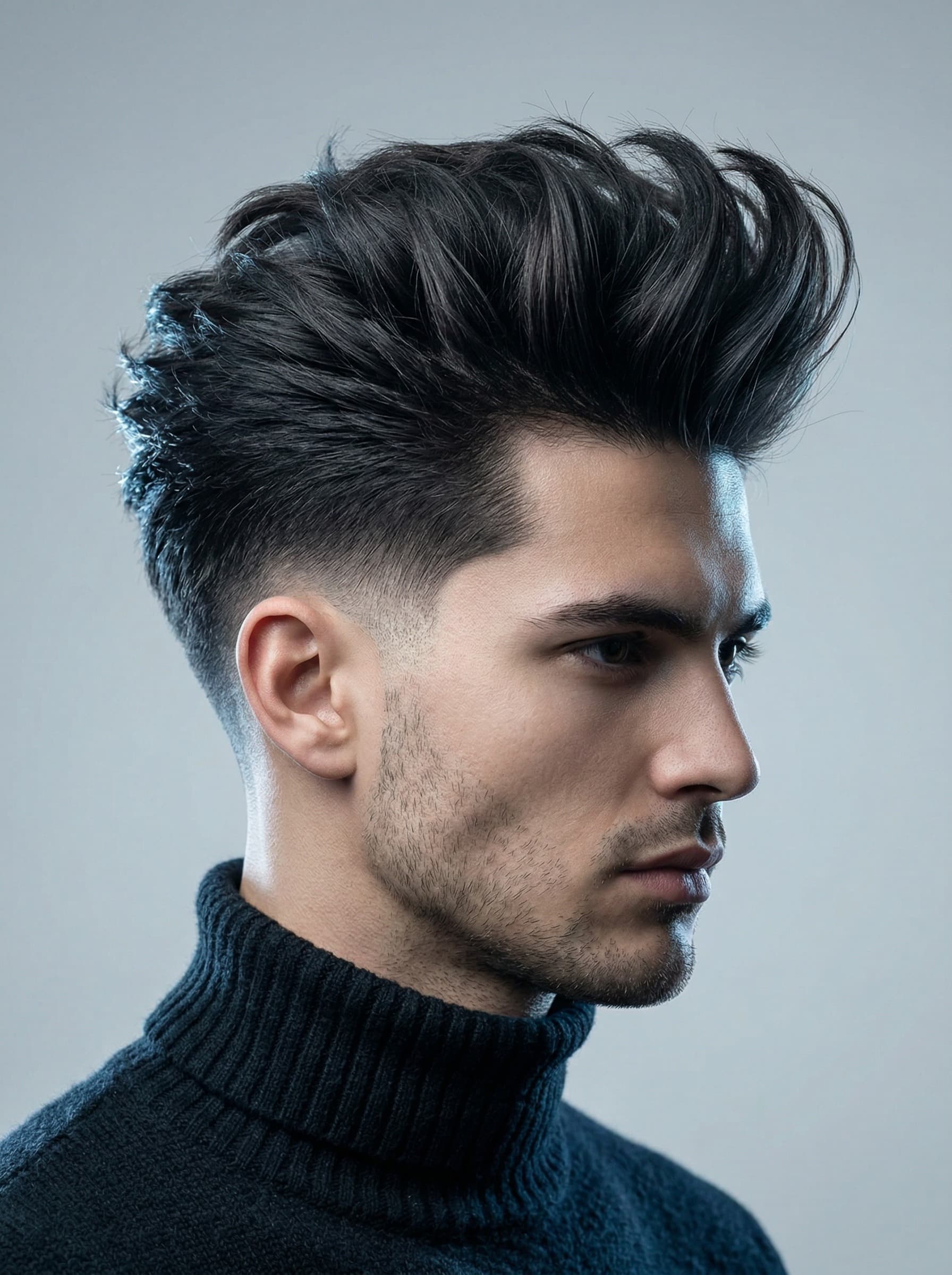
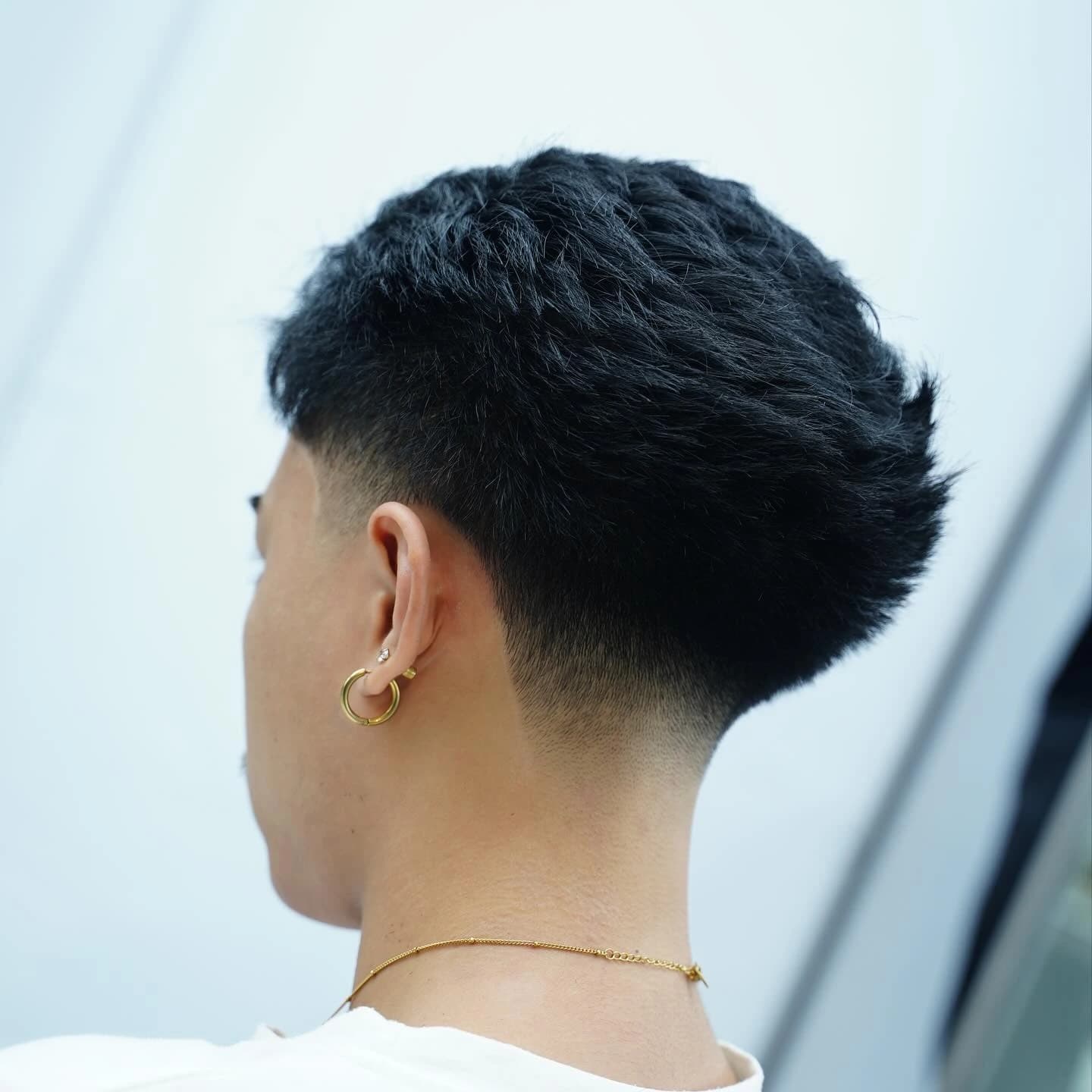
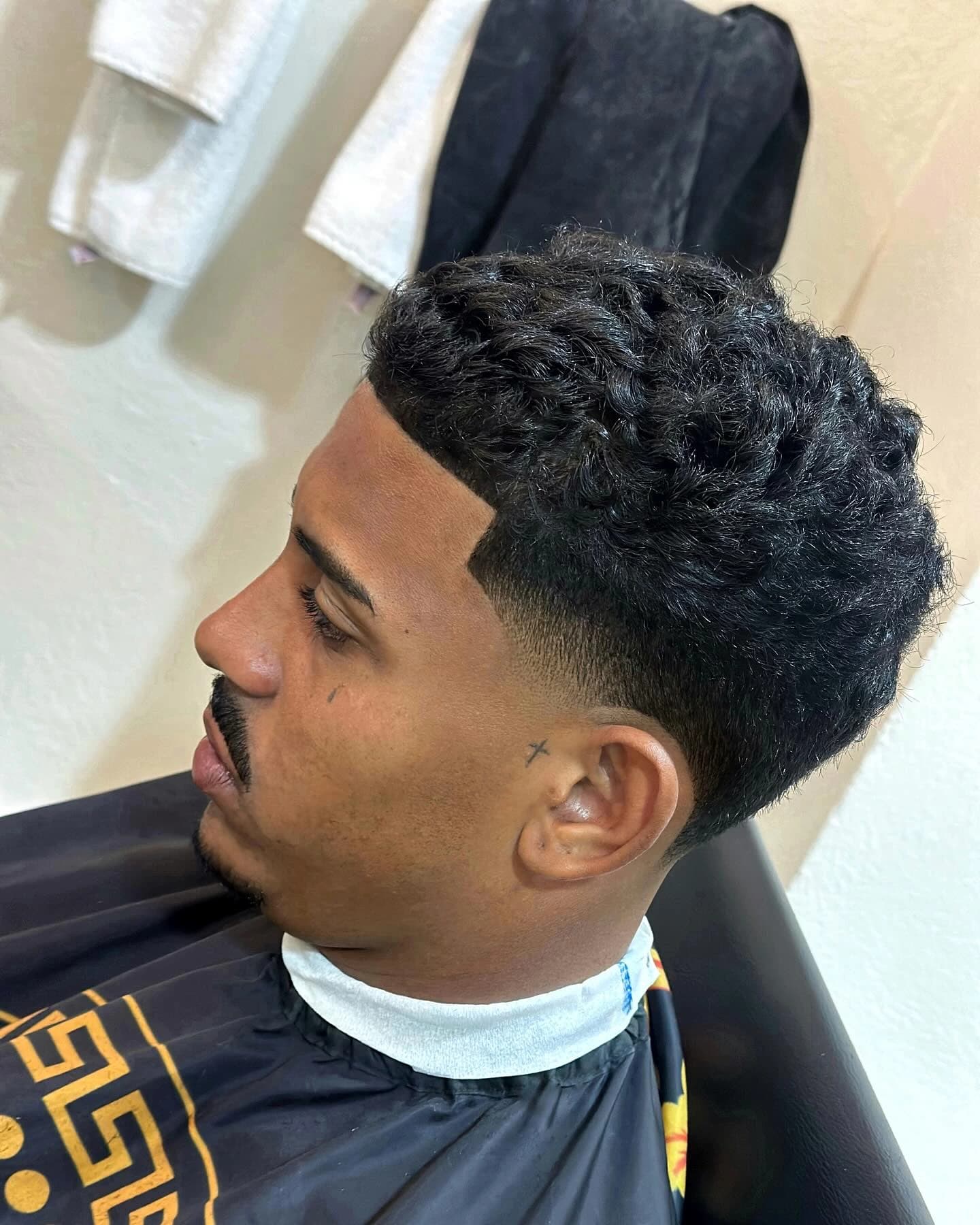
The Blowout Taper Fade represents a highly sophisticated, aerodynamic evolution of the traditional blowout, merging the explosive, airy volume of early 2000s urban styles with the surgical precision of modern barbering tapers.16 Unlike a standard high skin fade that aggressively removes all weight and density from the lateral sides of the head, the blowout taper intentionally retains significant density at the parietal ridge and the temporal regions.16 The skin-tight fading is focused strictly and surgically around the sideburns and the absolute base of the nape of the neck.18 This deliberate weight distribution creates a "blown back" or "wind-swept" trajectory that gives the optical illusion of immense natural volume without appearing unkempt or unruly.17 The style projects an aura of constant motion, capturing the kinetic energy of the hair in a seemingly frozen state of backward flow.
To execute the Blowout Taper Fade with the necessary precision, the barber typically begins by establishing a baseline clearance using a #1.5 clipper guard to carefully remove the bulk around the temporal and occipital areas without digging into the weight line.19 A mid-level taper is then executed by fluidly opening and closing the clipper lever, creating a seamless, gradual blend from bare skin at the base of the ear up into a #2 guard.19 The heavy weight line at the top of the sides is maintained intentionally, requiring shear-over-comb techniques to soften the transition without losing the shelf of hair.18 The top canopy of the hair is shear-cut exclusively, utilizing deep, aggressive point-cutting techniques to remove internal bulk.16 This texturization is critical; without it, the hair would be too heavy to support the upward and backward trajectory required by the blowout aesthetic.
The foundation of this style relies entirely on advanced thermal manipulation and specific chemical holding agents. Damp hair must be pre-treated with a high-quality thermal protectant and a lightweight, hydrophilic volumizing mousse or a sea salt spray rich in natural kelp extracts.14 A high-velocity blow dryer equipped with a narrow concentrator nozzle is used in strict tandem with a vented brush to force the roots upward from the scalp and direct the hair strands backward toward the crown.17 Once the hair is completely dry and the architectural lift is set into the hydrogen bonds of the hair, a small emulsification of matte styling paste or bentonite clay is worked gently through the mid-lengths to the ends.17 This final step locks the strands in place, providing a dry, reworkable hold that explicitly avoids the artificial, greasy shine of traditional pomades.
This versatile, highly requested style complements a wide array of facial structures. It is exceptionally flattering for men with round and square face shapes, as the extreme vertical volume generated at the crown significantly elongates the face along the Y-axis.18 Simultaneously, the tapered sides prevent the cheeks from appearing excessively wide, creating a slimming optical illusion.23 It readily accommodates straight, wavy, and loosely curled hair, provided the natural density of the hair follicles is thick enough to support the vertical and backward structural demands.23
2. The Textured French Crop with High Skin Fade
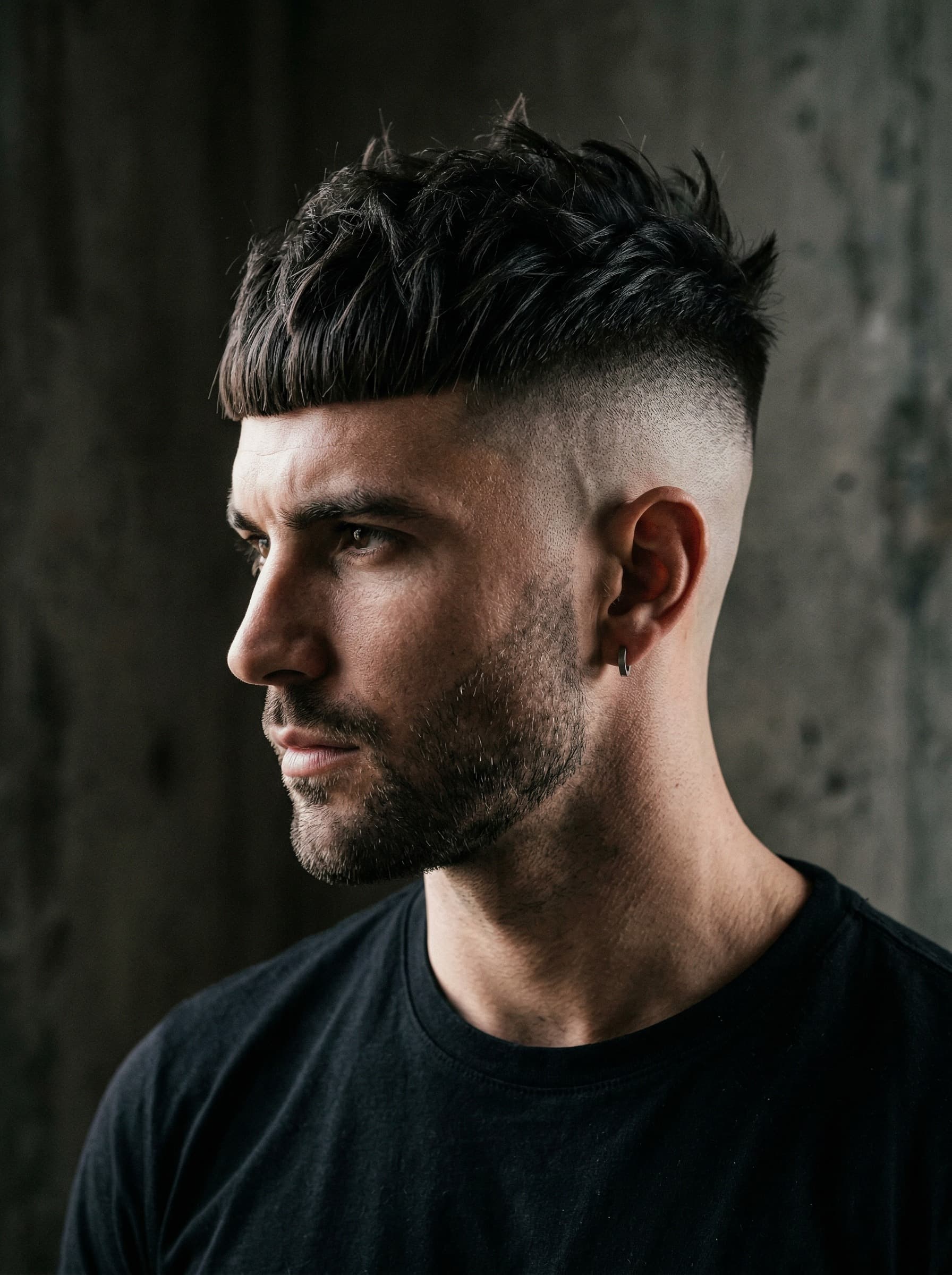
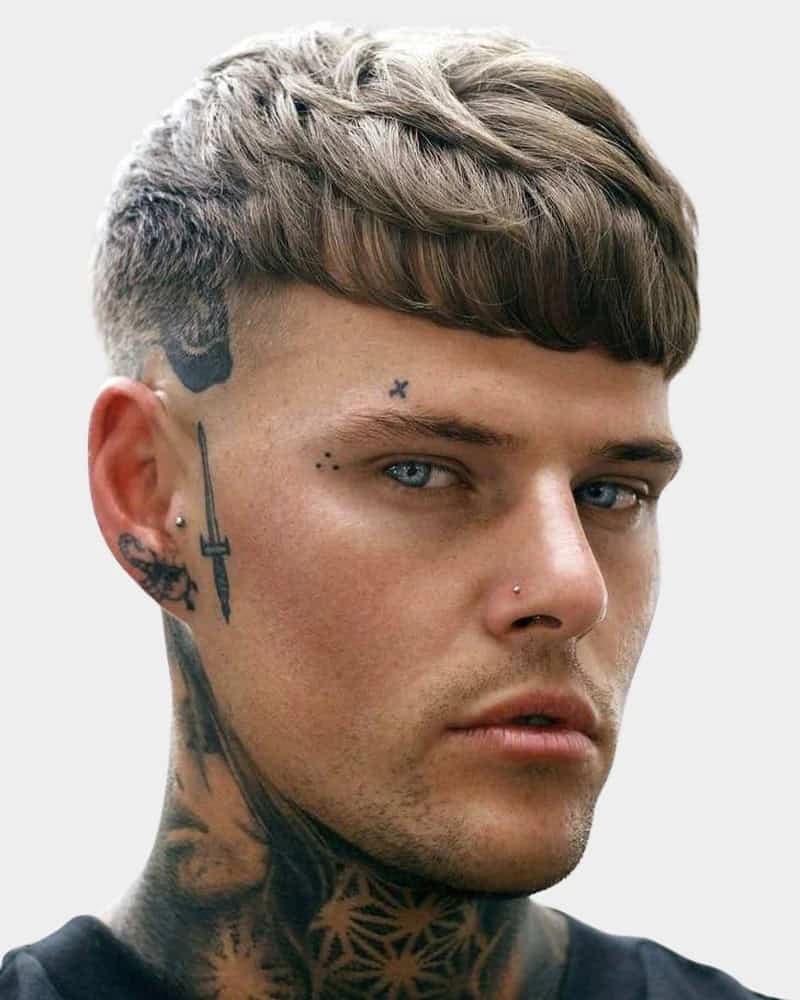
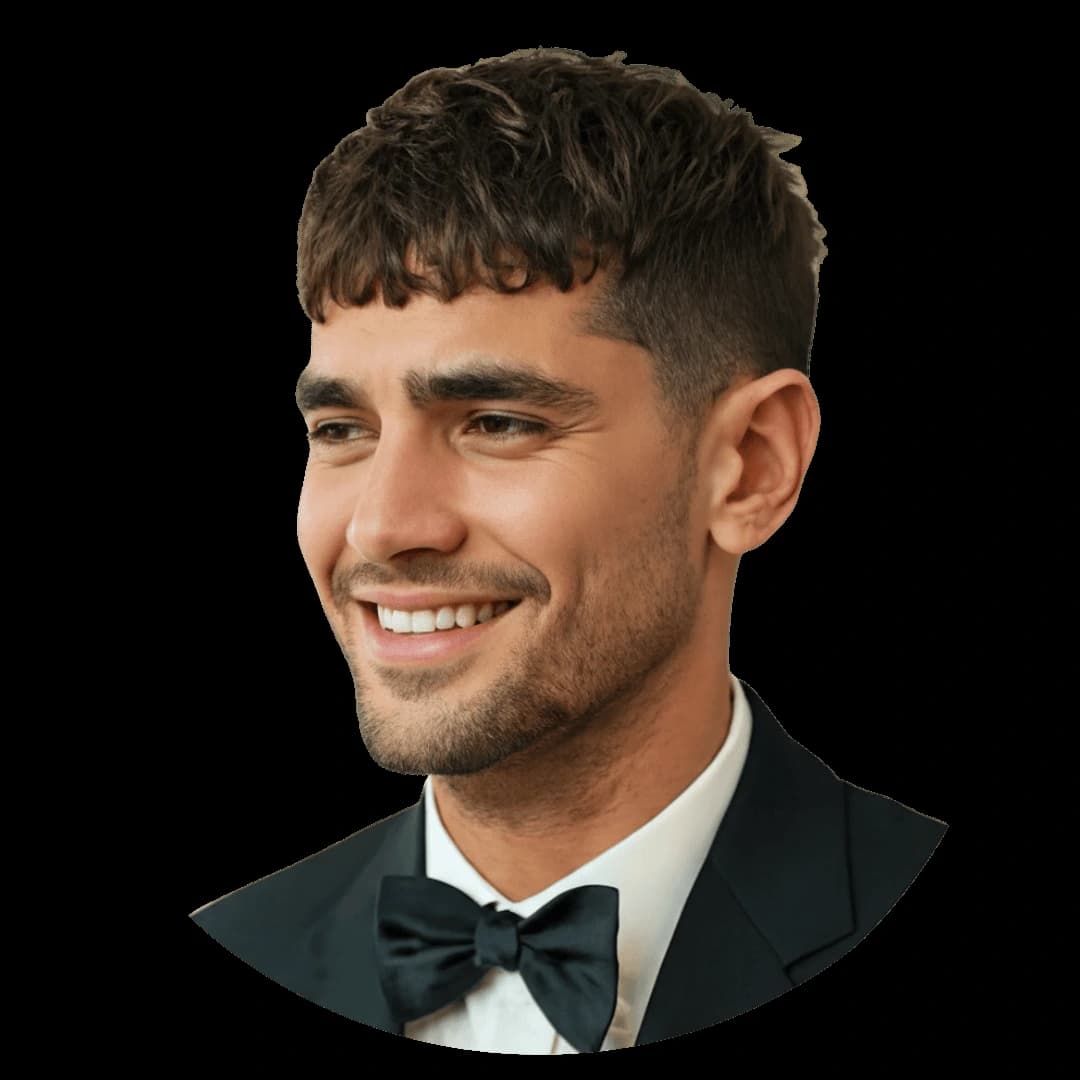
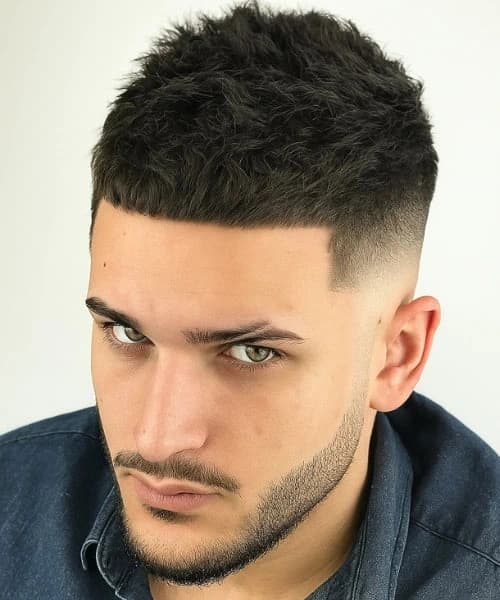
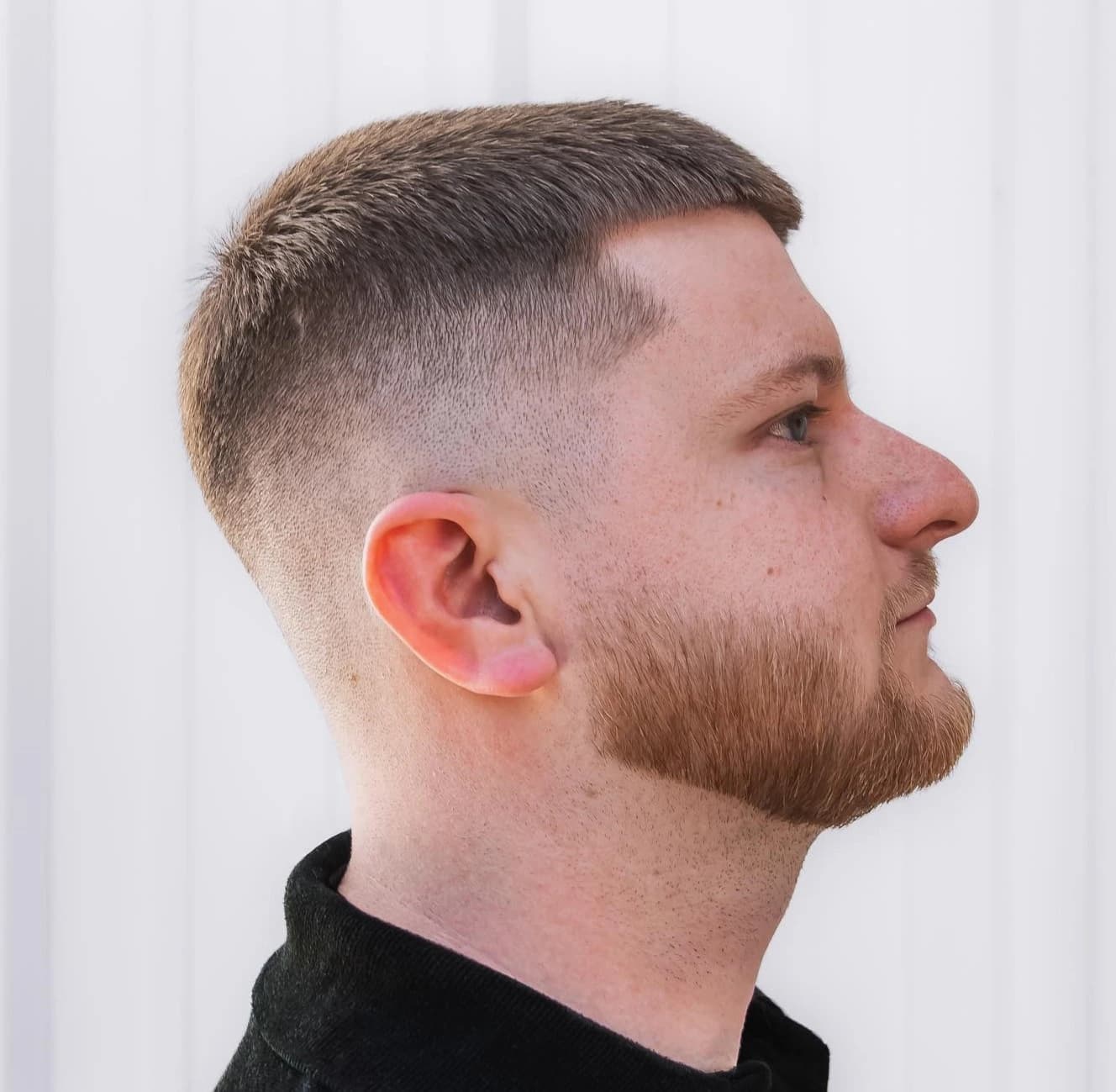
The Textured French Crop stands as a brutalist, fashion-forward reimagining of the classic Roman Caesar cut, heavily injected with contemporary European street-style influences and avant-garde runway aesthetics.24 It is primarily characterized by its severe, unapologetic geometric contrast: the lateral sides and the entire occipital region are completely eradicated via a high bald skin fade, while the top canopy is left relatively short, jutting aggressively forward to form a distinct, blunt, horizontally cut fringe resting across the upper forehead.25 In 2026, the French Crop has evolved drastically to feature aggressive, choppy, and chaotic texture on the apex, definitively moving away from the flat, lifeless, and monolithic variations of previous decades.24 The result is a highly architectural look that commands attention through its sheer defiance of traditional blending.
The defining mechanical feature of the French Crop is the high skin fade, which is pushed deliberately far up the cranial structure, often extending past the parietal ridge to create a stark, unblended disconnection with the top canopy.13 The barber utilizes zero-gapped foil shavers to take the sides down to the absolute bone, ensuring a microscopic level of closeness.28 For the superior canopy, the hair is combed forward and cut bluntly across the forehead with shears or trimmers to establish the rigid, unwavering horizontal line of the fringe.29 Subsequently, the barber must utilize specialized texturizing shears and deep, vertical razor-cutting techniques throughout the crown to create "piecey," jagged peaks and valleys.24 This deliberate shattering of the hair's surface tension prevents the style from looking like a heavy, solid helmet, introducing vital negative space into the silhouette.27
Maintenance and daily styling for the French Crop are remarkably streamlined, making it highly ideal for the active, fast-paced modern man.27 Post-shower, the hair is simply towel-dried or lightly blow-dried forward with no need for complex brush work.26 The critical, non-negotiable styling compound for this specific cut is a high-hold, zero-shine texturizing powder—often relying on silica silylate as the active ingredient—or an exceptionally heavy, dry matte clay.24 The product is aggressively scrunched directly into the roots of the dry hair to force the jagged layers to stand independently. The fingers are then used to separate the strands at the fringe, highlighting the internal dimension and the dramatic, chaotic texture of the canopy.24
The Textured French Crop acts as an architectural savior for men experiencing a receding hairline or temporal thinning, as the forward-swept fringe provides excellent, dense coverage and creates the optical illusion of a thick, perfectly straight hairline.13 It is highly recommended and physiognomically suited for men with diamond, oval, or long face shapes, as the distinct horizontal line of the fringe visually truncates the overall length of the face, providing excellent balance.27 Conversely, it is generally less suitable for perfectly round faces, as the blunt, horizontal fringe can unintentionally accentuate circular features and widen the appearance of the cheeks.
3. The Modern Mullet with Burst Fade
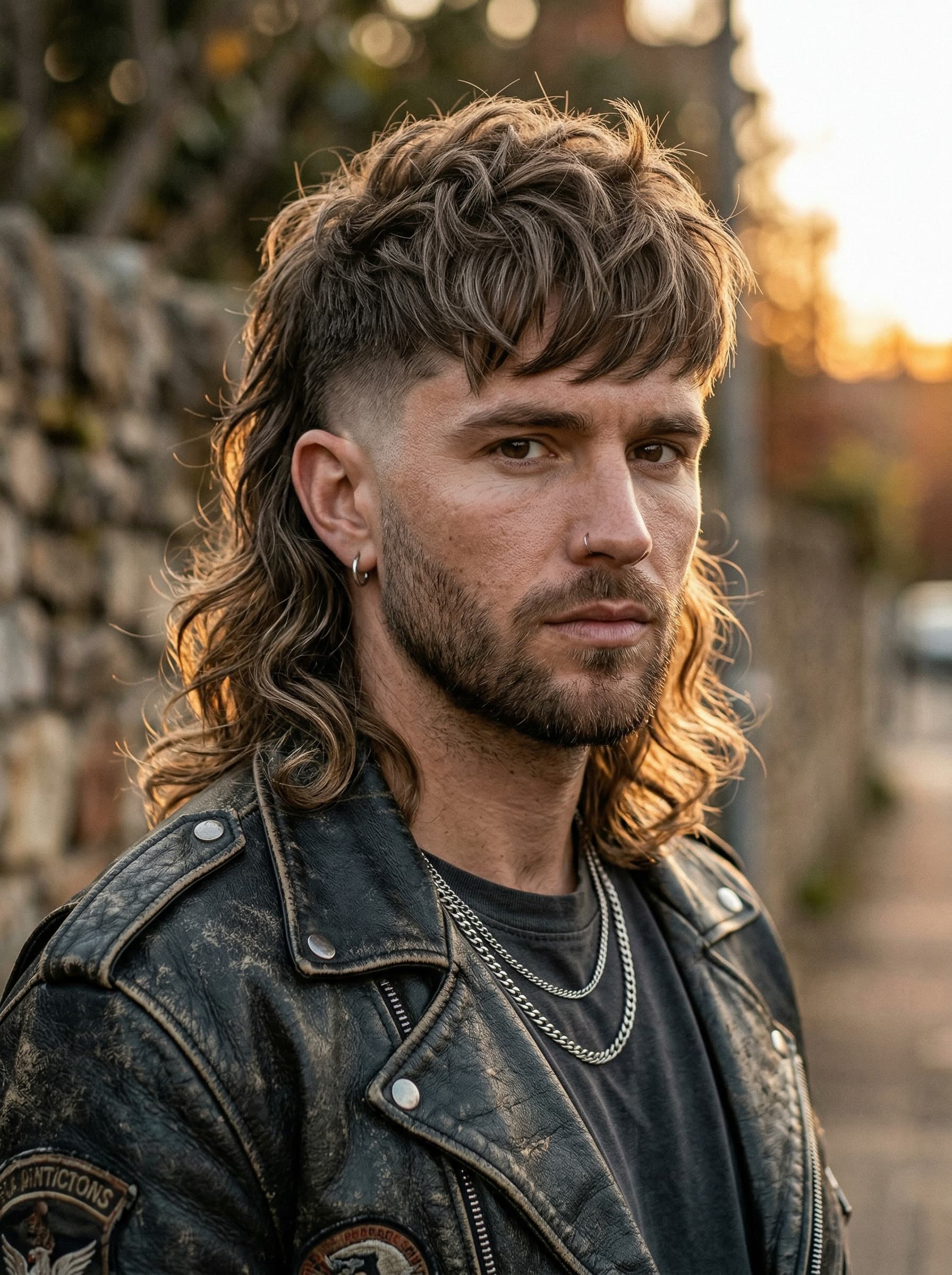
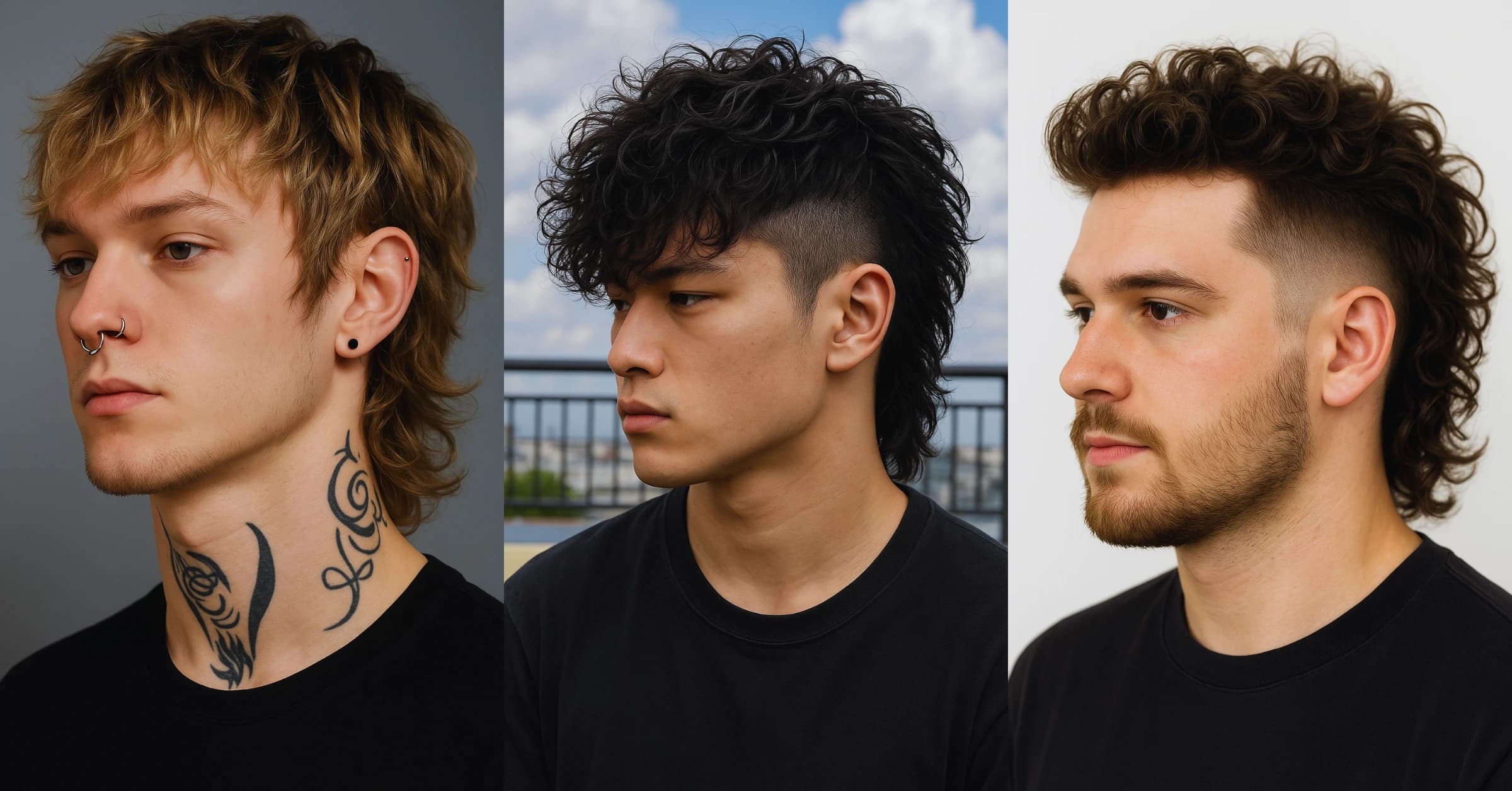
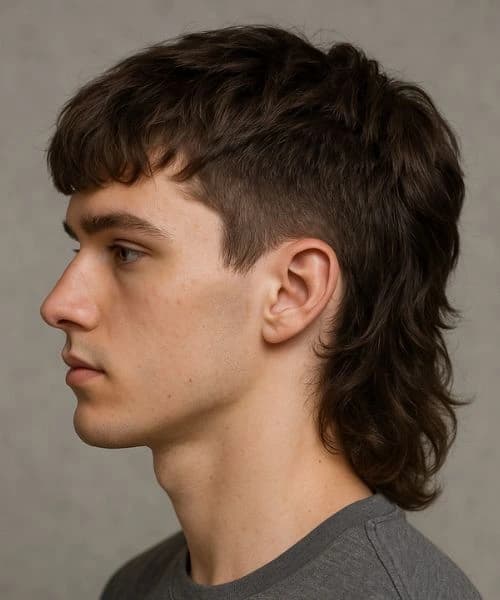
Shedding the comedic stigma and the ironic "business in the front, party in the back" ethos of the 1980s, the Modern Mullet has surged in popularity to establish itself as a highly sophisticated, avant-garde, and culturally dominant style in 2026.6 The contemporary iteration is deeply layered, highly organic, and incredibly fluid, prioritizing the enhancement of natural waves and texture over stiff, structured holds.8 The absolute hallmark of the modern mullet adaptation is the seamless integration of the burst fade or low taper. This specific fading technique flawlessly blends the ultra-short temporal regions into the cascading, voluminous flow of hair descending down the occipital bone and cervical spine, eliminating the harsh, unnatural disconnects of the past.8
The execution of the Modern Mullet requires a master-level understanding of cranial head shape and dynamic weight distribution. The lateral sides are typically taken down with a burst fade—a specialized, semi-circular fade that arcs tightly around the ear, dropping down to the skin but leaving the hair thick and dense at both the high temples and the nape of the neck.2 The top canopy is cut utilizing techniques similar to a textured crop or a modern shag, implementing heavy over-direction and deep point-cutting to remove unnecessary weight and encourage the hair to stand up or curl organically.8 The back "tail" of the mullet is left significantly longer, but it is deeply razor-cut and feathered with texturizing shears so that it integrates cleanly and fluidly with the top, rather than appearing as an isolated, disconnected block of hair trailing down the neck.8
The ultimate goal of the styling routine is to achieve a lived-in, effortless, and highly kinetic aesthetic. For individuals cursed with pin-straight hair, a chemical perm is frequently utilized by cosmetologists to introduce the necessary wave pattern required for the style to function correctly.21 Daily styling at home relies heavily on the liberal application of sea salt spray infused with kelp extract or natural oils, which artificially mimics the grit, volume, and wave-enhancing properties of ocean water.21 The hair is subsequently diffused with a blow dryer or allowed to air-dry naturally to promote optimal curl formation.8 A lightweight, hydrating curl-defining cream or a very light application of flexible styling paste is pinched meticulously into the ends of the mullet tail to prevent static frizz and maintain structural definition throughout the day.8
Physiognomically, the Modern Mullet is uniquely and surprisingly versatile. The added volume at the crown combined with the cascading length at the back works exceptionally well for individuals with wide or round faces.8 The verticality of the top and the descending tail draw the observer's eye rapidly up and down along the Z-axis, effectively slimming the lateral profile of the face.8 The cut thrives on medium to thick hair densities that possess a natural wave or curl pattern; men with extremely fine or pin-straight hair will require significantly more chemical texturization or intense thermal manipulation to achieve the desired oceanic flow.8
4. The Edgar Cut (The Takuache Crop)
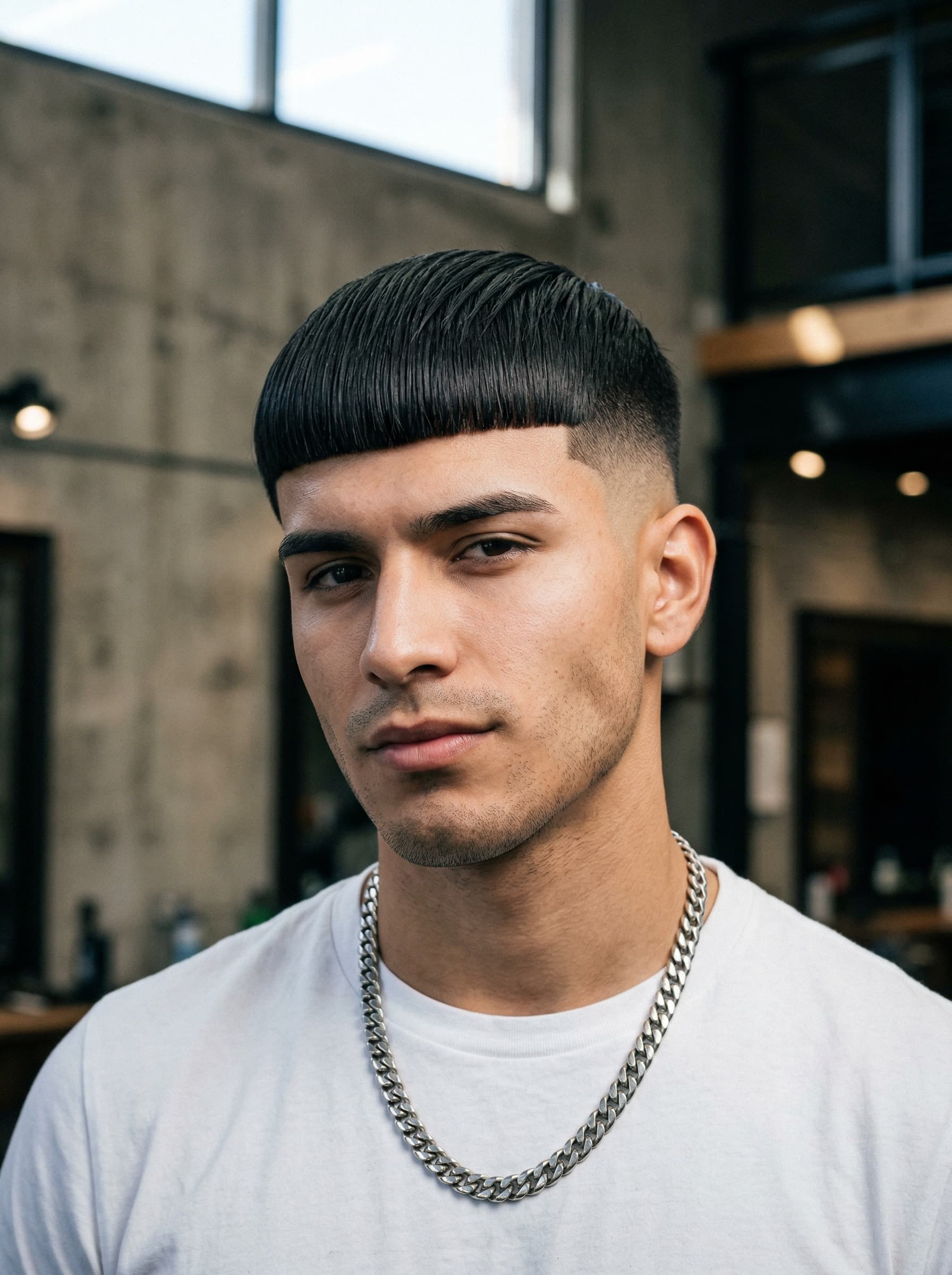
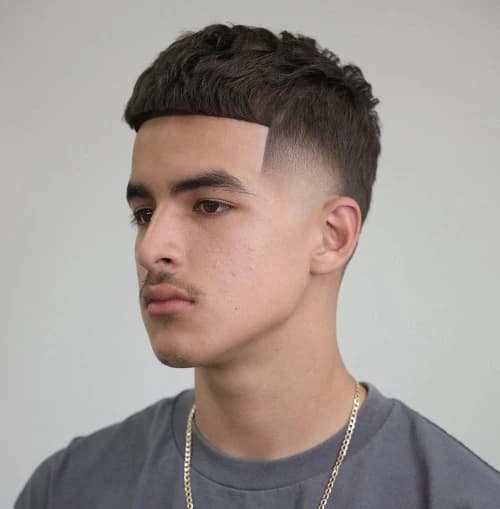
Originating deep within Latino and Hispanic youth subcultures in the American Southwest and Northern Mexico, the Edgar Cut—often affectionately or derisively referred to as the "Takuache" cut—has transcended its regional geographic roots to become a massive global phenomenon and a staple of 2026 men's fashion.9 The silhouette of the Edgar is incredibly distinct and unmistakable, forcefully combining the high-contrast, clinical bald fade of modern urban barbering with the heavy, bowl-like, blunt perimeter characteristic of indigenous South American hairstyles.9 It is characterized fundamentally by an exceptionally sharp, horizontal weight line that encircles the entire upper hemisphere of the head, culminating in a severe, blunt fringe that sits oppressively low on the forehead.9 It is a style that demands absolute geometric perfection.
The technical execution of the Edgar Cut leaves absolutely no room for error; an asymmetrical line ruins the entire aesthetic. The lateral sides and the occipital back are taken down to the absolute skin with precision foil shavers, generally executed as an ultra-high bald fade or a heavily contrasted drop fade that leaves no transition area.9 The most critical step is the establishment of the heavy weight line; the barber uses zero-gapped trimmers to cut a perfectly straight, blunt fringe across the forehead, relentlessly extending this sharp, horizontal line continuously around the temporal peaks to form a halo-like ridge.29 The superior top canopy is left heavy and dense. Unlike the chaotic, shattered top of the French Crop, the Edgar's top is traditionally styled flatter and more aggressively forward-directed, though the most modern 2026 variations have begun incorporating top-level point-cutting texture to slightly modernize and soften the rigid bowl shape.9
Maintaining the Edgar Cut requires diligent, almost obsessive upkeep. The blunt fringe must be trimmed every two to three weeks by a professional to maintain its severe, razor-sharp edge, as even a quarter-inch of growth destroys the geometric impact.29 Daily styling requires specific chemical products that physically lock the hair into its forward trajectory while simultaneously flattening any natural cowlicks or whorls at the crown. A strong-hold, matte texture clay or a dense, heavy styling paste is heavily emulsified in the hands and raked forcefully forward from the crown of the head to the fringe.29 The hair is subsequently blow-dried flat against the skull using a fine-tooth comb to reinforce the distinctive, unbroken bowl-like canopy.29
Physiognomically, the Edgar Cut creates a highly specific geometric shape that works exceptionally well on oval, pointed, and diamond face shapes.32 The heavy, low-sitting fringe entirely covers the forehead and adds significant lateral width to the upper half of the face, balancing out pointed chins.32 It is exceptionally well-suited for coarse, thick, and brutally straight hair types—textures particularly prevalent in Hispanic and Asian demographics—as the dense hair naturally supports the heavy weight line without separating.32 Men with thin, wispy, or receding hair will struggle immensely to achieve the solid, unbroken barrier of the Edgar's signature fringe, making the style highly restrictive based on genetic hair traits.9
5. The Broccoli Cut (The Zoomer Perm / Curly Top Fade)
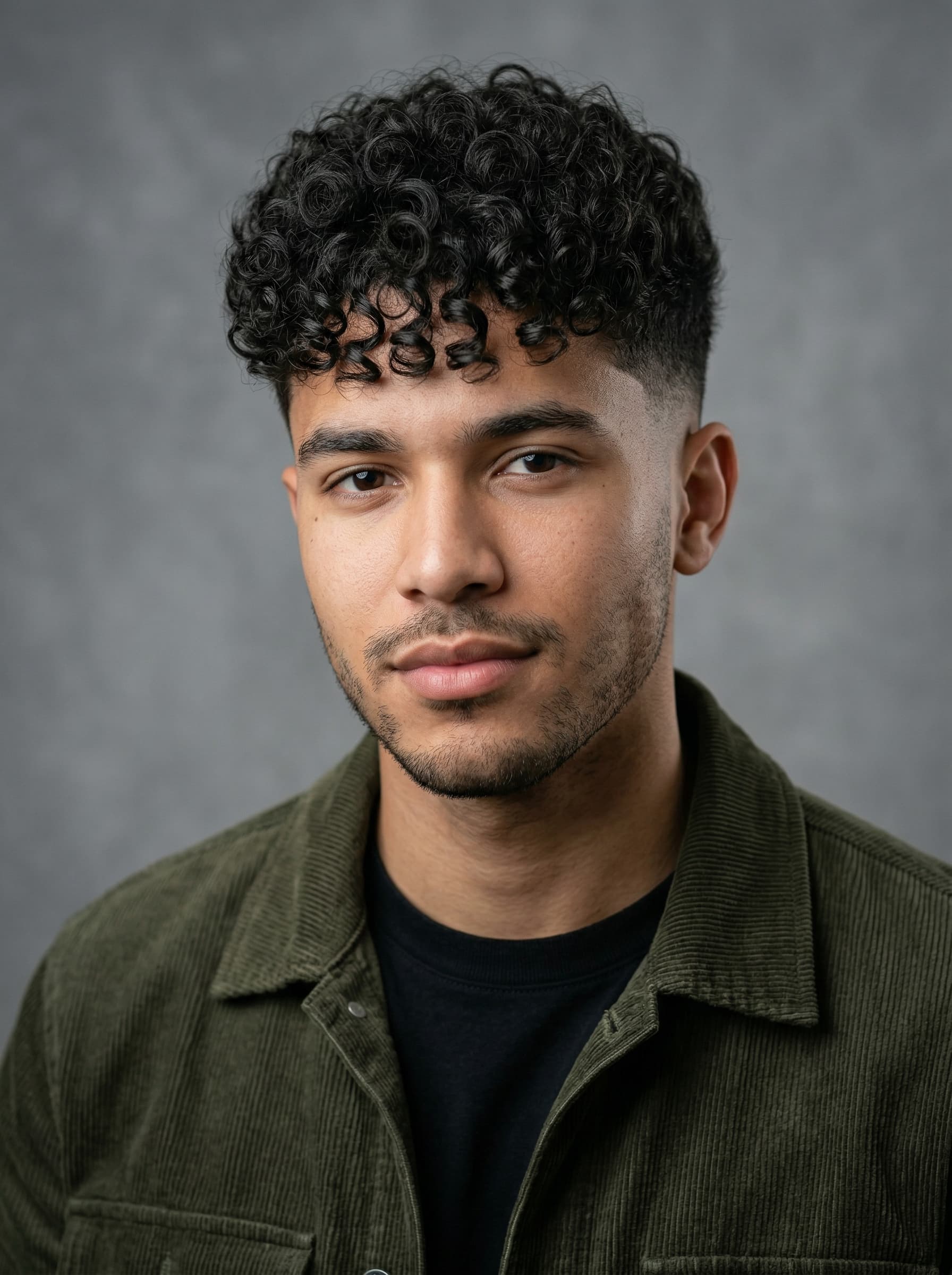
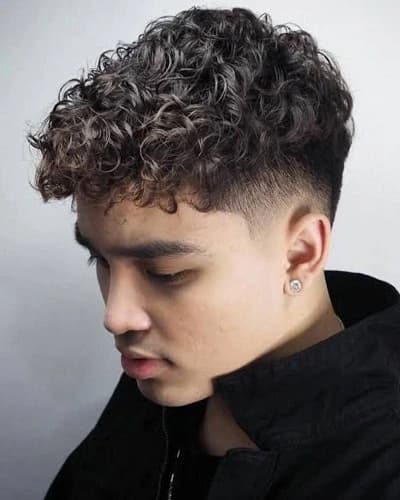
Colloquially dubbed the "Broccoli Cut" due to its undeniable and uncanny resemblance to the fluffy green floret of the vegetable, this explosive style has dominated the Generation Z and Alpha demographics throughout the early 2020s and remains an absolute powerhouse trend in 2026.4 Alternatively known in cosmetology circles as the "Zoomer Perm," the "Bird's Nest," or the "Alpaca," the style relies on a massive, towering accumulation of tight, overlapping curls or coils on the extreme apex of the skull.33 This towering structure is completely disconnected from closely shaved or heavily tapered lateral sides, creating a mushroom-cloud silhouette.33 It is a playful, highly voluminous style that explicitly rejects the sleek, pomade-heavy aesthetic of previous decades in favor of fluffy, bouncy, and seemingly chaotic verticality.4
The technical execution of the Broccoli Cut is heavily reliant on chemical cosmetology. For the vast majority of young men who do not possess naturally tight ringlets, the absolute foundation of this cut is a chemical perm.33 The cosmetologist utilizes small to medium-diameter curling rods and a strong waving lotion to alter the disulfide bonds in the hair, achieving the dense, structural curls required to support the vertical height.33 Once the perm is permanently set and neutralized, the barber focuses on the perimeter architecture. The sides are typically taken down with a mid-drop fade, a curved burst fade, or a high skin fade, ensuring that the transition from the bald sides to the voluminous top is sharp and high-contrast.4 The chemically altered curls on top are left highly layered and rounded, meticulously trimmed with shears to form a spherical, cloud-like silhouette that overhangs the forehead slightly, mimicking the vegetable's canopy.4
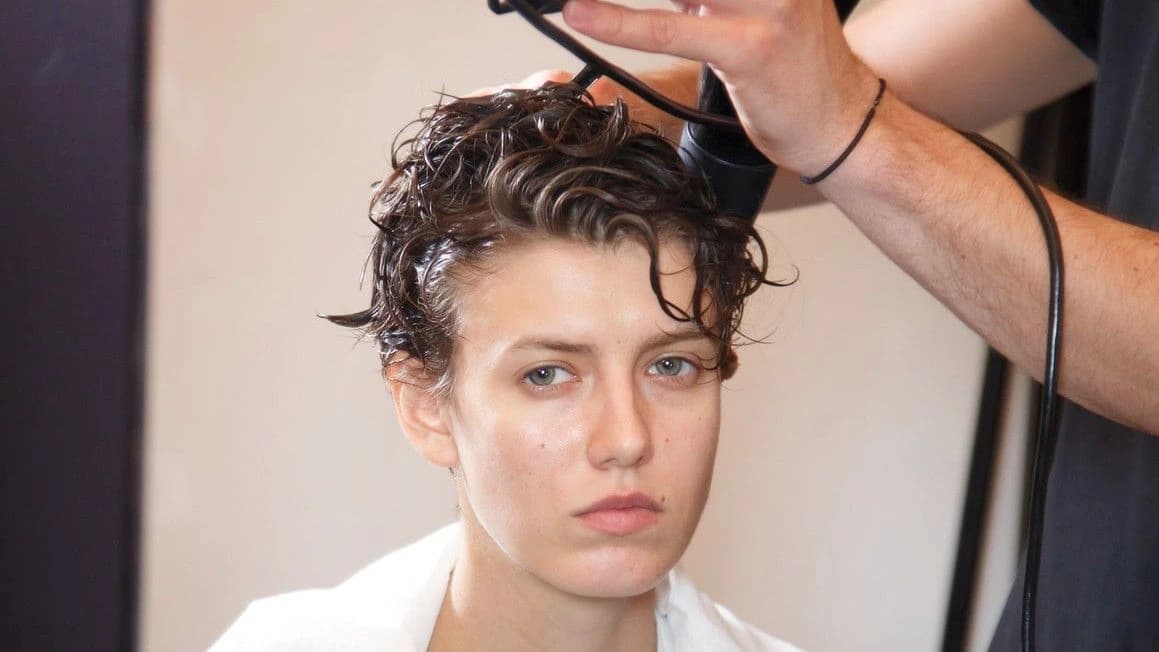
Maintaining the Broccoli Cut revolves entirely around intensive moisture retention and curl definition, as chemically permed hair is highly porous and prone to severe dryness, breakage, and frizz.31 Harsh sulfate shampoos must be strictly avoided; instead, co-washing (washing exclusively with a cleansing conditioner) is preferred. Daily styling involves applying a generous amount of hydrating curl-enhancing cream, pure argan oil, or a specialized anti-frizz serum to soaking wet hair to lock in the cuticle.4 The hair is then scrunched aggressively from the tips to the roots and dried using a blow dryer equipped with a massive diffuser attachment on low heat and low airflow. This bakes the curls into a tight, bouncy formation without blowing the delicate ringlets apart into a frizzy mess.4
The towering verticality and sheer mass of the Broccoli Cut make it a superb physiological choice for individuals with round, wide, or square faces, as the extreme height dynamically elongates the facial structure along the vertical axis.31 Conversely, men with excessively long, narrow, or oblong faces should exercise extreme caution, as the added height will severely unbalance their facial symmetry and elongate the head to comical proportions. It is a style tailor-made for those willing to embrace high-maintenance chemical treatments or those genetically blessed with naturally tight, dense coils.35
6. The Low Taper Fade with Side Part (The Old Money Aesthetic)
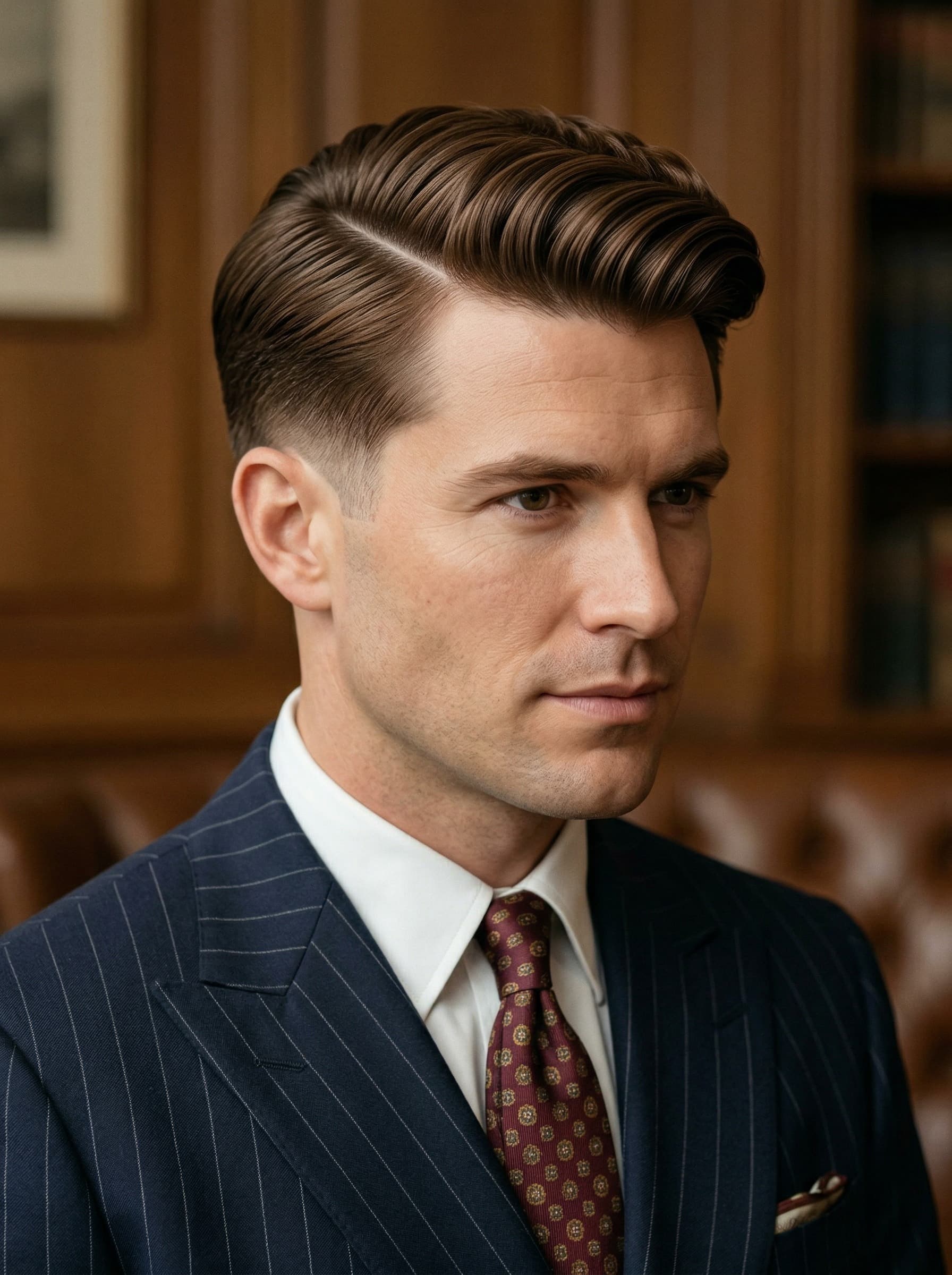
While wild textures and chemical perms heavily dominate youth culture, a parallel and equally powerful movement toward "Old Money" sartorial elegance has solidified the Low Taper Fade with a Classic Side Part as the premier choice for the professional, refined, and mature gentleman in 2026.14 Tracing its aristocratic lineage directly back to the Ivy League, Princeton, and executive cuts of the 1950s, this modern iteration fundamentally abandons the greasy, brittle, helmet-like holds of the past.36 Instead, it masterfully pairs the sophisticated, timeless geometry of an off-center part (most commonly a 60/40 ratio) with the clean, modern touch of a low taper fade.14 This creates an unparalleled blend of formal structure with soft, touchable, natural movement.14
The master barber must approach the execution of this cut with absolute architectural precision. The foundational side part is established either by meticulously following the hair's natural growth pattern and whorls, or by artificially carving a highly subtle, incredibly thin "hard part" line with a straight razor to provide a permanent styling guide.36 The top section is left medium-long (typically 3 to 5 inches), cut with shears utilizing a slight elevation toward the front fringe. This specific elevation allows the frontal hair to sweep gracefully backward over the crown.14 Unlike a high fade that aggressively exposes the scalp, the low taper fade is localized strictly and conservatively to the sideburns and the lowest half-inch of the neckline.14 This crucial decision leaves the temporal hair long enough to be combed neatly downward and backward, seamlessly blending into the longer top canopy without creating a stark disconnection.14
The ultimate goal of the styling routine is to achieve a polished, lustrous, and healthy finish that does not look brittle, stiff, or artificially wet. Immediately after washing, a lightweight, nourishing styling cream or a high-quality, water-based pomade is distributed evenly through damp hair.14 Using a fine-tooth comb and a blow dryer set to medium heat and medium velocity, the hair is directed forcefully into the established side part.14 The front section (the quiff or crest area) is lifted slightly with a vented brush while drying to create a soft, rolling, volumetric wave. A final, minute application of a low-shine molding paste or a single drop of smoothing argan oil is used to tame rogue flyaways and cement the sleek, aerodynamic silhouette.12
Physiognomically, the Low Taper Side Part is arguably the most universally flattering and risk-free hairstyle in existence. The strong asymmetrical nature of the side part breaks up the visual plane of the face, making it ideal for square, oval, and even highly round face shapes by shifting the focal point.13 It is highly effective and heavily recommended for men working in conservative corporate, legal, or formal environments who wish to retain a modern, well-groomed edge without resorting to aggressive, inappropriate skin fades.37 The cut is best suited for straight or slightly wavy hair with a fine to medium overall density; highly curly hair will resist the slicked-down nature of the part.37
7. The Modern Pompadour with Drop Fade
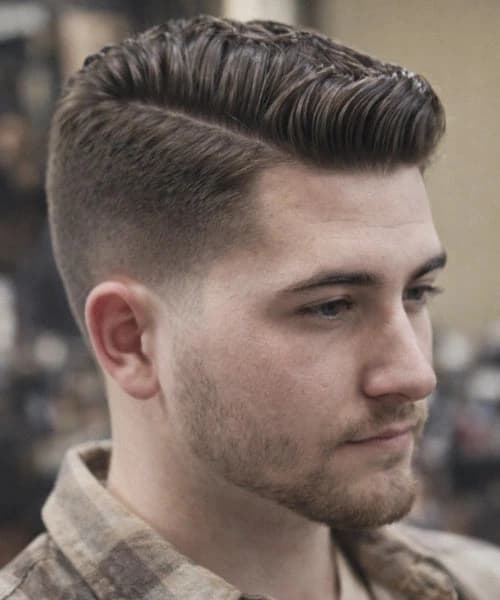
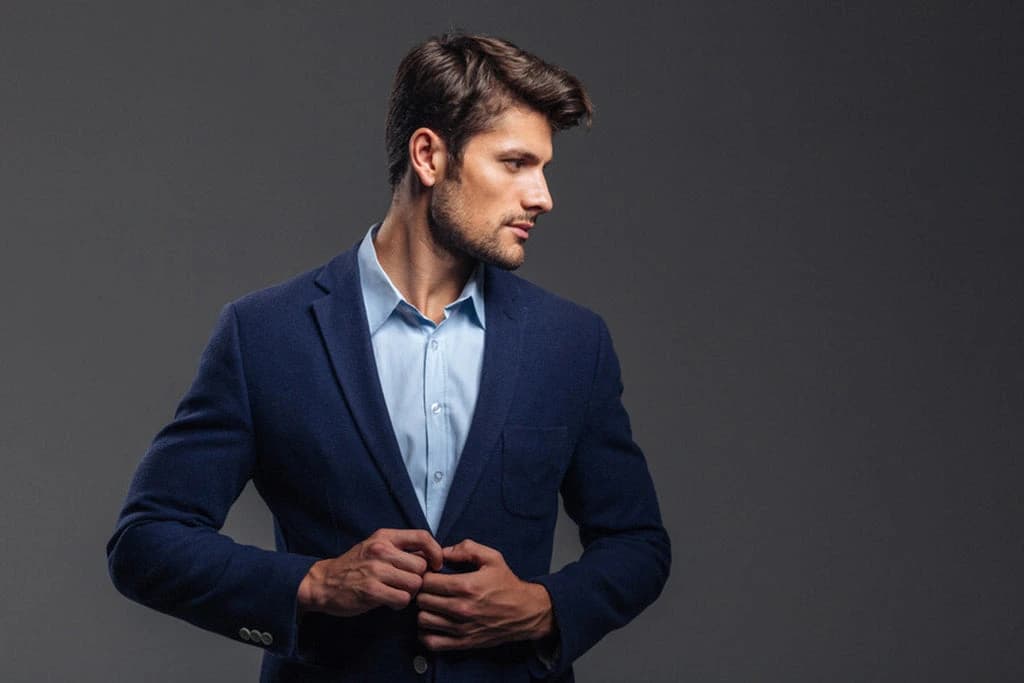
The Pompadour—originally named after the 18th-century mistress of King Louis XV, Madame de Pompadour, and famously popularized by 1950s rock-and-roll icons like Elvis Presley—has been continuously reinvented throughout grooming history.39 In 2026, the Modern Pompadour has definitively shed its heavy rockabilly grease, comb lines, and excessive artificial shine. The contemporary version is characterized heavily by its towering, smoothly sculpted verticality at the absolute front of the hairline, which gradually and gracefully fades into a sleek, swept-back crown.39 The transformative integration of the Drop Fade—a specialized fade that arcs sharply downward behind the ear toward the nape of the neck—gives the towering top a dynamic, aerodynamic, and sweeping foundation, creating a silhouette that is both historically classic and highly aggressive.14
The dramatic optical impact of the Pompadour relies entirely on the precise preservation of extreme length at the front bang area (often requiring 4 to 6 inches of growth), which is then scissor-cut to gradually taper shorter as it moves toward the vortex of the crown.39 This length discrepancy is what creates the wedge-like pomp. The lateral sides require a meticulous and smooth drop fade; the barber utilizes clippers to take the hair down to the bare skin at the temples, but crucially drops the fade line significantly lower behind the occipital bone.40 This creates a curved, sweeping aesthetic line in the fade itself that perfectly mimics and enhances the backward flow of the long hair on top.40
Constructing the Modern Pompadour on a daily basis is an exercise in structural engineering and thermal styling. A powerful pre-styler, such as a high-hold volumizing mousse or a thickening sea salt spray, must be applied to damp hair to provide foundational grip.14 The user must then master the "round brush blow-dry technique," catching the long front hair with a round, vented boar-bristle brush, pulling it violently upward for maximum root lift, and rolling it backward while simultaneously blasting it with high-velocity, high-heat air.39 Once the towering shape is erected and locked in with a cold shot of air to close the cuticle, a strong-hold, matte-finish molding paste or a dense texture clay is gently raked exclusively through the outer canopy to lock the structure in place.41 High-shine pomades are deliberately avoided to maintain a modern, touchable, and matte look.41
Because the defining characteristic of the Pompadour is its extreme vertical volume, it is the ultimate corrective hairstyle for round or highly square faces, as the height stretches the facial proportions vertically and sharpens the perception of the jawline.13 However, men with naturally long, narrow, or oblong faces must avoid this style entirely, as the massive added height will severely unbalance their facial symmetry and create a disproportionate aesthetic.13 Furthermore, it requires a dense, thick, and highly resilient hair type to support the immense architectural weight and thermal stress of the daily pomp creation.41
8. The Textured Quiff with Mid Fade
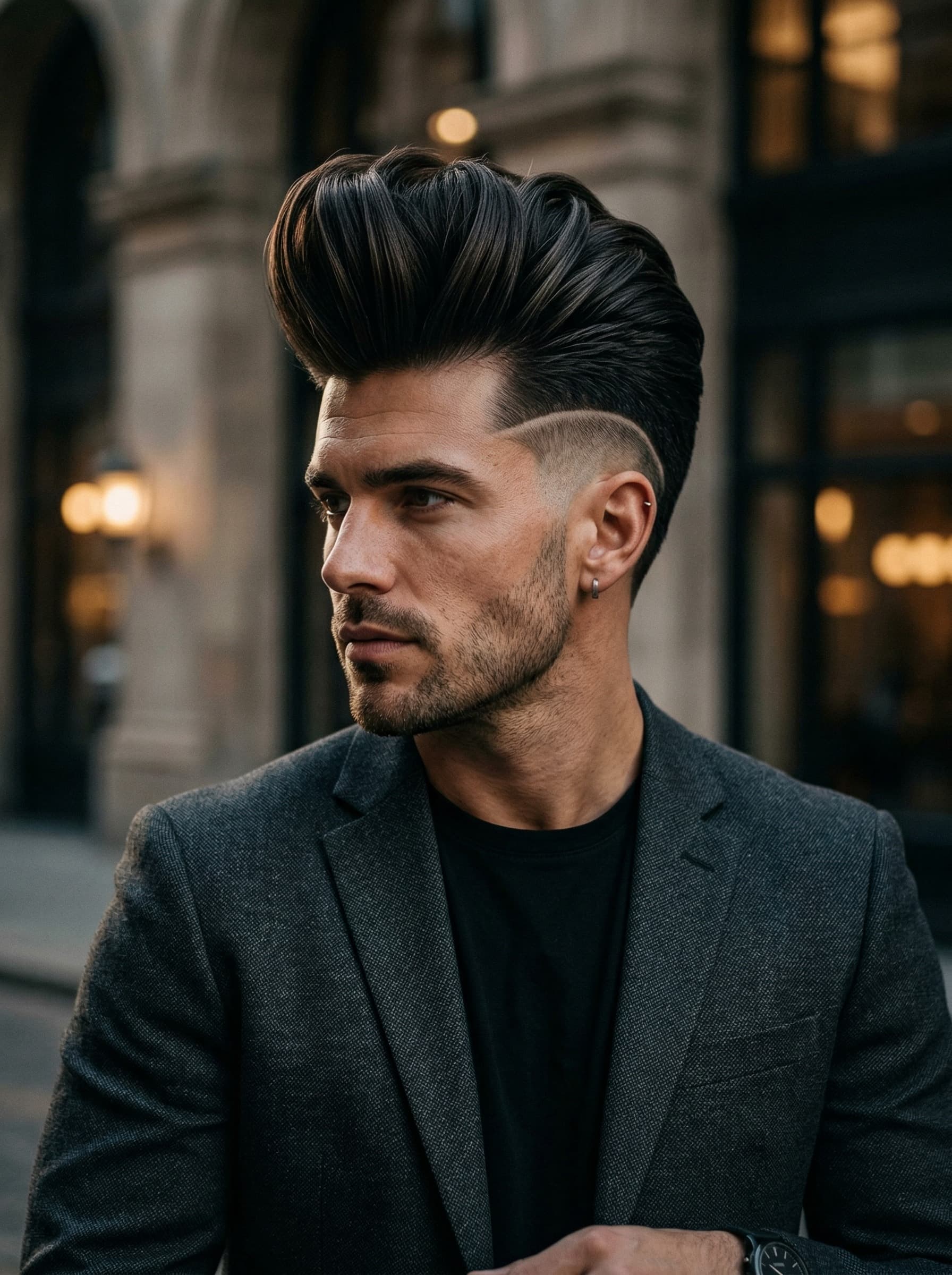
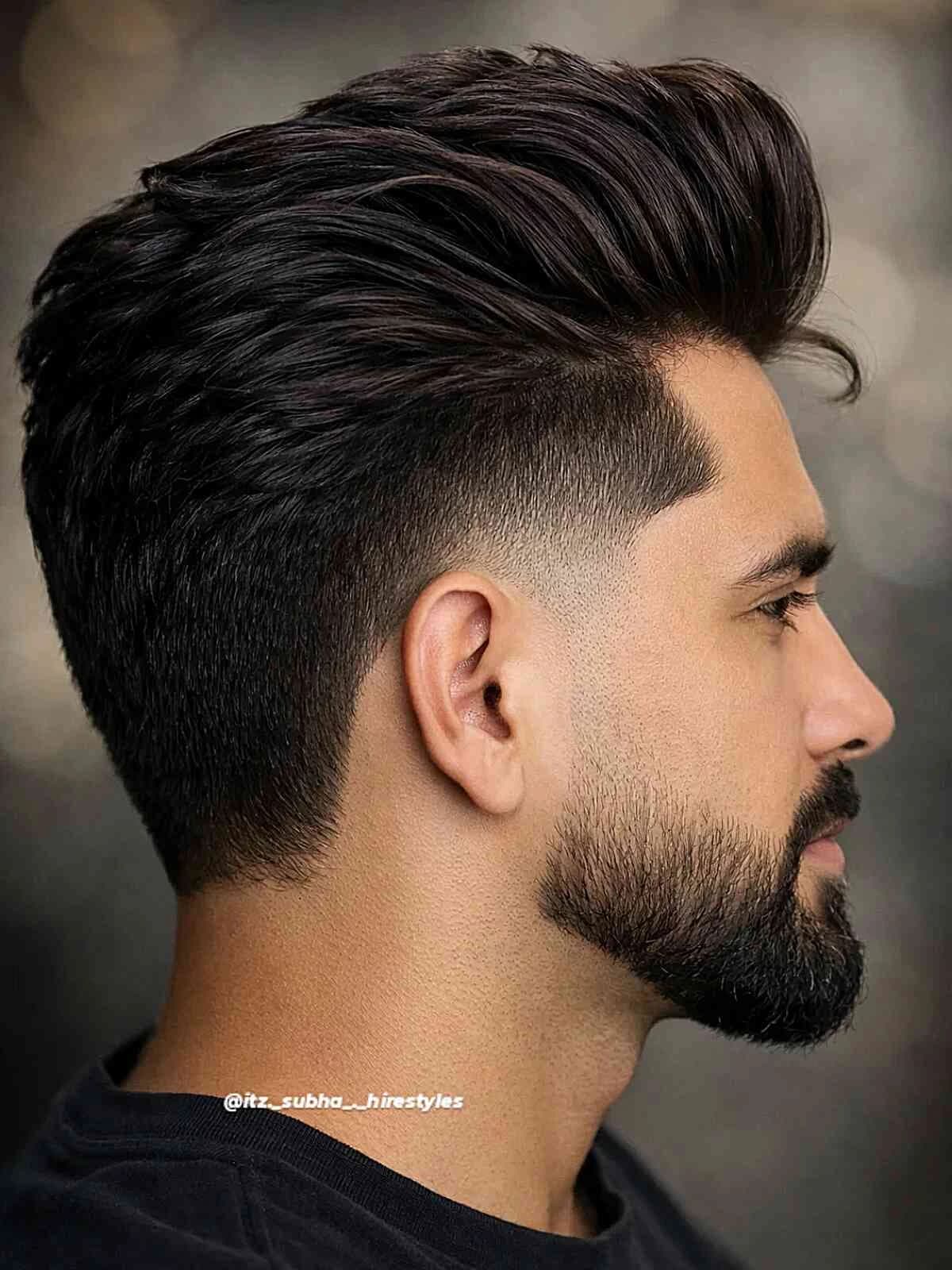
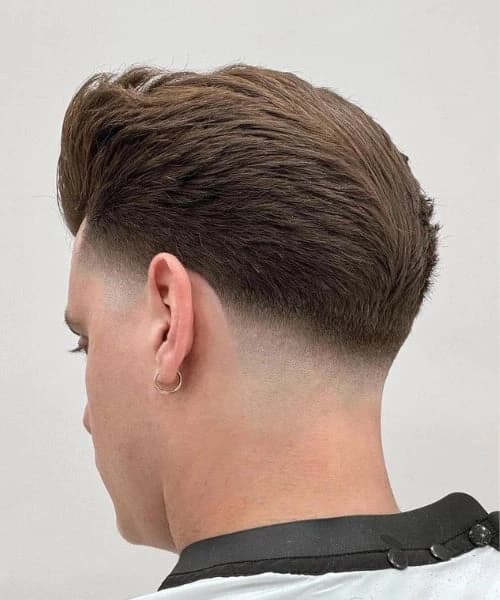
While often confused by laymen with the pompadour, the Quiff is a highly distinct and mechanically different entity. While the pompadour sweeps all the hair uniformly backward in a rolling wave, the Quiff directs the hair forward from the crown before flicking the front frontal section aggressively upward and slightly back at the very hairline.43 The 2026 iteration of the Textured Quiff is the absolute antithesis of the stiff, gelled, porcupine spikes of the 1990s and 2000s.7 It is a highly dynamic, aerodynamic style that heavily emphasizes chaotic, airy texture, distinct piecey separation, and effortless, lightweight movement, all firmly anchored by the ultra-clean, clinical lines of a mid-level skin fade.44 It perfectly bridges the aesthetic gap between the messy, forward-swept rebellion of the French Crop and the rigid, vertical ambition of the Pompadour.7
Mechanically, the lateral sides are executed with a meticulous mid-fade, starting the bare-skin shave approximately one inch above the top of the ear and blending smoothly upward. This leaves just enough weight and length at the parietal ridge to structurally support the canopy on top.15 The top canopy is the primary focal point of the barber's advanced shear work. Leaving the frontal fringe area around 3 to 4 inches long, the barber utilizes aggressive deep point-cutting, slide-cutting, and texturizing shears to fundamentally shatter the ends of the hair.44 This heavy, internal texturization removes vital bulk from the mid-shafts, allowing the hair to stand up easily without collapsing under its own structural weight.44
The Textured Quiff relies entirely on generating dry, weightless volume.7 On damp hair, a generous application of sea salt spray is applied to physically swell the hair cuticles and provide foundational grit.44 During the blow-drying phase, the hair is brushed aggressively forward from the crown until it reaches the forehead. At this exact point, the user's fingers or a specialized vent brush are used to forcefully lift the fringe upward and slightly to one side, blasting the roots with hot air.44 The defining and final step is the application of a micro-fine texturizing powder (often pumped directly into the roots for maximum lift) or a very dry, high-hold, zero-shine matte clay.7 The user pinches, twists, and pulls individual clusters of hair at the front to create the signature, highly separated "piecey" aesthetic.44
The Textured Quiff is hailed as one of the most highly adaptable hairstyles available. Its moderate, controlled height flatters square, oval, and round faces by providing an elongating vertical axis without demanding the extreme commitment or facial symmetry required of a towering pompadour.45 Furthermore, because the style relies heavily on texturizing powders and clays to artificially separate and thicken the hair strands, it is an exceptionally excellent choice for men with fine or slightly thinning hair. The airy, chaotic volume creates a highly effective optical illusion of supreme, thick hair density.7
9. The Slicked-Back Undercut
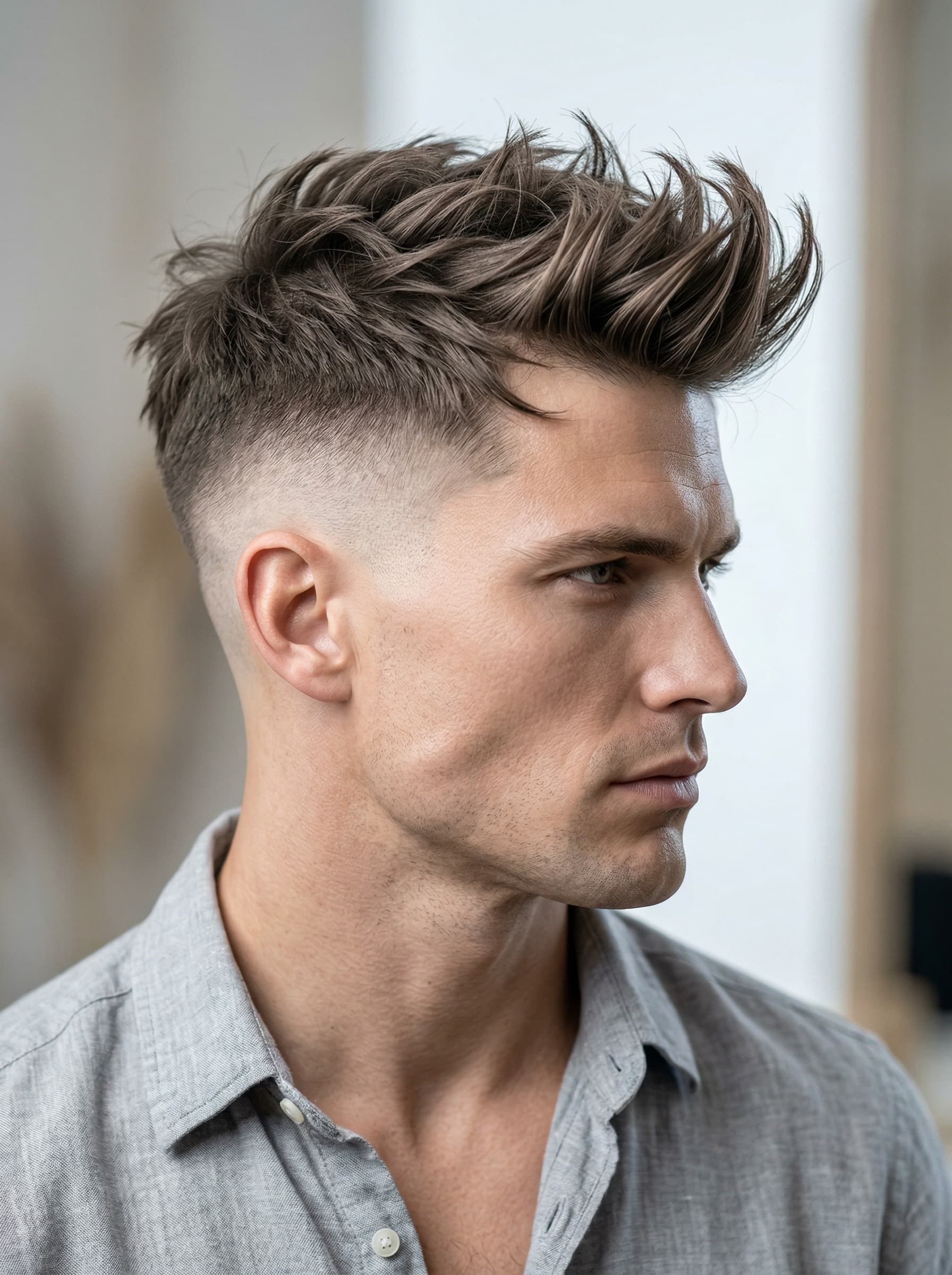
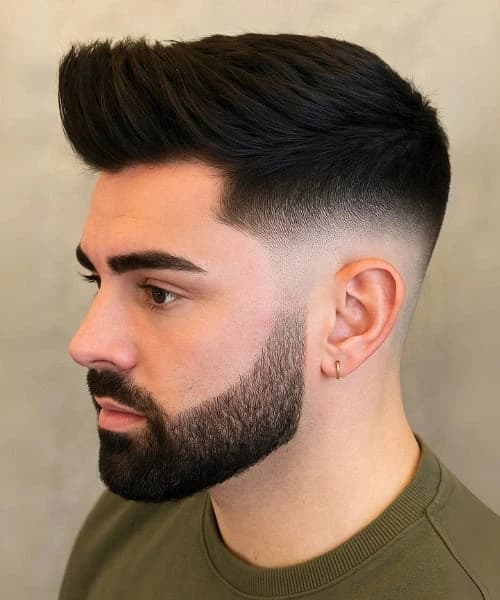
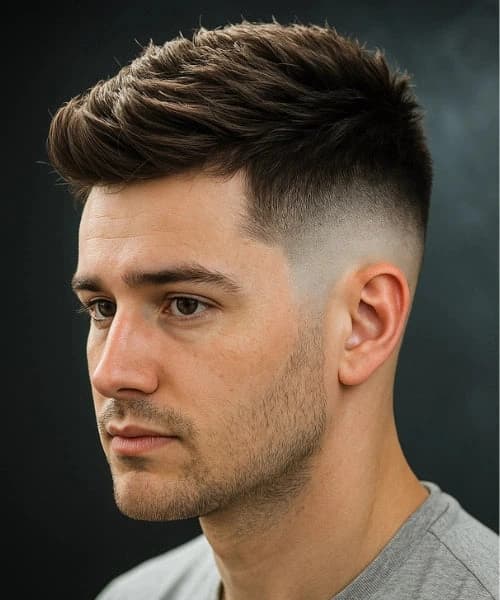
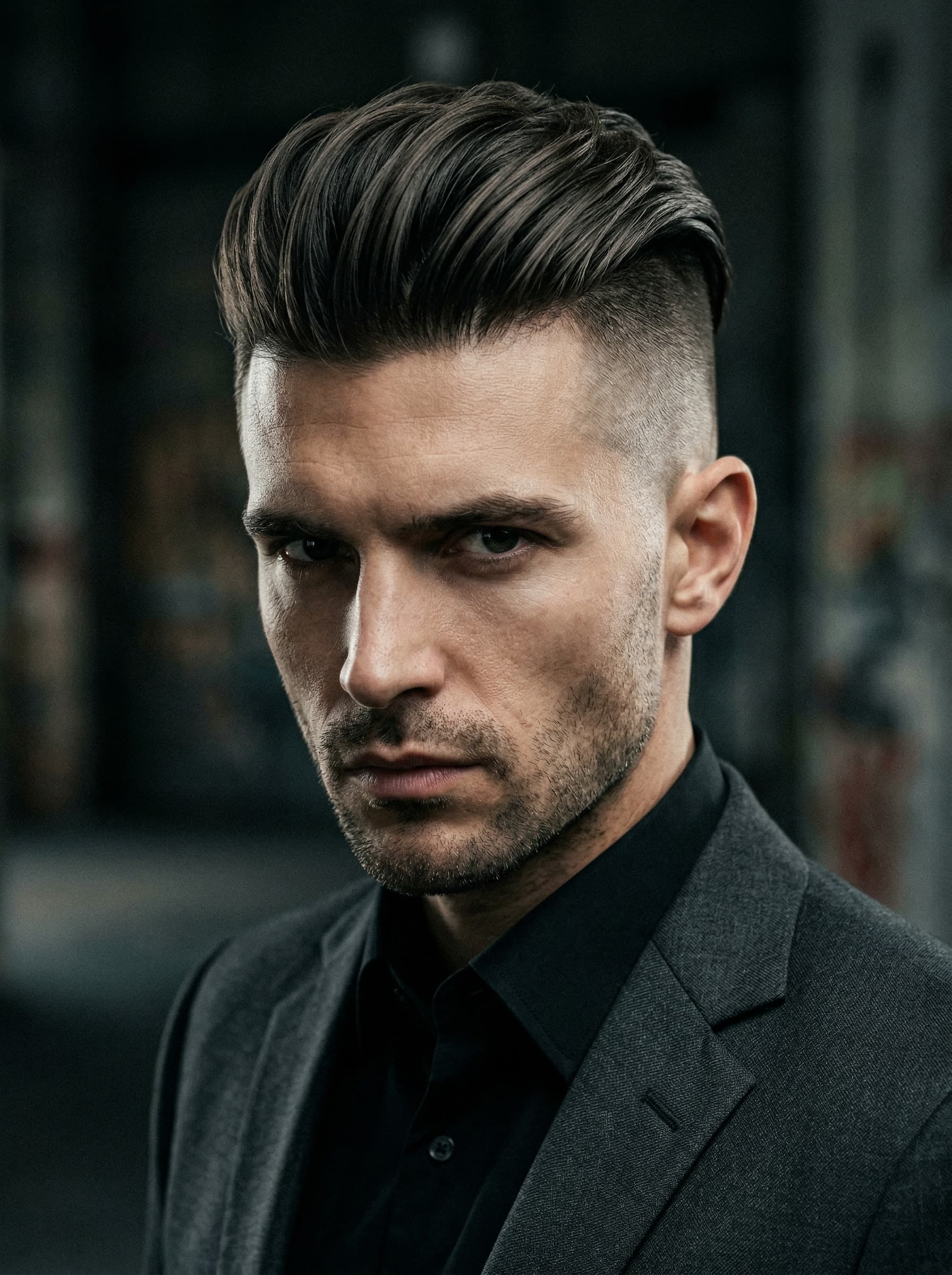
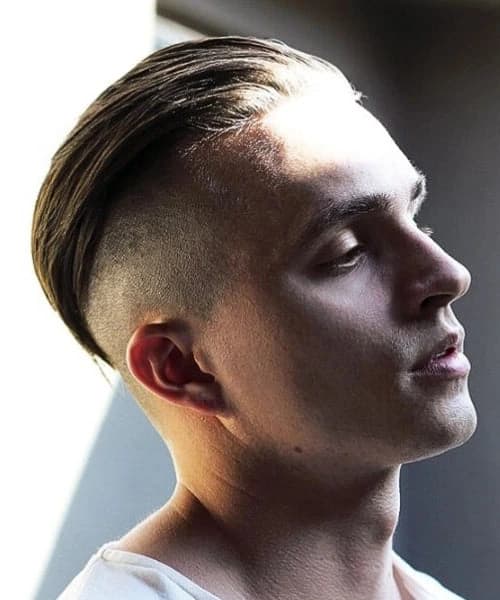
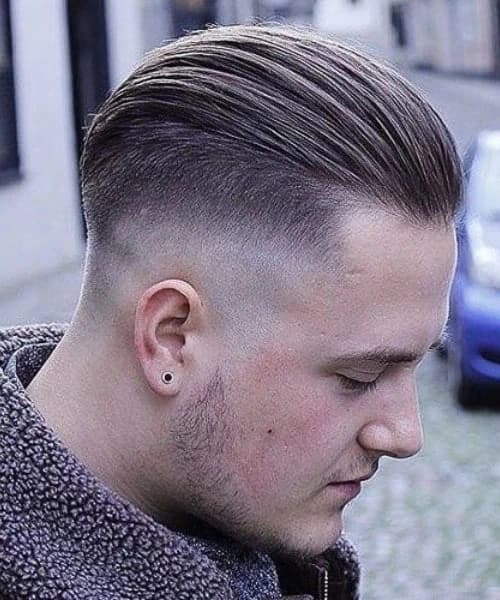
The Slicked-Back Undercut is a masterclass in extreme, aggressive architectural contrast. Originally popularized by early 20th-century working-class and gangster subcultures, and subsequently revitalized by period television dramas like Peaky Blinders and Hollywood icons, the 2026 iteration remains an absolute powerhouse of hyper-masculine aesthetics.12 The style is singularly defined by a total, deliberate lack of blending; the long, sweeping hair on the top canopy of the head completely and dramatically overhangs the ultra-short, uniformly buzzed sides.46 This harsh "disconnection" creates a severe, highly stylized, and intimidating silhouette that effortlessly exudes confidence, edge, and authority.12
The mechanical execution of the Undercut by a barber is relatively straightforward but requires flawless sectioning and line work. The barber parts the hair high up, exactly at the parietal ridge, clipping the entire top section out of the way to protect the length.47 The sides and back are then aggressively buzzed down to a uniform, ultra-short length (typically a #1, #0.5, or even bare foil shaver) straight up to the pre-established part line, with absolutely no fade, taper, or gradient whatsoever.12 The top canopy is left exceedingly long (often requiring 5 to 8 inches of growth) and is point-cut slightly at the ends to allow the heavy mass of hair to flow backward smoothly without bunching up or creating a cowlick at the crown.46
The styling routine completely determines the final atmospheric vibe of the Undercut. For a classic, glossy, vintage "wet look," the user applies a generous, heavy amount of high-shine, water-based pomade or a strong-hold gel to damp hair, utilizing a fine-tooth comb to rake the hair straight back, plastering it tightly against the curvature of the skull.12 For a much more contemporary, 2026-appropriate variation, the user entirely eschews shine products. Instead, they apply a matte styling paste or a nourishing styling cream, blow-drying the hair backward with a vented brush or fingers to create a "slick back flow." This modern approach yields massive, airy volume, natural bouncing movement, and zero artificial shine.12
Because the stark, vertical disconnection of the Undercut makes the head appear significantly narrower and taller, it is exceptionally flattering and highly recommended for men with wide, round, or deeply square face shapes.13 Men with naturally long, narrow, or oblong faces should generally avoid this cut entirely, as the completely shaved sides combined with the swept-back top will severely exacerbate the vertical length of the face, creating a disproportionate look.13 Furthermore, it is highly suited strictly for thick, straight, or slightly wavy hair; very curly or coily hair will stubbornly refuse to lie flat when slicked back without the aid of intense, damaging chemical relaxers or straightening irons.12
10. The Grown-Out Buzz Cut with Geometric Line-Up and Fade
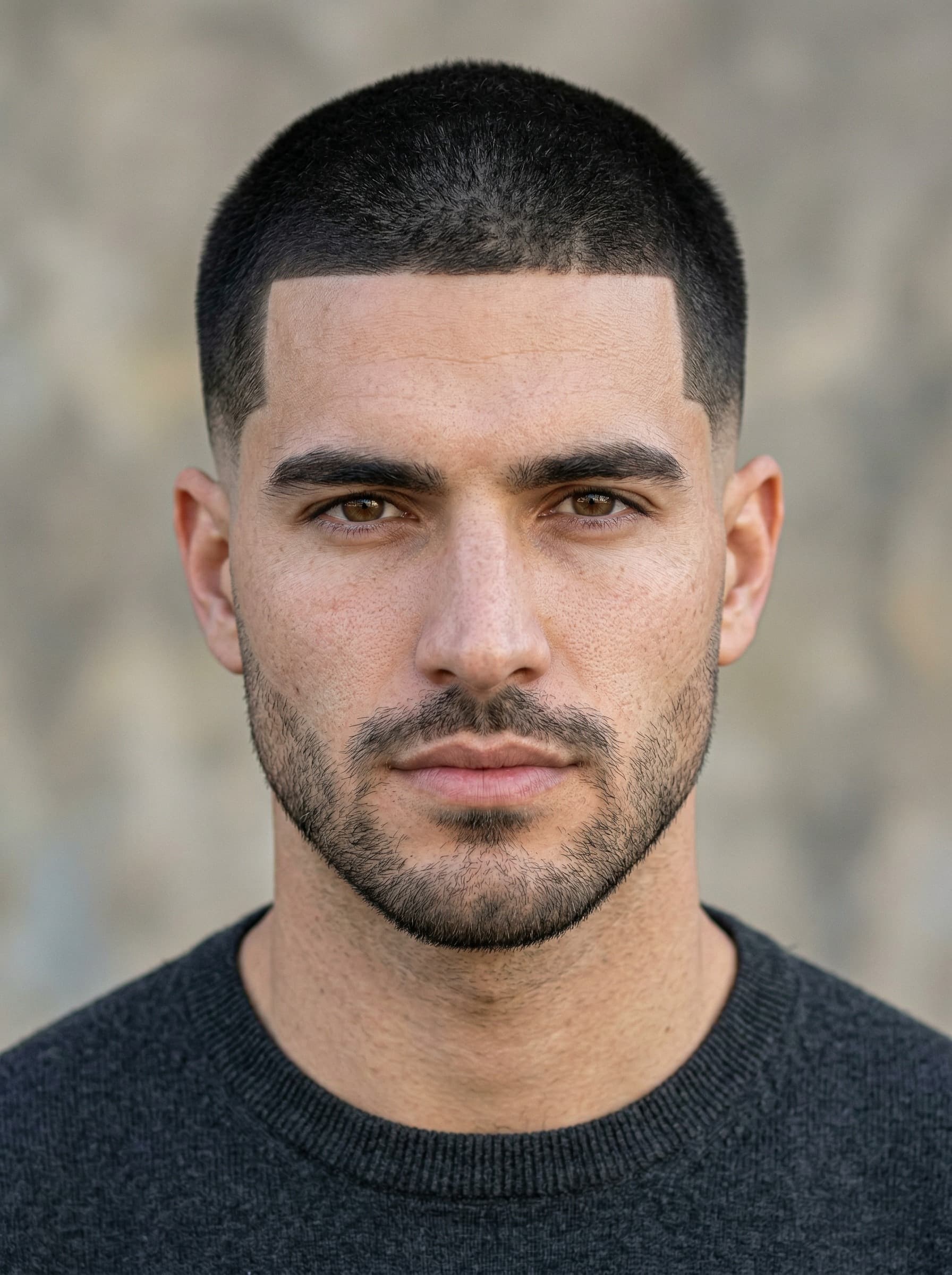
The standard, hyper-short military induction buzz cut—shaved down to the bare skin uniformly across the entire skull—has been a staple of extreme utility for decades. However, the 2026 high-fashion trend has completely elevated this utilitarian, thoughtless style into a meticulously crafted piece of facial architecture: the Grown-Out Buzz Cut, augmented with a geometric Line-Up and a highly subtle temple/nape fade.1 By intentionally allowing the buzz cut to grow to a velvety, highly touchable length (often executed with a #3, #4, or #5 guard), and starkly contrasting that soft fuzz with razor-sharp, millimeter-perfect geometric lines carved along the forehead and faded temples, the style completely transforms into a highly manicured, premium aesthetic favored by elite athletes, musicians, and fashion-forward minimalists.13
The technical execution relies heavily on the barber's steady hand and geometric eye. The barber begins by running a consistent, longer clipper guard (e.g., #4) evenly across the entire cranial hemisphere, ensuring a perfectly even, velvety surface with no patches.13 The true artistry, however, occurs exclusively at the perimeters. Using a specialized, zero-gapped T-liner trimmer and a cut-throat straight razor, the barber carves a "Line-Up" (also known as an edge-up or shape-up), creating impossibly straight, crisp lines and exact 90-degree right angles along the front hairline and the temples.48 To prevent the cut from looking like a solid, unnatural helmet placed on the head, a highly subtle, low skin fade or a temple fade (often called a Brooklyn fade) is applied strictly to the sideburns and the very bottom edge of the neckline.13 This creates a blur effect that seamlessly and beautifully integrates the sharp hairline into the natural jawline.
This style represents the absolute zenith of low-maintenance daily styling, requiring zero morning manipulation, zero blow-drying, and zero texturizing.13 However, the maintenance of the cut is ironically incredibly demanding. The architectural integrity of the razor-sharp Line-Up and the smooth skin fade degrades rapidly as the hair grows even a fraction of an inch. To maintain the crisp, high-contrast, premium aesthetic, the wearer must visit the barber religiously every 7 to 14 days for a meticulous re-lining and fade touch-up.13 A light, daily application of pure argan oil, jojoba oil, or a nourishing scalp serum is often used to keep the exposed scalp healthy, hydrated, and to keep the short, velvety hair looking rich, dark, and vibrant.52
Physiognomically, because a buzz cut of any length offers zero camouflage, it completely exposes the natural topography of the skull and the exact, unhidden proportions of the face.13 Therefore, it is immensely flattering on men with strong, highly symmetrical facial features, pronounced, wide jawlines, and ideal diamond or oval face shapes.13 The addition of the geometric Line-Up provides artificial, sharp angularity, which can beautifully and artificially sharpen the appearance of a soft or round face.13 Furthermore, for men with coarse, thick, or tightly coiled afro-textured hair, this specific grown-out length prevents matting while allowing the dense hair to appear incredibly lush and uniform.50

Technical Synthesis: The 2026 Grooming Matrix
To systematically synthesize the diverse architectural strategies, chemical requirements, and physiognomic data detailed in the extensive analyses above, the following matrix categorizes the ten premier styles. This structured data provides a concise overview of the foundational frameworks that dictate modern cosmetology.11
| Hairstyle | Foundational Architecture | Optimal Fade Integration | Primary Chemical Styling Compound | Salon Maintenance Frequency | Optimal Physiognomy |
|---|---|---|---|---|---|
| Blowout Taper Fade | Voluminous crown, heavy temporal weight line | Low/Mid Taper Fade | Volumizing Mousse & Matte Clay | 3-4 Weeks | Round, Square, Oval |
| Textured French Crop | Forward-swept canopy, blunt horizontal fringe | High Bald/Skin Fade | Silica Texturizing Powder | 2-3 Weeks | Oval, Diamond, Long |
| Modern Mullet | Shag layering, cascading occipital tail | Burst Fade / Low Taper | Sea Salt Spray & Curl Cream | 4-6 Weeks | Round, Wide, Oval |
| Edgar Cut (Takuache) | Symmetrical bowl weight line, dense blunt fringe | High Skin Fade / Drop Fade | Dense, Heavy Styling Paste | 2 Weeks | Oval, Diamond, Pointed |
| Broccoli Cut | Towering permed ringlets, spherical apex | Mid Drop Fade / Burst Fade | Hydrating Curl Enhancing Cream | 3 Weeks (Fades), 3 Months (Perm) | Round, Square |
| Low Taper Side Part | Asymmetrical 60/40 split, rolling frontal quiff | Low Taper Fade | Premium Water-Based Pomade | 3-4 Weeks | Universal (All Shapes) |
| Modern Pompadour | Extreme anterior verticality, swept back | Curved Drop Fade | Volumizing Spray & Matte Clay | 3 Weeks | Round, Square |
| Textured Quiff | Forward flow, shattered vertical anterior fringe | Mid Fade | Dry, Zero-Shine Matte Clay | 3-4 Weeks | Oval, Round, Square |
| Slicked-Back Undercut | Severe disconnection, extreme top length | No Fade (Uniform Buzz #1) | Shine Pomade / Matte Cream | 4-5 Weeks | Square, Round, Wide |
| Grown-Out Buzz Cut | Uniform cranial length, geometric perimeter | Temple/Nape Skin Fade | Argan Oil / Scalp Serum | 1-2 Weeks (Line-ups) | Oval, Diamond, Symmetrical |
Put It On Your Face
See which colors sharpen the haircut direction you already like.
Start with the free color analysis to identify your best shades, then test hair colors on your own photo before you commit to a crop, quiff, pompadour, or buzz.

Conclusion: The Future Trajectory and Dichotomy of Men's Hair Aesthetics
The exhaustive analysis of 2026's premier men's hairstyles reveals a fascinating, highly polarized dichotomy lying at the very heart of modern grooming and cosmetic architecture. On one extreme end of the stylistic spectrum, there exists an unprecedented, almost obsessive demand for surgical, geometric precision. This is overwhelmingly evidenced by the millimeter-perfect, razor-carved line-ups of the Grown-Out Buzz Cut, the severe, unwavering horizontal weight lines of the Edgar Cut, and the seamless, microscopic gradient transitions of the ubiquitous skin fade.9 These styles require barbers to operate with the exactitude of a draftsman, where a single millimeter of error completely destroys the intended aesthetic.
Conversely, on the exact opposite end of the spectrum, the apical regions—the top canopy of the hair—are experiencing a massive, explosive renaissance of organic, unbridled chaos. Men are actively, consciously rejecting the stiff, helmet-like holds, aggressive gels, and high-shine pomades of previous eras. Instead, the modern aesthetic heavily favors the towering, bouncy, chemically induced ringlets of the Broccoli Cut, the deeply shattered, jagged, piecey fringe of the French Crop, and the free-flowing, wind-swept tail of the Modern Mullet.8
This intense, constant tension between the clinical, mechanical execution of the clipper on the sides and the organic, artistic freedom of the shears on top dictates the entirety of the current cosmetology market. Furthermore, the data suggests that men are increasingly willing to invest substantial time and capital into sophisticated chemical treatments, such as perms and texturizers, as well as specialized chemical styling products, like kelp-infused sea salt sprays and hydrophobic silica powders, all simply to achieve a final look that ironically appears completely "effortless" and natural.13 Moving forward, the grooming industry will undoubtedly continue to blur the rigid lines between rebellious youth subcultural aesthetics and highly manicured mainstream professionalism. As long as this dynamic holds, organic texture, kinetic movement, and highly customized, mathematically precise fade architecture will remain the immovable, foundational pillars of modern men's style.
Works cited
- Fall 2025 Men's Hair Trends: Sharp Cuts, Natural Texture, and Effortless Style, accessed April 1, 2026, https://charlesifergan.com/fall-2025-mens-hair-trends-sharp-cuts-natural-texture-and-effortless-style/
- The Top Men's Haircuts of 2025 You'll Be Asking Your Barber For - Cutters Yard, accessed April 1, 2026, https://cuttersyard.com/the-top-mens-haircuts-of-2025-youll-be-asking-your-barber-for/
- The Only Men's Haircut Guide You Need in 2025 (Fades, Tapers, & Trends) - YouTube, accessed April 1, 2026, https://www.youtube.com/watch?v=QoE9gcaZrpA
- 38 Trending Curly Hairstyles for Men | Forte Series, accessed April 1, 2026, https://forteseries.com/blogs/hairstyles/curly-hairstyles-for-men
- 36 Trending Taper Fade Haircuts for Men | Forte Series, accessed April 1, 2026, https://forteseries.com/blogs/hairstyles/taper-fade
- The 90+ Best Mullet Hairstyles for Men: Modern Cuts, Fades & Styling Tips - Boss Hunting, accessed April 1, 2026, https://www.bosshunting.com.au/style/grooming/mullet-hairstyle/
- The Quiff Hairstyle: 25 Stylish Variations For Modern Men - Relentless Grooming, accessed April 1, 2026, https://www.relentlessgrooming.com/blogs/hair/quiff-hairstyles-men
- 50 Modern Mullet Haircut Styles for Men 2026 - Forte Series, accessed April 1, 2026, https://forteseries.com/blogs/hairstyles/modern-mullet
- 30 Coolest Edgar Haircuts for Men in 2026 - The Right Hairstyles, accessed April 1, 2026, https://therighthairstyles.com/edgar-haircut/
- Top 25 Men's Hairstyles for 2026 | Trending Cuts Queens NYC, accessed April 1, 2026, https://www.didahairstudio.com/blog/mens-hairstyles-2026-trending-styles-queens-nyc
- Men's Hairstyles 2025 | 700+ Haircuts & How To Style, accessed April 1, 2026, https://manforhimself.com/mens-hairstyles/
- 40 Best Slick Back Hairstyles for Men | Forte Series, accessed April 1, 2026, https://forteseries.com/blogs/hairstyles/slick-back
- The Best Buzz Cuts for Men: A Barber's Guide (2026) | Man of Many, accessed April 1, 2026, https://manofmany.com/style/hairstyles-grooming/buzz-cut-fade-haircuts-men
- Top 35 Side Part Haircuts for Men | Forte Series, accessed April 1, 2026, https://forteseries.com/blogs/hairstyles/side-part
- 25+ Best Quiff Hairstyles for Men in 2026 With Photos, accessed April 1, 2026, https://groomrelentless.com/quiff-hairstyles-for-men/
- Blowout Taper Haircut: Best Styles + How to Style It (Houston Guide), accessed April 1, 2026, https://007-barbershop.com/blowout-taper-haircut-houston/
- 30 Top Blowout Taper Haircuts for Men | Forte Series, accessed April 1, 2026, https://forteseries.com/blogs/hairstyles/blowout-taper
- 20 Blowout Taper Fade Haircut Ideas for 2026 - The Right Hairstyles, accessed April 1, 2026, https://therighthairstyles.com/blowout-taper/
- Blowout Taper Fade - YouTube, accessed April 1, 2026, https://www.youtube.com/shorts/w32gSK0VBTk
- Low Blowout Taper Haircut (Step-by-Step Tutorial) - YouTube, accessed April 1, 2026, https://www.youtube.com/watch?v=u9Qc7KL97Nw
- 28 Modern Mullet Styles & Classic Variations | Rush Hair & Beauty, accessed April 1, 2026, https://www.rush.co.uk/blog/modern-mullet/76061
- Blowout Taper Hairstyles: Top 10 Looks | Rush Hair & Beauty, accessed April 1, 2026, https://www.rush.co.uk/blog/blowout-taper-hairstyles-top-10-looks/78248
- 25 Modern Blowout Taper Fade Haircuts Guys Want for a Sharp Finish, accessed April 1, 2026, https://www.latest-hairstyles.com/mens/blowout-taper-fade.html
- Modern French Crop Haircut Ideas (24 Examples For 2026) - Ape to Gentleman, accessed April 1, 2026, https://www.apetogentleman.com/best-french-crop-haircuts/
- 30 Stylish French Crop Haircuts for Men - The Right Hairstyles, accessed April 1, 2026, https://therighthairstyles.com/french-crop-haircut/
- 40 Best French Crop Haircuts for Men | Forte Series, accessed April 1, 2026, https://forteseries.com/blogs/hairstyles/french-crop
- French Crop Hairstyle Guide | Texture, Fringe & Fades - 007 Barbershop - Houston, accessed April 1, 2026, https://007-barbershop.com/french-crop-hairstyle-guide/
- 70+ Of The Best French Crop Haircuts Right Now - Boss Hunting, accessed April 1, 2026, https://www.bosshunting.com.au/style/grooming/french-crop-for-men/
- 33 Trending Edgar Haircuts for Men - Forte Series, accessed April 1, 2026, https://forteseries.com/blogs/hairstyles/edgar-cut
- Mullet Hairstyles: 13 Ways to Embrace Your Individuality - Gatsby Global, accessed April 1, 2026, https://www.gatsbyglobal.com/en/technique/mullet-hairstyles-embrace-individuality-and-self-expression/
- Broccoli Haircut 2025: The Hottest Men's Hairstyle Trend Taking Over TikTok & Barbershops, accessed April 1, 2026, https://vikingbeardbrand.ca/blogs/news/broccoli-haircut-2025-trend-guide
- 29 Trendy Edgar Haircut Styles for Men to Try in 2026 - Latest-Hairstyles.com, accessed April 1, 2026, https://www.latest-hairstyles.com/mens/edgar-haircut.html
- Broccoli haircut - Wikipedia, accessed April 1, 2026, https://en.wikipedia.org/wiki/Broccoli_haircut
- What Is the Broccoli Haircut? | Marie Claire, accessed April 1, 2026, https://www.marieclaire.com/beauty/broccoli-haircut/
- Best 15+ Broccoli Haircuts for Gen Z: Viral TikTok Trend. - Men Trends, accessed April 1, 2026, https://trends.mendeserve.com/broccoli-haircuts/
- 7 Classic Side-Part Hairstyles For Men - Pete & Pedro, accessed April 1, 2026, https://peteandpedro.com/blogs/the-pedro-post/7-classic-side-part-hairstyles-for-men
- 10 Classic Side Part Hairstyles That Never Go Out of Style - Judes Barbershop, accessed April 1, 2026, https://www.judesbarbershop.com/10-classic-side-part-hairstyles-that-never-go-out-of-style/
- 50 Trending Low Taper Fade Haircuts for Men - Forte Series, accessed April 1, 2026, https://forteseries.com/blogs/hairstyles/low-taper-fade
- 15 Pompadour Haircut & Hairstyles for Men | Man of Many, accessed April 1, 2026, https://manofmany.com/style/hairstyles-grooming/pompadour-haircut-hairstyles-men
- 25 Best Pompadour Fade Haircuts for Men in 2026 - Latest-Hairstyles.com, accessed April 1, 2026, https://www.latest-hairstyles.com/mens/pompadour-fade-haircuts.html
- Top 35 Pompadour Haircuts for Men | Forte Series, accessed April 1, 2026, https://forteseries.com/blogs/hairstyles/pompadour
- 19 Pompadour Hairstyles For Men To Up Their Game | GATSBY, accessed April 1, 2026, https://www.gatsbyglobal.com/en/technique/essential-guide-pompadour-hairstyles-men-variations-styling/
- 2025 Men's Look Book Hairstyling Guide | Quiff, Pompadour, Side Part - Pete & Pedro, accessed April 1, 2026, https://peteandpedro.com/blogs/the-pedro-post/2025-mens-look-book-hairstyling-guide
- Top 35 Quiff Haircut Styles for Men - Forte Series, accessed April 1, 2026, https://forteseries.com/blogs/hairstyles/quiff-haircut
- 9 Quiff Hairstyles & Essential Styling Guide for Men | GATSBY, accessed April 1, 2026, https://www.gatsbyglobal.com/en/technique/essential-guide-quiff-hairstyles-men-variations-styling/
- 20+ Best Slicked Back Hairstyles & Haircuts for Men | Man of Many, accessed April 1, 2026, https://manofmany.com/style/hairstyles-grooming/best-slicked-back-hairstyles-for-men
- Men's Slick Back Haircut: 16 On-Trend Styles - wikiHow, accessed April 1, 2026, https://www.wikihow.com/Mens-Slick-Back-Haircut
- 30+ Buzz Cut Hairstyles for Men: Top Trends by Length, Fade & Hybrid Variations, accessed April 1, 2026, https://vagazine.com/haircuts-for-men/buzz-cut-hairstyles/
- 23 Types of Buzz Cuts: Best Styles and Face Matches - Copenhagen Fashion Summit, accessed April 1, 2026, https://www.copenhagenfashionsummit.com/types-of-buzz-cuts-best-styles-and-face-matches/
- 30 Flawless Buzz Cut Fade Ideas for a Clean Finish - The Right Hairstyles, accessed April 1, 2026, https://therighthairstyles.com/buzz-cut-fade/
- 35 Trending High Fade Haircuts for Men - Forte Series, accessed April 1, 2026, https://forteseries.com/blogs/hairstyles/high-fade
- Hair Cut Services - Sport Clips, accessed April 1, 2026, https://sportclips.com/services