Best Hair Colors for Every Color Season
A practical seasonal hair color guide for Spring, Summer, Autumn, and Winter palettes, with salon language you can actually use.
Quick answer
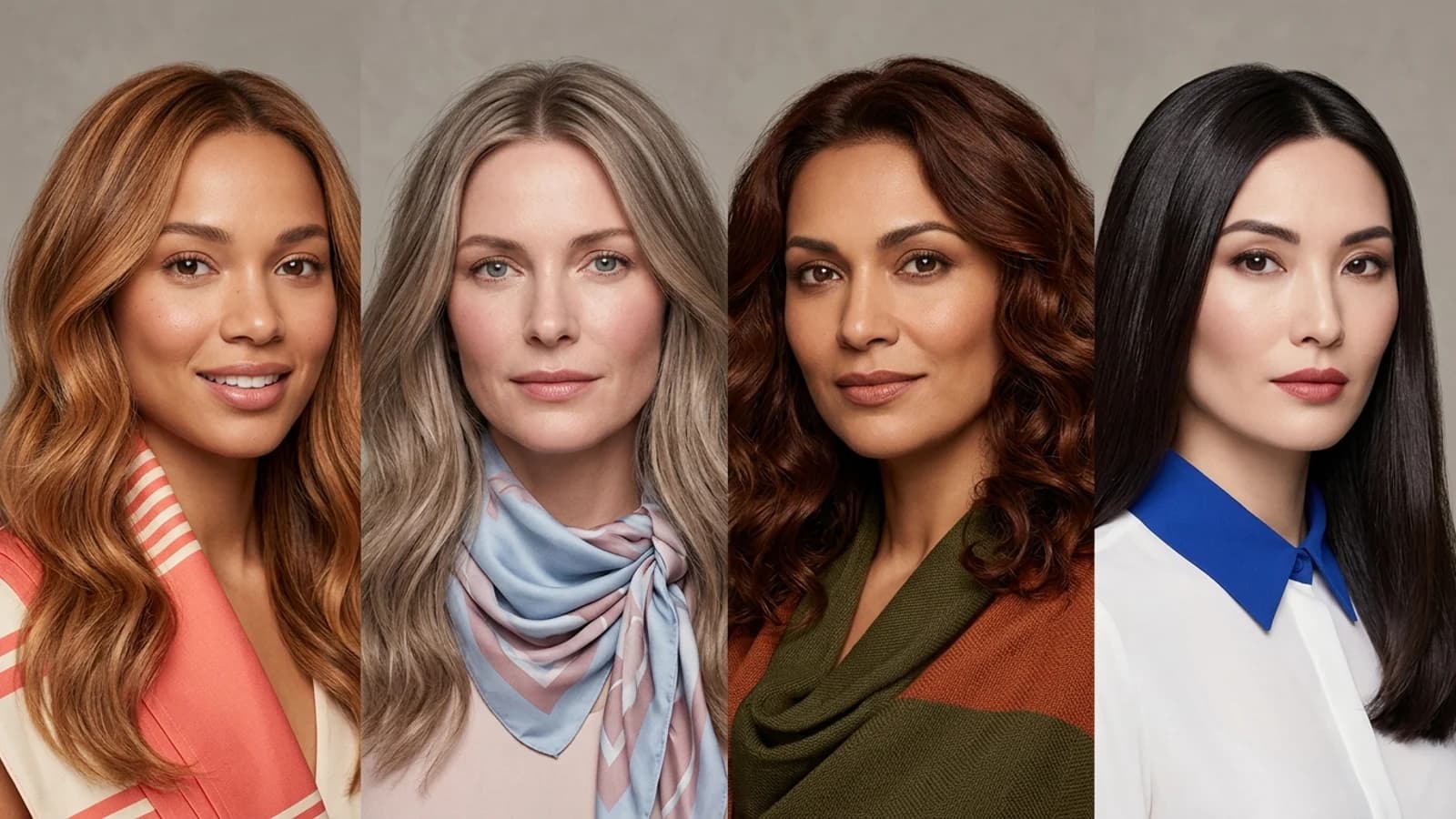
Choose hair color by matching three things: undertone, depth, and chroma. Springs usually need clear warmth such as honey blonde, golden brown, strawberry blonde, or copper. Summers usually need cool softness such as pearl blonde, ash brown, mushroom brown, or smoky brunette. Autumns usually need warm muted richness such as caramel, auburn, chestnut, chocolate, or espresso. Winters usually need cool depth and clarity such as cool espresso, blue-black, dark ash brown, icy silver, or high-contrast platinum.
What you will learn
- Hair color changes the frame around the face, so it can make skin look clearer, duller, warmer, cooler, more even, or more shadowed.
- Your color season does not change when you dye your hair, but your outfit contrast strategy may change if your hair becomes much lighter or darker.
- The most useful salon language combines seasonal direction with level, tone, contrast, and maintenance reality.
Quick Answer: Best Hair Colors by Color Season
The best hair color for your color season is the color that makes your skin look clearer, your eyes look more focused, and your features look balanced. The wrong color can be beautiful in isolation and still make the face look tired, flat, red, gray, or sallow.
Use your season as the guardrail. Spring hair color should look warm, fresh, and clear. Summer hair color should look cool, soft, and refined. Autumn hair color should look warm, muted, and rich. Winter hair color should look cool, deep, crisp, or deliberately high contrast.
Try before you commit
Preview the direction, then confirm the season.
Use the hair try-on to compare broad shade families on your own photo, then use a full color analysis when you need season-specific hair, wardrobe, metals, and styling direction together.
Why Hair Color Changes the Way Skin Looks
Skin color is not a flat paint chip. It is created by light interacting with biological pigments and tissue structures, including melanin, hemoglobin, carotenoids, blood flow, and skin thickness.123 That is why two people with the same surface depth can react very differently to the same dye.
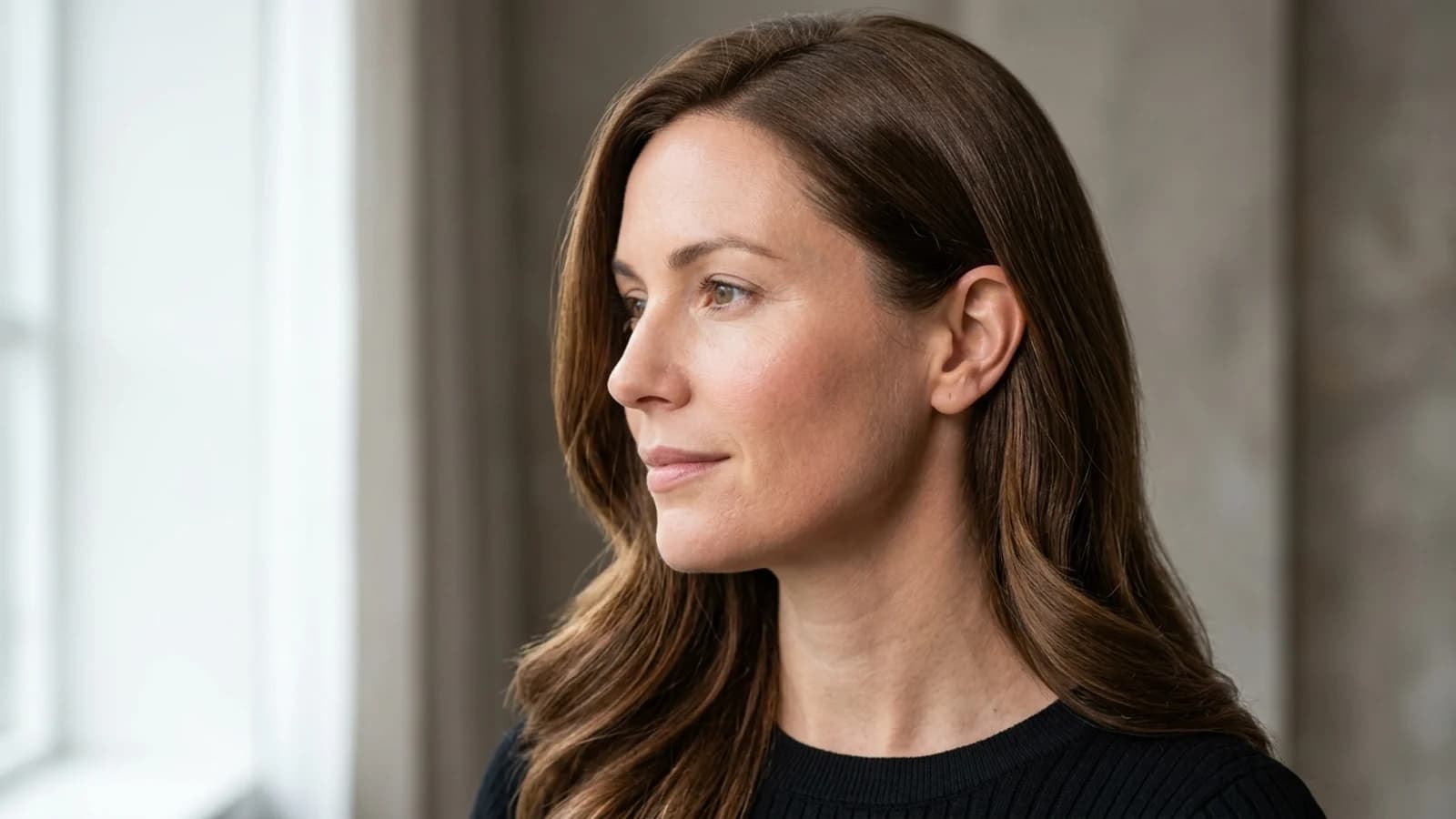
Hair has its own optical behavior. Light reflects from the hair cuticle, enters the hair shaft, interacts with natural or artificial pigment, and exits as colored reflected light.56 Because hair surrounds the face, that reflected light becomes part of the face's visual environment. A warm copper frame can push skin visually cooler or greener. A flat ash frame can make warm skin look dull. A deep black frame can increase facial contrast dramatically.
Why Celebrity Hair Color Copying Fails
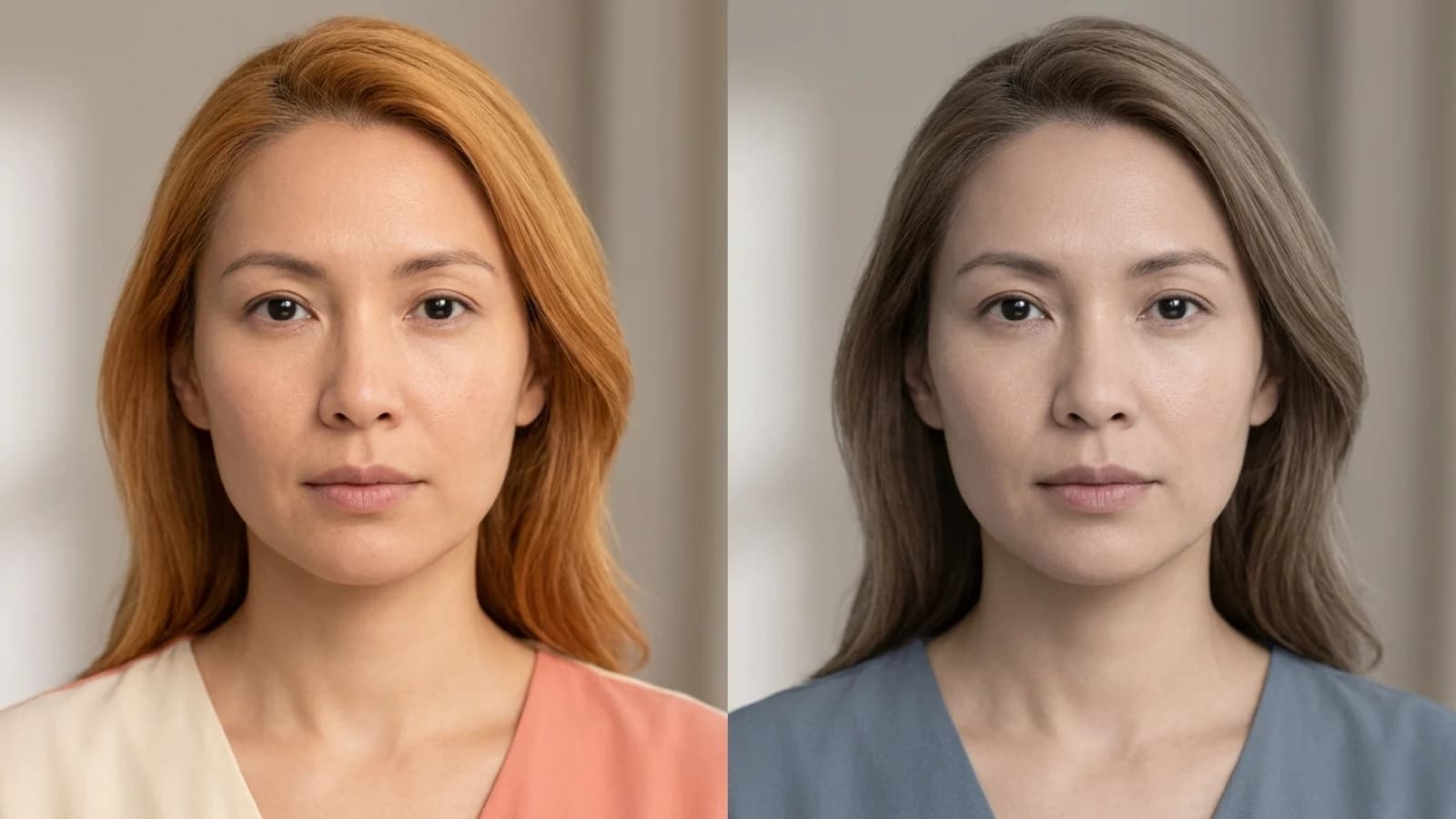
Celebrity reference photos fail when the reference has a different undertone, facial contrast, eye depth, or natural chroma than you do. The same golden blonde can look expensive on one person and yellowing on another. The same ash brunette can look refined on one face and heavy or gray on another.
The reason is simultaneous contrast: colors change how adjacent colors are perceived.7 Hair is the background and the face is the foreground. When the hair shifts warmer, cooler, lighter, darker, brighter, or softer, the skin appears to shift with it.
Salon Language: Level, Tone, and Maintenance
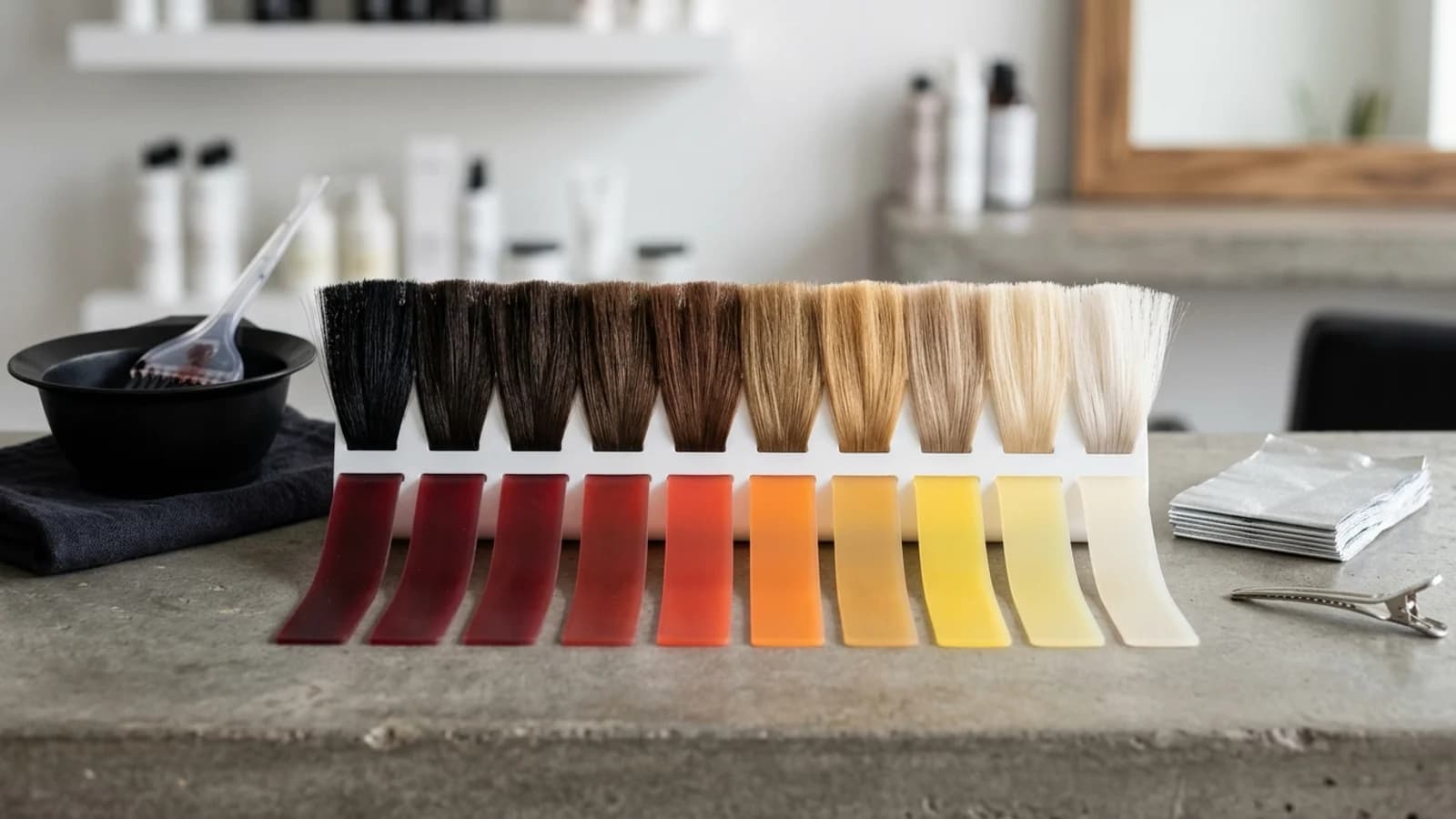
A seasonal recommendation becomes useful in the salon only when it is translated into professional language. The first concept is level: the lightness or darkness of hair, usually measured from Level 1 black to Level 10 very pale blonde.9 A Light Spring might sit best around Level 8 to 10, while a Deep Winter often needs Level 1 to 3.
The second concept is tone. Tone describes the temperature and color direction inside the level: gold, copper, red, violet, blue, ash, pearl, beige, neutral, or brown. The third concept is chroma: whether the color looks clear and saturated or soft and muted. A Bright Spring copper and a Soft Autumn copper are both warm, but they should not be mixed the same way.
- Ask for the target level range instead of only a trend name.
- Name the temperature: warm, cool, neutral-warm, or neutral-cool.
- Name the chroma: clear, bright, soft, muted, dusty, smoky, or rich.
- Name the contrast goal: blended, dimensional, crisp, or high contrast.
- Discuss maintenance before the service, especially for copper, ash, platinum, silver, and blue-black.
The 12-Season Hair Color Guide
The 12-season system refines the four seasonal families by hue, value, and chroma. That matters for hair because two people can both be warm and still need different levels of depth and saturation. Light Spring and Deep Autumn are both warm, but one needs delicate luminosity while the other needs rich darkness.
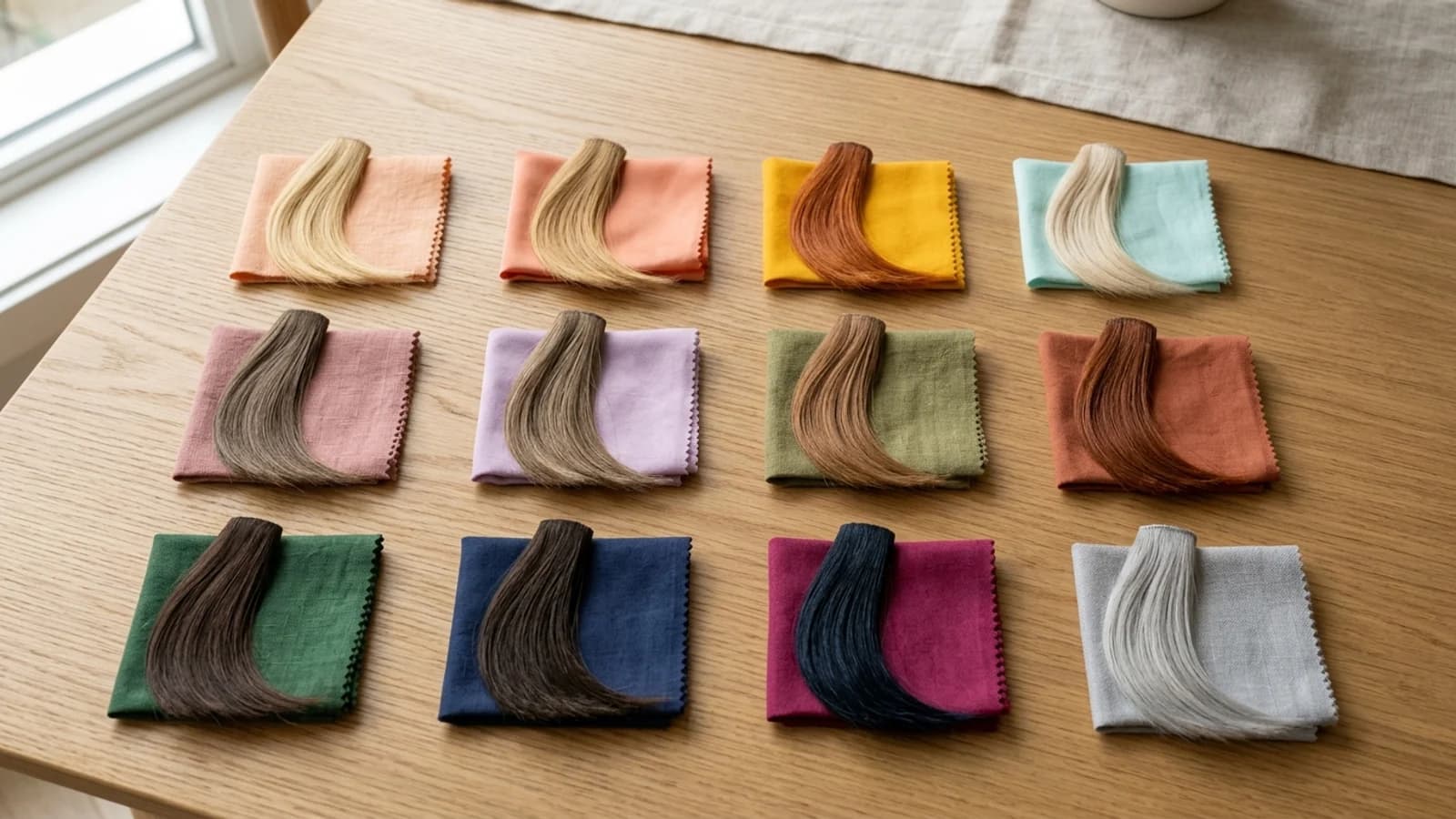
| Season | Best hair color families | Usually avoid | Salon language |
|---|---|---|---|
| Light Spring | Honey blonde, butter blonde, champagne, soft strawberry blonde, light caramel brown. | Icy platinum, heavy ash, blue-black, deep cool brunette. | Level 8-10, warm creamy gold, soft copper, low contrast. |
| Warm Spring | Golden brown, saturated honey blonde, warm chestnut, true copper. | Ash blonde, silver, blue-black, muddy matte brunette. | Level 5-8, pure gold or copper, clear warmth. |
| Bright Spring | Bright copper, clear auburn, medium golden brown, luminous golden highlights. | Dusty brown, muted ash, flat mushroom tones. | High shine, clear saturation, crisp dimension. |
| Light Summer | Pearl blonde, light ash blonde, icy beige, smoky silver blonde. | Golden blonde, copper, warm caramel, heavy dark brown. | Level 8-10, violet or blue-based toner, soft low contrast. |
| Cool Summer | Cool mocha, medium ash brown, dark ash blonde, pearl brunette. | Copper, chestnut, warm mahogany, yellow-gold blonde. | Level 6-8, smoky ash, cool taupe, blended dimension. |
| Soft Summer | Mushroom brown, dusty dark blonde, cool taupe, muted espresso, soft bronde. | Jet black, vivid red, sharp platinum, bright copper. | Muted, neutral-cool, soft balayage within one or two levels. |
| Soft Autumn | Toasted almond, soft caramel, muted copper, warm taupe brown, dark golden blonde. | Icy blonde, pure black, vivid cherry, high-contrast platinum. | Level 5-7, neutral-warm, sandy, amber, low saturation. |
| Warm Autumn | Auburn, burnished copper, warm chestnut, golden brown, dark chocolate. | Ash brown, cool silver, blue-black, pale icy blonde. | Level 4-6, gold, copper, warm brunette, rich depth. |
| Deep Autumn | Dark chocolate, deep auburn, warm black, espresso with mahogany or golden reflection. | Light blonde, pastels, icy gray, cool beige. | Level 2-4, very deep but warm-neutral, subtle dark caramel dimension. |
| Deep Winter | Pure black, cool espresso, deep cool brown, subtle cool mahogany. | Golden blonde, bright copper, caramel, warm chestnut. | Level 1-3, blue or green-ash control, cool depth. |
| Cool Winter | Jet black, blue-black, dark ash brown, icy silver, stark white gray. | Gold, caramel, strawberry blonde, warm mahogany. | Level 1-3 or clean silver, strong blue or violet control. |
| Bright Winter | Jet black, cool espresso, vivid cool cherry, magenta, icy platinum. | Dusty ash, mushroom brown, muted bronde, warm gold. | Maximum clarity, high reflectivity, strong contrast. |
How to Adapt Blonde, Brunette, Red, Black, and Gray
Blonde
Blonde is a range, not a single color. Springs need blondes that feel sunny: butter, honey, champagne, and pale gold. Summers need blondes that feel cool and misted: pearl, ash, icy beige, and silver blonde. Autumns usually need darker golden-caramel interpretations rather than pale high-lift blondes. Winters can wear platinum only when it is extremely clean, icy, and high contrast.
Brunette
Brunette can be warm chocolate, cool espresso, dusty mushroom, golden brown, or neutral mocha. Summer and Winter brunettes usually need ash, blue, green, or violet control to suppress red-orange warmth. Spring and Autumn brunettes usually look better when the warmth is intentional rather than over-neutralized.
Red and copper
Red and copper are easiest for Spring and Autumn, but they need different personalities. Spring reds should look clear, fresh, peachy, or bright copper. Autumn reds should look deeper, earthier, burnished, auburn, or rust. Winter can wear red only when it becomes cool cherry, burgundy, or magenta. Summer usually needs to approach red very cautiously because orange warmth can exaggerate redness in the skin.
Black, gray, and silver
Black is a high-contrast extreme. It naturally belongs to Winter and can work for Deep Autumn when it reads as warm black or espresso rather than blue-black. Gray and silver tend to read cool because they lack the warmth of melanin. Summers and Winters often transition into gray more naturally, while Springs and Autumns may need soft golden glosses, warm lowlights, or a warmer beige-gray strategy.
Hair Color Can Change Your Outfit Contrast Strategy
Changing your hair color does not physically change your skin undertone or your core seasonal palette. A Cool Winter who becomes platinum is still cool. A Warm Autumn who goes darker is still warm. But hair color can change facial contrast: the value gap between your skin, hair, and eyes.
Facial contrast is a cue people use when reading age, clarity, and feature definition.8 If you dramatically lighten naturally dark hair, you may need lower-contrast outfit combinations even if your palette stays cool and clear. If you darken naturally light hair, you may be able to wear stronger light-dark pairings than before. This is why hair color and wardrobe should be planned together.
Wardrobe rule
Your season sets the palette. Your hair color changes the contrast dial.
After a major hair color change, keep your undertone direction stable, then re-check whether high-contrast or low-contrast outfits now look more natural near your face.
Pre-Salon Consultation Checklist
Before any chemical color service, bring seasonal direction and technical constraints into the same conversation. The right result depends on your starting level, hair history, condition, maintenance budget, and whether your desired look requires lift, deposit, glossing, or color correction.
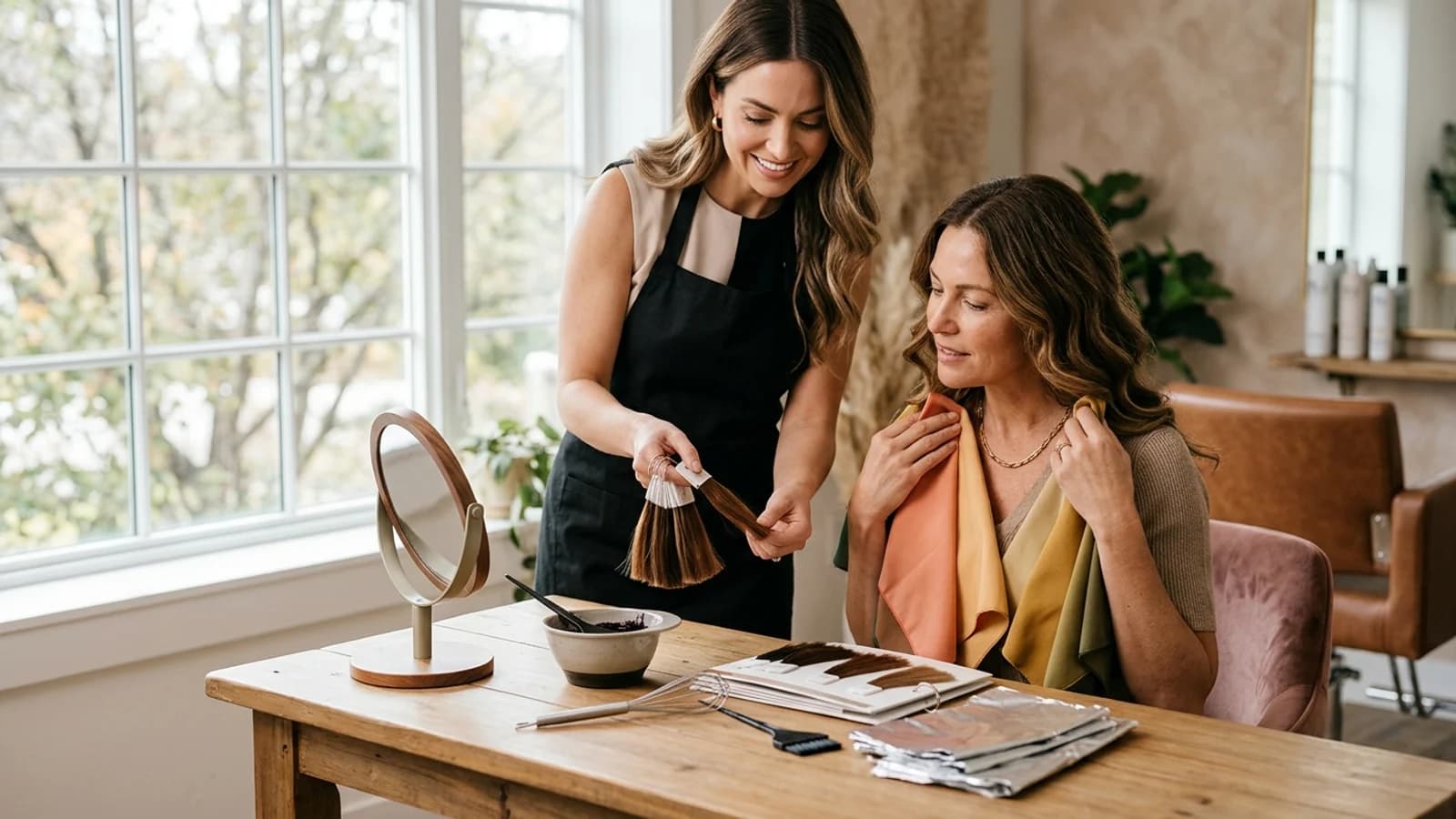
| Step | What to ask |
|---|---|
| Hair history | What permanent color, box dye, bleach, keratin, henna, or gloss has touched the hair in the last three to five years? |
| Season goal | Should the final result be warm, cool, neutral, bright, muted, light, deep, blended, or crisp? |
| Level target | What level range protects the season's natural depth and contrast? |
| Chemical path | Can the goal be reached with gloss and tone, or does it require permanent color, lift, or correction? |
| Maintenance | Will the color need purple shampoo, blue shampoo, color-depositing copper care, UV protection, glossing, or root touch-ups? |
Frequently Asked Questions
Can changing my hair color change my season?
No. Hair color can change how much contrast your face appears to have, but it does not change the underlying skin behavior that drives your season. Your outfit contrast may need adjustment, but your undertone direction remains the anchor.
Why does ash blonde turn yellow?
Lightening exposes warm underlying pigment. Cool toners neutralize that warmth, but UV exposure, heat, washing, and mineral buildup can fade the toner and reveal yellow or orange again. Cool blondes need regular violet or blue-violet maintenance.
Can every season be blonde?
Almost every season can interpret blonde, but not every season should wear the same blonde. Light seasons can usually go lighter. Deep seasons usually need blonde to be either very controlled, dimensional, or intentionally high contrast. Warm seasons need gold or honey. Cool seasons need pearl, ash, or icy beige.
How do I know if a hair color washes me out?
A washing-out color usually makes the skin look gray, dull, red, overly yellow, or shadowed. The eyes may look less focused and the jawline may lose definition. A harmonious hair color makes the face look clearer before you notice the hair itself.
Sources
This article uses scientific and professional color references while avoiding outbound links to competing color-analysis blogs.
- Making Sense of Skin Color in Clinical Care - PMC
- A Survey of Skin Tone Assessment in Prospective Research - PMC
- Melanin: What Is It, Types and Benefits - Cleveland Clinic
- Human Skin Models in Biophotonics: Materials, Methods, and Applications - PMC
- Characterization of Human Scalp Hairs by Optical Low-Coherence Reflectometry - Optica Publishing Group
- Hair Structures Affecting Hair Appearance - MDPI Cosmetics
- Feeling Colour: Oscillating Op Art - Open Book Publishers
- Aspects of Facial Contrast Decrease with Age and Are Cues for Age Perception - PMC
- Your Guide to Wella's Hair Color Charts - Wella Professional Store