Skin Undertone Test: How to Tell If You're Warm, Cool, Neutral, or Olive
A practical guide to warm, cool, neutral, and olive undertones, with better tests than the old vein trick.
Quick answer
To test your skin undertone, compare several signals instead of trusting one trick: optic white vs. cream fabric, silver vs. gold metal, foundation behavior, natural-light photos, and how warm and cool drapes affect the face. Warm undertones usually look clearer in cream, gold, peach, rust, and camel. Cool undertones usually look clearer in optic white, silver, blue-pink, berry, and jewel tones. Neutral and olive undertones often need more careful testing because they can borrow from both sides.
What you will learn
- Undertone is different from surface skin tone: fair, medium, tan, brown, and deep skin can all be warm, cool, neutral, or olive.
- The vein test is weak because vein color is affected by skin depth, lighting, scattering, and olive or yellow overtones.
- Undertone is only one part of color analysis; value, contrast, and chroma still determine the full season and palette.
Quick Answer: The Best Skin Undertone Test
The best skin undertone test is not a single test. It is a comparison process. You want to see how your face changes when it is placed next to warm, cool, neutral, and olive-leaning colors. The right undertone direction usually makes the skin look clearer and more even. The wrong direction can exaggerate shadows, redness, sallowness, grayness, or the appearance that the garment is wearing you.
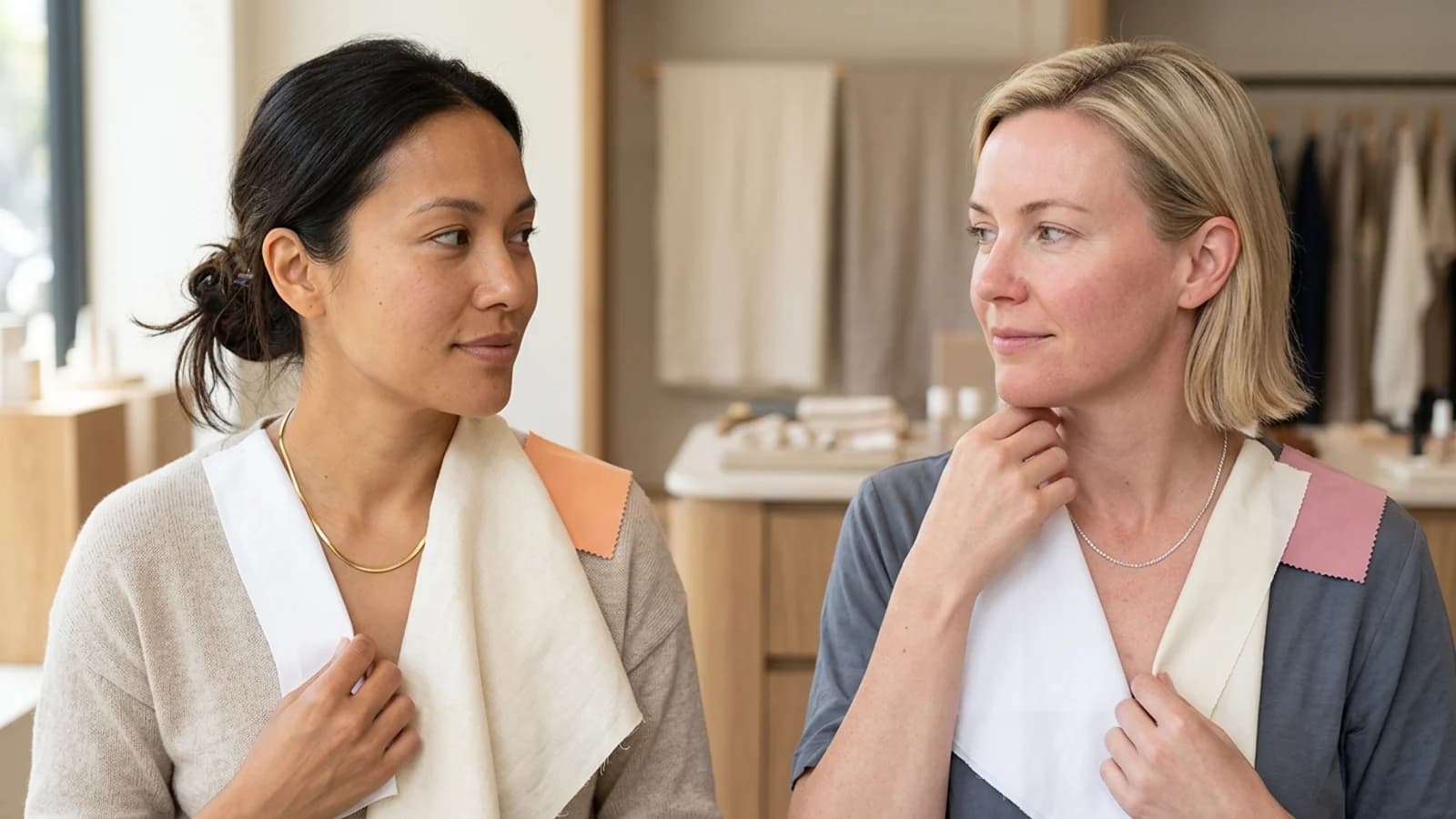
Start with five checks: white vs. cream fabric, silver vs. gold metal, foundation behavior, a bare-face natural-light photo, and real color draping. If all five point in the same direction, you probably have a clear undertone. If they conflict, you may be neutral, olive, close to a seasonal border, or testing under poor lighting.
Use this as a starting point
Undertone is the first clue, not the full answer.
auraDNA reads undertone together with value, chroma, and contrast from your photos, then turns the result into a season, palette, avoid list, hair direction, metals, denim, and wardrobe guidance.
Surface Tone, Undertone, and Overtone
People often use skin tone and undertone as if they mean the same thing. They do not. Surface tone is the visible depth of the skin: fair, light, medium, tan, brown, deep, and the many points between. Undertone is the underlying color direction beneath that surface: warm, cool, neutral, or olive. Overtone is a temporary surface cast, such as redness, tanning, flushing, grayness, hyperpigmentation, or the effect of lighting.
Skin color is created by light interacting with biological pigments and tissue structures, including melanin, hemoglobin, carotenoids, blood flow, and skin thickness.12 This is why undertone can be subtle. Two people can have similar surface depth and very different underlying color behavior. One medium complexion may look golden and warm. Another may look rose-brown and cool. Another may have a green-gray olive cast.
Warm, Cool, Neutral, and Olive Undertones
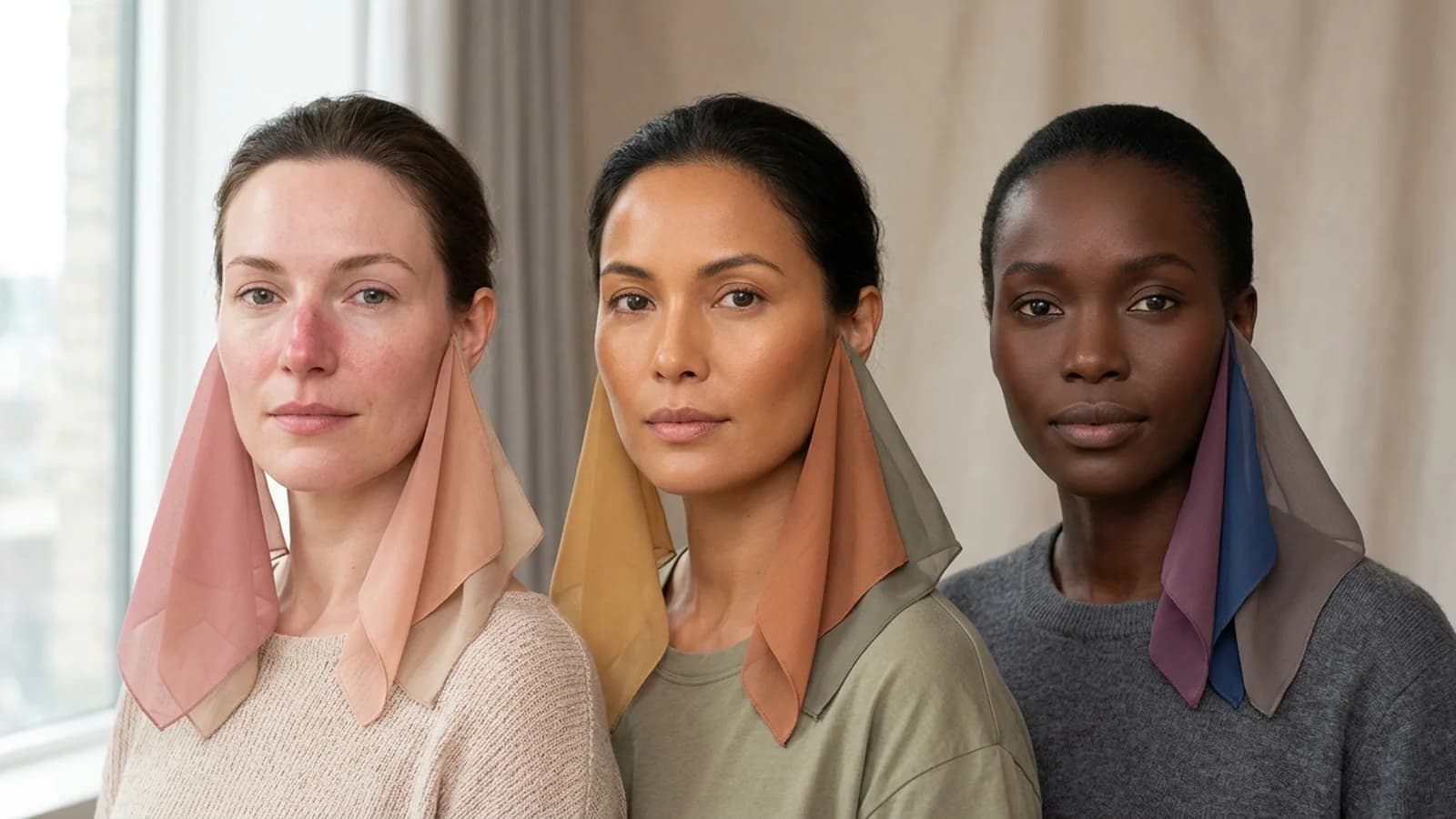
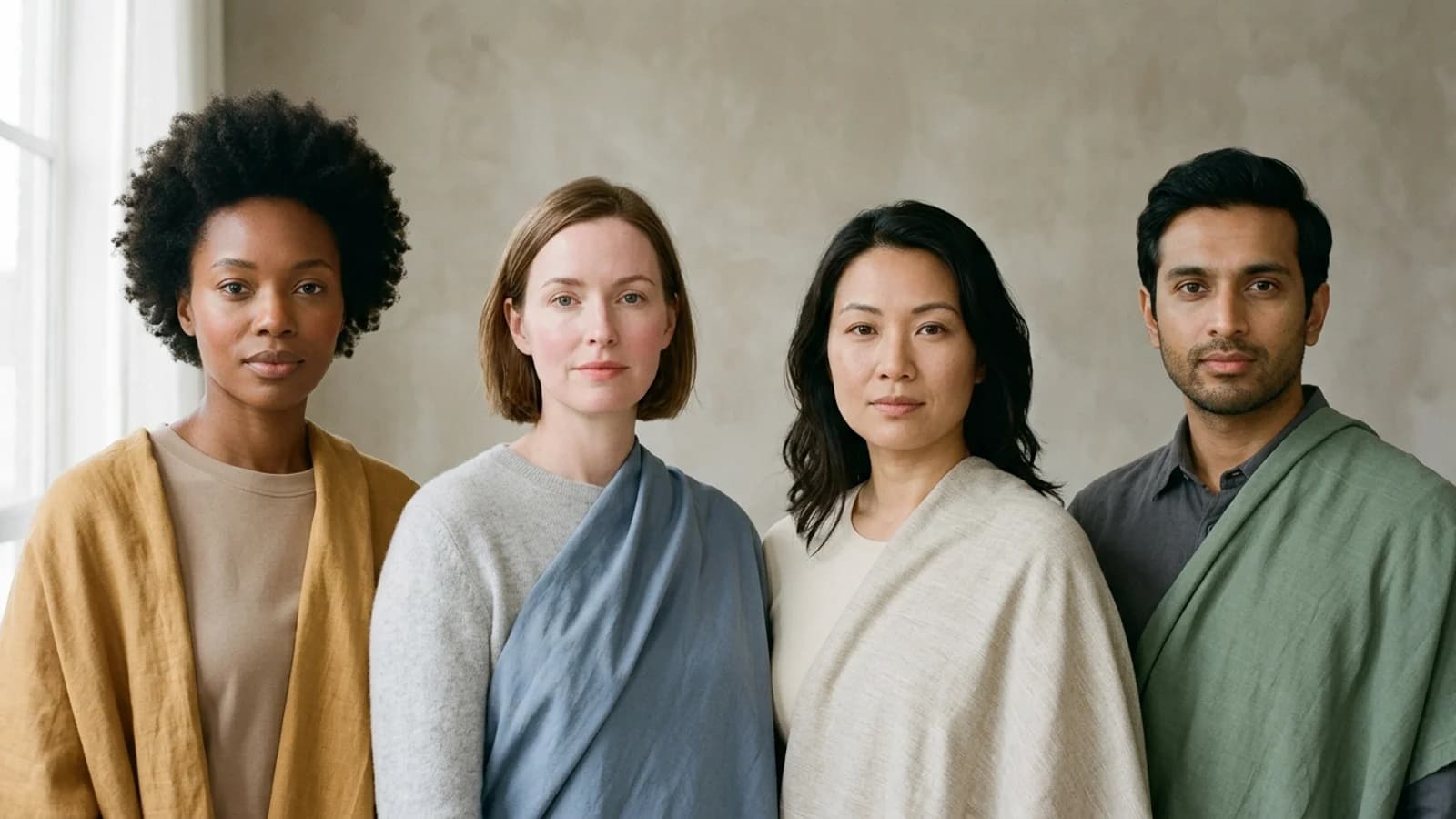
Undertone categories are shortcuts for how skin behaves next to color. They are not tied to race, ethnicity, or surface depth. Fair skin can be warm. Deep skin can be cool. Medium skin can be olive. Neutral undertones can appear at any depth.
| Undertone | Common visual clues | Often flattering | Often difficult |
|---|---|---|---|
| Warm | Golden, peach, yellow, caramel, bronze, copper, or honey cast. | Cream, camel, rust, warm olive, coral, tomato red, yellow gold. | Icy pink, cool gray, optic white, blue-based pastels. |
| Cool | Rose, pink, blue-red, plum, cool mahogany, porcelain, or ash cast. | Optic white, silver, fuchsia, berry, blue-red, sapphire, emerald. | Mustard, orange, camel, yellow beige, warm peach. |
| Neutral | Balanced beige, taupe, brown, or mixed signals from warm and cool tests. | Balanced mid-tones, soft rose, jade, navy, charcoal, champagne metals. | Very yellow warmth or very icy coolness if the rest of the coloring is soft. |
| Olive | Green, gray, muted, earthy, or yellow-gray cast; foundation often looks too orange, pink, or peach. | Muted olive, teal, forest green, soft terracotta, plum, taupe, espresso. | Pale icy pastels, neon yellow-green, overly peach foundation, flat beige. |
These categories are useful, but they are still broad. A warm person may be bright and light, pointing toward Spring, or rich and muted, pointing toward Autumn. A cool person may be soft and low-contrast, pointing toward Summer, or crisp and high-contrast, pointing toward Winter. That is why undertone alone does not determine your full color season.
Why Olive Undertone Is So Confusing
Olive undertone is often misread as neutral because it does not behave like a simple warm/cool category. Olive skin can look green, gray, muted, earthy, golden, or cool depending on the lighting and surrounding colors. It can also make standard makeup shades behave strangely: warm foundations may look orange, cool foundations may look pink or ashy, and neutral foundations may look peachy or flat.
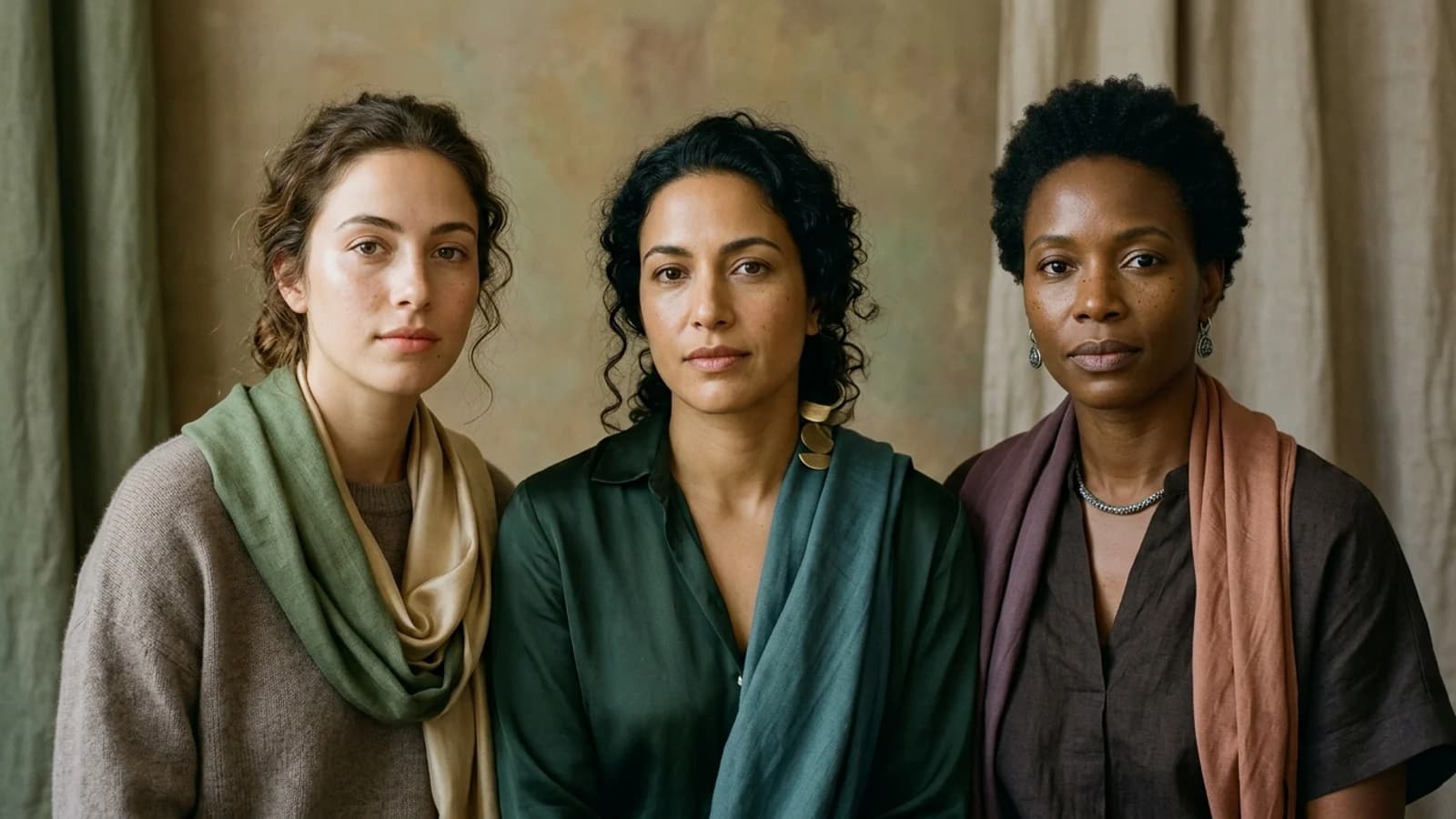
The important point: olive is not a surface depth. It can appear in fair, medium, tan, brown, and deep skin. Some olive undertones lean warm, especially when golden and earthy colors look healthy. Some lean cool, especially when teal, berry, deep green, and silvered tones look cleaner. Some are neutral-olive and need muted colors more than a strict temperature rule.
- Warm olive often looks best in softened earth tones: olive, camel, rust, terracotta, warm taupe, muted gold, and deep teal.
- Cool olive often looks best in richer cool tones: pine, teal, cool burgundy, plum, charcoal, blue-red, and oxidized silver.
- Neutral olive often needs low-to-medium chroma colors: taupe, soft cocoa, muted rose, sage, slate, espresso, and champagne metal.
- If every foundation looks too orange, too pink, too peach, or too flat, olive undertone is worth testing carefully.
The Tests Ranked From Weak to Useful
A reliable undertone test should compare how the face changes, not just what color a single body part appears to be. The most useful tests place color near the face and watch for clarity, shadow, redness, grayness, and whether the skin looks connected to the color.
| Test | Usefulness | Best use | Main limitation |
|---|---|---|---|
| Vein test | Low | A rough clue only. | Vein color is affected by skin depth, tissue, lighting, and scattering. |
| Jewelry test | Moderate | Compare yellow gold, silver, rose gold, champagne, and antiqued metals near the face. | Personal taste and metal finish can bias the result. |
| White vs. cream | Moderate to high | Compare optic white and soft cream under the chin in indirect daylight. | Makeup, redness, and room color can distort the reaction. |
| Foundation behavior | High | Look for repeated patterns: too orange, too pink, too gray, too yellow, or peach-mask effect. | Foundation formulas differ, and oxidation can confuse the read. |
| Natural-light photo | High | Use bare-face photos in indirect daylight with no filter and compare stable traits. | Camera white balance and shadows can shift the result. |
| Color draping | Very high | Compare warm, cool, light, deep, bright, and muted fabrics against the face. | Requires controlled lighting and careful observation. |
Why the Vein Test Fails
The internet version of the vein test says blue veins mean cool, green veins mean warm, and mixed veins mean neutral. That is too simplistic. Veins do not appear blue or green because the blood itself is blue or green. The color you see is affected by how light travels through skin and tissue before returning to the eye.78
Skin thickness, melanin, collagen, body fat, lighting, and the depth of the vessel can all change the visible color of veins. A yellow or olive surface cast can make bluish veins look green. Deep skin may make veins difficult to read at all. For these reasons, the vein test should never be the primary basis for typing your undertone.
Better At-Home Tests
White vs. Cream
Hold optic white and cream fabric under your chin in natural indirect daylight. If optic white makes your face look cleaner and cream makes it yellowed or dull, you may lean cool. If cream makes your skin look smoother and optic white looks harsh or gray, you may lean warm. If both are fine but neither is perfect, test neutral and olive possibilities.
Silver vs. Gold
Compare bright silver, yellow gold, rose gold, champagne gold, antiqued gold, and brushed silver near the face. Warm undertones often prefer yellow gold. Cool undertones often prefer silver. Neutral and olive undertones may prefer mixed, softened, champagne, antiqued, or less reflective metals.
Foundation Behavior
Your foundation history is often more honest than your memory. If many foundations look orange, the shade may be too warm. If they look pink or chalky, they may be too cool or too light. If they look peachy, flat, or disconnected from the neck, olive or neutral undertone may be involved. Test foundation along the jaw and neck, not just the wrist.
Natural-Light Photo
Take a bare-face photo in indirect daylight, facing a window, with no color filter, no tinted glasses, and no strong makeup. Avoid direct sunlight because it warms and blows out the skin. A photo is still not perfect, but it can reveal whether your skin reads golden, rose, neutral beige, gray, or olive across several lighting-stable areas.
Draping: The Face-Based Test
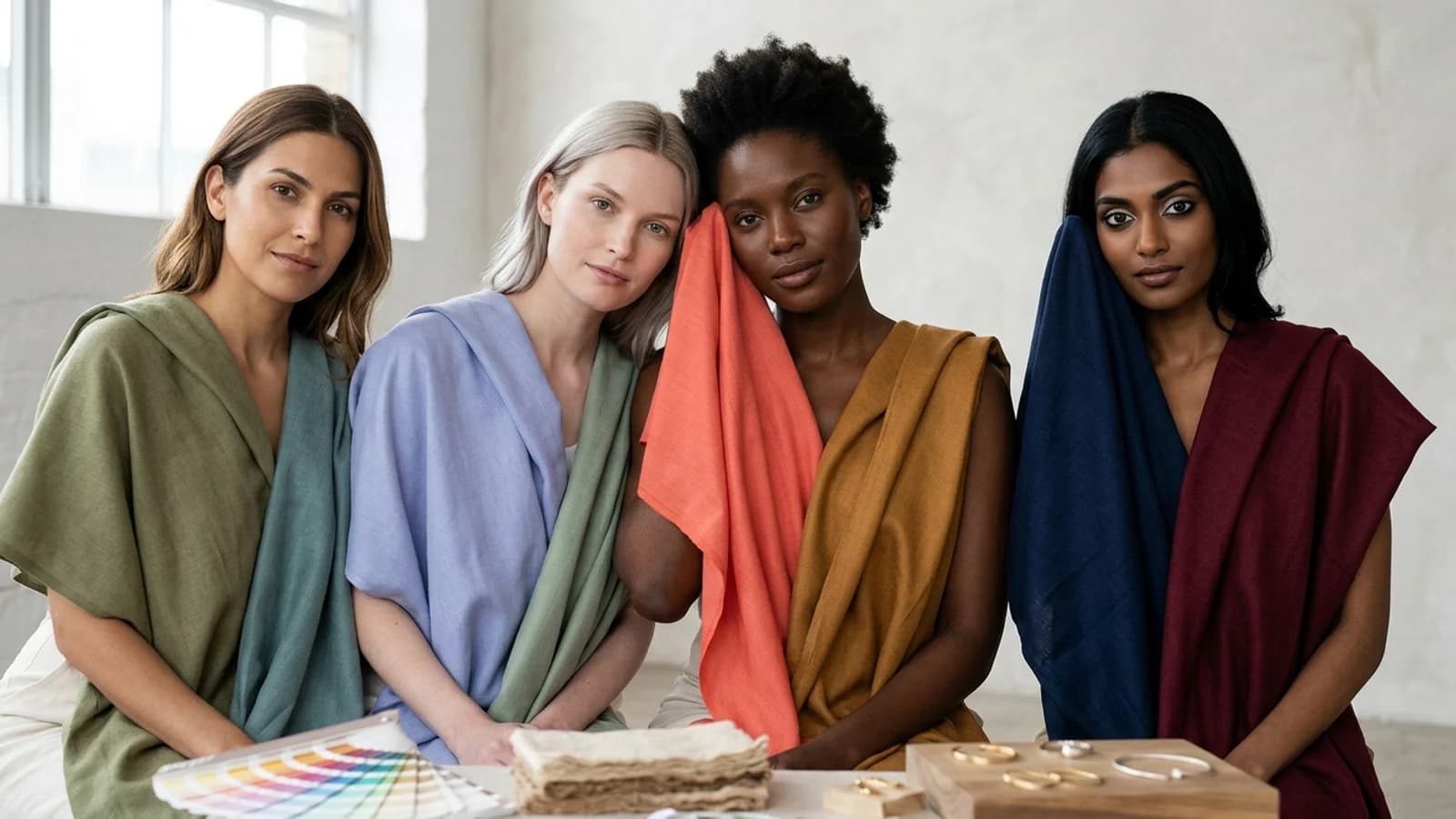
Draping works because colors placed next to each other change how the eye reads them. This is related to simultaneous contrast and color assimilation effects, including phenomena such as the Bezold effect.9 In practical terms, a drape can make skin look clearer, or it can exaggerate the very tones you do not want to emphasize.
Try pairs, not isolated colors: optic white vs. cream, warm peach vs. cool pink, camel vs. cool gray, olive vs. emerald, tomato red vs. blue-red, dusty rose vs. coral. Watch the skin around the mouth, under the eyes, along the jaw, and across the forehead. A better color usually makes the whole face look more cohesive.
- Good sign: the face looks clearer, rested, and more dimensional.
- Good sign: eyes look more awake and the jawline looks more defined.
- Warning sign: the color makes the skin look gray, yellow, red, or shadowed.
- Warning sign: the garment color is the first thing you notice instead of the face.
Why Undertone Is Not Your Full Season
Undertone answers the temperature question. A complete color season also needs value and chroma. Value is how light or deep your overall coloring is. Chroma is how clear, vivid, muted, or gray your coloring appears. These dimensions are central to color systems such as Munsell's hue, value, and chroma model.5
| Base signal | Possible directions | What decides the final season |
|---|---|---|
| Warm | Spring or Autumn | Spring if clearer and lighter; Autumn if richer, deeper, or more muted. |
| Cool | Summer or Winter | Summer if softer and lower contrast; Winter if clearer, deeper, or higher contrast. |
| Neutral | Border or transition seasons | Chroma and value usually matter more than a strict warm/cool label. |
| Olive | Often muted, deep, or neutral-border seasons | The final season depends on whether the olive reads soft, deep, warm, cool, or bright. |
Want the complete read?
Use auraDNA when your undertone tests conflict or when you want your season, best colors, avoid colors, hair direction, metals, denim, and styling rules in one report.
Practical Color Guidance by Undertone
Use undertone guidance closest to the face first. Tops, jackets, scarves, glasses, jewelry, lipstick, blush, and hair color change the face more than pants or shoes. If you are not ready to rebuild a wardrobe, start with the colors that frame your skin.
| Undertone | Wardrobe | Makeup | Hair and metals |
|---|---|---|---|
| Warm | Cream, camel, rust, olive, terracotta, tomato red, warm brown. | Peach, coral, warm rose, terracotta, warm nude. | Honey, caramel, copper, chestnut; yellow gold and warm brass. |
| Cool | Optic white, navy, charcoal, sapphire, emerald, berry, fuchsia. | Rose, berry, mauve, blue-red, cool pink. | Ash brown, cool brunette, blue-black, platinum; silver and white gold. |
| Neutral | Soft white, taupe, navy, jade, balanced beige, charcoal, muted rose. | Rose-beige, soft peach, balanced nude, medium berry. | Neutral brunette, beige blonde, soft black; champagne, mixed metals. |
| Olive | Moss, teal, espresso, forest green, muted plum, soft terracotta, taupe. | Muted rose, plum, peachy-rose, terracotta, desaturated berry. | Espresso, soft auburn, cool dark brown; champagne, brass, oxidized silver. |
These are starting points, not final rules. If your undertone is warm but your chroma is very bright, you will need clearer colors than a muted warm person. If your undertone is cool but your contrast is soft, icy high-contrast colors may still be too sharp. The season result refines the undertone result.
Common Mistakes
- Mistaking redness for a cool undertone. Redness can be an overtone, not the underlying color direction.
- Assuming deep skin is always warm. Deep skin can be cool, warm, neutral, olive, bright, soft, or deep depending on the total feature relationship.
- Calling every difficult match neutral. Olive and muted undertones are often mislabeled neutral because standard products do not account for green-gray balance.
- Testing on the wrist instead of the face. Face-framing colors matter most because they reflect onto the complexion.
- Testing under colored lighting. Bathroom bulbs, tinted windows, filters, and colorful walls can change the read.
- Using hair dye as your baseline. If your hair color is artificial and not harmonious, it can distort your undertone test.
FAQ
Can my undertone change?
Your underlying pigment tendency is usually stable, but the visible read of your skin can shift with tanning, age, redness, hyperpigmentation, hair color, makeup, health, and lighting. That is why repeated testing in controlled daylight matters.
Can I be both warm and cool?
You can be neutral, neutral-warm, neutral-cool, or olive. In those cases, a strict warm/cool answer may not be enough. You may need to test chroma, value, and sister-season behavior.
Is olive always warm?
No. Olive can lean warm, cool, or neutral. The green-gray cast is the clue, but the surrounding colors that clean up the face reveal whether the olive undertone needs warmer, cooler, softer, or deeper colors.
Why does foundation look orange on me?
The shade may be too warm, too saturated, too peach, or not muted enough for your undertone. If this happens across many brands, test neutral and olive undertone possibilities rather than simply going lighter or darker.
What should I do after finding my undertone?
Use undertone to narrow your direction, then test value, chroma, and contrast to find your full color season. That is where wardrobe colors, hair color, metals, makeup, and avoid colors become much more specific.
Source Notes
This article was adapted from the Skin Undertone Test Guide manuscript and edited for auraDNA's blog format, search intent, internal linking strategy, and source policy.
Sources
Selected neutral sources used for skin color measurement, color dimensions, light scattering, and contrast effects.
- Skin Color Quantification - OpenOximetry
- Research Techniques Made Simple: Cutaneous Colorimetry - PubMed
- Correlation Between Skin Color Evaluation by Skin Color Scale Chart and Narrowband Reflectance Spectrophotometer - PMC
- Variation in Skin Red and Yellow Undertone: Reliability of Ratings and Relevance for Perceived Social Experiences - PMC
- How Color Notation Works - Munsell Color
- What is a Spectrophotometer / Color Spectro? - X-Rite
- Scattering of Light from the Systemic Circulatory System - PMC
- Elucidating the contribution of Rayleigh scattering to the bluish appearance of veins - Journal of Biomedical Optics
- Bezold effect - Wikipedia